
Sheepmeat export update January 2026
January 2026 - Sheep Meat Export Update
Australia’s sheep meat export performance in January 2026 reflects a market that has started the year on a softer footing in year on year terms, but which remains broadly aligned with longer run seasonal patterns.
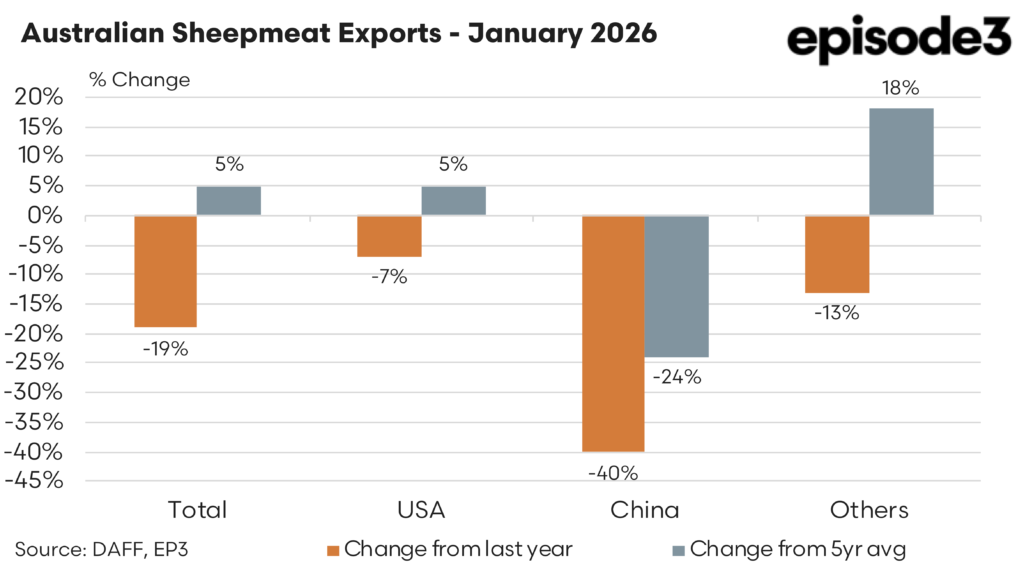
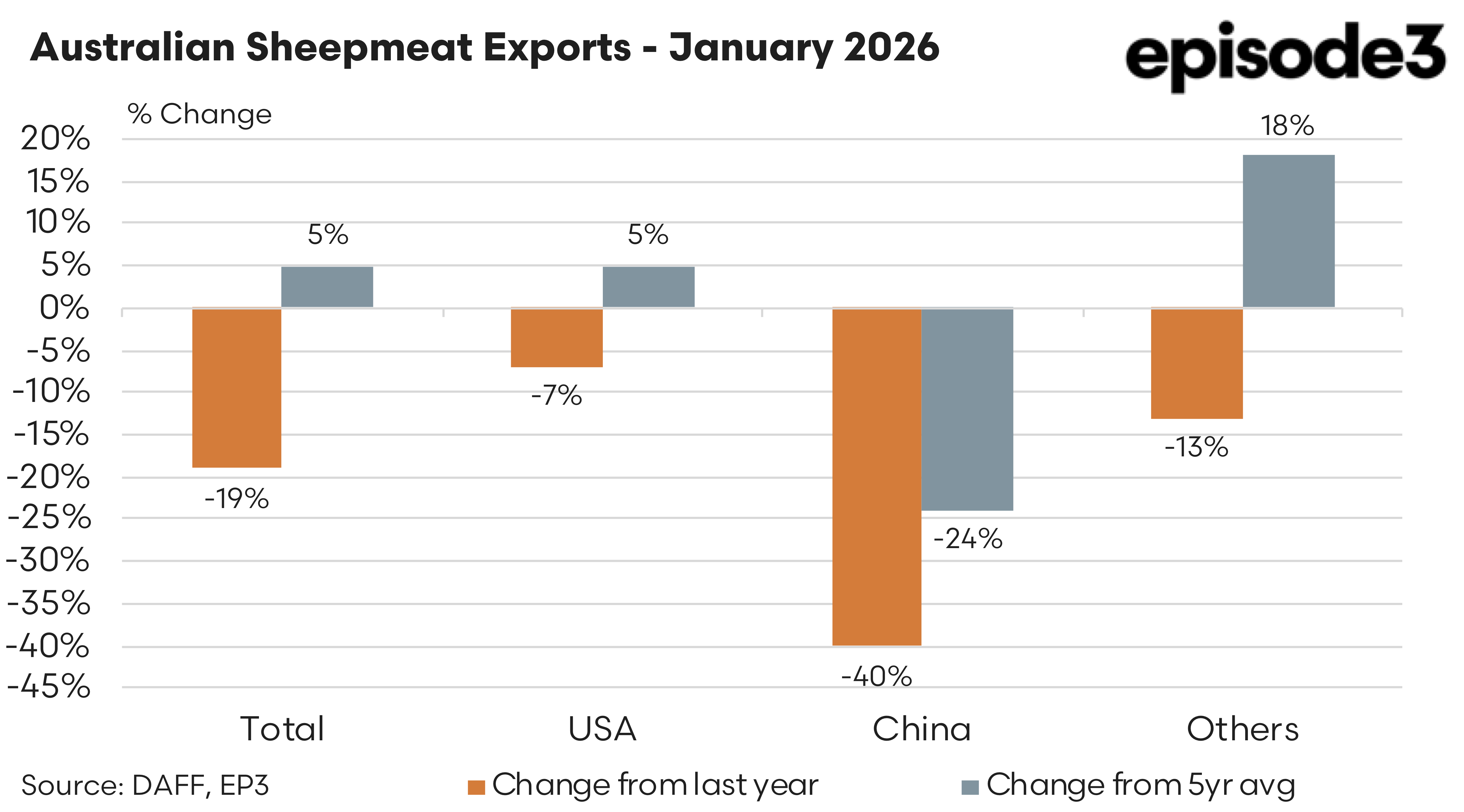
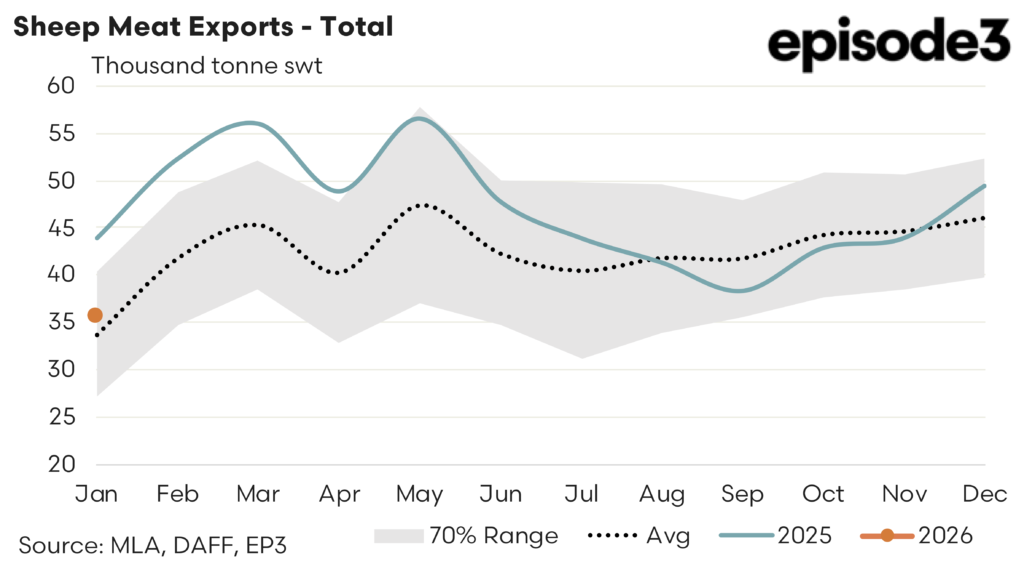
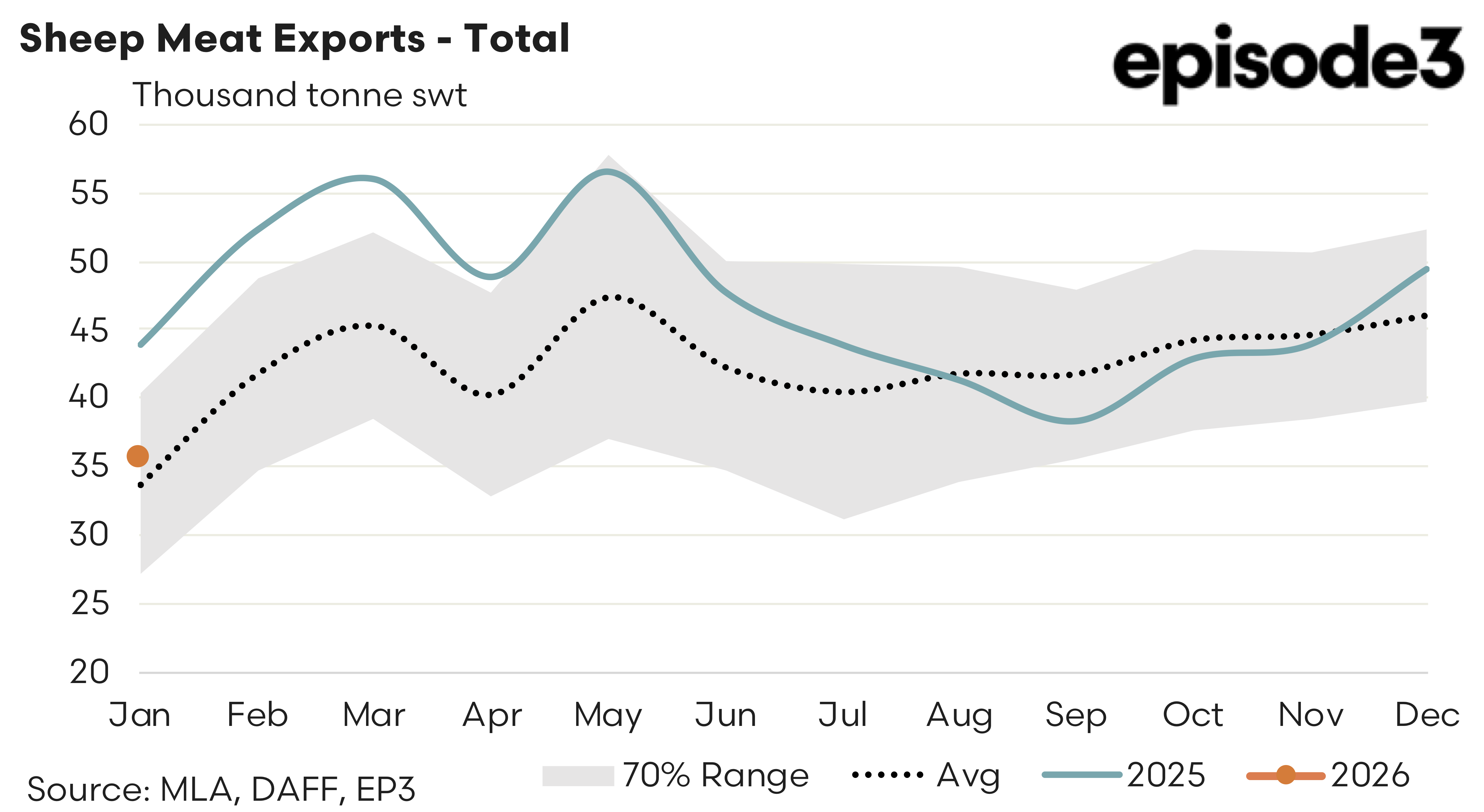
Total exports of lamb and mutton combined reached 35,631 tonnes in January. This was 19 percent lower than January last year, highlighting the impact of reduced slaughter availability and a shift in supply dynamics following the heavy turnoff seen through parts of 2024 and early 2025. However, when viewed against the five year January average, total exports were 5 percent higher, indicating that despite the annual decline, trade volumes remain within a normal seasonal range rather than signalling a structural downturn.
Looking at the distribution of market share so far in 2026, Australian sheep meat exports are notable for how evenly spread the major destinations have become. China, the USA and the MENA region have each accounted for close to one fifth of total exports, with shares of roughly 18 to 19 percent apiece, while other Asian markets contribute a further meaningful tranche at nearly 14% of the total trade. The remainder has been absorbed by a broad mix of smaller and emerging destinations, which together still represent the single largest combined share of nearly 32%. This relatively even split across the top markets reduces reliance on any one destination and provides a degree of resilience in the export program. It also means that shifts in demand from individual markets, such as the recent softening into China, can be partially offset by stability or growth elsewhere rather than translating directly into sharp swings in overall export performance.
The United States remained an important destination for Australian sheep meat in January, with exports totalling 6,375 tonnes. Volumes shipped to the US were 7 percent lower than January 2025, reflecting softer year on year supply, but were 5 percent above the five year average for the month. This positioning suggests that while US demand has not driven growth at the margin this year, it continues to provide a stable outlet for Australian sheep meat, particularly given the relatively firm demand backdrop and Australia’s established market presence.
China recorded one of the more pronounced shifts in January export flows. Shipments totalled 6,404 tonnes, representing a 40 percent decline compared with January last year and sitting 24 percent below the five year average for the month. This outcome points to a material pullback in Chinese demand at the start of 2026, likely reflecting softer consumption conditions in the face of historically high sheep and lamb price levels at Australian saleyards and a limited ability for exporter/processors to pass this cost further down the supply chain. The China result stands out relative to other destinations and was a key driver of the overall year on year decline in total exports.
Exports to all other destinations combined accounted for the largest share of trade, totalling 22,853 tonnes in January. While volumes to these markets were 13 percent lower than a year earlier, they were 18 percent above the five year average. This highlights the growing importance of diversification across a wide range of markets, including the Middle East, other parts of Asia and regions outside Australia’s traditional core destinations. Strength in these markets helped offset weaker demand from China and provided a degree of balance to the overall export program.
The January 2026 sheep meat export data points to a market undergoing adjustment rather than contraction. Year on year volumes were lower across most destinations, but exports remain broadly consistent with longer term seasonal norms. The mix of destinations continues to evolve, with non-core markets playing an increasingly important role in absorbing supply, while softer conditions in China represent a clear watch point for the months ahead.