Are Australian wheat growers being short-changed?

Market Morsel
Australian wheat is often described as expensive compared with grain from competing exporters, but the latest numbers show a more mixed picture.
For this comparison, Western Australia is used as the Australian benchmark because it is the country’s largest and most export-focused grain-producing state. A high proportion of the WA crop is exported, making its FOB price a clean indicator of Australian export competitiveness than eastern Australian values, which can be more heavily influenced by domestic feed and milling demand.
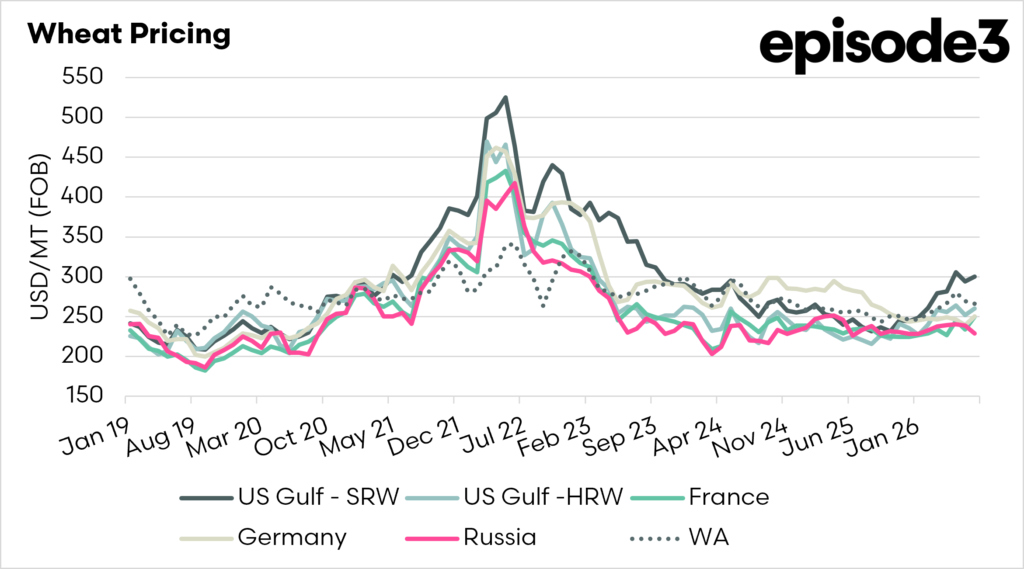
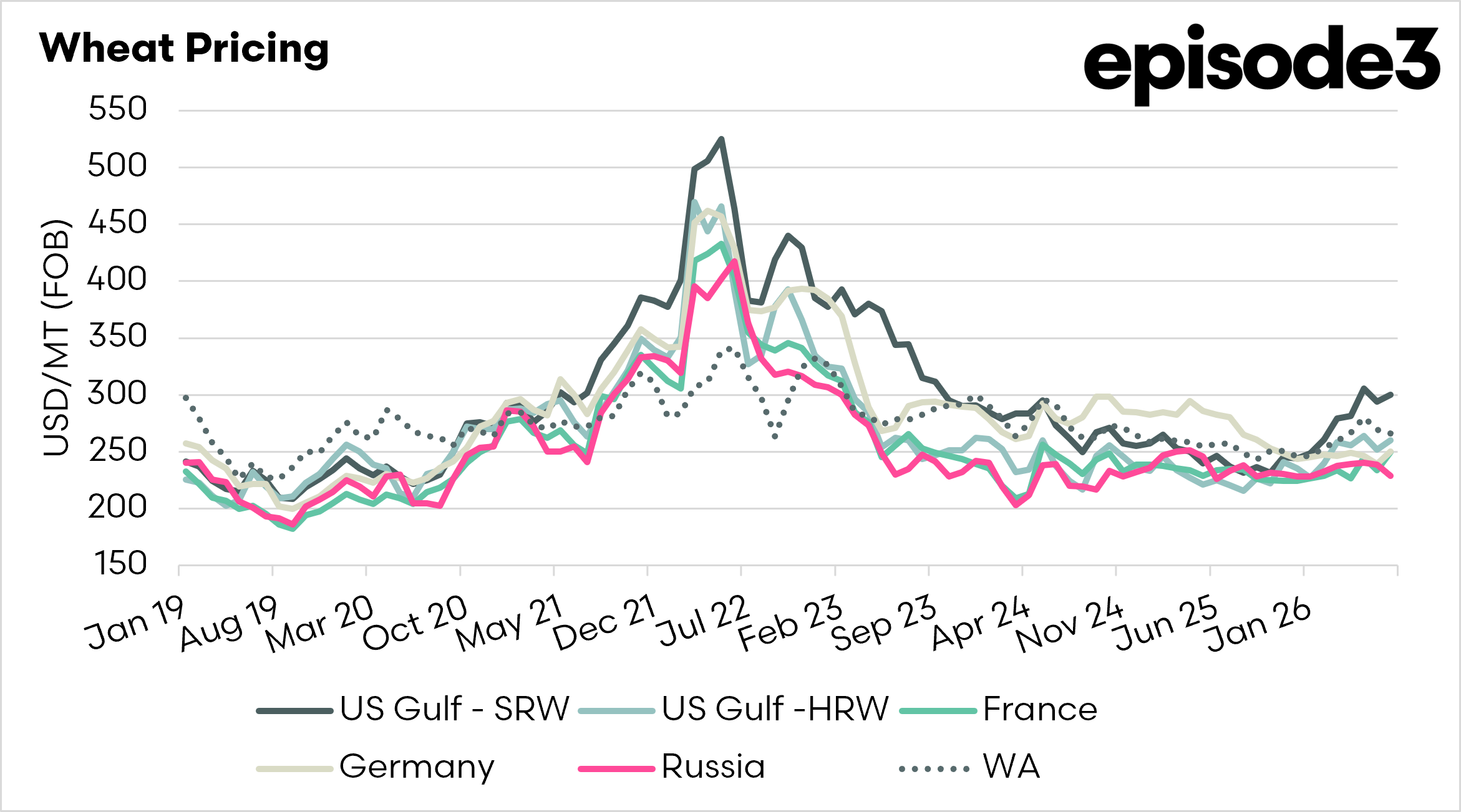
In July 2026, WA wheat averaged about US$266 per tonne FOB. That was well below US Gulf soft red winter wheat, which averaged nearly US$300 per tonne. WA was therefore around US$34 per tonne, or 11%, cheaper than the US soft wheat benchmark.
The comparison with other origins was less favourable. WA traded at about US$6 per tonne above US hard red winter wheat, US$16 per tonne above French and German wheat, and US$37 per tonne above Russian wheat.
Russia was the cheapest major origin in the dataset at about US$229 per tonne. That placed WA roughly 16% above Russian wheat at the port of loading. France and Germany were both close to US$250, leaving WA about 6% higher.
These numbers show why there is no single answer to whether Australian wheat is expensive. Australian grain is currently competitive with some US wheat but carries a premium over Europe and the Black Sea.
The annual movements are also revealing. Compared with July 2025, WA wheat has increased by only about 3%. Russian wheat is slightly cheaper, while French wheat has risen by around 6%. US Gulf wheat has moved much more sharply, with soft red winter wheat up about 26% and hard red winter wheat rising nearly 18%.
Australia has therefore become more competitive against the United States without becoming cheaper than Russia or continental Europe.
FOB prices are only the starting point. Wheat must still be delivered to the customer, and Australia’s freight advantage into Southeast and East Asia can offset part, or sometimes all, of an FOB premium against distant exporters. Quality, reliability, protein and customer requirements also affect which origin wins business.
For Australian growers, the message is that WA wheat is not universally expensive. It is competitively priced against the US but still needs freight advantages and established Asian demand to overcome cheaper Russian and European offers. If Australia produces a large crop, that premium against the Black Sea will be the number to watch.