War premium fades, local weather takes control.

Market Morsel
- Offshore wheat prices eased as some of the Black Sea risk premium was unwound.
- Australian cash markets split sharply by region, with northern wheat and barley strengthening while southern values stayed flat or fell.
- Dry conditions across the north are starting to matter more than weaker global futures.
- Canola prices softened as crude oil and global oilseed markets retreated.
- Urea rose again despite lower crude, showing fertiliser costs are still being supported by freight and supply risk.
- The market message for growers is that local supply and weather are currently more important than the headline move in Chicago.
The Detail
Global grain markets lost some of their war premium this week, but Australian prices did not follow them neatly lower. For local growers, the more important story was the widening gap between the dry northern grain belt and the better-seasoned south.
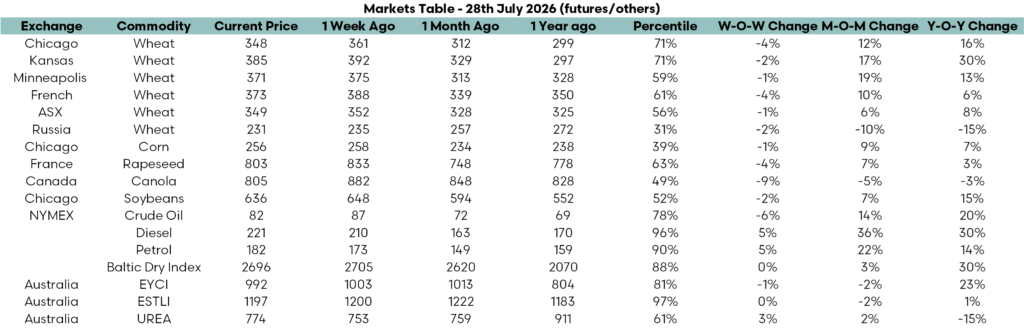
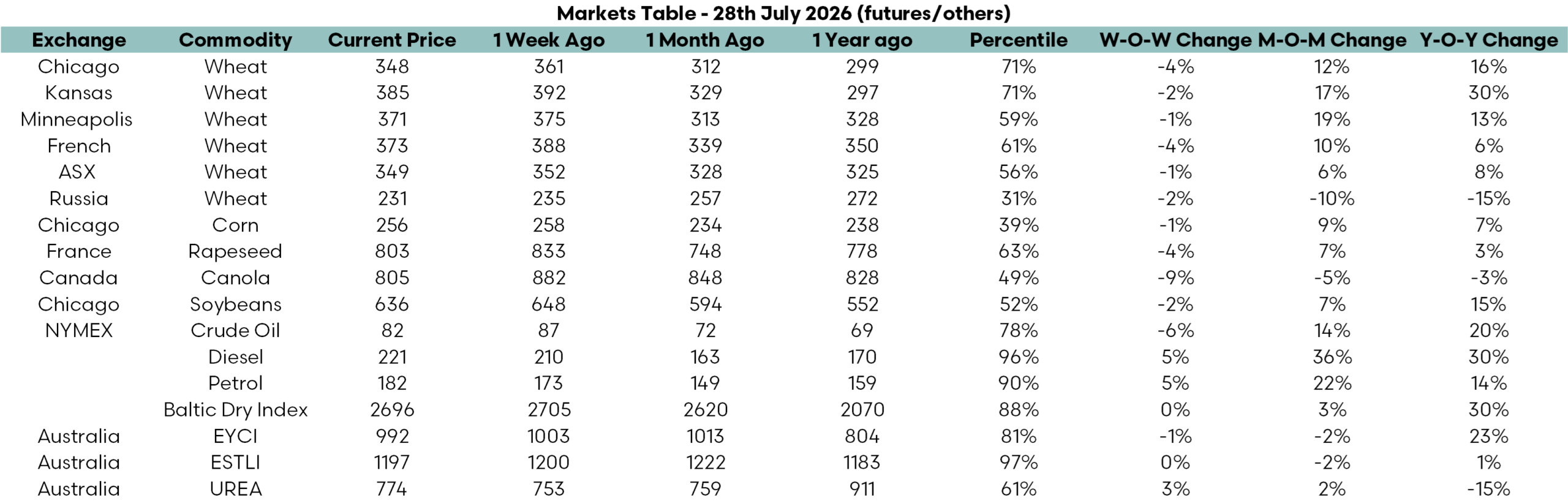
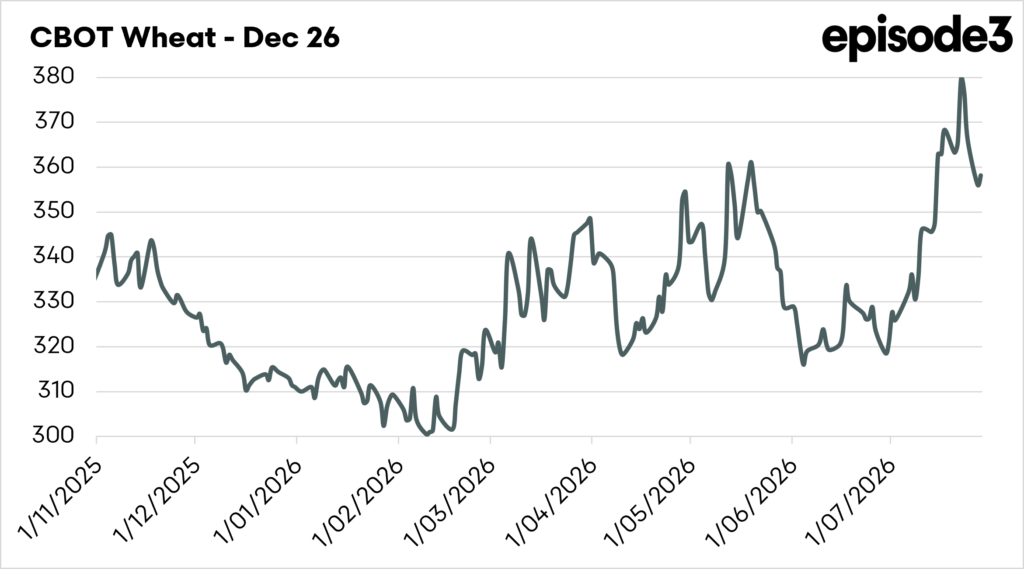
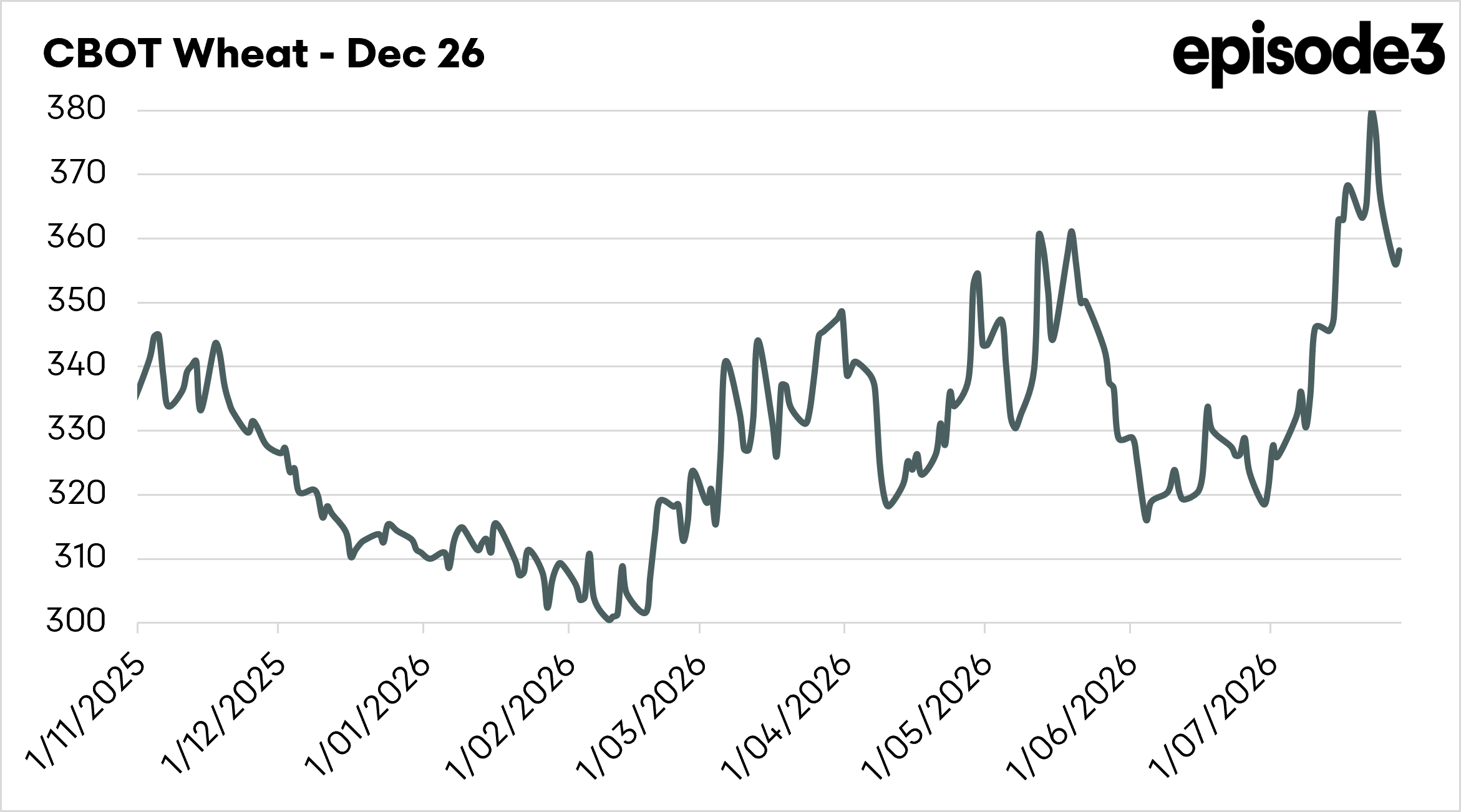
Chicago and French wheat futures both fell 4pc over the week. Kansas wheat was down 2pc and Minneapolis eased 1pc. Traders took some profit after the sharp Black Sea-driven rally, encouraged by reports that Russia and Ukraine’s largest grain export terminals had avoided major damage.
That does not mean the Black Sea problem has gone away.
Attacks on ports, vessels and surrounding infrastructure are still disrupting trade. Freight and insurance costs have risen, some shipping restrictions are still in place, and grain is building up behind damaged or constrained export routes. Russian wheat offers were steady to slightly lower near US$235–237/t, but higher freight costs were eating into the value available to exporters and growers.
The market has effectively removed some of the panic from futures without resolving the physical problem. That leaves wheat vulnerable to another sharp move if a major terminal is hit or shipping conditions worsen again.
Weather is also starting to carry more weight.
European crop monitor MARS cut all its major 2026 yield forecasts after repeated heatwaves shortened grain filling and damaged summer crops. The European Union soft wheat yield estimate was reduced to 5.88t/ha, down from 6.00t/ha last month and 7pc below last year.
The reductions were larger for corn and sunflower. Hot and dry conditions have reduced soil moisture, restricted crop growth and damaged flowering across parts of western and central Europe. More cuts could follow if the heat persists.
US corn and soybean crop ratings also deteriorated. Corn rated good to excellent fell from 67pc to 63pc, while soybeans dropped from 66pc to 63pc. Both are now at their lowest rating for this time of year since 2023.
The weather outlook is not yet pointing to a crop disaster. US rainfall has been near average, while temperatures are expected to ease after a short hot spell. Even so, corn is moving through pollination and soybeans are approaching the important pod-filling period, leaving both crops sensitive to further heat.
Oilseeds were hit hardest by the week’s retreat.
Canadian canola futures fell 9pc, European canola dropped 4pc, and Chicago soybeans eased 2pc. Crude oil was the main trigger. Brent fell sharply after the US and Iran paused strikes, weakening the value of crops used in biodiesel and other renewable fuels.
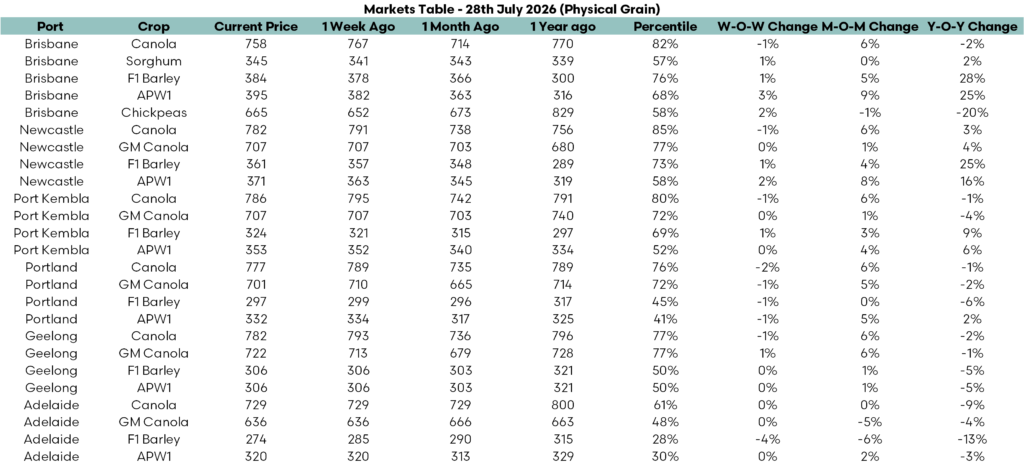
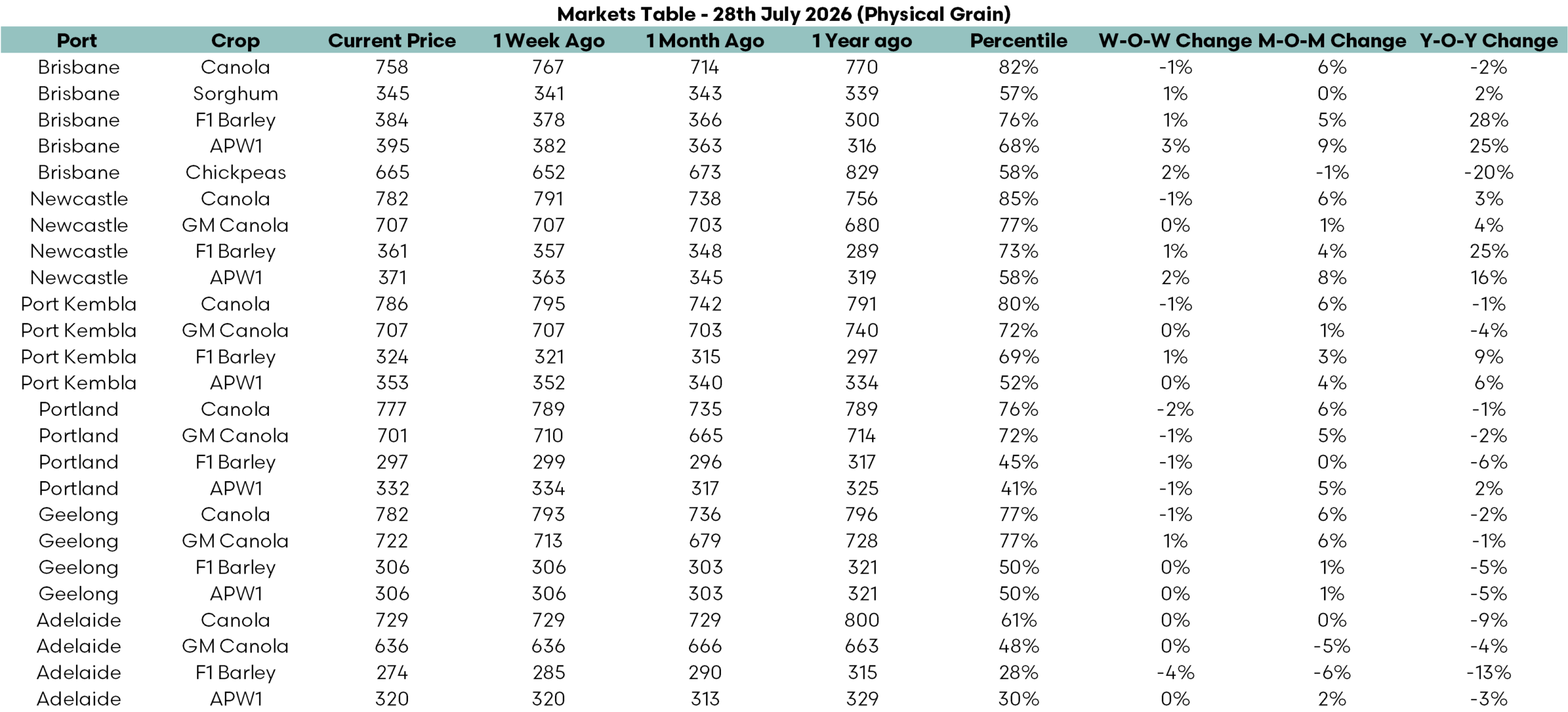
Australian canola prices also eased, but the losses were far smaller. Brisbane, Newcastle, Port Kembla, Portland and Geelong generally fell by $9–12/t, while Adelaide was unchanged. Local basis and regional crop prospects helped cushion Australian bids from the heavier offshore fall.
The clearest market split was in wheat and barley.
Brisbane APW1 rose $13/t to $395/t, and Newcastle gained $8/t to $371/t, despite the fall in global wheat futures. Brisbane feed barley rose $6/t to $384/t, while Newcastle lifted $4/t.
Dry conditions across Queensland and northern NSW are beginning to shape new-crop expectations. Downs values are already reaching well into NSW as buyers consider where grain will come from if the north misses further rain.
The south looks very different. Portland wheat eased $2/t, Geelong was unchanged, and Adelaide held steady. Adelaide feed barley fell $11/t, while Portland slipped $2/t. Better rainfall and stronger production expectations are keeping buyers more relaxed.
Fertiliser costs are another issue growers cannot ignore. Australian urea rose 3pc to $774/t despite weaker crude oil. Middle East shipping risks are still supporting replacement prices. Australia has imported about 2.66Mt, equal to 92pc of forecast seasonal needs, so the immediate concern is less about running out and more about what the next cargo will cost.
For Australian growers, the message is simple. Offshore markets may be unwinding some of their war premium, but local prices are increasingly being set by rainfall, crop prospects and where buyers believe grain will be available. Right now, northern dryness is carrying more weight than a weaker week in Chicago.