Grain markets hold, but growers face a cost squeeze

The Snapshot
- Northern wheat and barley prices stayed firm as growers and buyers weighed a potentially drier seasonal finish.
- Canola bids fell 4–5pc across most Australian ports despite a strong rebound in Canadian futures.
- Chinese buying and weaker US corn conditions supported global markets but did not produce a broad price rally.
- Australian urea rose 6pc to $824/t and is now 14pc higher than a month ago.
- Diesel and petrol jumped 10–11pc, tightening grower margins even as crude oil eased.
The Detail
Australian grain markets were split again this week, with northern wheat and barley values holding firm while canola bids fell sharply across most ports. The bigger concern for growers was not just the direction of grain prices, but the renewed lift in fertiliser and fuel costs.
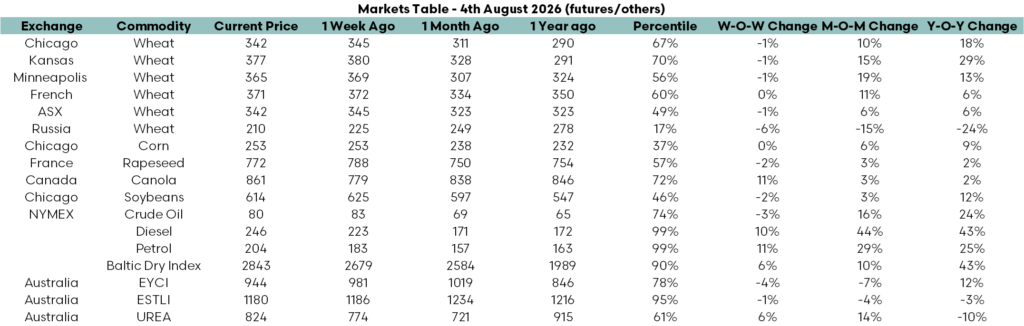
Wheat futures were relatively subdued. Chicago, Kansas and Minneapolis wheat each eased 1pc over the week, while French wheat was unchanged. Black Sea shipping risk kept a floor under the market after further attacks involving Russia and Ukraine, but cheap Russian wheat continued to limit the upside. The Australian dollar value of Russian wheat fell 6pc to $210/t, down 24pc from a year ago.
Russia has increased protection for vessels in the Azov and Black Sea region and is looking at alternative cargo routes. That confirms the physical disruption is real, even if futures have not responded with another large rally. Traders are understandably wary that further attacks on ports or vessels could interrupt exports and push buyers towards other origins.
US crop conditions added some support. The share of US maize rated good to excellent fell from 63pc to 61pc, the third consecutive weekly decline and the lowest rating for this point of the season since 2023. Soybean ratings held at 63pc, but August weather will be important as crops move through pod filling.
China also returned to the US soybean market in size. USDA confirmed 488,000t of soybean sales to China, while traders indicated total buying late last week may have been closer to 1Mt. The purchases offered some demand support, but Chicago soybeans still fell 2pc over the week to A$614/t as softer crude oil and improved rainfall in parts of the US Midwest capped the response.
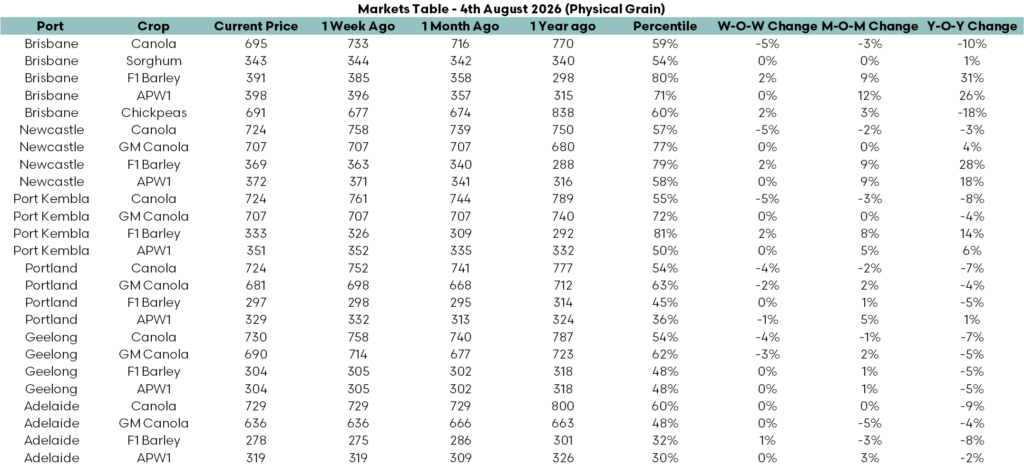
The clearest weakness was in Australian canola. Brisbane fell $38/t to $695/t, Newcastle dropped $34/t to $724/t and Port Kembla lost $37/t to $724/t. Portland and Geelong both fell $28/t, to $724/t and $730/t respectively. Adelaide was unchanged at $729/t.
The fall came despite Canadian canola futures rising 11pc over the week. European canola fell 2pc, soybeans declined, and crude oil eased 3pc, leaving Australian bids caught between mixed offshore signals and local buyer caution. The result was a sharp reduction in non-GM canola values, while GM prices were steadier in NSW and weaker in Victoria.
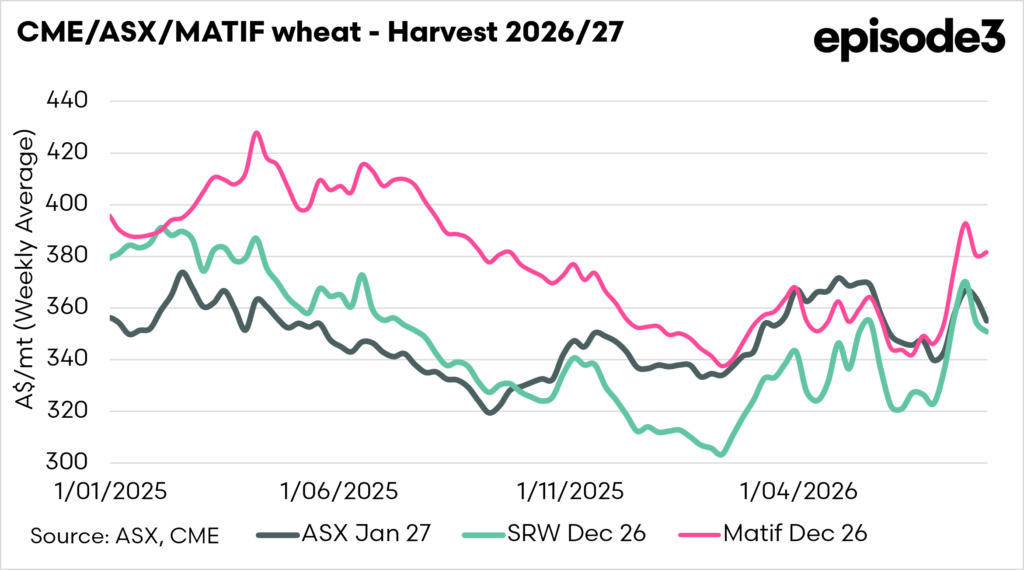
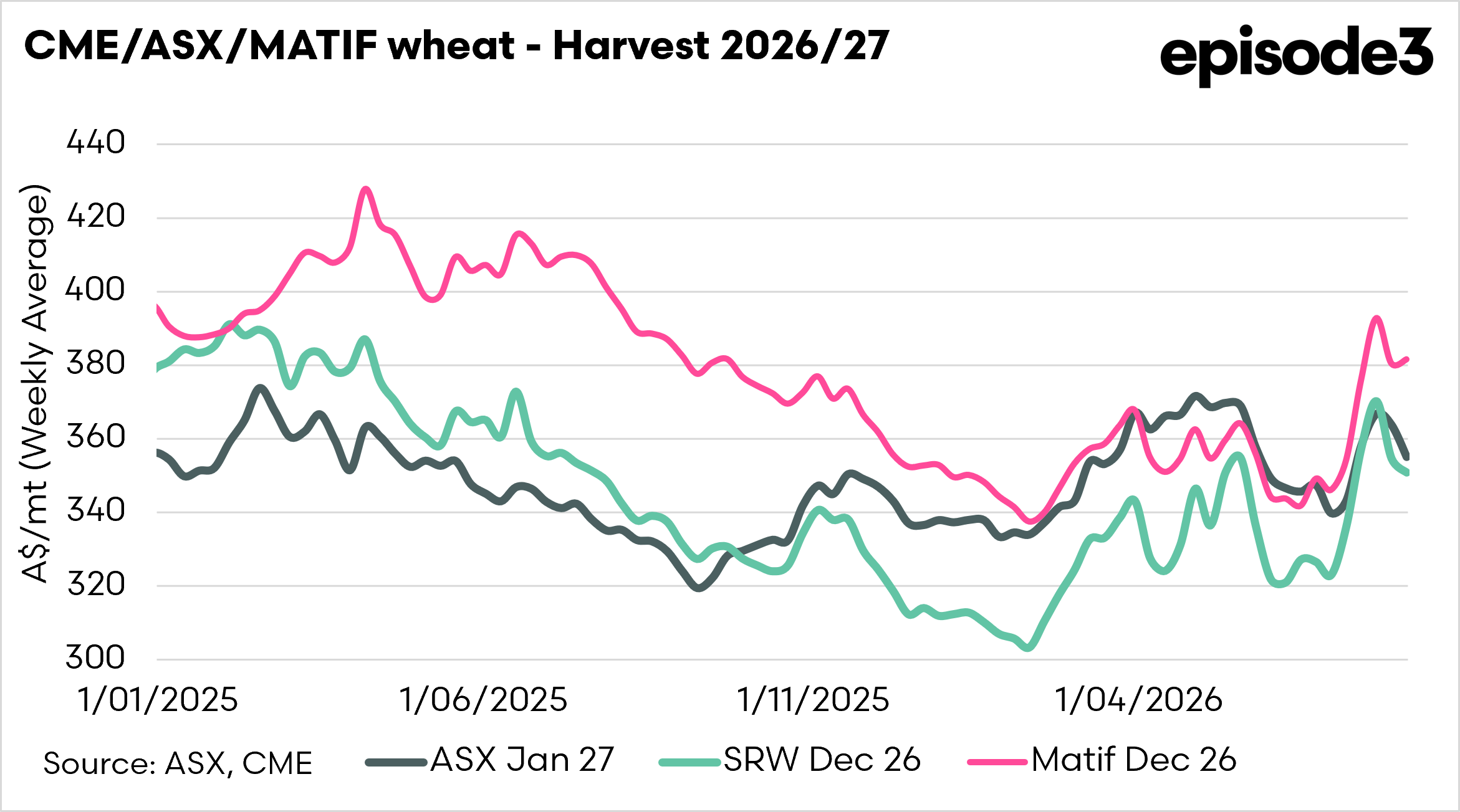
Wheat and barley continued to show a north-south divide. Brisbane APW1 held near recent highs at $398/t, up $2/t for the week and 26pc above a year ago. Brisbane feed barley gained $6/t to $391/t, while Newcastle barley rose $6/t to $369/t and Port Kembla increased $7/t to $333/t.
Those northern values continue to reflect concern about the seasonal finish. Recent dry weather has helped growers access paddocks and complete spraying, but the outlook for a drier end to the year is influencing selling decisions. Crops are also relatively advanced, keeping frost risk in focus despite little reported damage so far.
Southern markets were more relaxed. Portland wheat fell $3/t to $329/t, while Geelong eased $1/t to $304/t. Adelaide wheat was unchanged at $319/t. Barley was largely steady in Victoria, while Adelaide gained $3/t to $278/t. Better southern crop prospects are reducing the urgency for buyers to chase grain.
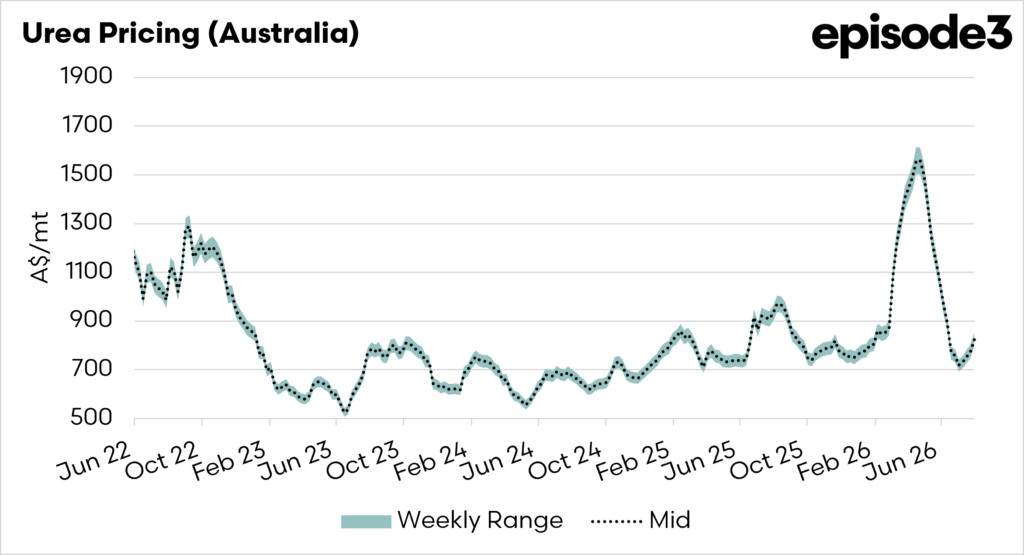
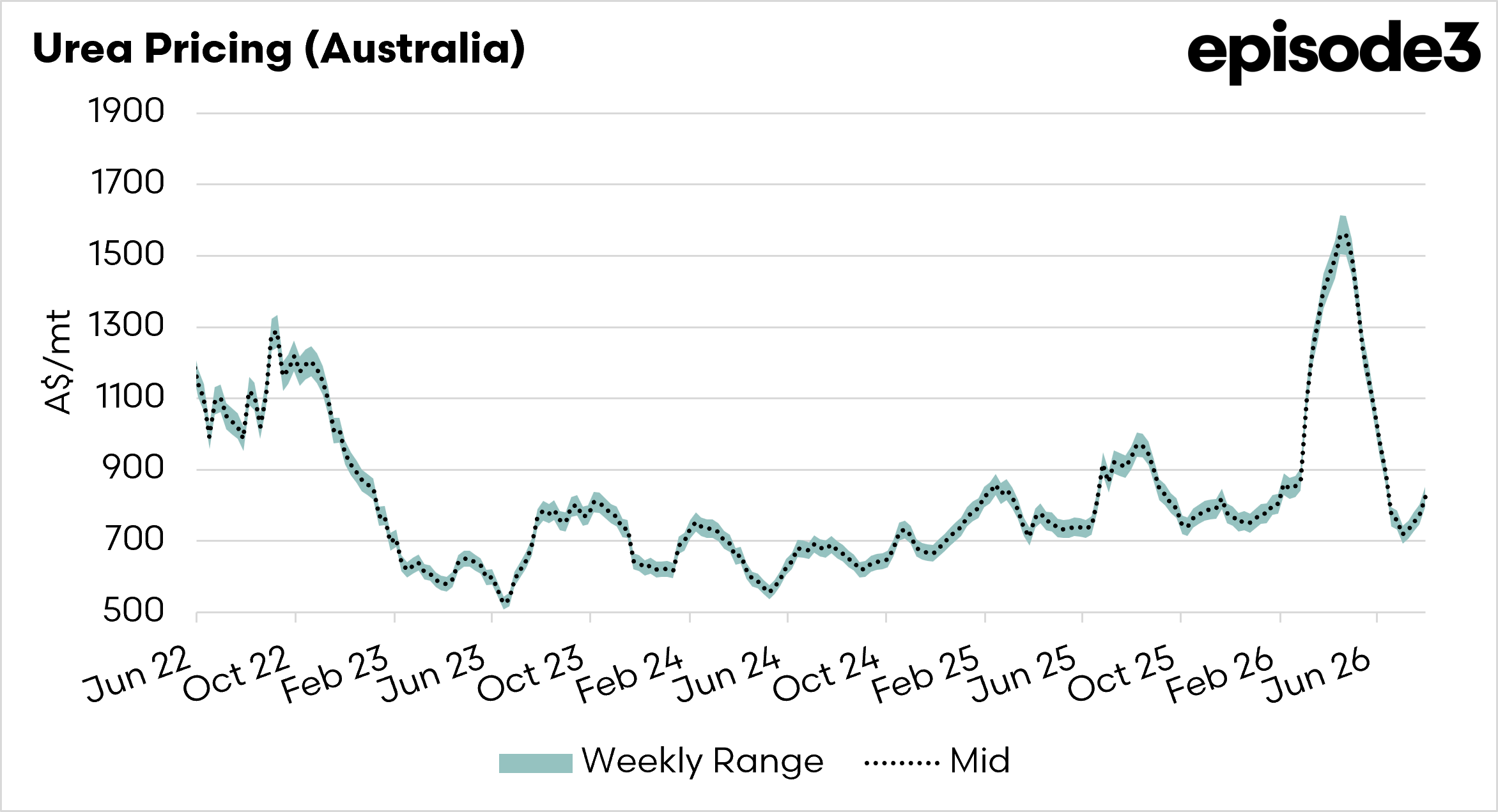
Input prices moved in the opposite direction. Australian urea rose 6pc to $824/t and is now 14pc higher than a month ago. India’s new 1.7Mt urea tender and continued Middle East shipping risks have supported global prices, although Australia has already imported around 96pc of forecast seasonal requirements. That means the main local problem is replacement cost, rather than immediate physical availability.
Fuel costs also jumped. Diesel rose 10pc and petrol gained 11pc, even though crude oil fell 3pc. The Baltic Dry Index increased 6pc, adding another reminder that freight and logistics costs remain elevated.
For growers, the market message is mixed. Northern wheat and barley values are being supported by weather risk, but canola has lost ground and key input costs are rising. Grain prices are not collapsing, but the margin between crop revenue and the cost of producing and moving grain is becoming less comfortable.