Market Lessons: Holding grain? You “can insure” against a price fall.

Market Lessons
We will regularly publish practical market guides designed to help growers better understand the tools available to manage price risk. The aim is not to tell farmers what decision to make, but to explain how different strategies work so they can make a fully informed choice.
Harvest may be finished, but a grower holding grain is still exposed to the market.
Keeping wheat in storage means hoping the price improves before it is sold. That may happen, but the market can also fall while storage charges, interest and quality risks continue to build.
One way to protect against a price fall is to buy a put option. A put option works a little like insurance. The grower pays a known cost upfront and receives protection if the market drops below a chosen level.
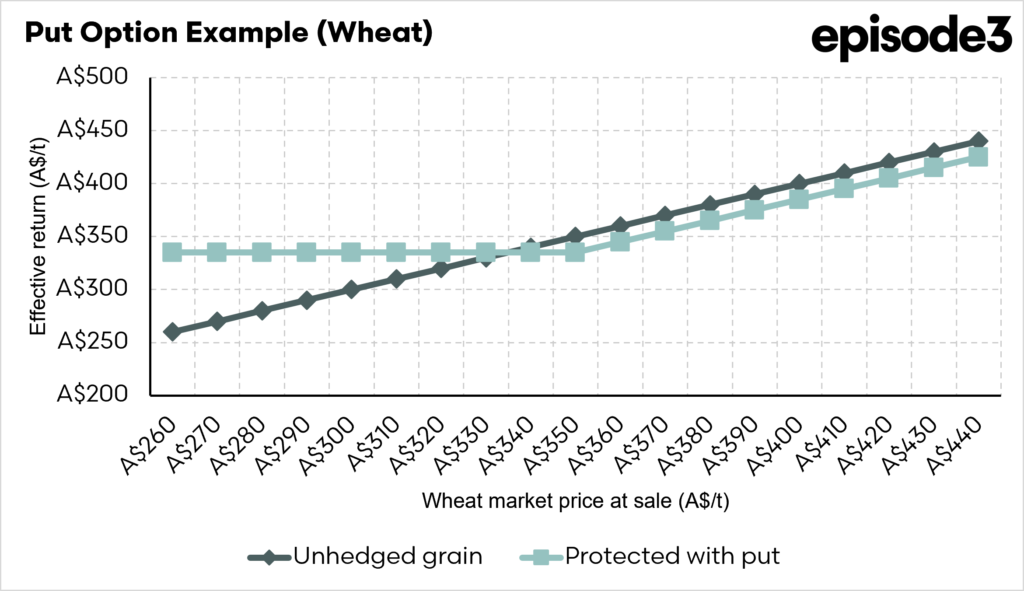
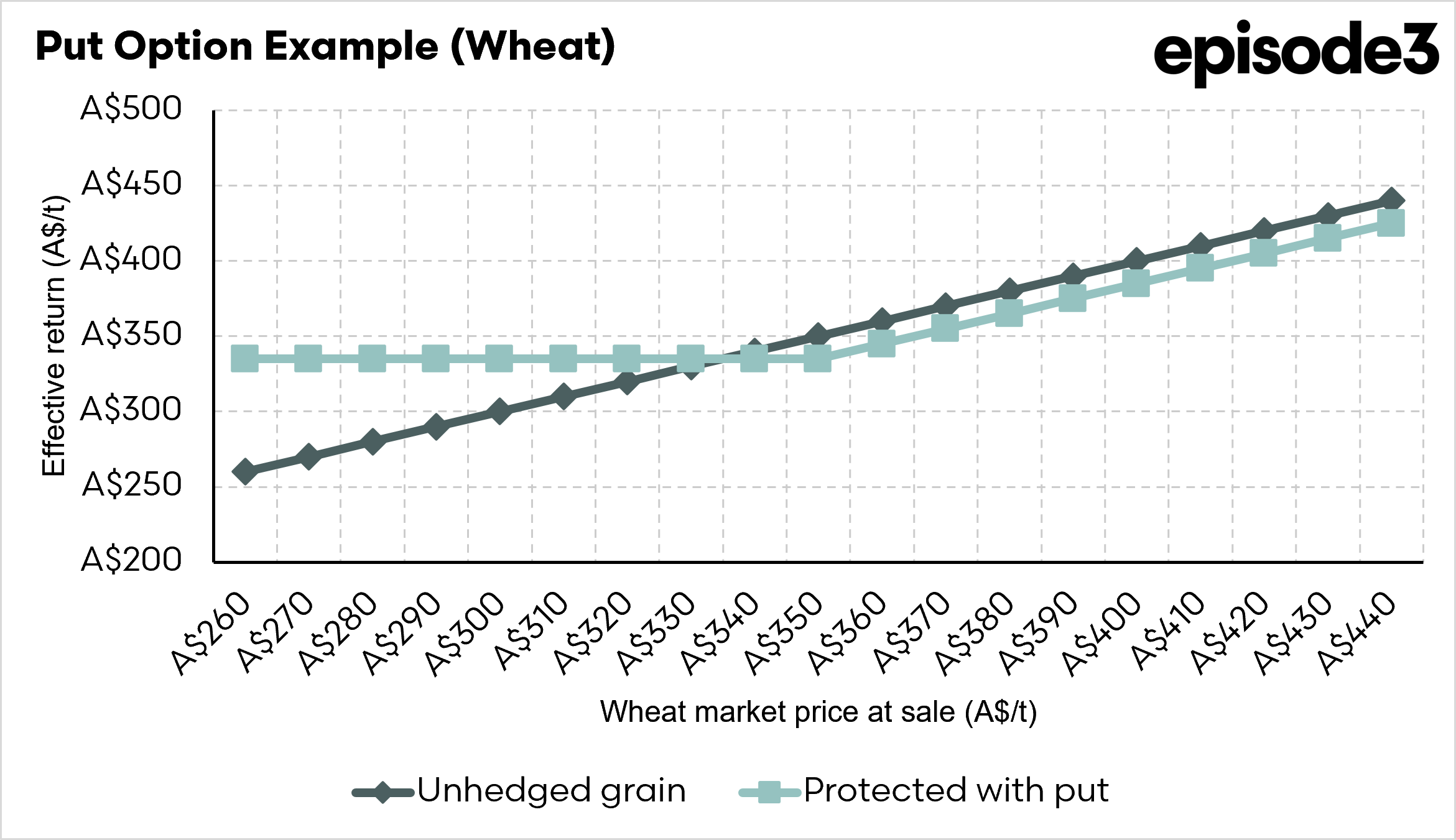
Assume wheat is worth A$350 per tonne and the grower wants to hold it for another three months. The grower buys protection near A$350/t and pays A$15/t for it.
If the market falls to A$300/t, the wheat in storage has lost about A$50/t in value. The option should gain close to A$50/t, helping offset that fall. After allowing for the A$15/t cost of the option, the grower has effectively protected a price near A$335/t.
If the market rises to A$400/t, the grower can still sell the wheat at the higher price. The option is allowed to expire, and the cost is limited to the A$15/t paid upfront.
That is the main attraction. The grower has protection if prices fall but can still benefit if prices rise.
The protection is not perfect. The option follows a futures market, while the grain is sold into a local cash market. Local prices can move differently because of freight, quality, storage availability and buyer demand. Storage costs and interest also continue.
Buying a put option is not about predicting that wheat prices will fall. It is about putting a floor under part of the price while keeping the grain and leaving the upside open.