Market lessons: What is basis and why does it matter?

Market Lessons
Growers often hear that wheat, canola or other grain futures have risen overnight, only to find that the local bid has barely moved. At other times, international futures may fall, while the price offered at the local site remains steady. The reason is often the basis. Basis is one of the most important terms in grain marketing to understand – and luckily it is not complex.
Basis is the difference between the local physical grain price and the value of the relevant futures market after it has been converted into Australian dollars. In simple terms, the local grain price is made up of the futures value plus basis. Futures provide an international reference point, while basis reflects the conditions in the market where the grain is being sold.
Assume the converted futures price for wheat is A$300/mt and a local buyer is bidding A$340/mt. The basis is therefore positive A$40/mt. That A$40/mt can reflect freight, handling costs, local supply, nearby demand, grain quality and how urgently the buyer needs to secure tonnes.
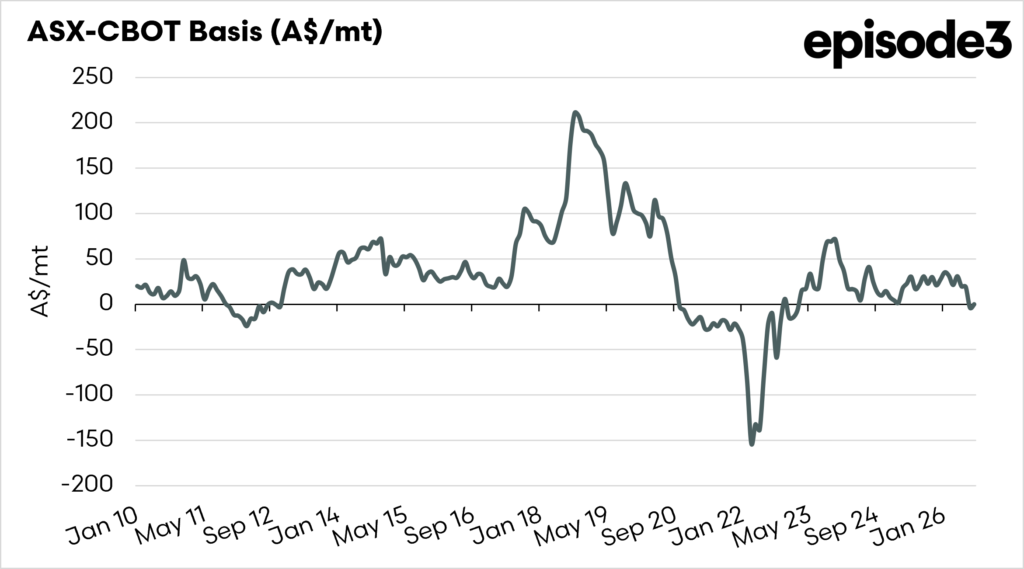
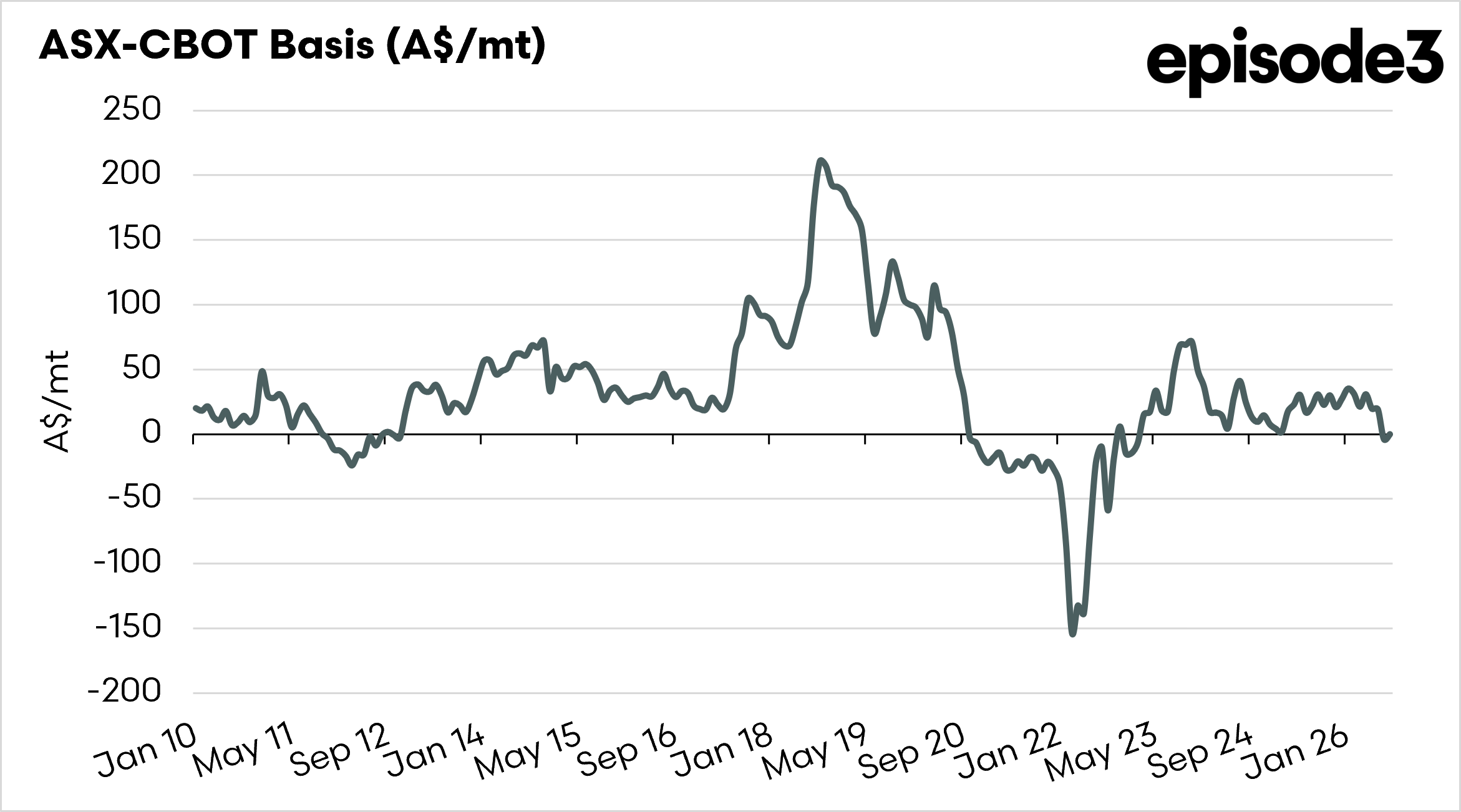
Basis is not fixed and can change even when the international market does not. During a large harvest, grain may be plentiful, and buyers may not need to compete aggressively. Basis can weaken, limiting the local price even if futures remain firm. In a smaller production year, domestic users and exporters may compete for limited supplies, causing basis to strengthen.
This is also why two growers watching the same futures contract can receive very different prices. A grower near an export port will face different freight and demand conditions from a grower several hundred kilometres inland. Prices can also vary between states, delivery sites, commodities, grades and delivery periods.
Understanding basis helps growers separate the global and local parts of the price. A strong futures market does not automatically mean the local price is attractive. Futures may be high while weak basis reduces the final cash bid. Equally, average futures combined with unusually strong basis may produce a worthwhile selling opportunity.
Basis also matters when using futures or options. These tools generally protect movement in the international component of the price, but they do not completely protect against changes in the local market. A grower may hedge wheat when it is worth A$350/mt and offset a later A$30/mt futures decline. If basis also weakens by A$10/mt, the final physical return may still be A$10/mt lower than expected.
The lesson is to avoid watching futures in isolation. Growers should track the converted futures value, the local cash price and the difference between them. Over time, this can show whether local basis is strong, weak or close to its normal range.
Good grain marketing is not only about deciding whether the international market will rise or fall. It is also about recognising when the local market is offering a good price relative to the global benchmark.