Market Morsel: Making the Most of Wheat Market Volatility

Market Morsel
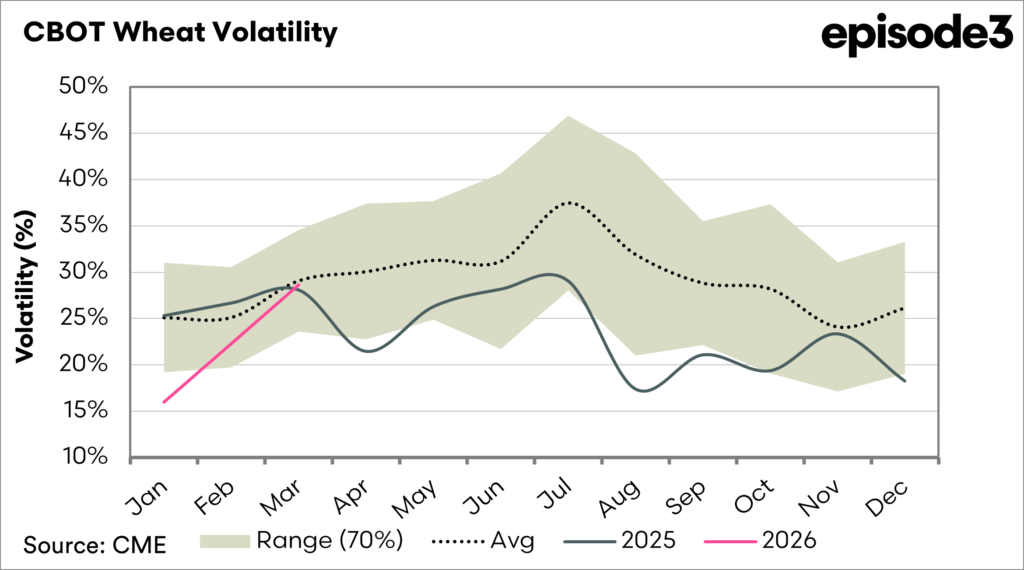
The past year has seen wheat markets experience below normal volatility. The world had ample grain stocks, and traders had no fear. Frankly, from a grain markets perspective, 2025 was boring. That has all changed with the Middle Eastern conflict, but we shouldn’t be afraid of volatility
Volatility has always been a defining feature of wheat markets. At times, it feels as though nothing happens for years, and then suddenly the market moves dramatically in a matter of weeks.
Over the past few decades, wheat prices have repeatedly swung between periods of calm and periods of intense volatility. These rapid price movements are not unusual. In fact, volatility is part of the structure of agricultural commodity markets. Prices are heavily influenced by weather, geopolitics, trade policy and speculative money, all of which can change quickly and unexpectedly.
The past few seasons have been a good reminder of this reality. Wheat markets have experienced significant swings driven by events such as geopolitical conflicts, supply disruptions and shifting global energy markets. These factors can create sudden price spikes or sharp declines, often within short timeframes.
Historically, wheat futures have only experienced extreme volatility during a handful of periods since the modern futures market began in the 1970s. During those moments, the market can move rapidly as traders reassess global supply risks and attempt to price in new information. When uncertainty increases, price movements tend to become larger and more frequent.
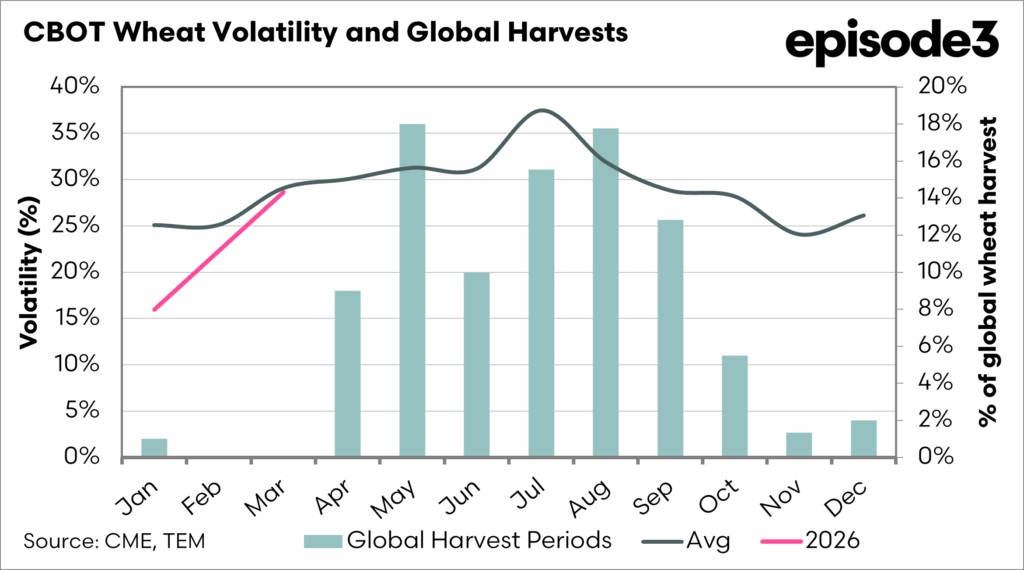
One of the key drivers of volatility is the seasonal nature of global wheat production. Much of the world’s crop is harvested during the northern hemisphere summer. As this period approaches, markets become increasingly sensitive to weather developments in major producing regions such as the United States, Europe and the Black Sea. A shift in rainfall forecasts or temperature outlooks can quickly change production expectations and trigger large market reactions.
Speculative trading activity can also amplify volatility. Investment funds frequently take large positions in futures markets, either betting on higher prices or anticipating declines. When market conditions change, these positions can unwind quickly. For example, when traders holding large short positions are forced to buy back contracts as prices rise, a short-covering rally can push prices sharply higher.
For grain growers, volatile markets can be both frustrating and full of opportunity. Rapid price movements can lead to regret when prices move higher after grain has been sold, or lower after holding off on sales. At the same time, these swings create windows where profitable pricing opportunities appear unexpectedly.
Consumers of grain face the opposite challenge. Feedlots, millers and food manufacturers often struggle with volatile input costs, particularly when they have limited ability to pass those increases further down the supply chain.
In the end, volatility cannot be eliminated from wheat markets. It is an inherent feature of a globally traded commodity influenced by weather, politics and financial markets.
The key is not to fear volatility, but to be prepared for it when it arrives. A boring market is generally one that doesn’t give much away, but it tends not to give much away for too long, so don’t dilly dally when the opportunity presents itself.