
The 100-year grain problem

Are we prepared for a world where we face a persistent oversupply of grain?
Agriculture is a technological and scientific industry, which has allowed the world to be fed, but is the industry sleepwalking to a major issue? Are we facing an issue for our grandchildren? Let’s investigate.
The one thing that farmers and industry tend to focus on above all else is increased production. We have opened up large tracts of land around the world, we have increased our yields, and we produce more per hectare than we ever have.
Our industry advocates have been pushing to ensure that we produce enough grain to feed a growing world, aiming for a global population target of around 10 billion people.
This is a noble effort, although let’s be honest, farming is a business, and anyone involved in it is there to make a crust, not feed the world.
In Australia and around the world, research agencies and industry bodies alike continue to chase higher grain output through investment in agronomic techniques, genetic tools, and climate-smart farming systems. Global grain demand continues to grow, particularly in parts of Africa and Southeast Asia.
But the longer-term picture is less clear.
The problem is that expectations are starting to shift; the peaks expected may not materialise at the levels previously expected, or may not be sustained for a prolonged period.
Demographers expect the world’s population to peak sometime in the next fifty years.
After that, it’s expected to decline slowly at first, and then more steeply in many regions.
Fertility rates are already below replacement level in much of the developed world, and even countries like China and India are seeing population plateaus or outright declines.
The chart below shows two of the central population projections to the end of this century, along with our grain production per capita.
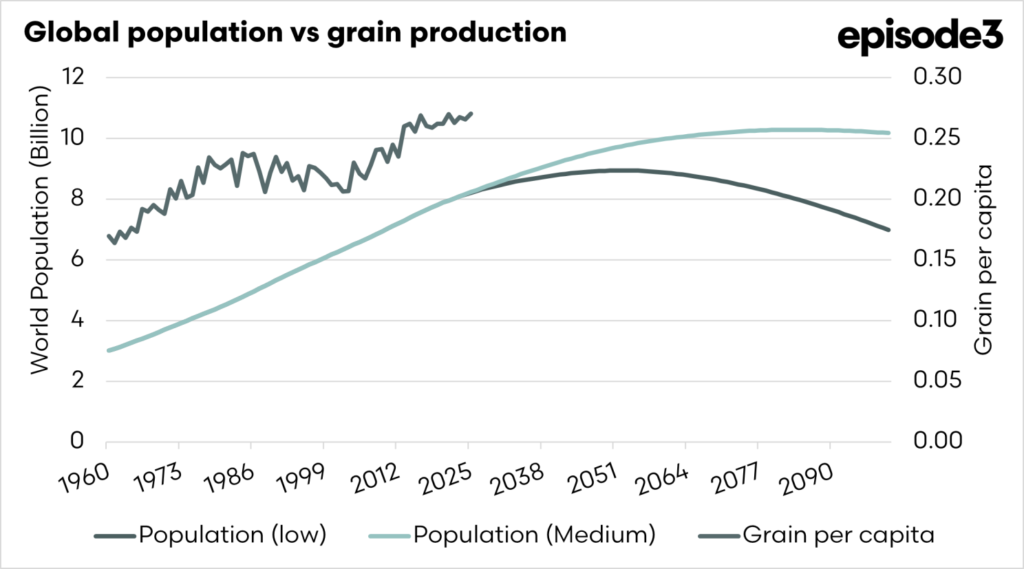
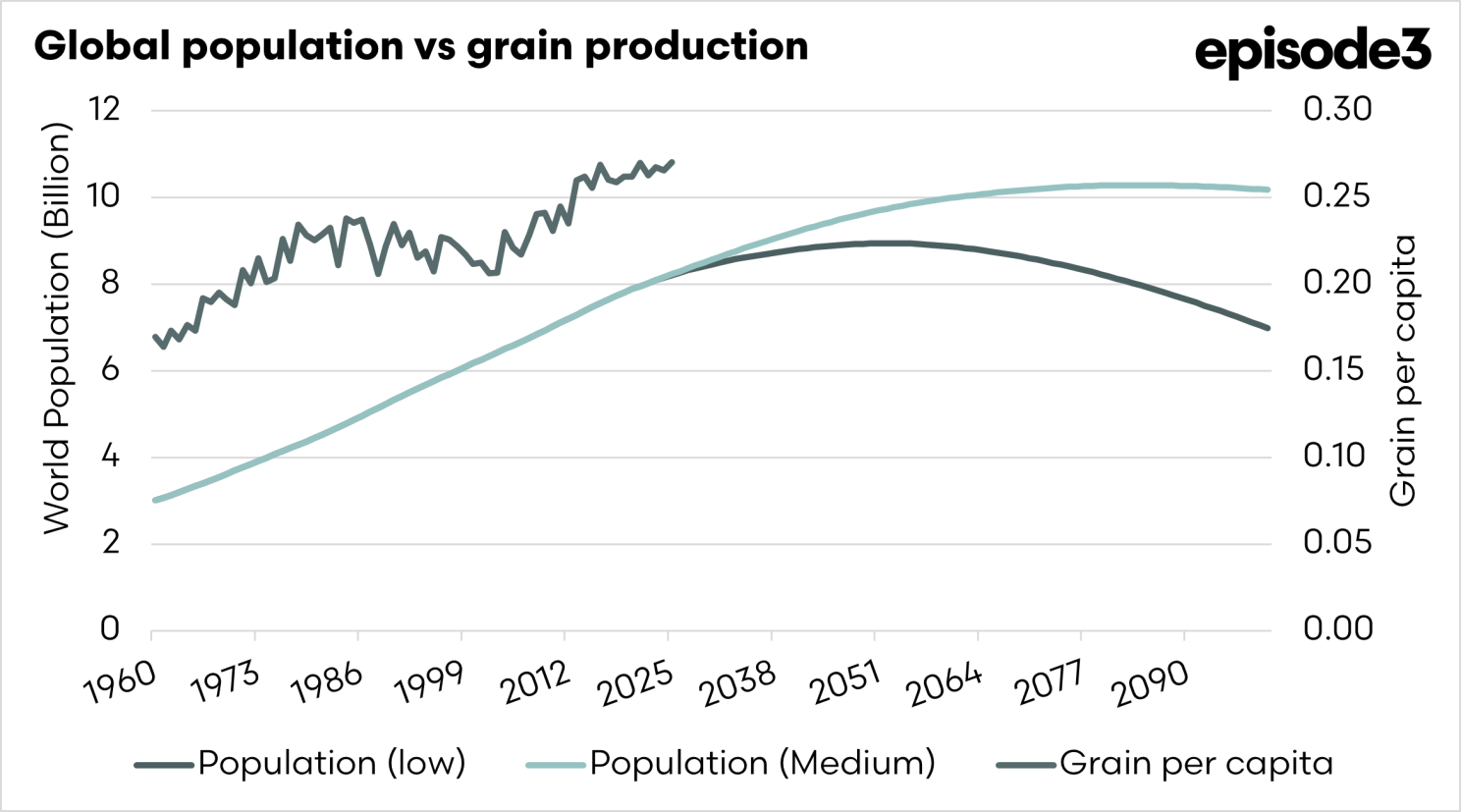
This year, the world is expected to produce a record volume of grain per capita. What happens if we continue to aim for a huge population, only to overproduce?
An oversupply of grain can have significant economic consequences. When production consistently outpaces demand, prices tend to fall, squeezing farm margins and making it harder for growers to remain profitable.
Oversupply can also distort global trade flows, as exporters compete aggressively on price, sometimes triggering trade disputes or accusations of dumping.
The grain price around the world has barely kept up with inflation, with a rising population. If populations start to decline in 100 years from now, then we will be in a testing situation.
Therefore, if the demographers are correct, we need to find some solutions.
The supply is unlikely to be an issue in 100 years, as future technologies are expected to advance our yields further.
The demand will be an issue, and we need to find solutions, which luckily, there are a few.
Biofuels: We will still likely require oil-based fuels for some time, and increasing the use of biofuels from grains will increase the demand for grains and oilseeds.
Animal feeding: One of the best ways to add value to grains is by feeding them to animals and converting them into animal protein. In the Western world, the animal diet has largely peaked, but fortunately, we have a growing population in poorer parts of the world that could increase consumption.
Wealth growth: To increase demand for grains, it requires robust wealth growth globally. A poor population doesn’t move into the next level of higher value food (meat); therefore, developing the wealth of the overall global population will result in higher demand for grains.
Land use change: There may be a requirement to move land out of agricultural production to other uses such as nature restoration or renewables. This should really be focused on marginal land.
It may seem a long way to the end of this century, but the reality is that we are potentially sleepwalking into a situation where, through the noble efforts of feeding the world, we inadvertently harm ourselves.
The world will likely have ample supplies, but what will the financial effect be on the grandchildren of today’s farmers?