US trade deal steals a fifth of Indonesian wheat demand from Australia
The Snapshot
- Indonesia has signed an agreement to preferentially import around 2 million tonnes of wheat from the United States, equal to roughly 17% of its annual wheat demand.
- Indonesia imports around 10–11.5 million tonnes of wheat per year, and Australia regularly supplies 4–5 million tonnes in strong production seasons.
- If US wheat purchases increase under the agreement, existing suppliers such as Australia, Ukraine and Canada will likely lose market share.
- The shift would effectively remove part of Indonesia’s wheat demand from normal commercial competition, turning it into politically directed trade.
- Our concern is the precedent it sets. If other countries begin buying US agricultural products to avoid tariffs, more of the global grain market could become politically allocated rather than price-driven.
- Trump is making American farmers great again, but at the expense of our producers.
The Detail
Two million tonnes. That’s how much Indonesian wheat demand may now be politically reserved for the United States.
Indonesia is tied neck and neck with Egypt as the largest importer of wheat and an extremely close and important market for Australian producers, but Trump’s trade deals may affect our competitiveness by reducing a fifth of their potential wheat demand.
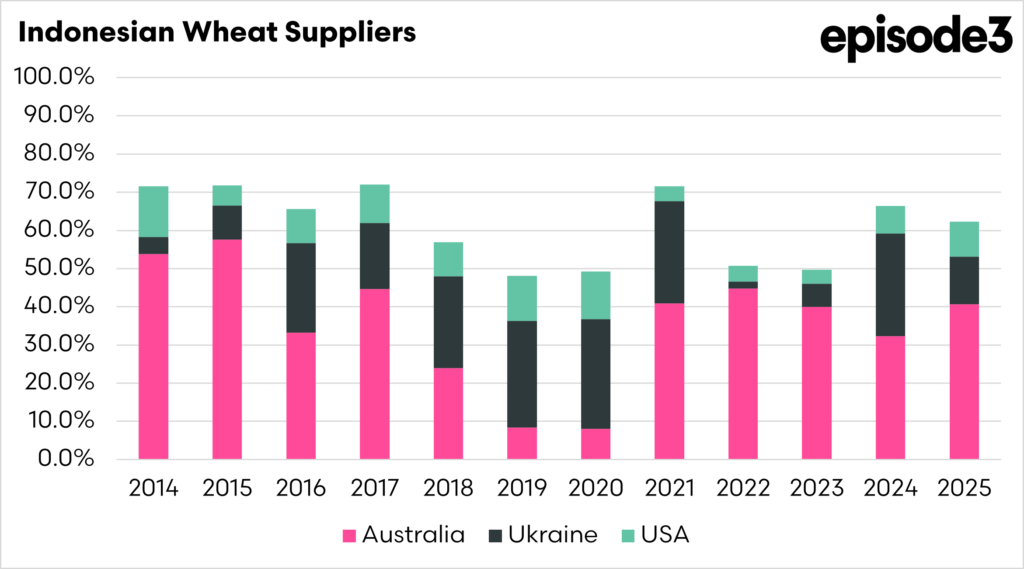
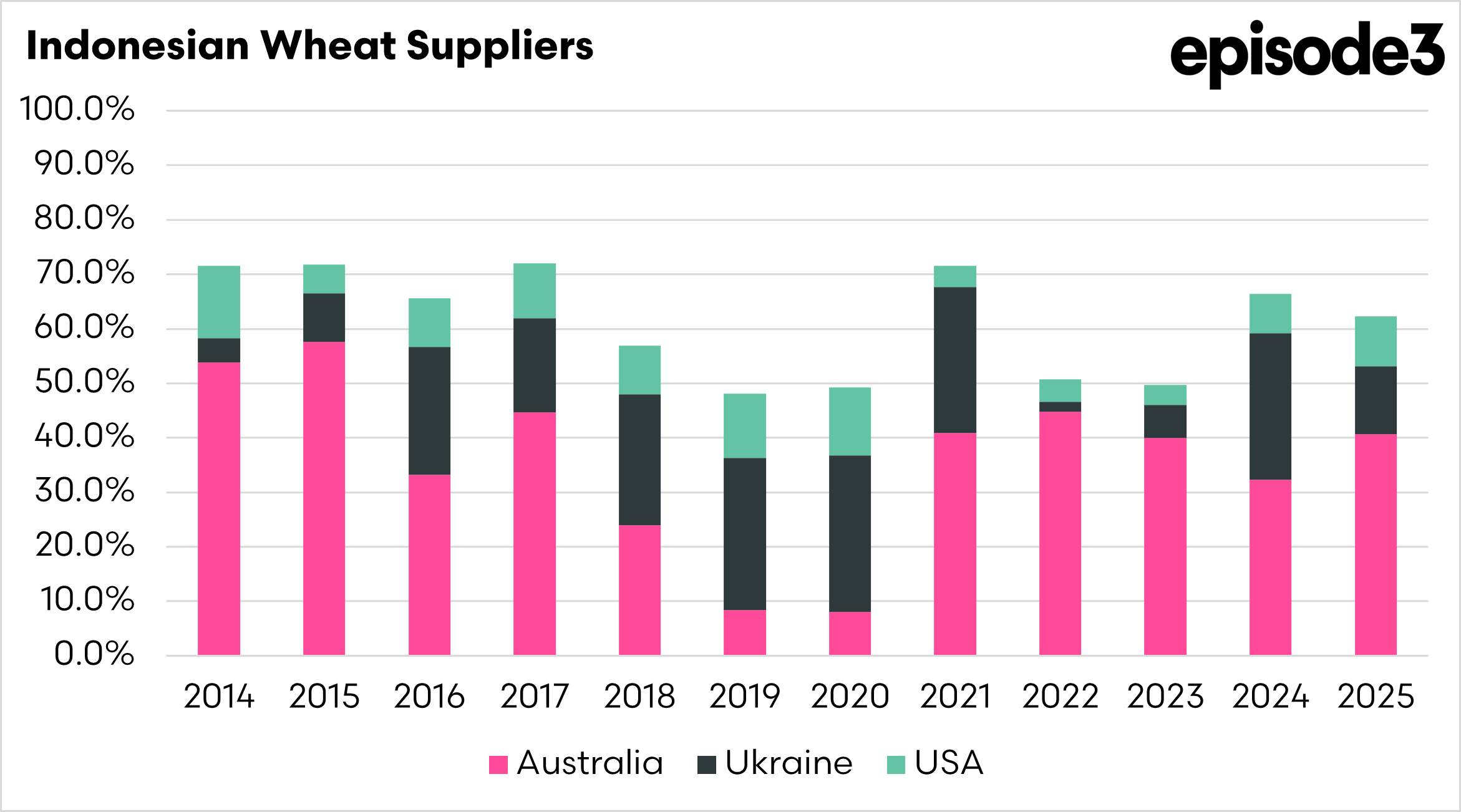
In many years, it has been Australia’s largest single export destination, regularly taking between four and five million tonnes when Australian production is strong. With Indonesia importing around 10 to 11.5 million tonnes of wheat annually, Australian shipments can account for as much as 40 to 50 per cent of the market in large crop years.
That relationship has been built on our quality, reliability and close proximity, especially from Western Australia. However, recent negotiations between the US and Indonesian governments could cut our lunch. A new agreement between the two nations will reduce a significant portion of Indonesia’s wheat demand from normal competitive market forces.
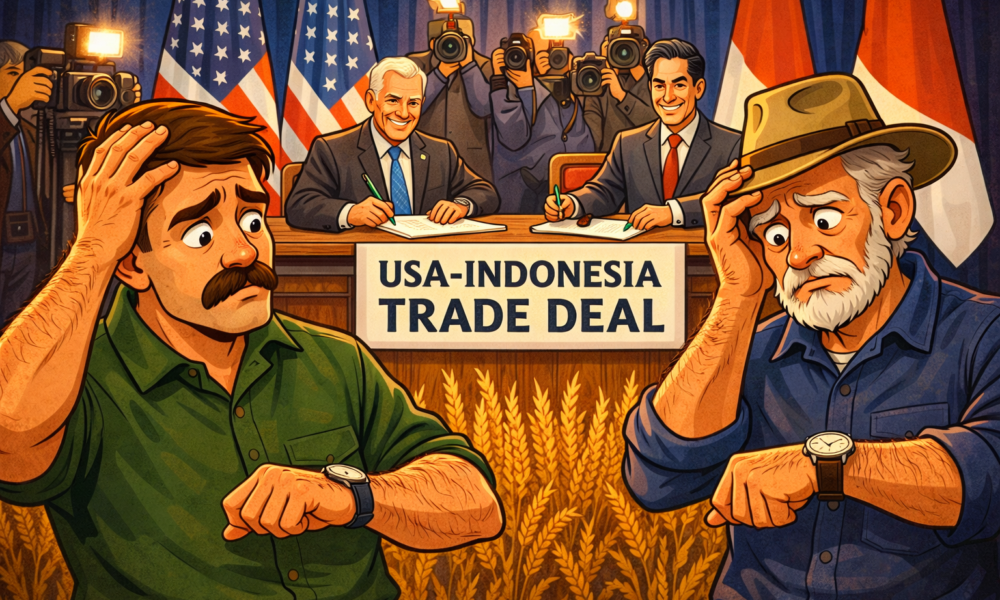
Indonesia has signed a memorandum of understanding indicating it will preference around two million tonnes of wheat imports from the United States each year. The move is part of broader efforts to maintain favourable trade relations with Washington and avoid potential tariffs on Indonesian exports to the US.
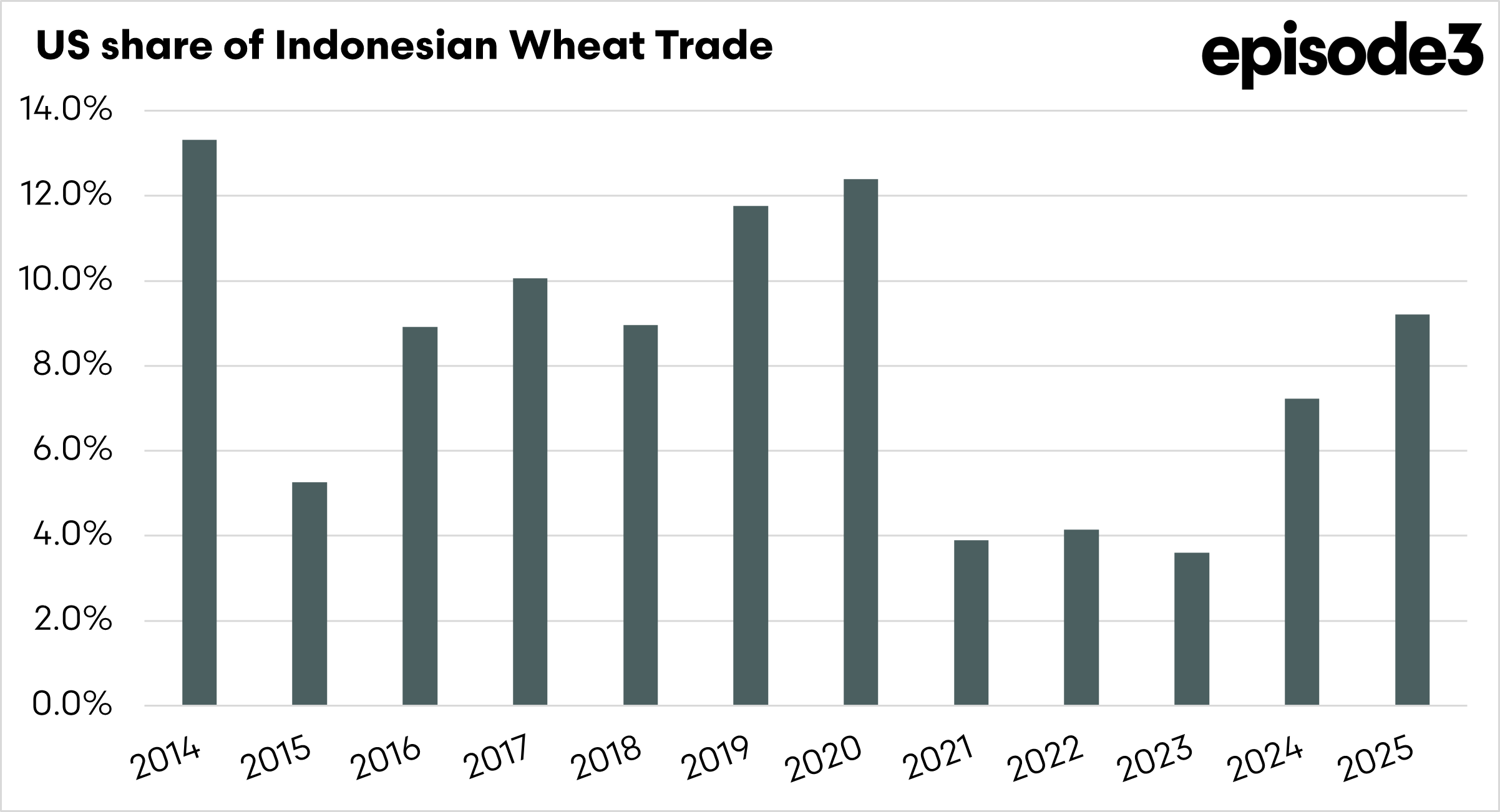
Two million tonnes might not sound like a lot, but it is significant. Indonesia already imports wheat from a range of origins, including the United States, Canada, Australia and the Black Sea region. However, the scale of the commitment is significant when viewed against Indonesia’s total wheat demand.
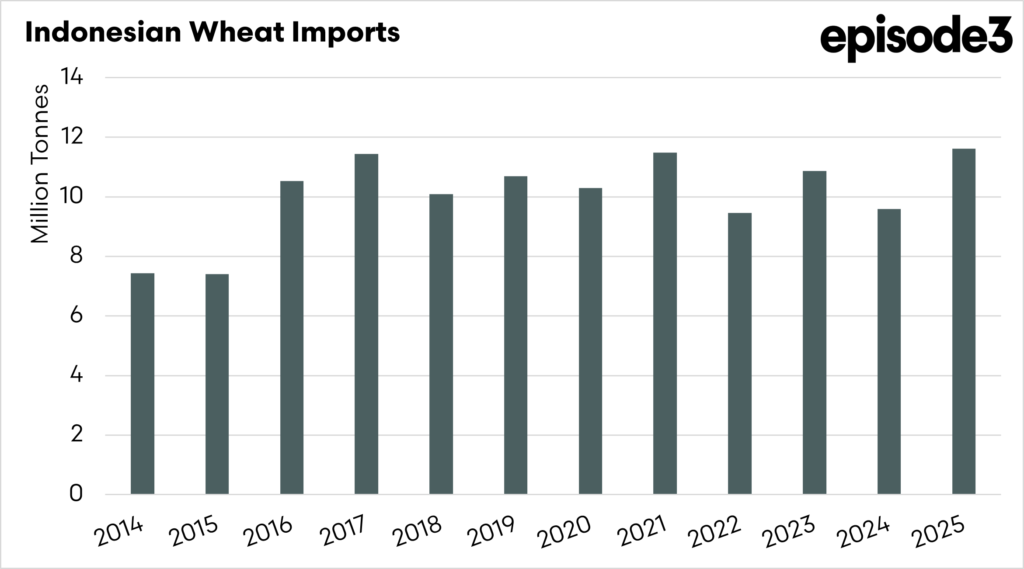
Indonesia imported around 11.6 million tonnes of wheat in 2025. If two million tonnes of that total is effectively reserved for US wheat, it means close to 17 per cent of the market would no longer be determined purely by commercial competition, as 2 million tonnes of demand is already set aside for US exporters.
Australia’s exports to Indonesia fluctuate significantly with crop size. In 2017, Australia shipped just over 5.1 million tonnes to the market, while in 2025 shipments again surged to roughly 4.7 million tonnes. In drought years, the figure can fall sharply. In 2019, Australia exported less than 900,000 tonnes to Indonesia as production collapsed. Their market is highly price sensitive; during droughts, they will look to alternative sources.
When Australian supply tightens, other exporters step in. Ukraine became a major supplier to Indonesia after 2016, shipping close to 3 million tonnes to the market in both 2019 and 2021. Canada typically supplies between 1.3 and 2.4 million tonnes annually, while US shipments have historically ranged between roughly 400,000 tonnes and 1.2 million tonnes per year.
The new MOU would therefore represent a significant structural shift in the market. Instead of US wheat competing directly with other origins, a portion of Indonesian demand would effectively become politically allocated.
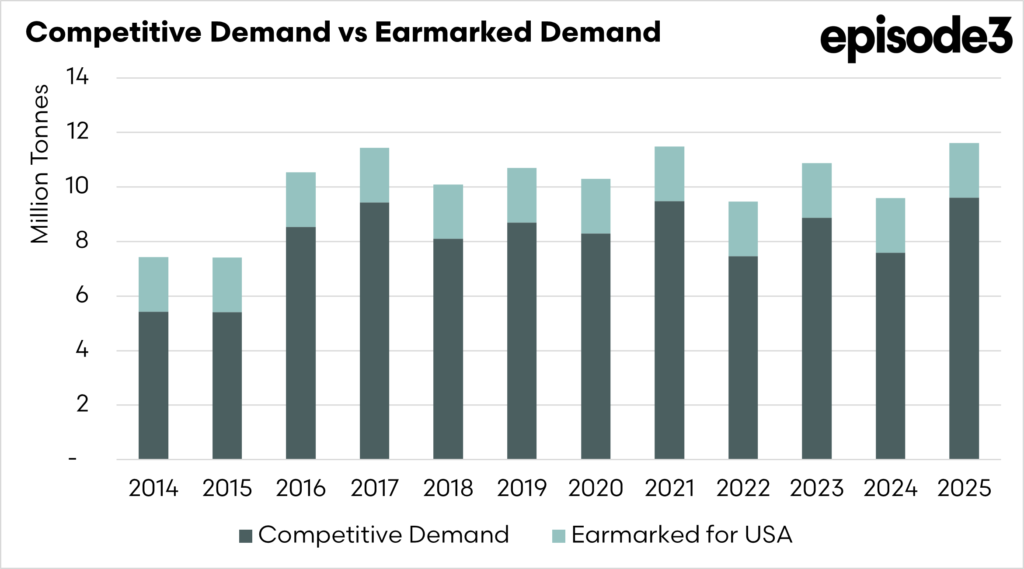
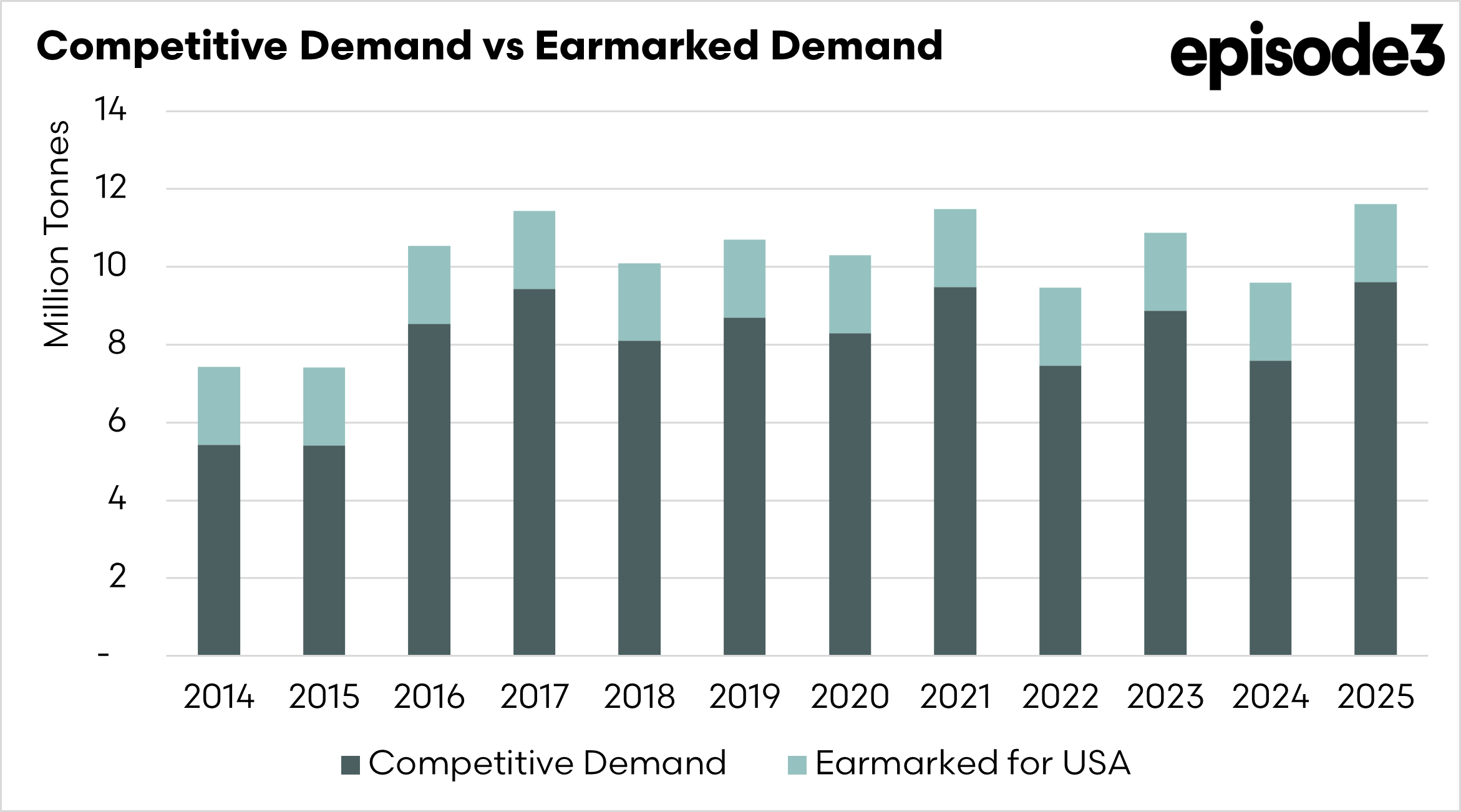
Farmers in Australia should be concerned. The implication is that Indonesia’s market share open to competition becomes smaller. If two million tonnes are committed to US suppliers, the contestable portion of Indonesia’s imports falls to around 9 million tonnes.
That matters because Australia’s grain industry relies heavily on export markets. Roughly 70 per cent of Australian wheat production is shipped overseas each year. In large harvests, the country can produce more than 35 million tonnes of wheat, leaving international buyers to absorb a substantial surplus.
Indonesia plays a crucial role in that system because of both its size and its proximity to Australian ports. The short shipping distance from Western Australia to Indonesian flour mills has traditionally given Australian wheat a strong freight advantage.
Indonesia isn’t the importer that could potentially be at risk of political interference in agricultural trade flows. Southeast Asia collectively is a huge market for Australian grains. The major buyers include Vietnam, the Philippines, Thailand and Indonesia. If governments begin to increase purchases of US agricultural products to maintain favourable trade relationships, similar arrangements could emerge across multiple markets.
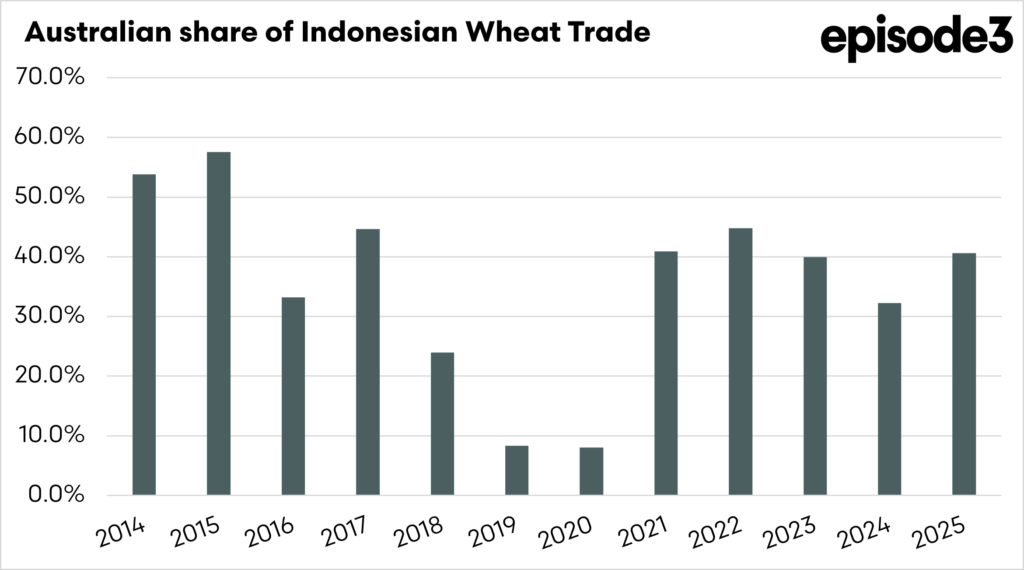
Australian wheat is already facing intense competition from the Black Sea region. Russia has become the world’s largest wheat exporter, and Ukraine has dramatically expanded its presence in Asian markets over the past decade. These exporters often produce wheat at a lower cost and compete aggressively on price.
The risk is not necessarily losing Indonesia entirely but seeing a growing portion of global grain trade shift away from open competition and toward political negotiation. For decades, Australian wheat has thrived in markets where buyers make decisions based on price, quality, freight and reliability. But if governments begin directing purchases for geopolitical reasons, the rules of global grain trade start to change.
This move by the US and Indonesia effectively reduces demand for Australian (and other origins) to sub-10 m tonnes, at which point we can no longer compete. The political manoeuvring around the world as countries attempt to keep the US on board could have substantial risks in the future. On Episode3.net in 2024, we wrote about the political manoeuvring that saw China switch to US origins and risk our market. You can read that here
Australian producers need free and fair market access worldwide, and trade protectionism puts our trade at risk.