
Beef export update February 2026
February 2026 - Beef export update
Australian beef exports lifted again in February, reinforcing the strong start to the year and highlighting the depth of global demand for Australian product.
Total shipments reached 130,884 tonnes for the month, sitting 11 percent higher than February last year and 60 percent above the five year February average. That result continues the theme seen through the opening months of 2026 where exports remain well above historical seasonal norms.
The United States remained the largest destination, importing 39,949 tonnes of Australian beef during February. Shipments into the US were 14 percent higher than the same month last year and an extraordinary 130 percent above the five year February average. The scale of that divergence from normal trade flows reflects the severe tightening in US cattle supply. With the American herd sitting near multi decade lows, domestic manufacturing beef supplies remain constrained and processors continue to rely heavily on imported lean beef. Australia has been one of the key beneficiaries of that supply gap.
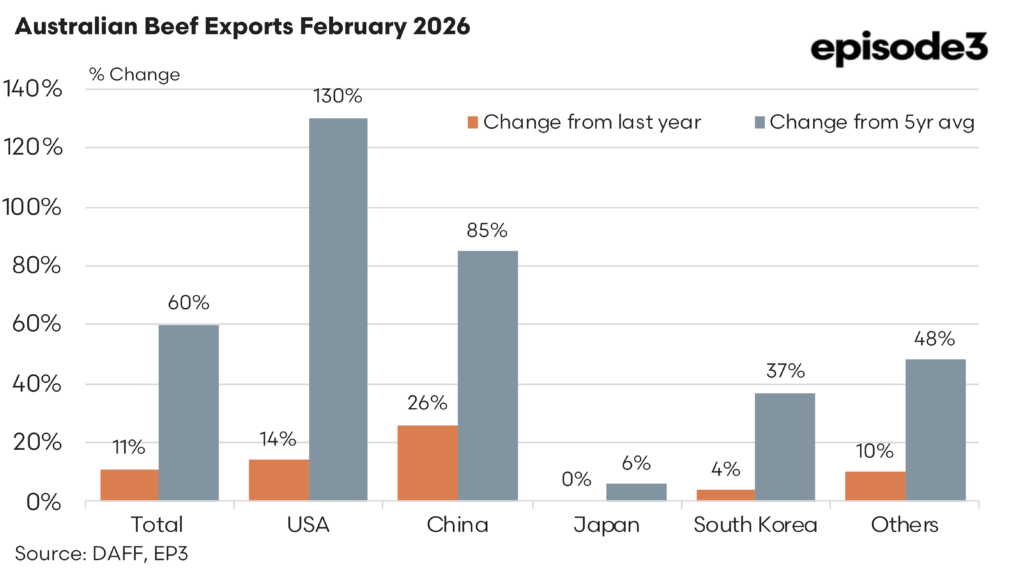
China was again the second largest destination, with 27,018 tonnes shipped during February. Exports to China were 26 percent higher than February last year and 85 percent above the five year average, underlining the continued strength of Chinese demand for Australian beef across a wide range of cuts. China has remained one of the fastest growing markets for Australian beef over the past decade and the early months of 2026 suggest that appetite remains firm.
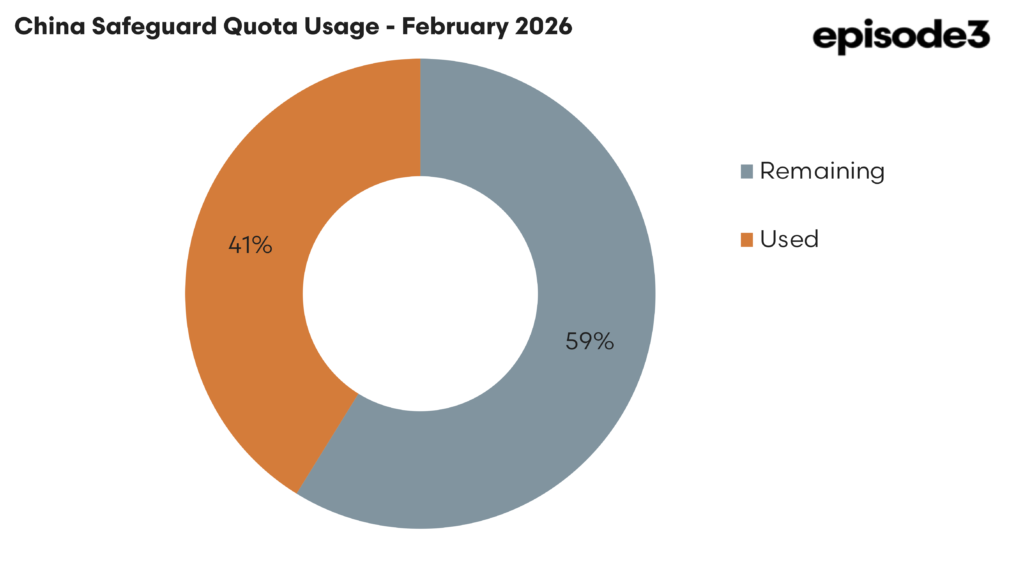
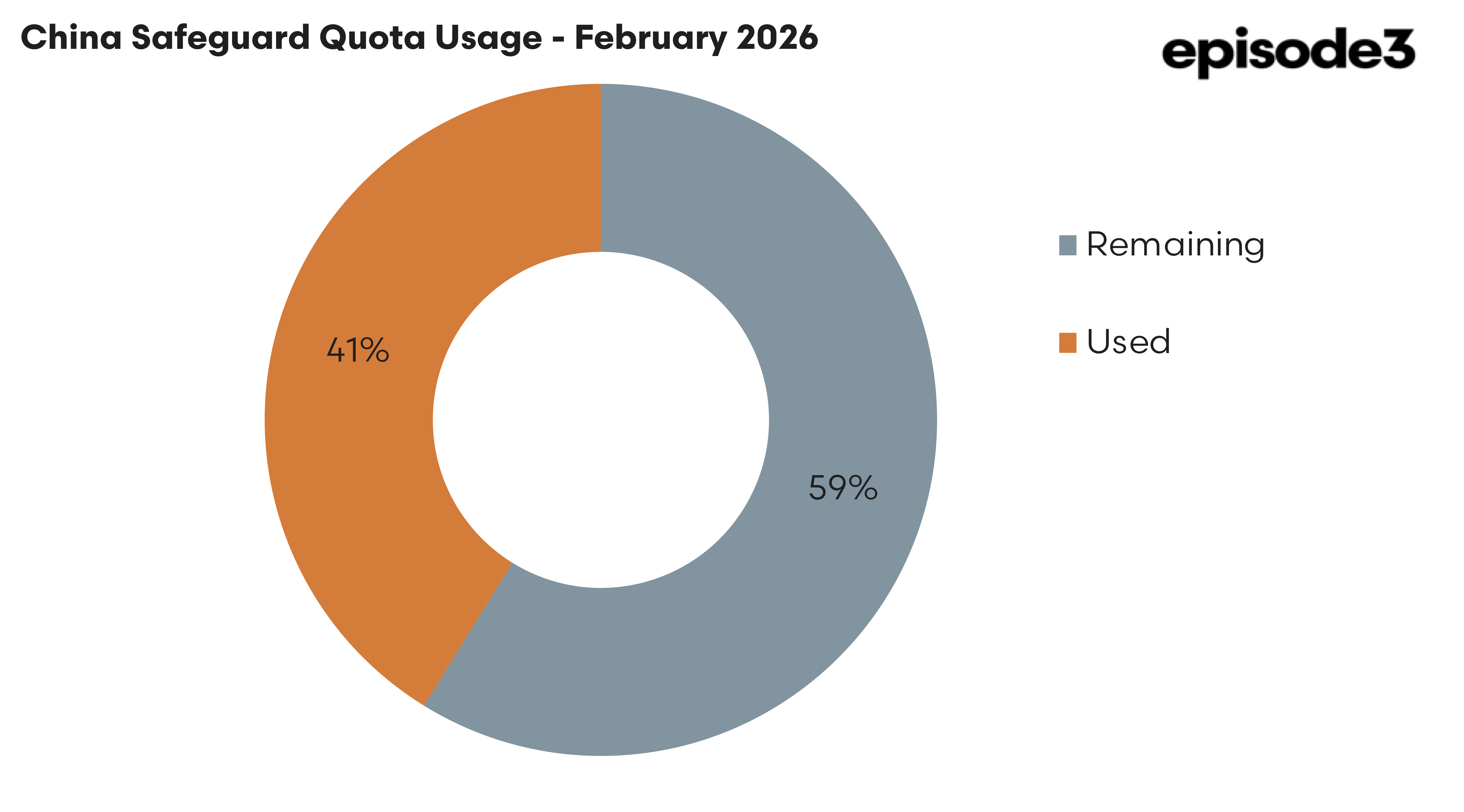
However the rapid pace of imports is also bringing renewed attention to China’s beef safeguard quota. By the end of February 41 percent of the annual quota had already been utilised, leaving 59 percent still available for the remainder of the year. That is a notable level of usage so early in the calendar year. If import volumes continue at a similar pace the quota could be reached well before the final quarter. Once triggered, the safeguard mechanism applies additional tariffs to beef imports which can alter purchasing behaviour and redirect trade flows into other markets.
Japan remained another key pillar of Australia’s export program, taking 20,026 tonnes of beef during February. Shipments to Japan were broadly unchanged compared with the same month last year, although they still sat around 6 percent above the five year February average. Japan continues to operate as one of Australia’s most stable and consistent markets, absorbing a broad mix of chilled and frozen product across retail and food service channels.
South Korea also maintained solid import demand, purchasing 18,510 tonnes of Australian beef during the month. Exports to Korea were 4 percent higher than February last year and 37 percent above the five year average, highlighting the continued growth of the Korean market over the past decade. Strong consumer demand and favourable market access arrangements have steadily increased Australia’s share of the Korean beef market.
The February data reinforces the broader theme currently shaping Australian beef exports. Demand across several major markets remains extremely robust while Australia continues to move through a period of elevated cattle supply. For now the numbers point to a simple conclusion. Australian beef exports remain historically strong for this point in the year, and unless global demand conditions shift materially, export volumes are likely to remain elevated through much of 2026.