
Beef export update September 2026
August 2026 - Beef export update
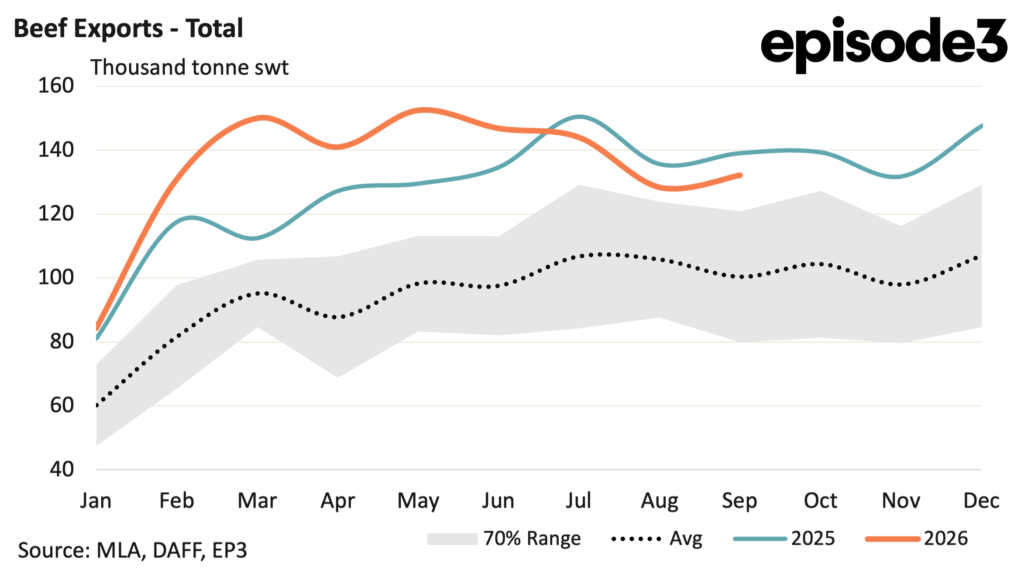
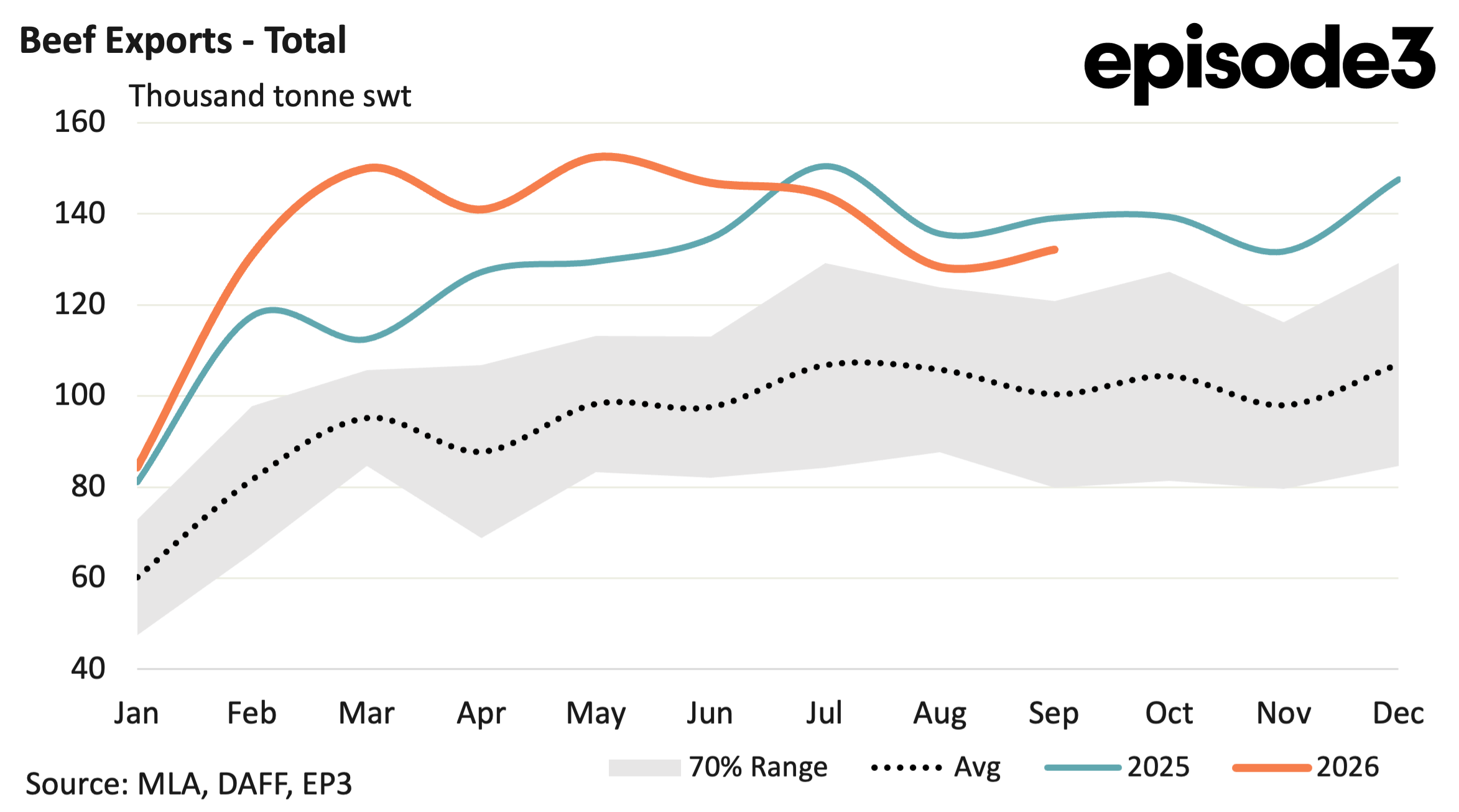
Australian beef exports remained at historically elevated levels during August, despite total shipments easing slightly from the extraordinary volumes recorded a year ago and the South Korean safeguard tariff beginning to have a noticeable impact on trade. Total Australian beef exports during August were 5pc below the same month last year. That sounds relatively subdued after the records set earlier in 2026, but the longer-term comparison tells a very different story. August shipments remained 21pc above the five-year average, demonstrating that Australian beef continues to move into international markets at an exceptionally strong rate.
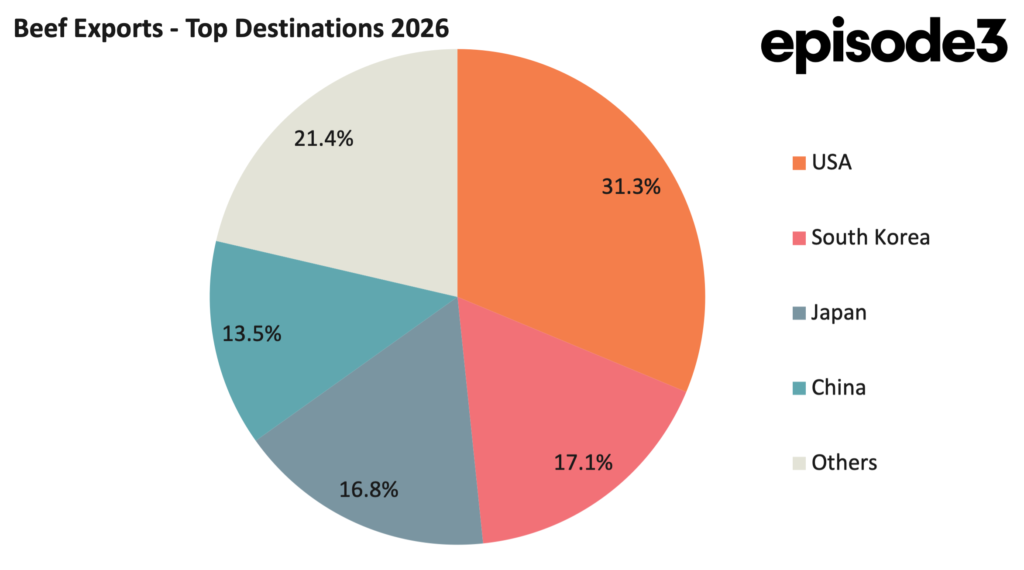
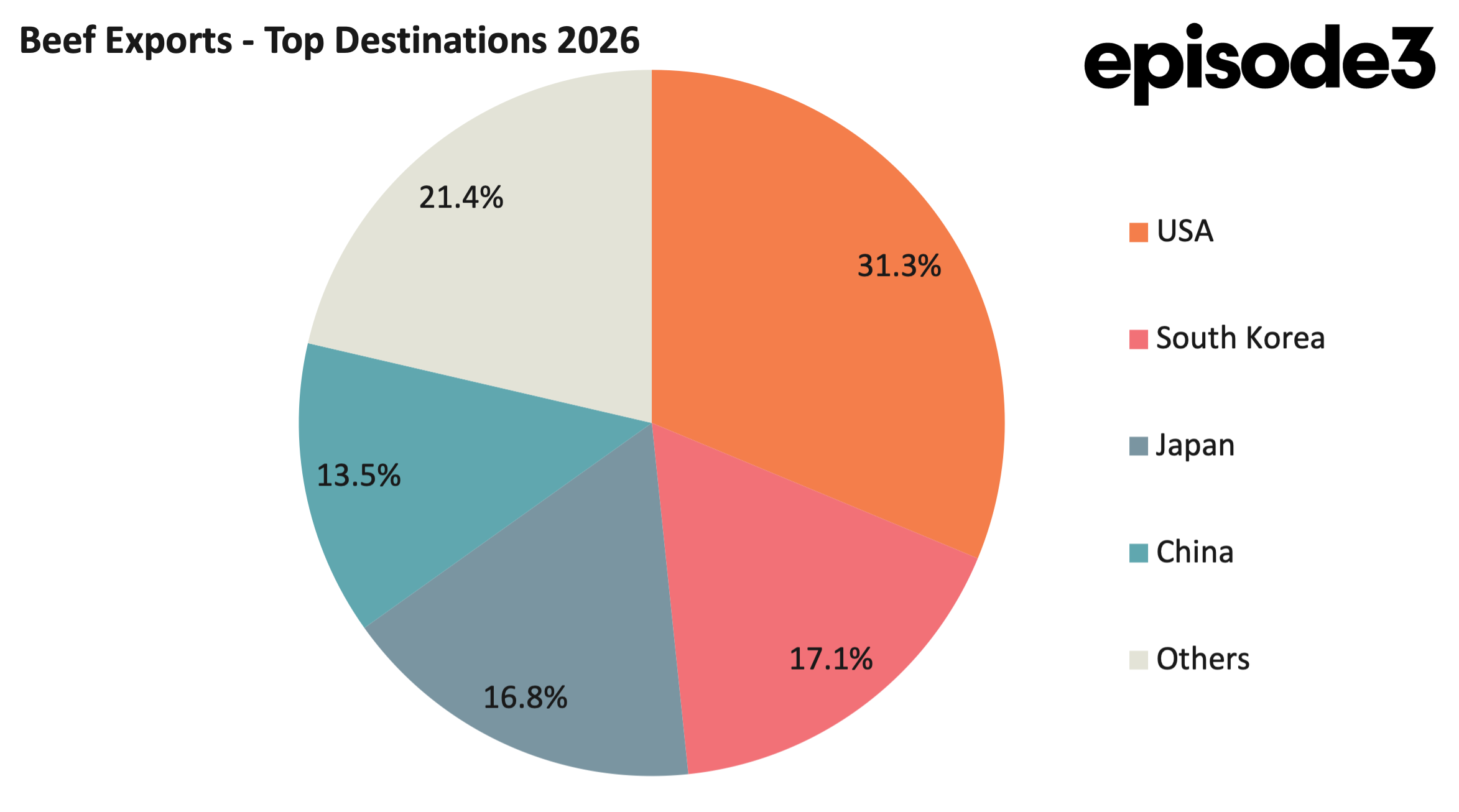
The United States continues to do much of the heavy lifting, taking 43,463 tonnes during September. US shipments were 4pc higher than last year and a massive 71pc above the five-year average. That represented almost one-third of Australia’s total September beef exports and continues the remarkable strength of US demand seen throughout 2026. The US now accounts for 31.3pc of Australian beef exports so far this year, extending its position as Australia’s largest beef export destination.
Japan was another standout performer during September, with shipments reaching 27,107 tonnes. That was 19pc above last year and 45pc above the five-year average. Japan has quietly become an increasingly important part of the export story as safeguard tariffs have disrupted trade patterns into China and South Korea. Earlier in the year China sat comfortably ahead of Japan, but Japan has since moved into third position for year-to-date exports and now accounts for 16.8pc of Australian shipments.
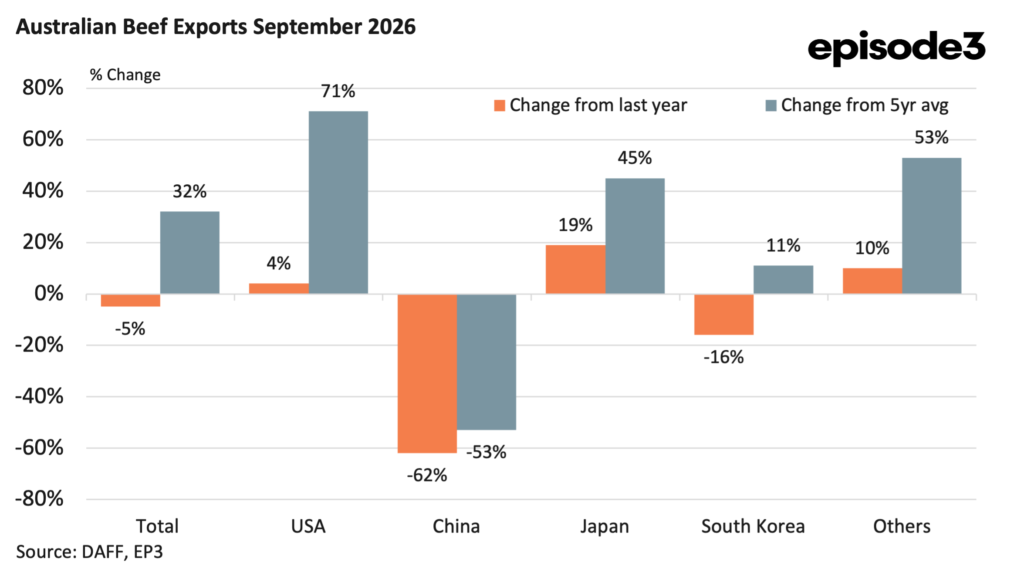
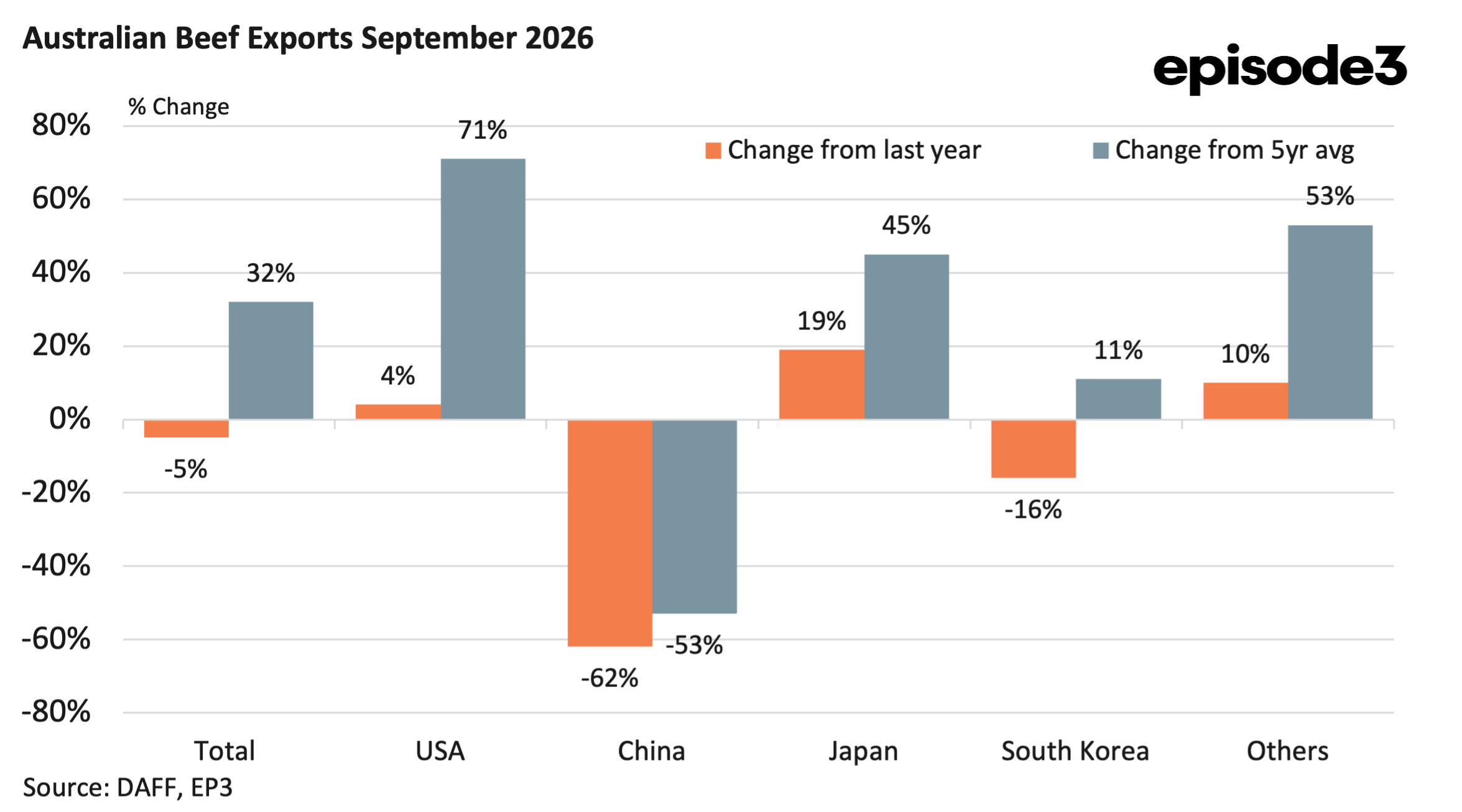
South Korea remains Australia’s second-largest destination for 2026, with a 17.1pc share, but the impact of its safeguard tariff is becoming increasingly visible. September shipments fell to 17,927 tonnes, 16pc below last year. Importantly, volumes remained 11pc above the five-year average, so trade is not historically weak. However, volumes have clearly retreated from the extraordinary levels shipped before the safeguard was triggered. June exports to South Korea reached 32,599 tonnes and July remained elevated at 29,068 tonnes. September volumes were therefore around 45pc below the June peak. With the safeguard increasing the tariff on Australian beef to 24pc, compared with 5pc before it was triggered, some slowdown was always likely. The market has not disappeared, but the additional cost has clearly changed the economics of Australian beef into South Korea.
China remains the most dramatic example of this shift. Exports to China were just 7,778 tonnes in September, 62pc below last year and 53pc below the five-year average. China now accounts for only 13.5pc of Australian beef exports so far during 2026. Earlier in the year it was Australia’s second-largest beef destination, but since its safeguard was triggered and the tariff increased to 55pc, China has slipped behind both South Korea and Japan into fourth position. September volumes improved modestly to 6,458 tonnes, up from July, but trade remains a fraction of the levels seen before the safeguard took effect.
The remaining destinations remain an important outlet for Australia’s large beef production. The “others” category absorbed 35,871 tonnes during September, 10pc above last year and an impressive 53pc above the five-year average.
That diversification has become increasingly important as access conditions change across Australia’s major Asian customers. The September figures show how quickly Australia’s beef export mix has shifted in 2026. China has fallen sharply, South Korea is now showing the impact of its safeguard, while Japan, the US and a broad range of smaller destinations have absorbed significantly more Australian beef. Despite total September shipments sitting 5pc below last year’s exceptional result, exports remain 32pc above normal levels.
For now, the US remains the engine room of trade, Japan continues to strengthen, and Australia’s diversified customer base is doing a good job of absorbing product displaced from China and, increasingly, from South Korea. The challenge for the rest of 2026 will be to maintain that performance while two of Australia’s largest Asian markets continue to operate under substantially higher tariff barriers.