
Export returns take another bite out of beef processor margins
Get short video updates on your phone
For quicker updates as markets move, follow @themeatwatcher on Instagram. I regularly post short summaries and charts breaking down what’s happening in meat proteins and broader ag markets so you can stay across the key moves without having to read through pages of analysis. If markets are moving quickly, that’s usually where the updates will land first.
Beef Processor Trading Conditions Update July 2026
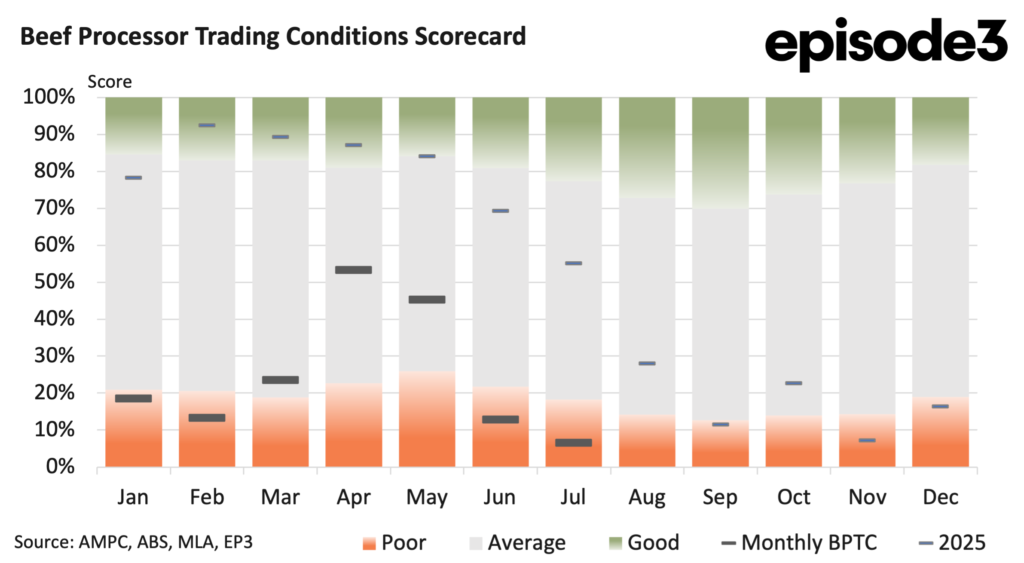
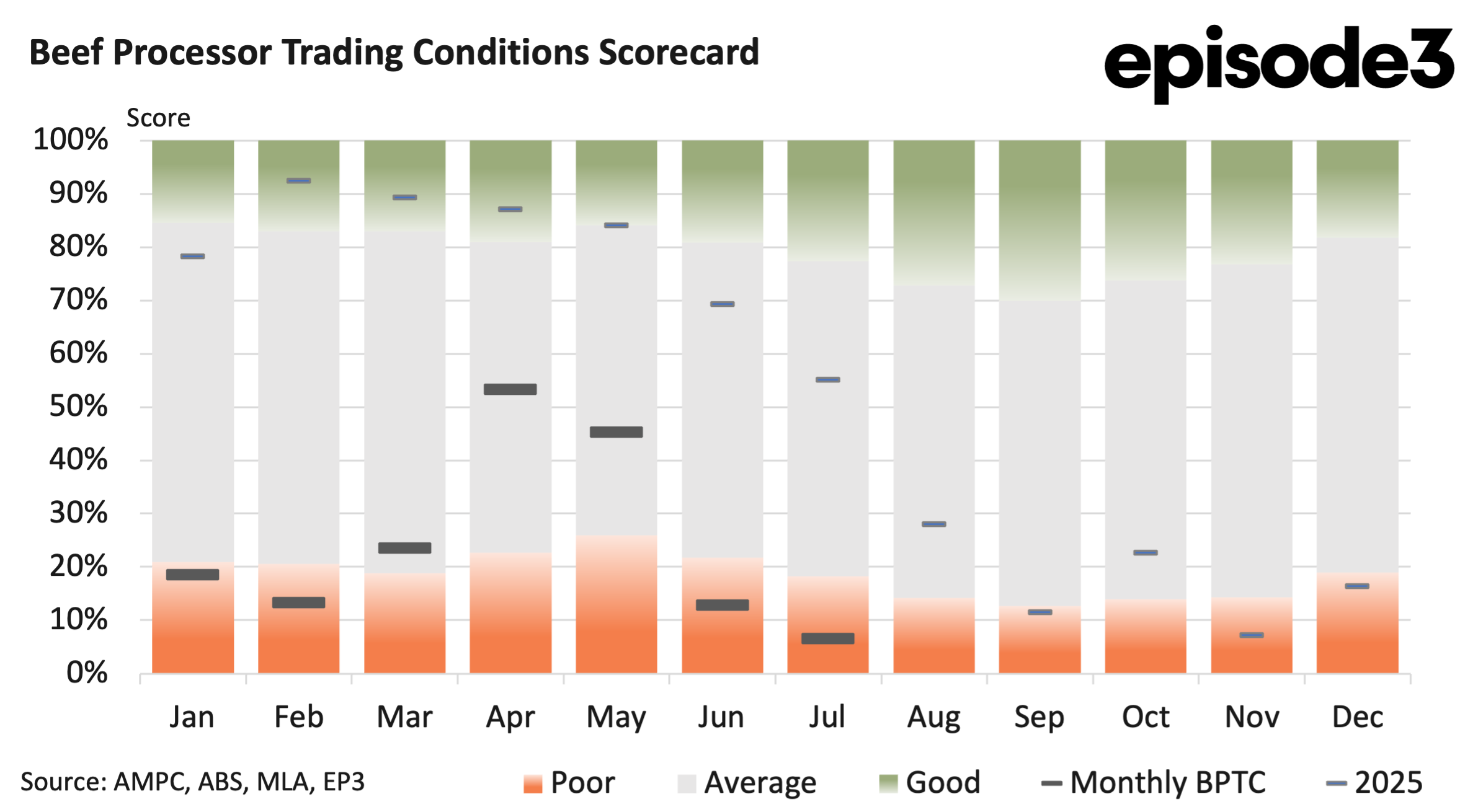
Australian beef processor trading conditions deteriorated further in July, as weaker export returns outweighed the relief from lower cattle procurement costs and stronger co-product values. The Episode 3 Beef Processor Trading Conditions (BPTC) index eased from a revised 13pc in June to 7pc in July, highlighting the increasingly difficult commercial environment for Australian beef processors. The latest result follows the incorporation of updated MLA co-product values into the historical BPTC calculations, which lifted the June reading from its previously reported 3pc to 13pc. Despite this revision, the broader picture remains unchanged, with processor trading conditions deteriorating markedly from the more favourable levels seen in the first half of 2025.
The principal driver of the July decline was a substantial reduction in beef export values across Australia’s four largest international markets. Combined export values fell by 6pc in July, adding further pressure on processor revenues at a time when operating conditions were already challenging. China recorded the largest deterioration, with export values falling by 18pc over the month. This decline comes against the backdrop of Australia’s beef safeguard arrangements with China, which triggered a punitive 55pc tariff on shipments exceeding the safeguard threshold in June. The additional tariff burden has complicated trade flows and reduced the competitiveness of Australian beef in a market that has traditionally been an important outlet for processors. While the July decline cannot be attributed entirely to the safeguard arrangements, the scale of the reduction highlights the challenges facing exporters supplying China.
Japan also recorded weaker returns, with export values declining by 4pc during July. The United States, which remains Australia’s largest individual beef export destination, registered a 3pc reduction in export values. South Korea was the only major destination to record an improvement, although the increase was marginal at just 0.5pc. This modest gain came despite the South Korean beef safeguard being triggered during July, lifting the applicable tariff from 5pc to 24pc. The combined movements highlight the importance of export market performance to Australian processor trading conditions. Even relatively modest changes across several major destinations can have a considerable cumulative impact on processor returns, particularly when international beef sales account for such a large share of Australian production.
There was some relief on the livestock procurement front. Australian heavy steer prices declined by 3pc during July, while processor cow values eased by 1pc. These reductions provided processors with some improvement in cattle purchasing costs compared with those in June. However, the decline in cattle prices was insufficient to offset the wider deterioration in export beef values. This is an important distinction, as falling livestock prices do not necessarily translate into improved trading conditions for processors. If the value of the meat being sold declines more rapidly than the cost of acquiring the animal, the commercial squeeze can persist despite cheaper cattle.
Co-product returns provided another positive contribution during July, increasing by 4pc over the month. These returns, which include the value recovered from products beyond the primary meat cuts, represent an important component of total carcase revenue. The recent MLA revisions have reinforced the importance of incorporating these values when assessing processor trading conditions. However, even the combination of stronger co-product returns and cheaper cattle procurement was insufficient to offset weaker export market performance.
Domestic retail beef prices were unchanged in July, providing neither additional revenue support nor further downward pressure through the retail price component of the index. Operating costs were also relatively stable, with food manufacturing costs rising by just 0.1pc and utility costs falling by 0.2pc. These movements were relatively minor compared with the much larger changes in international beef values and livestock procurement costs.
The result was another deterioration in the BPTC index, which has now fallen from 53pc in April and 45pc in May to 13pc in June and just 7pc in July. That represents a decline of 46 index points over just three months and leaves July among the weakest readings since the beginning of 2025. The comparison with last year is particularly revealing, as the July 2025 index stood at 55pc, compared with just 7pc a year later.
Australian processors are therefore facing a very different trading environment, with international market pressures increasingly offsetting any benefit from softer domestic cattle prices. The challenge heading into the rest of 2026 will be whether export values can stabilise enough to restore balance between livestock procurement costs and revenue from processed beef. Until then, cheaper cattle alone may offer little comfort to processors amid persistently weak trading conditions.