China’s return gives canola growers more bargaining power
Market Morsel
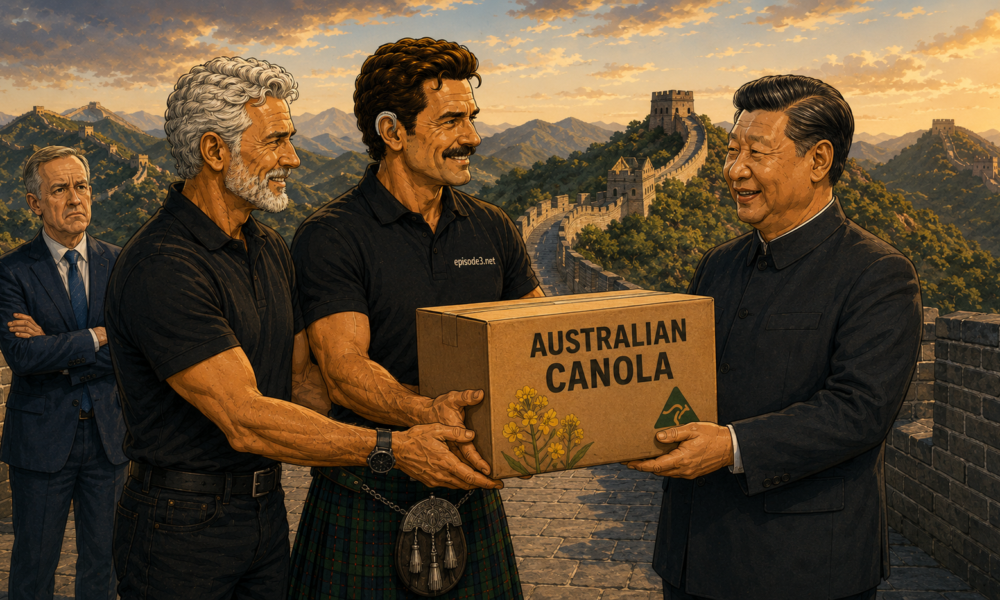
Australian canola has regained broader access to China, and that matters more than the immediate tonnes involved.
China has expanded import access beyond the trial purchases made by state-owned trader COFCO, allowing approved private crushers to apply for licences and receive Australian canola through designated ports. Cargoes will still need to be processed at approved facilities close to those ports, so this is not yet a completely open market. It is, though, a meaningful step towards normal trade.
For Australian growers, the benefit is straightforward. We now have another major customer capable of competing for our crop.
China is the world’s largest canola importer, while Australia is the second-largest exporter. The relationship makes commercial sense, particularly while China continues to manage its trade relationship with Canada, the dominant global supplier. Australian canola is reportedly competitive with Chinese crushers, giving buyers another supply option and Australian exporters another destination.
That does not mean China will suddenly absorb unlimited volumes or replace Europe as the main buyer of Australian canola. Canada is likely to keep the largest share of Chinese imports, and access conditions could still restrict how quickly trade grows. The significance is the added competition.
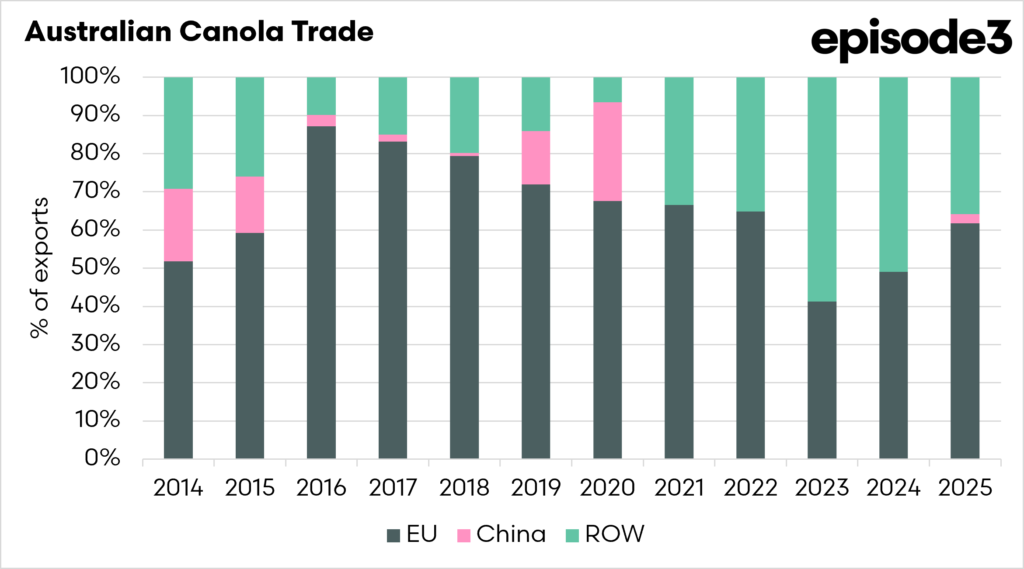
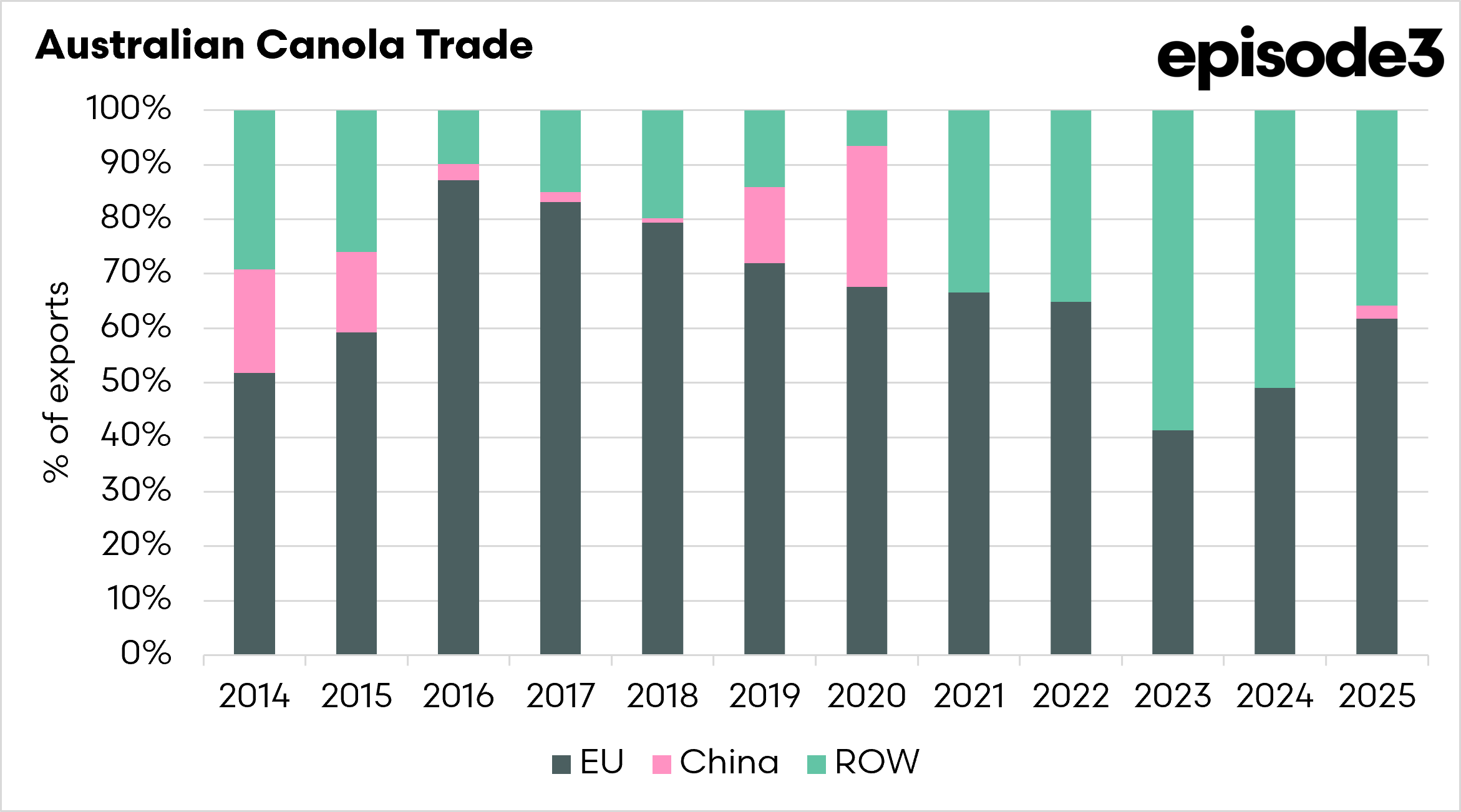
Australian canola has become heavily reliant on Europe, particularly through demand linked to renewable fuel mandates. That trade has been valuable, but concentration creates risk. When one customer dominates, its certification requirements, sustainability rules and purchasing preferences gain more influence over the entire supply chain.
China’s return gives exporters more flexibility. A cargo that does not suit one market may suit another. More buyers can improve competition at harvest, support basis and reduce the risk that Australian growers are forced to accept the conditions of a single dominant destination.
Plenty of farmers will also be happier selling to China at the same price if it means they do not have to fill out another ISCC audit form.
That may be a throwaway line, but the commercial issue is real. Certification has a cost, whether measured in fees, administration or lost flexibility. A market that can buy Australian canola without imposing the same process gives growers and exporters another option when comparing bids.
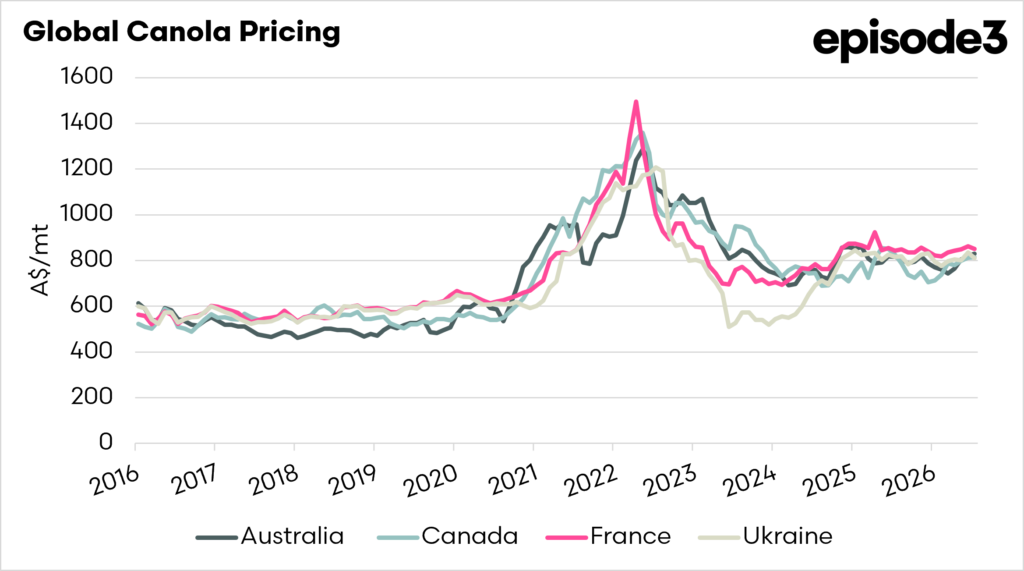
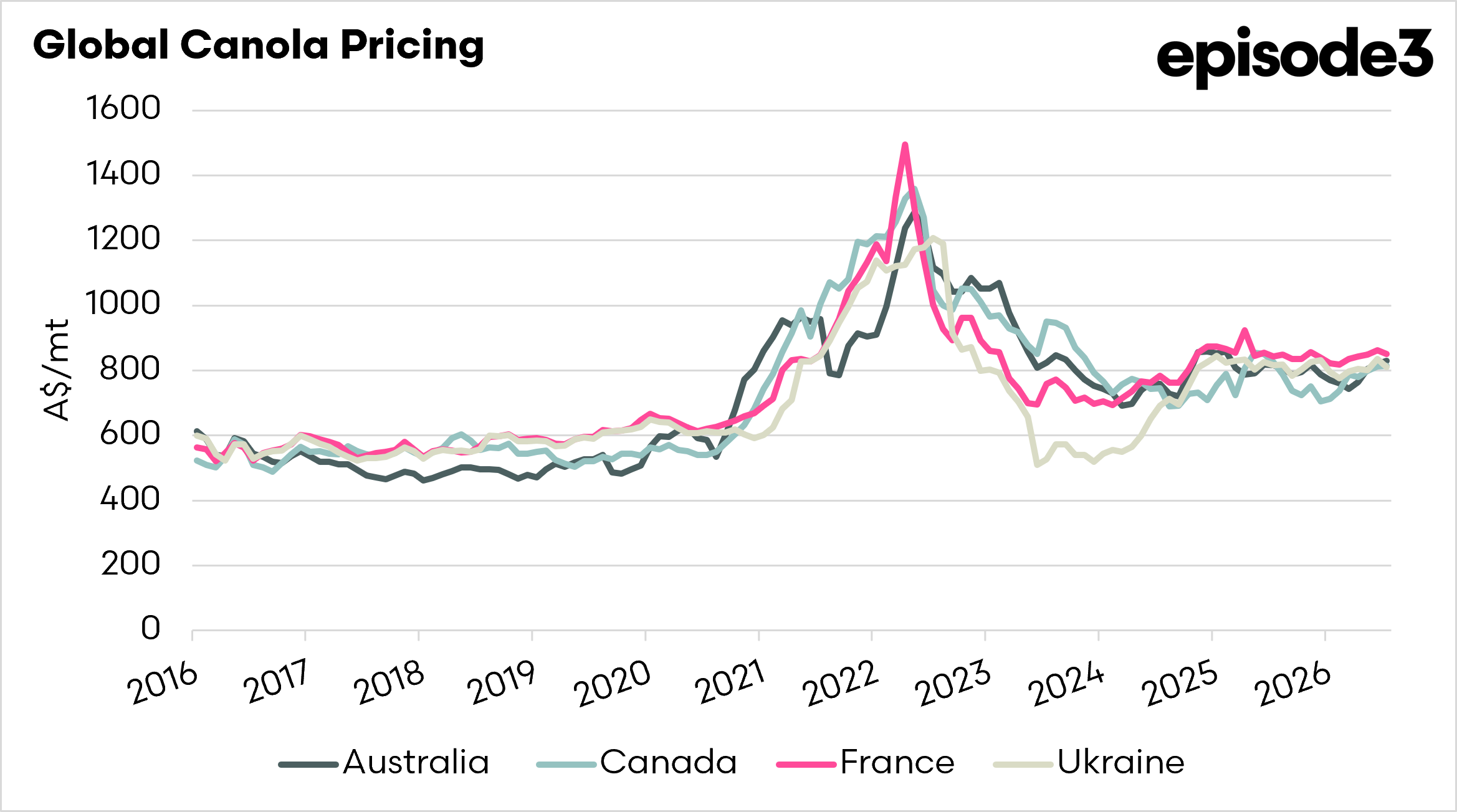
This is not yet a price boom, and it may take time for the change to appear clearly in Australian cash markets. Still, reopening private trade with China is positive. The value is not simply another shipment, it is having another serious buyer at the table. The more doors open, the more opportunities the industry has.