The 20% Fee That Could Undo Urea’s Price Recovery

Market Morsel
- Trump has proposed a 20% fee on cargo through the Strait of Hormuz, amid escalating US–Iran conflict.
- On urea, that adds A$113/tonne, lifting the effective cost to A$678/tonne.
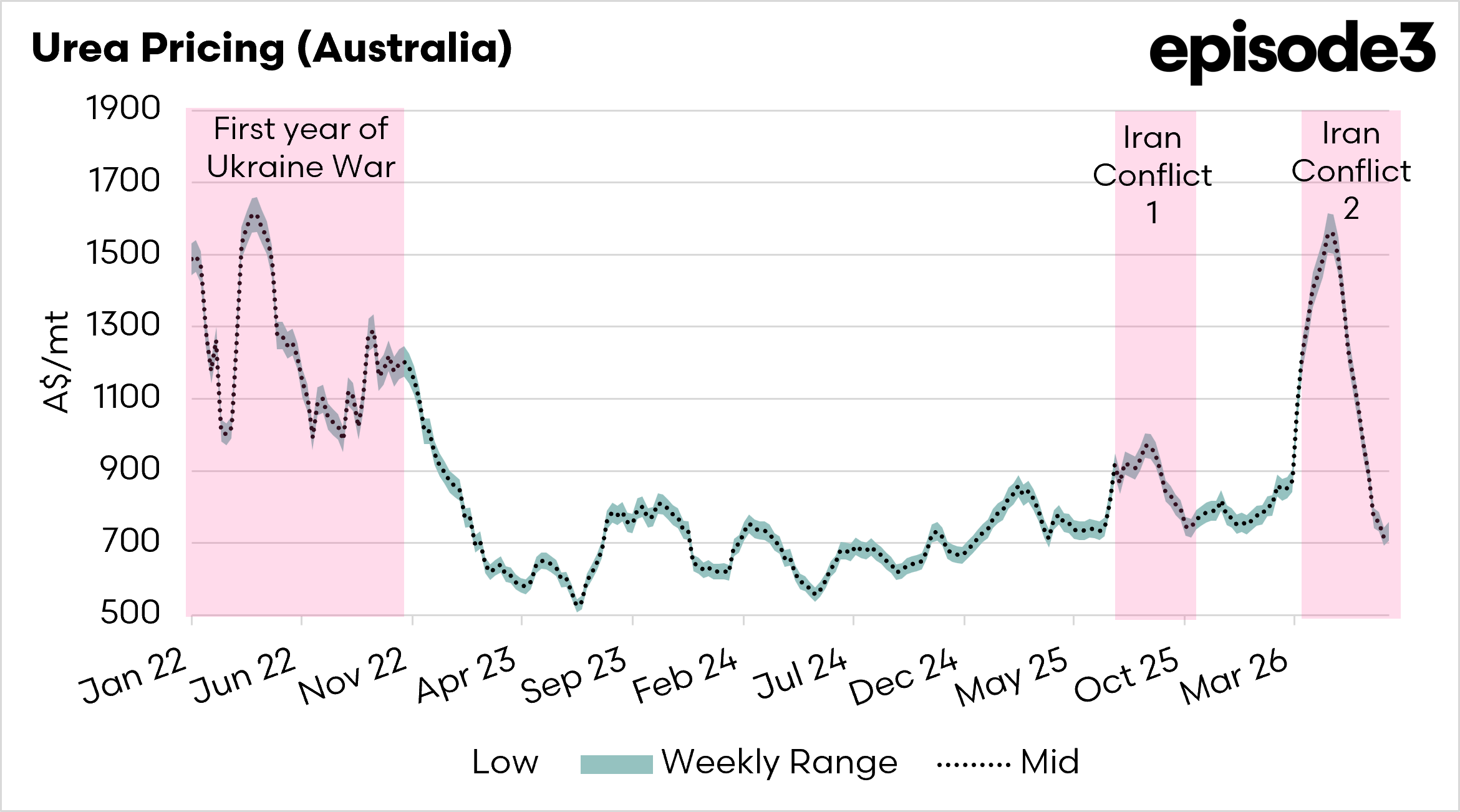
- Bad timing: landed urea prices had just eased to A$732/tonne, down 50%+ from April’s peak.
- The fee is 3.75x larger than the flat US$1m/vessel charge Iran had considered.
- Costs would flow to the farm gate, with diesel also exposed if the conflict drags on.
Donald Trump’s proposed 20% fee on cargo moving through the Strait of Hormuz could become a major new cost for global trade, particularly for oil and fertiliser. The proposal, announced on 13 July 2026, was framed as a way for the United States to recover the cost of protecting vessels using the strait. It comes as conflict between the US and Iran escalates, and both sides contest control over shipping through one of the world’s most important trade routes.
Around a fifth of global oil moved through the Strait of Hormuz before the conflict, so any charge imposed on cargo value would have immediate consequences for energy markets, shipping costs and agricultural inputs. A large crude oil tanker carrying about 2 million barrels at US$80 per barrel would hold cargo worth roughly US$160 million. A 20% fee would add about US$32 million to the shipment, equivalent to around US$16 per barrel, on top of normal freight, insurance and security costs.
For fertiliser, the numbers are just as concerning. A 50,000-tonne urea shipment valued at A$565 per tonne FOB would be worth around A$28.25 million. Applying a 20% fee would add about A$5.65 million, or roughly A$113 per tonne. That would lift the effective value from A$565 per tonne to about A$678 per tonne before freight, insurance, handling and local distribution costs were included.
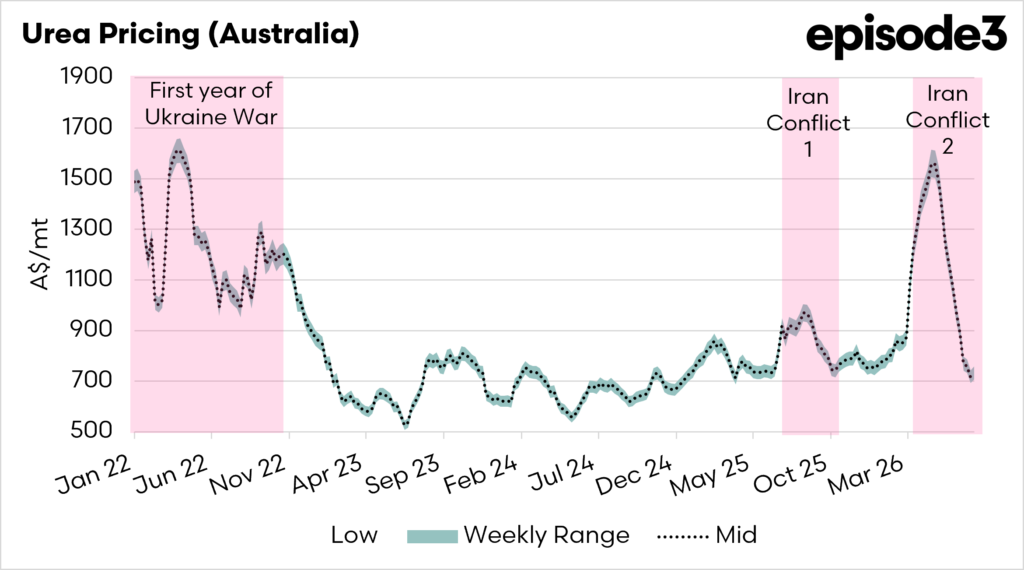
The timing is particularly frustrating for Australian farmers because landed urea prices had finally returned towards more manageable levels. Australian landed prices rose from about A$875 per tonne in late February to almost A$1,560 per tonne in mid-April as conflict disrupted supply and freight. Since then, the market has unwound most of that increase, falling to around A$732 per tonne by 9 July. That is a decline of more than 50% from the April peak and around 20% below the same week last year.
A 20% Hormuz fee could quickly reverse part of that improvement. Based on the earlier assumptions, the fee alone could add about A$113 per tonne before any increase in freight, insurance or distributor margins. The proposed US charge would also be significantly larger than the flat fee Iran had reportedly been considering. Iran’s proposal of about US$1 million per vessel would equate to roughly A$1.5 million at an exchange rate near US$0.66. Trump’s 20% charge on the same urea cargo would be about 3.75 times higher.
For Australian farmers, the risk is straightforward. Higher costs would flow from importers to distributors and eventually to the farm gate. Diesel would also be exposed, with higher crude prices, freight charges and insurance costs feeding into transport, machinery and harvest expenses across the agricultural supply chain.
There is still genuine uncertainty over whether the proposal will proceed or how it would be calculated and collected, and the market is still assessing the situation. The longer the conflict continues, though, the greater the risk that diesel, fertiliser and other farm input prices move higher again.