
Sheep meat processors get a lift, but 2026 remains a tough year

Sheep Processor Trading Conditions Model
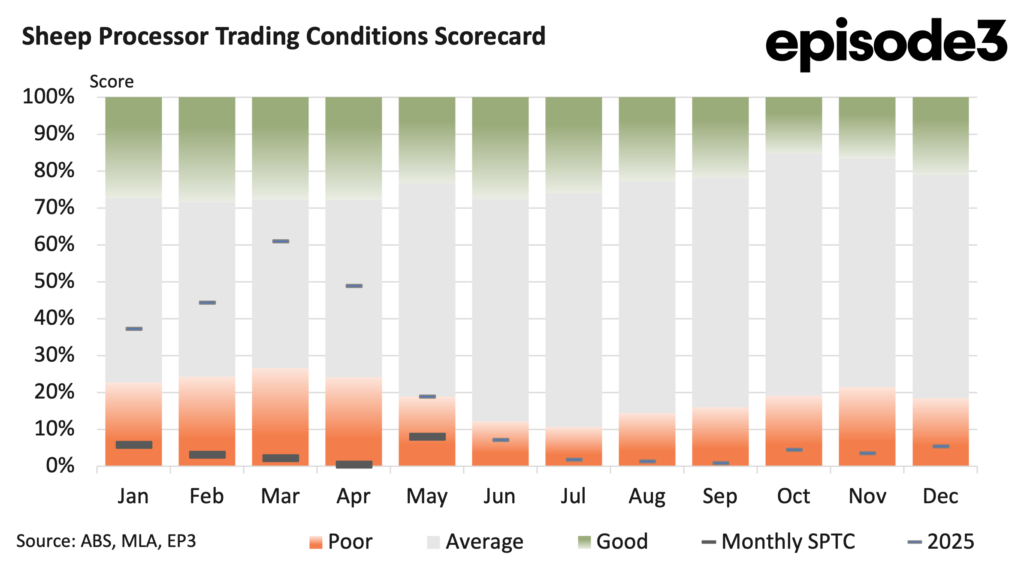
Sheep meat processor trading conditions improved during May, providing processors with their strongest monthly result of 2026 so far. The Sheep Processor Trading Conditions index lifted from just 0.4 percent in April to 8pc in May, signalling that margins recovered modestly after reaching their weakest point earlier in the year. While the improvement is encouraging, it needs to be viewed in context.
The average SPTC for 2026 now sits at just 4pc, well below the 42pc average recorded by the end of May last year. The comparison highlights how difficult trading conditions have been for processors throughout the first five months of the year. The improvement during May was driven primarily by lower livestock procurement costs.
After several months of relentless increases in sheep and lamb prices, processors finally received some relief on the buying side of the ledger. Heavy lamb prices declined by almost 3pc during May, reducing the cost of securing finished lambs for processing. Trade lamb prices also eased, falling by around 2pc over the month. Light lamb prices recorded the largest decline, slipping by approximately 3.5pc, while mutton prices eased by almost 1pc.
Although these reductions may appear relatively modest, livestock procurement represents the single largest operating cost for sheep meat processors. Even small movements in purchase prices can therefore have a meaningful impact on processor margins. The May result demonstrates how sensitive processor profitability remains to fluctuations in livestock values. After months of rising procurement costs steadily eroding margins, the decline in sheep and lamb prices provided processors with some welcome breathing room.
The improvement in livestock costs was supported by a modest increase in domestic retail pricing. Retail lamb prices increased by around 1.6pc during May, providing processors with a slight improvement in returns from the domestic market. While the rise was not substantial, it helped offset some of the pressure created by higher operating costs elsewhere in the business.
Export performance during May was comparatively steady. Across Australia’s major sheep meat destinations, average export values were largely unchanged from the previous month. There was some variation between individual markets, but the overall export revenue picture remained relatively stable.
The United States recorded a modest improvement, with average export values increasing by almost 1pc during May. Given the importance of the US as one of Australia’s highest value lamb markets, even a small improvement provided additional support to processor returns.
China also remained steady, with average export values showing little movement compared with April. Malaysia likewise delivered relatively stable pricing during the month, contributing to the broader picture of flat export returns. The only notable weakness among the major destinations came from the United Arab Emirates, where average export values eased by around 1.7pc. The decline reflects the ongoing disruption affecting Middle Eastern sheep meat trade following the conflict involving Iran and the resulting changes to regional supply chains.
Despite this, the overall export picture remained relatively stable, meaning there was little change in processor revenue from offshore markets during May. Unlike earlier in the year, where export pricing revisions significantly altered processor margin calculations, May’s result was shaped far more by changes in livestock procurement costs than export receipts.
The improvement in the SPTC therefore reflects the simple reality that processors paid less for livestock while maintaining broadly similar returns from both export and domestic markets. Even so, the recovery should not be interpreted as a return to healthy processor profitability. An index reading of 8pc remains historically weak and well below the levels typically associated with favourable trading conditions. The year-to-date average of just 4pc illustrates that processors continue to operate under considerable financial pressure despite May’s improvement.
Operating costs beyond livestock procurement also remain elevated. Transport, labour and energy expenses continue to weigh on processor margins, limiting the extent to which lower livestock prices can improve overall profitability. Those costs have become an increasingly important part of the margin equation over the past year and continue to offset some of the benefits provided by lower livestock purchase prices.
The contrast with 2025 remains striking. At the end of May last year, the average SPTC sat at 42pc, more than ten times higher than the equivalent average for 2026. That comparison underlines just how dramatically the operating environment has changed over the past twelve months. Livestock values remain historically high despite the modest correction recorded during May, while export markets have generally been supportive without delivering the type of revenue growth needed to fully restore processor margins. The result is a sector that continues to operate in a challenging commercial environment where even modest improvements in procurement costs are enough to produce noticeable changes in trading conditions.