
Could an early spring flush be on the cards?
Market Morsel
Australian sheep producers have enjoyed an extraordinary run of prices through winter, but consumers buying lamb for the Sunday roast or barbecue have been experiencing the other side of that equation. Mutton prices have pushed into record territory, while lamb values have traded around historically high levels.
For producers, those prices have provided some welcome returns after several difficult seasons and a period of substantial flock adjustment.nFor consumers, however, expensive livestock eventually works its way through processors, wholesalers and retailers, contributing to higher prices at the meat counter.
Spring normally starts to change that balance as more new season lambs become available, and processors have greater choice and the intense competition for limited winter supplies begins to ease. The interesting question this year is whether that adjustment could arrive slightly earlier than usual.
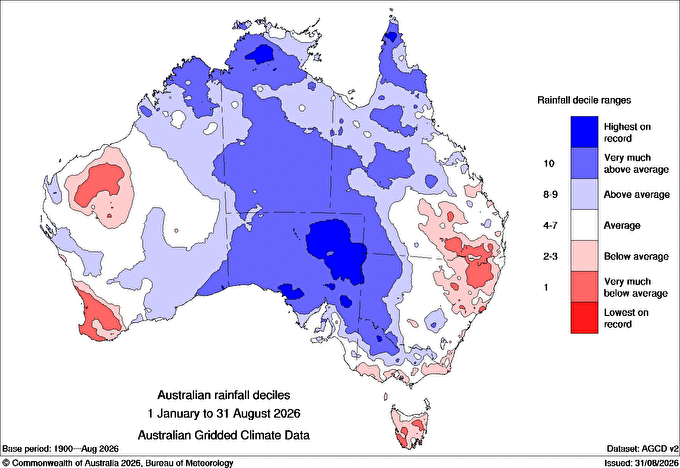
Winter 2026 has been wetter than normal across significant parts of Australia’s major eastern and southern sheep producing regions, while minimum temperatures have also been unusually mild. That combination can be particularly useful for sheep production because rainfall provides soil moisture while warmer overnight temperatures allow pastures to make better use of it. Rather than pasture effectively sitting dormant through a cold winter, producers in favourable regions have entered spring with considerably more feed available.
For producers, the benefits potentially begin around lambing. Better ewe nutrition can support milk production and subsequent lamb growth, while milder temperatures can reduce some of the exposure risks associated with particularly cold conditions. That does not mean a wet and mild winter automatically delivers exceptional lamb marking percentages. Severe storms, prolonged wet conditions and localised feed problems can still result in losses, and conditions have varied considerably between regions. Where lambing conditions have been favourable, however, the seasonal backdrop should have been more supportive than a particularly hard and cold winter.
The more immediate market impact may come from how quickly those surviving lambs gain weight. Good pasture availability, adequate moisture and warmer temperatures can allow young lambs to grow more quickly. For a producer looking across a paddock of new season lambs, that could mean animals reaching suitable sale weights several weeks earlier than they might in a more difficult season. Importantly, this does not necessarily mean Australia suddenly has substantially more lambs. It means a greater proportion of the available lamb crop could become commercially ready earlier.
That distinction matters for both producers and consumers.
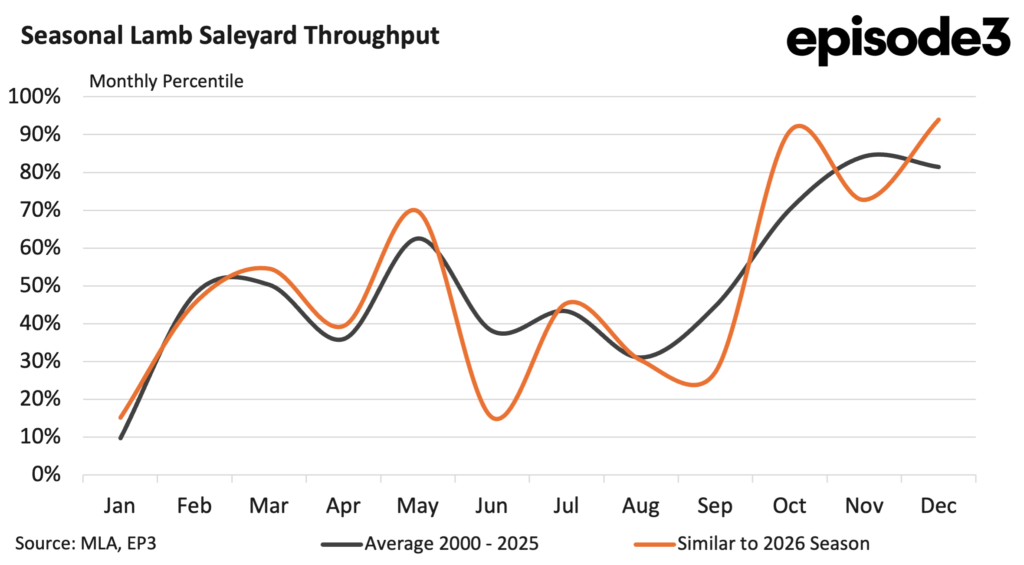
Episode 3 analysis of historical lamb saleyard throughput shows the normal seasonal increase building through spring before reaching its major peak around November. However, seasons experiencing rainfall conditions similar to 2026 have tended to produce a more front-loaded pattern, with throughput rising particularly strongly during October. If that pattern repeats, producers could have an opportunity to market finished new season lambs earlier, while processors and retailers may begin seeing additional supply before the traditional November flush.
The tradeoff for producers is that more lambs normally mean some downward pressure on livestock prices. Historically, the spring flush can see saleyard lamb prices decline by around 15 to 20pc from winter levels as livestock availability increases. The exact movement varies considerably depending on export demand, processor competition and the size of the lamb crop, but the underlying seasonal relationship is relatively consistent.
Winter scarcity eventually gives way to greater spring availability and some of the premium required to secure limited livestock begins to unwind. That does not necessarily mean poor prices for producers this spring. Prices entered the season from exceptionally high levels, meaning even a normal seasonal correction could leave lamb values historically attractive.
Producers with good feed availability also have choices. If pasture remains plentiful and lamb prices remain attractive, some may decide there is little reason to rush stock onto the market and instead continue adding weight. For Australian consumers, however, increasing spring supply offers the prospect of some relief. September and October are also when warmer weather starts changing how households eat. Barbecues return, chops and cutlets become more attractive, and retailers begin positioning themselves for the run towards Christmas.
The seasonal setup nevertheless provides an interesting balancing point for the market. Producers have benefited from an exceptional winter price environment, while consumers have faced historically expensive lamb. Spring should begin bringing additional livestock forward and, based on seasons with similar rainfall patterns, that process could start earlier than usual.
For producers, that means carefully weighing attractive prices today against the opportunity to add more weight while feed remains available. For consumers, it provides some hope that the extraordinary winter price pressure begins to ease as new season lamb reaches the market.