
Higher procurement cost squeezes beef processors again

Beef Processor Trading Conditions - July 2026 update
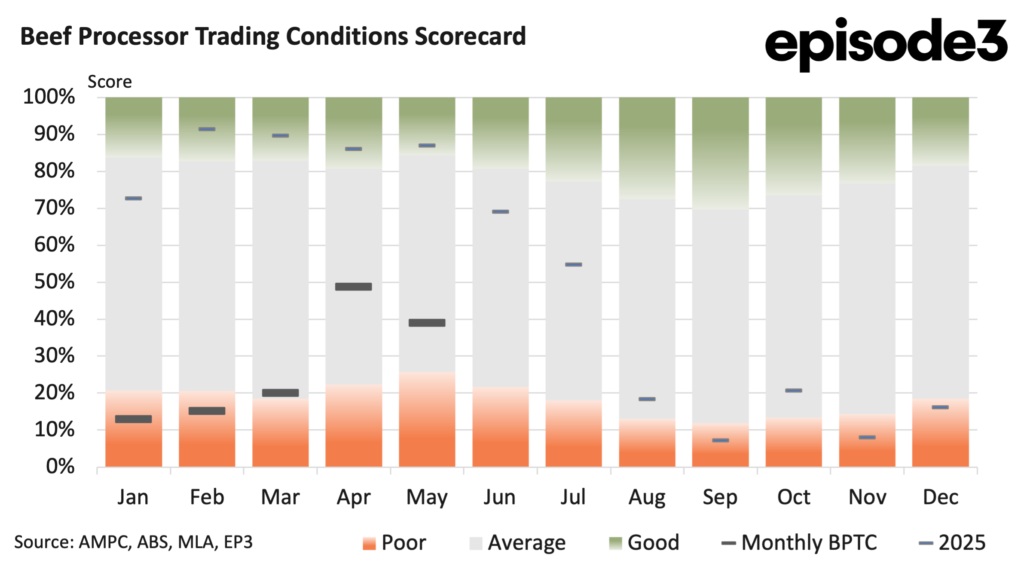
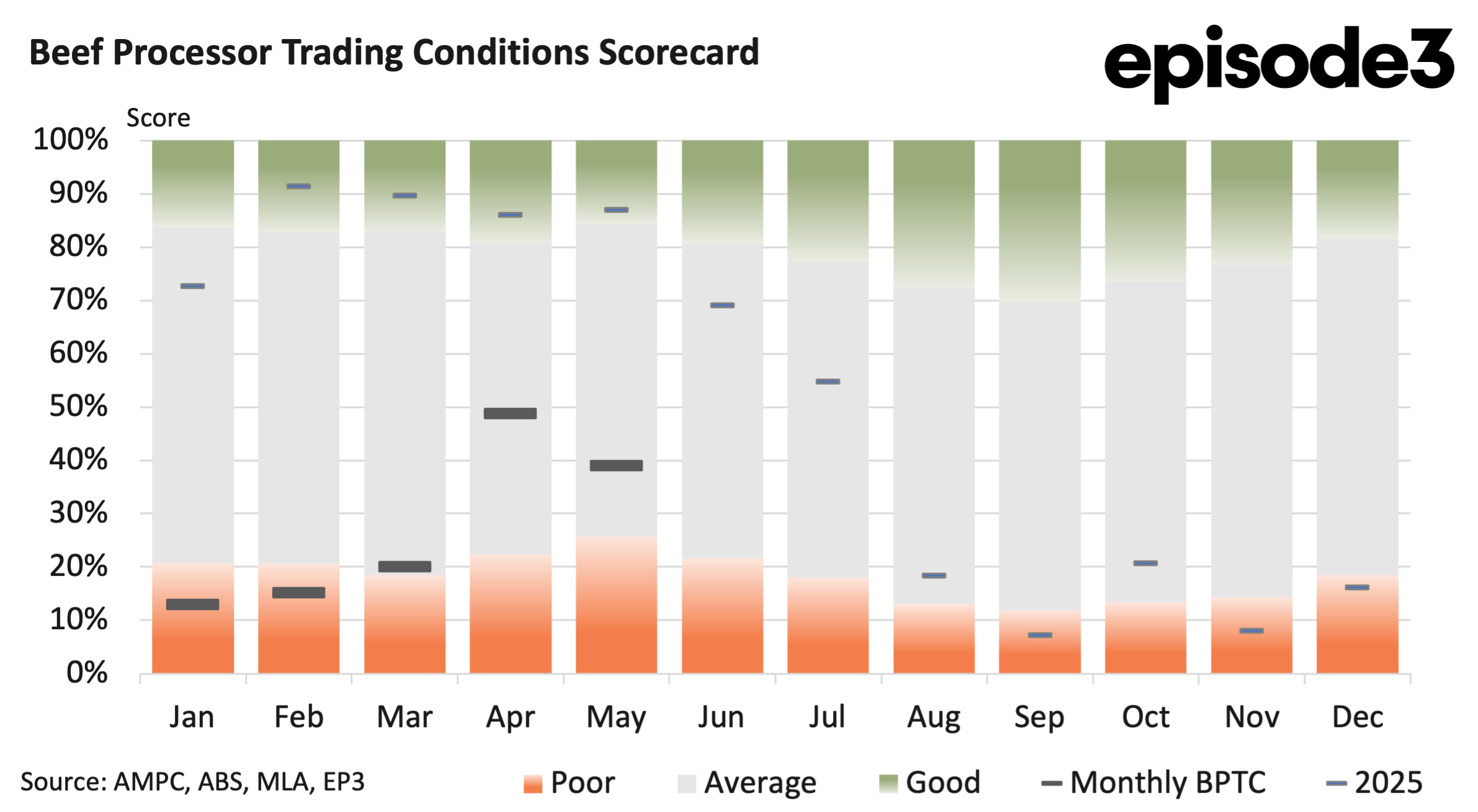
Beef processor trading conditions eased through May 2026, with the Beef Processor Trading Conditions index slipping from 49 percent in April to 39pc.
While the result remains comfortably above the levels recorded earlier this year, it highlights how quickly margins can come under pressure when cattle prices begin to lift. The annual average BPTC for 2026 now sits at 27pc.
That is an improvement on the opening months of the year, but it remains well below the 85pc annual average recorded over the same January to May period in 2025. The comparison reinforces just how favourable processor conditions were this time last year and how much the operating environment has changed over the past twelve months. The key driver behind the May decline was a renewed increase in livestock procurement costs.
After easing through April, cattle prices moved higher again as processors returned to more normal operating schedules following the Easter and ANZAC disruptions. Improved seasonal conditions across many production regions also reduced producer selling pressure, tightening the supply of slaughter cattle available to processors.
Heavy steer prices increased by 5pc during May and young cattle prices lifted 5.2pc over the month. Processor cow prices recorded the largest increase, rising by 7.4pc. These movements have an immediate impact on processor profitability. Livestock purchases remain the largest single operating cost for beef processors, meaning even relatively modest increases in cattle prices can quickly compress processing margins. The improvement recorded during April therefore proved short lived as procurement costs once again moved higher.
Export markets provided little additional support during the month. Across Australia’s four largest beef export destinations, average export values were largely unchanged from April. That stability helped prevent a sharper decline in processor conditions, but it also meant there was little additional revenue available to offset the higher cost of purchasing cattle.
The United States remained Australia’s highest value export destination across the top four destinations, although average export prices eased by around 1pc during May. Given the importance of the American market, even relatively small movements can influence processor returns, particularly for manufacturing beef. Japan moved in the opposite direction, with average export values lifting by 2pc over the month. The improvement reflects continued steady demand from one of Australia’s longest established premium beef markets. China also strengthened during May, with export values increasing by almost 2pc. South Korea was the weakest of the four major export destinations.
Average export values declined by 4pc during the month, limiting the overall improvement across North Asian markets. Some markets improved, others softened, but overall returns across the four largest destinations changed very little from April. That stability meant export markets were neither helping nor materially hurting processor margins during May.
Domestic conditions also remained supportive. Australian retail beef prices increased by 1.4pc during the month, continuing the gradual upward trend seen through much of the year. Higher retail prices reflect the cumulative impact of elevated livestock values and broader inflationary pressures flowing through the supply chain. However, stronger retail prices do not immediately translate into improved processor profitability. There is often a lag between changes in livestock prices and adjustments further down the supply chain. Processors therefore remain exposed to rising procurement costs long before those increases are fully reflected at the retail level.
The May result demonstrates just how sensitive processor margins have become. Export values were broadly unchanged and domestic retail prices continued to improve, yet higher cattle prices alone were sufficient to reduce the BPTC by 10 index points. This highlights the importance of the spread between livestock procurement costs and beef sale prices. When export values are rising faster than cattle prices, processor margins expand. When cattle prices move ahead while export returns remain flat, margins inevitably tighten.
May falls firmly into the latter category. Despite the monthly decline, processor conditions remain considerably stronger than they were at the beginning of 2026. The BPTC has recovered from the very subdued levels recorded during the first quarter, reflecting a more balanced relationship between procurement costs and beef returns. Even so, the industry remains well short of the exceptional profitability experienced during 2025.
Looking ahead, much will depend on the direction of cattle prices over winter and the performance of Australia’s major export markets. Seasonal conditions across many cattle producing regions remain favourable, supporting producer confidence and encouraging stock retention. If that continues to tighten cattle availability, procurement costs are likely to remain elevated. Export markets also warrant close attention. While values remained broadly stable during May, softer demand or increased competition in any of Australia’s major destinations could quickly place additional pressure on processor margins.