Market lessons: Holding grain is not free

Market Lessons
Storing grain after harvest can create marketing flexibility. It allows a grower to delay a sale, wait for basis to improve or take advantage of a stronger market later in the season. But holding grain is not free. Every month grain remains unsold, it carries a cost.
The most obvious cost is storage itself. Depending on whether grain is held on farm or in commercial storage, there may be monthly storage charges, handling costs, insurance and maintenance expenses. On-farm storage can look cheaper, but it still comes with infrastructure costs and the need to maintain grain quality.
Then there is the cost of capital. Grain sitting in storage is grain that has not yet been converted into cash. If a grower could have sold wheat for A$320/mt at harvest, that A$320 remains tied up while the grain is held. If the business is carrying debt, or could use that money elsewhere, waiting adds a financing cost.
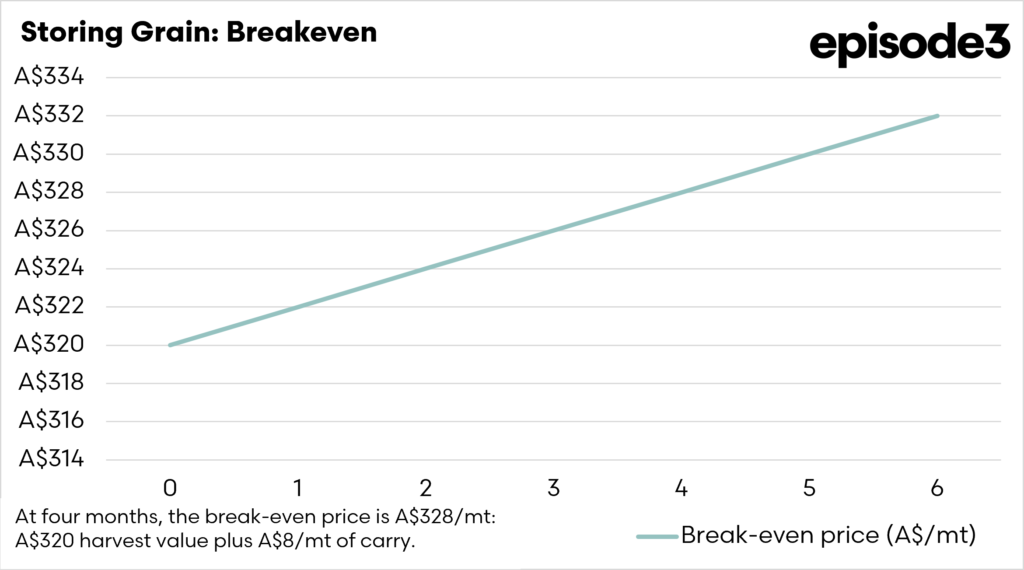
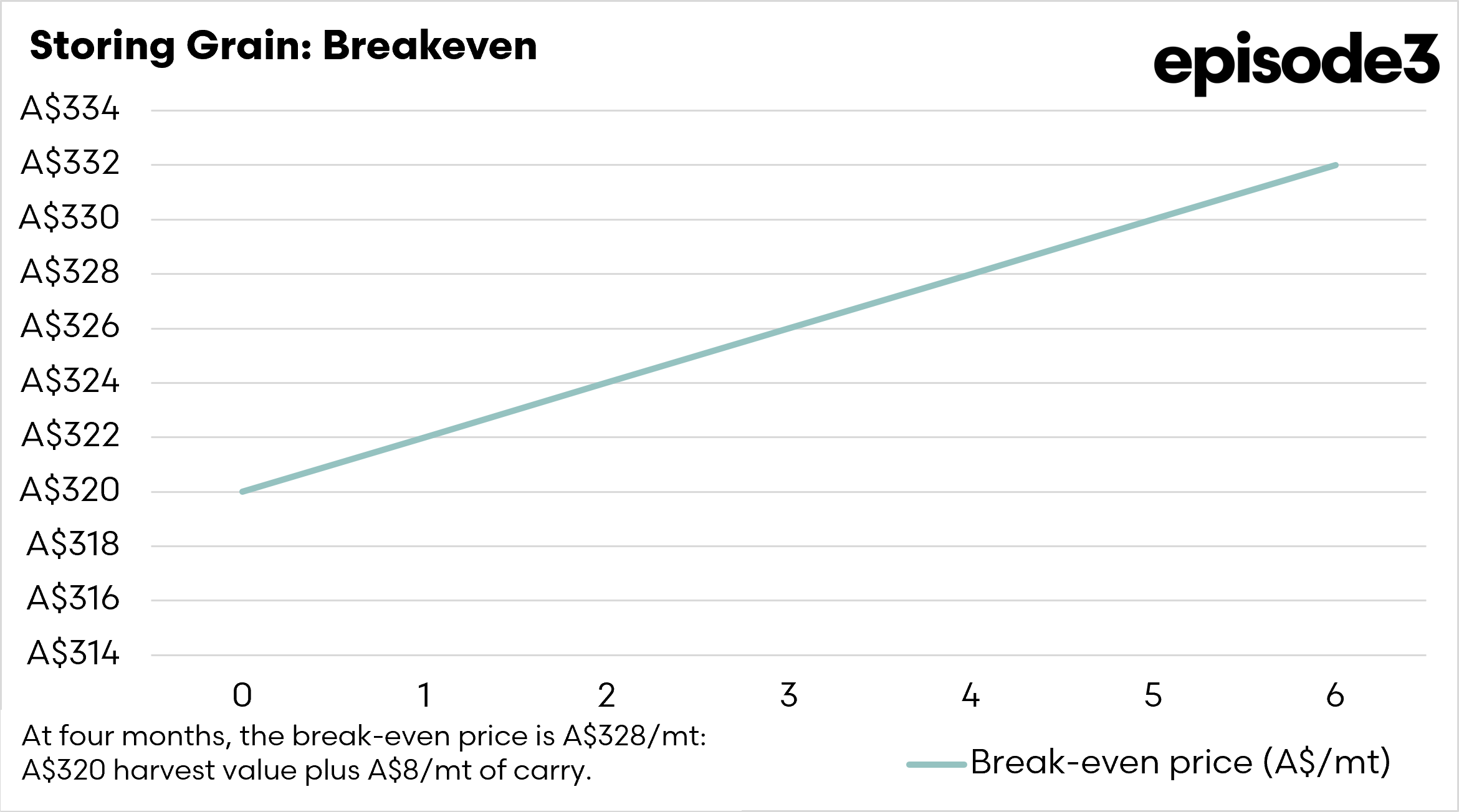
Consider a grower holding wheat worth A$320/mt for four months. Assume storage, insurance and financing costs together amount to A$2/mt per month (this is hypothetical – use your own numbers). After four months, the carrying cost is A$8/mt. The wheat therefore needs to be worth more than A$328/mt just to leave the grower in the same position as selling at harvest.
If the price rises to A$340/mt, holding the grain has added value. After subtracting A$8/mt in carrying costs, the effective improvement is A$12/mt. But if the price only rises to A$325/mt, the grower may have received a higher headline price while still being worse off after storage costs.
There is also quality risk. Grain can deteriorate in storage through insects, moisture, temperature problems or poor management. A price rally does little good if the grain loses grade or attracts discounts before it is sold.
This does not mean growers should avoid storage. Storage can be a valuable marketing tool when the market offers enough reward for waiting, particularly when basis is expected to improve or later delivery periods pay a premium.
The important question is not simply whether the price might rise. It is whether the expected improvement is large enough to cover the cost and risk of holding the grain.
If you are storing grain, start with a spreadsheet. Calculate the break-even price, if the market cannot offer more than that, waiting may feel like a marketing strategy while actually costing money.