
Black Sea wheat: delayed, not disappeared

The Snapshot
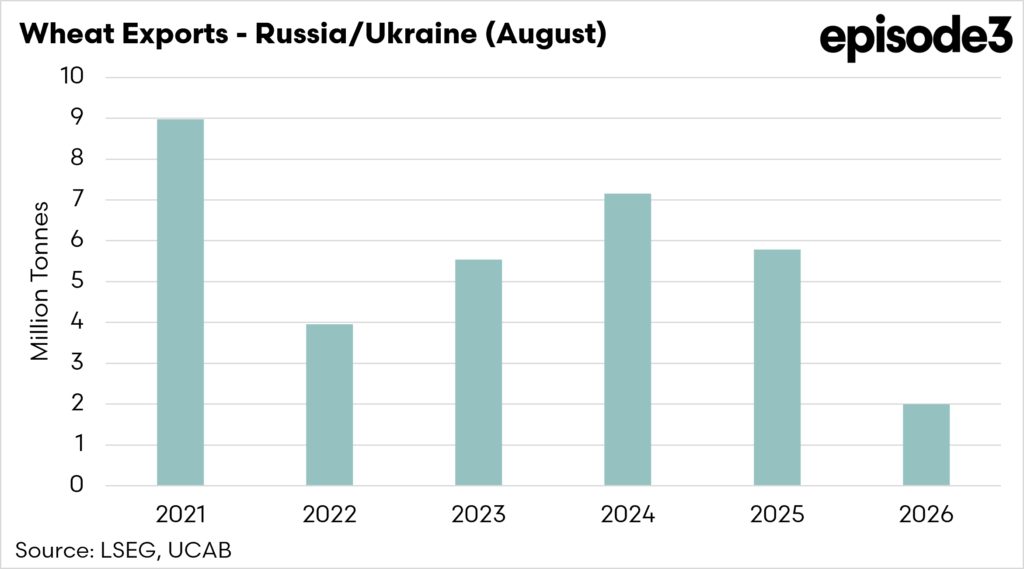
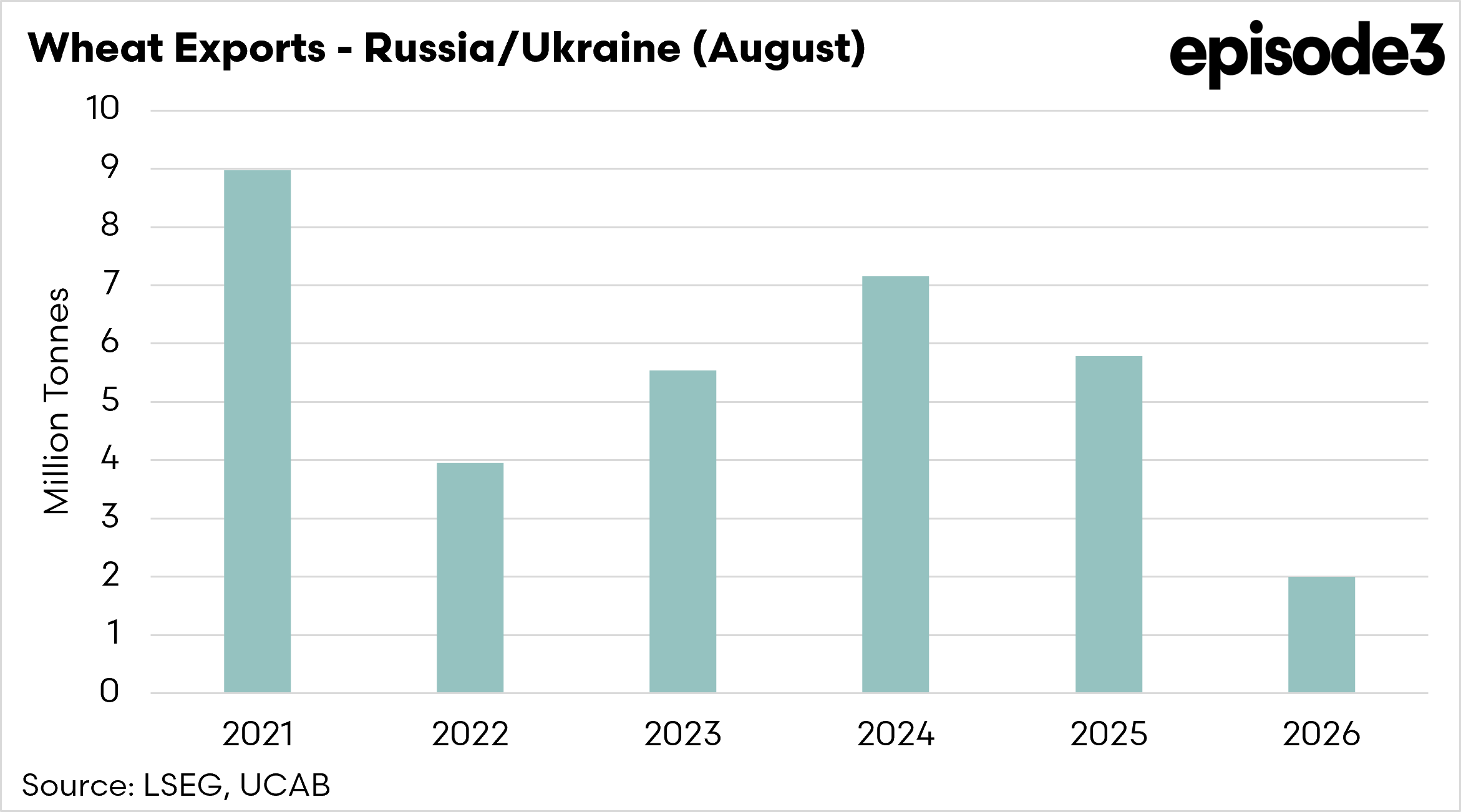
- Russian and Ukrainian wheat exports fell to around 2.0mt combined in August.
- That was roughly 65pc below August 2025 export volumes.
- The slowdown is tightening the amount of Black Sea wheat available to buyers.
- Much of the wheat not exported stays in storage and will eventually need to find a market.
- For Australian growers, a Black Sea rally may offer an opportunity rather than a reason to wait indefinitely for higher prices.
The Detail
Russia and Ukraine have spent much of the past four years showing that grain has an extraordinary ability to find its way to market. War, sanctions, attacks on ports, shipping restrictions and damaged infrastructure have all created problems, but large volumes of wheat have continued to leave the Black Sea. August looks different, with exports from both countries slowing sharply at the same time.
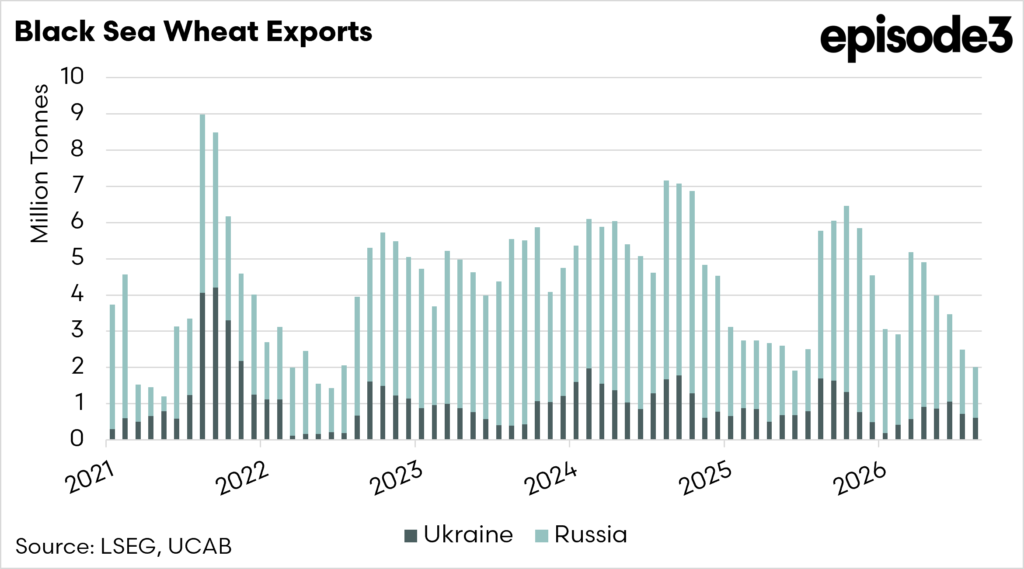
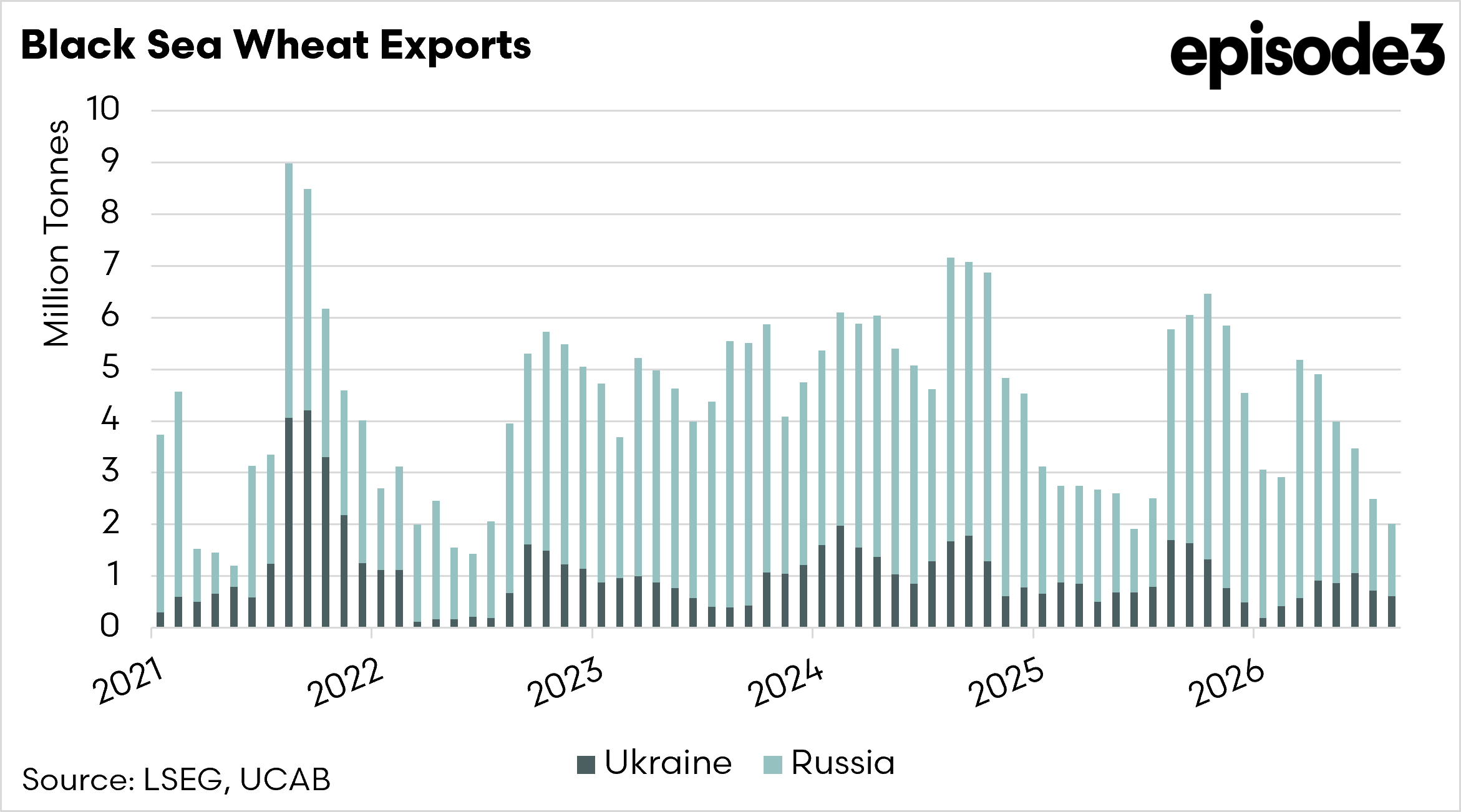
Russia exported around 1.39 million tonnes of wheat during August, while Ukrainian wheat exports were around 613,000 tonnes. Combined, that puts shipments at roughly 2.0 million tonnes for the month.
In August last year, Russia and Ukraine exported a combined 5.77 million tonnes of wheat. In August 2024, the figure was more than 7.1 million tonnes. On the latest numbers, combined exports this August were around 65pc below the same month last year, making it one of the clearest signs yet that the Black Sea export system is under real pressure.
The fall in Ukraine has been extreme. Ukrainian Agribusiness Club data put August wheat exports at 612,700 tonnes, compared with 1.06 million tonnes in July, a decline of about 42pc. Total Ukrainian grain exports also fell from 2.67 million tonnes in July to just 988,000 tonnes in August, showing that this is not just a wheat issue but a broader slowdown in agricultural exports.
Russia has experienced an equally dramatic change. Russian wheat exports were above 4 million tonnes in August 2025 and almost 5.5 million tonnes in August 2024. This August, they were around 1.4 million tonnes.
For the international wheat market, having exports from both countries slow at the same time matters. Russia and Ukraine are major competitors in the global wheat trade, particularly into markets across the Middle East, North Africa and Asia. When less wheat leaves the Black Sea, buyers need to look elsewhere, which can support competing origins, including Australia.
The important point, however, is that there is a big difference between wheat that has been destroyed and wheat that has simply been delayed. If wheat cannot leave Russia or Ukraine, much of it stays on farms, in commercial storage or sitting somewhere behind the export system. It is removed from the international market temporarily, but it stays in the background waiting for its chance to hit the global market.
Ukraine is already facing that problem. The early grain harvest is almost complete, carryover stocks remain in the market, and the corn harvest is approaching, which means larger volumes of grain will compete for logistics and storage capacity if exports remain slow. The longer this continues, the more grain is likely to build up behind the export bottleneck.
In the short term, that can be bullish for the international market because an Egyptian miller cannot buy wheat simply because it exists in a silo somewhere in Ukraine. The grain needs to physically reach the buyer, and when that movement is restricted, the amount of wheat genuinely available to the world market tightens. We are already seeing buyers around the world changing their trade flows because of fears of a lack of Black Sea access.
The problem is that the longer the disruption lasts, the bigger the stockpile potentially becomes. Storage is finite, holding grain costs money and growers and exporters eventually need cash flow. Another crop also keeps getting closer, which increases the incentive to move old grain once export routes improve.
If those routes do improve, accumulated wheat can start moving relatively quickly, and sellers may have plenty of reason to price it competitively. That creates an interesting market dynamic, because the disruption that pushes wheat prices higher today could be building the supply pressure that pushes them lower later.
Another reason not to mistake the August slowdown for a shortage of Black Sea wheat is that supply has already been substantial. Between January and July this year, Russia and Ukraine had already exported around 26 million tonnes of wheat combined, compared with about 18.3 million tonnes over the same seven months of 2025.
That means combined exports were actually around 42pc higher this year before the August slowdown arrived. Russia was particularly strong, exporting around 21.3 million tonnes between January and July, roughly 60pc more than during the same period last year. Plenty of wheat has been moving, and the story has suddenly shifted from abundant Black Sea supply to whether that supply can physically get out.
How long that disruption continues is now critical. If it is short-lived, exports could recover and some of the wheat currently being held back will start competing for business again. If it lasts for months, the immediate availability of Black Sea wheat becomes increasingly important for international prices, while a growing volume of grain potentially accumulates behind the ports.
For Australian growers, that second part is worth remembering. A prolonged Black Sea disruption could produce attractive pricing opportunities as buyers search for alternative supplies, but assuming every tonne missing from Russian or Ukrainian exports has disappeared would be a mistake.
A tonne delayed is not a tonne destroyed, and eventually much of that wheat will come looking for a buyer. If that happens as the Australian harvest comes onto the market, competition could return remarkably quickly, particularly if Russian and Ukrainian sellers are under pressure to clear storage and generate cash flow.
The Black Sea may have temporarily turned down the wheat tap, but the grain is still sitting behind it. The key question for growers is not just how long exports are constrained, but how much wheat is building up in the meantime and what happens when that export system starts flowing again.
As we have mentioned throughout this rally on podcasts, radio interviews, presentations and articles, this rally could be short-lived, as peace will remove the fear from the market.