A pause in the wheat rally, not an end to the risk

The Snapshot
- Wheat prices pulled back this week, but Chicago is still 9pc higher over the month.
- Black Sea disruption continues to restrict exports, despite improving Ukrainian shipments through the Danube.
- Ukraine’s alternative routes are far more expensive, adding around A$56–69/t in logistics costs.
- European maize damage is adding support to wheat, with French crop ratings at record lows.
The Detail
Last week I described writing about the grain market as a bit like Groundhog Day, with the Black Sea once again responsible for much of the excitement. A week later, we are still talking about Russia, Ukraine and interrupted grain shipments, but the market has provided a useful reminder that even when the underlying story is bullish, prices do not have to move higher every day.
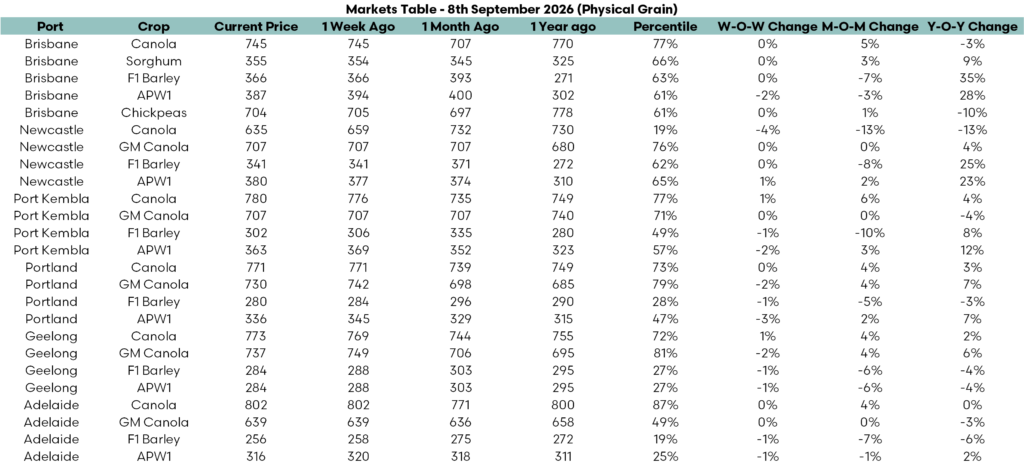
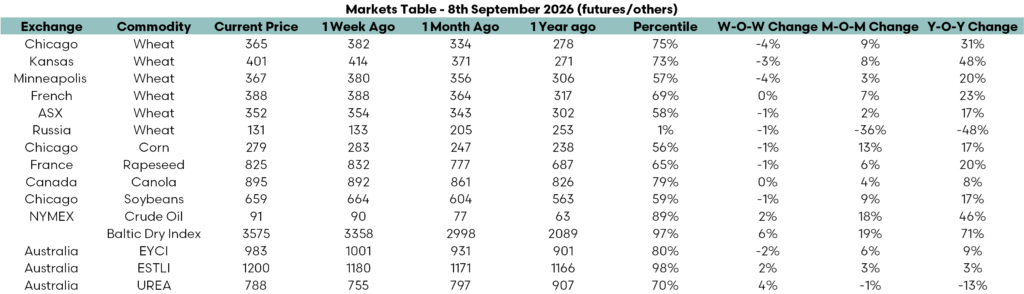
Chicago wheat was down 4pc over the week, Kansas fell 3pc, and Minneapolis dropped 4pc. Those numbers need a small qualification because US grain futures were closed on Monday, September 7 for the Labor Day holiday, meaning the latest table does not include a normal Monday trading session. More importantly, the pullback needs perspective. Chicago wheat is still 9pc higher than a month ago, Kansas is up 8pc and French wheat is 7pc higher. The Black Sea risk premium has not disappeared, but some of the enthusiasm has cooled.
There has been little obvious progress towards ending the war. US diplomatic efforts over the weekend did not produce a breakthrough, while attacks on ports and shipping continue to restrict Russian and Ukrainian exports. Europe is benefiting from the disruption, with France and other western EU exporters picking up business into markets including Egypt, Sudan and West Africa. At the same time, Saudi Arabia cancelled a 535,000t wheat tender because prices were considered too high. That tells us something important: disrupted supply is supporting prices, but higher prices eventually start to ration demand as well.
Ukraine is managing to get more grain out. Weekly wheat, corn and barley exports jumped 80pc to around 434,000t, but that is well below the roughly 760,000t being shipped each week when the main Black Sea ports were running normally in early July. The grain is increasingly travelling through the Danube, but the cost is high. Logistics from the Danube are estimated at A$56-69/t more than normal Black Sea movements, while vessel shortages have pushed some longer-haul freight rates another A$28-35/t higher in a single week.
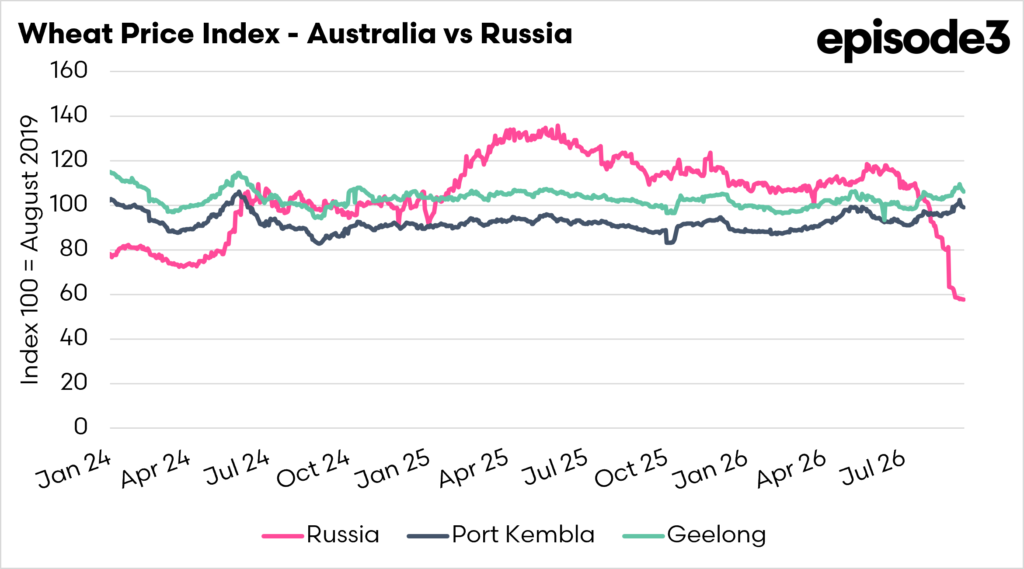
The grain in the black sea region has not disappeared; it is only delayed. Russian and Ukrainian stocks will build while export routes are constrained. A peace agreement or shipping deal suddenly allows those tonnes to move freely again; the same wheat sitting behind the ports becomes a competitor and can hit the market like a tsunami. Markets can change very quickly, which is why rallies created by geopolitical events should be treated as opportunities rather than guarantees of permanently higher prices. We saw this in the past week, as the possibility of peace or a deal caused the market to tank.
Europe has another problem developing away from the war. Just 27pc of the French maize crop is now rated good-to-excellent, compared with 62pc last year and the lowest rating since records began in 2011. French maize production could fall dramatically, increasing the prospect of additional wheat being fed domestically. That matters because Europe is being asked to provide more grain to importers displaced from the Black Sea at precisely the time its own feedgrain supply is under pressure. Global food prices are also moving higher again, with the FAO Food Price Index reaching its highest level since late 2022 during August.
Closer to home, Australian crop conditions received another useful drink. Rainfall greater than 15mm was recorded through large parts of Victoria, south-eastern South Australia and southern NSW, while several systems also delivered useful rain across parts of WA. There were some heavier falls and flood warnings, particularly in Victoria and Tasmania, but from a national winter crop perspective the spring weather has generally been more helpful than harmful.
Fertiliser is still the slightly uncomfortable part of the equation. Australian urea jumped another 4pc this week to A$788/t, although it is 13pc below a year ago. Global urea prices are being supported by European demand, high gas costs and uncertainty around Middle Eastern logistics. Australian import values have risen to around A$788, around the same level as pre-conflict.
The Black Sea is the driver of the market until peace, or a shipping deal is inked. It is a reminder not to assume the market will keep rewarding you for holding off selling; markets can run up quickly and retreat just as quickly. Have a plan.