
Sheepmeat export update August 2026
August 2026 - Sheep Meat Export Update
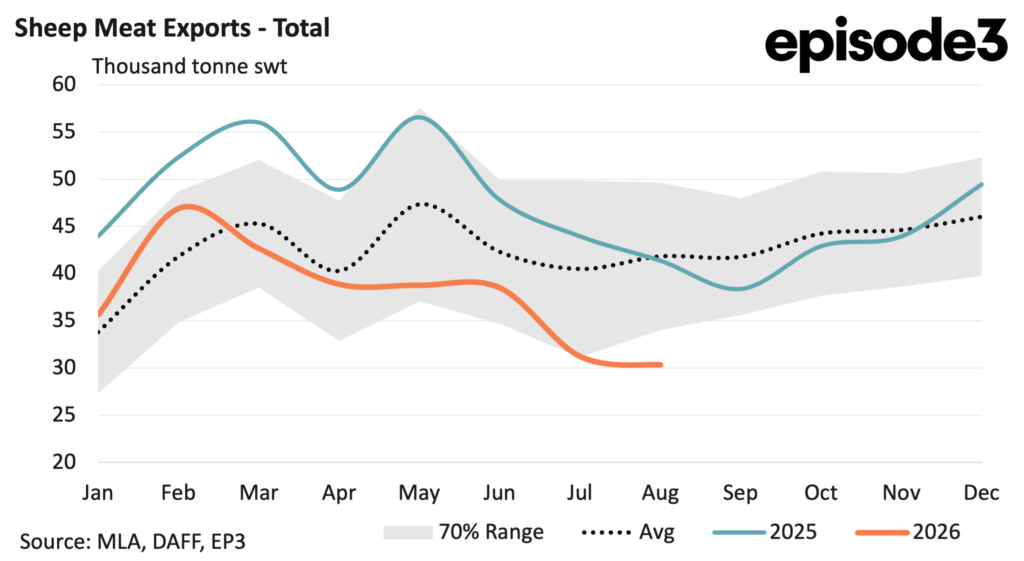
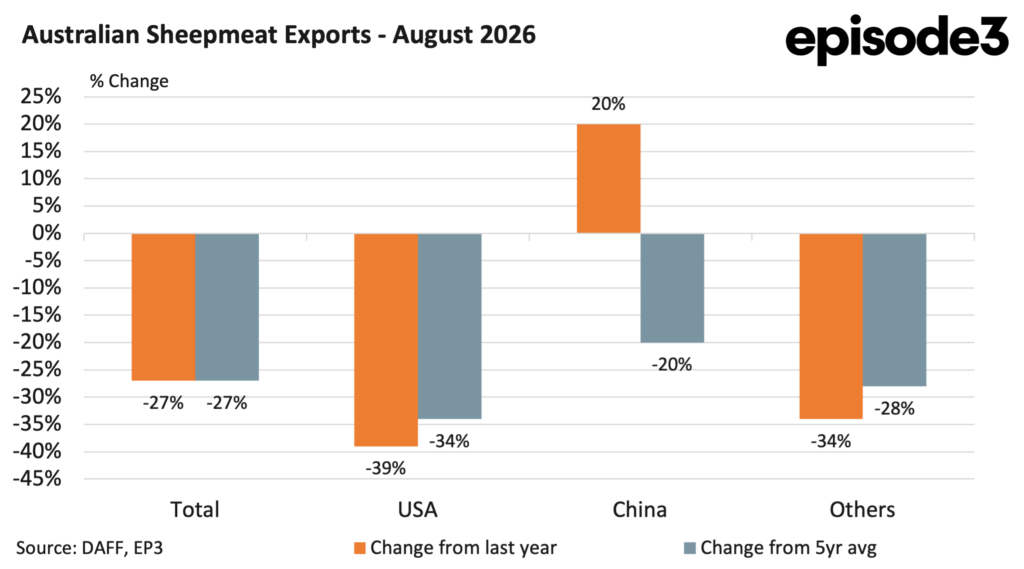
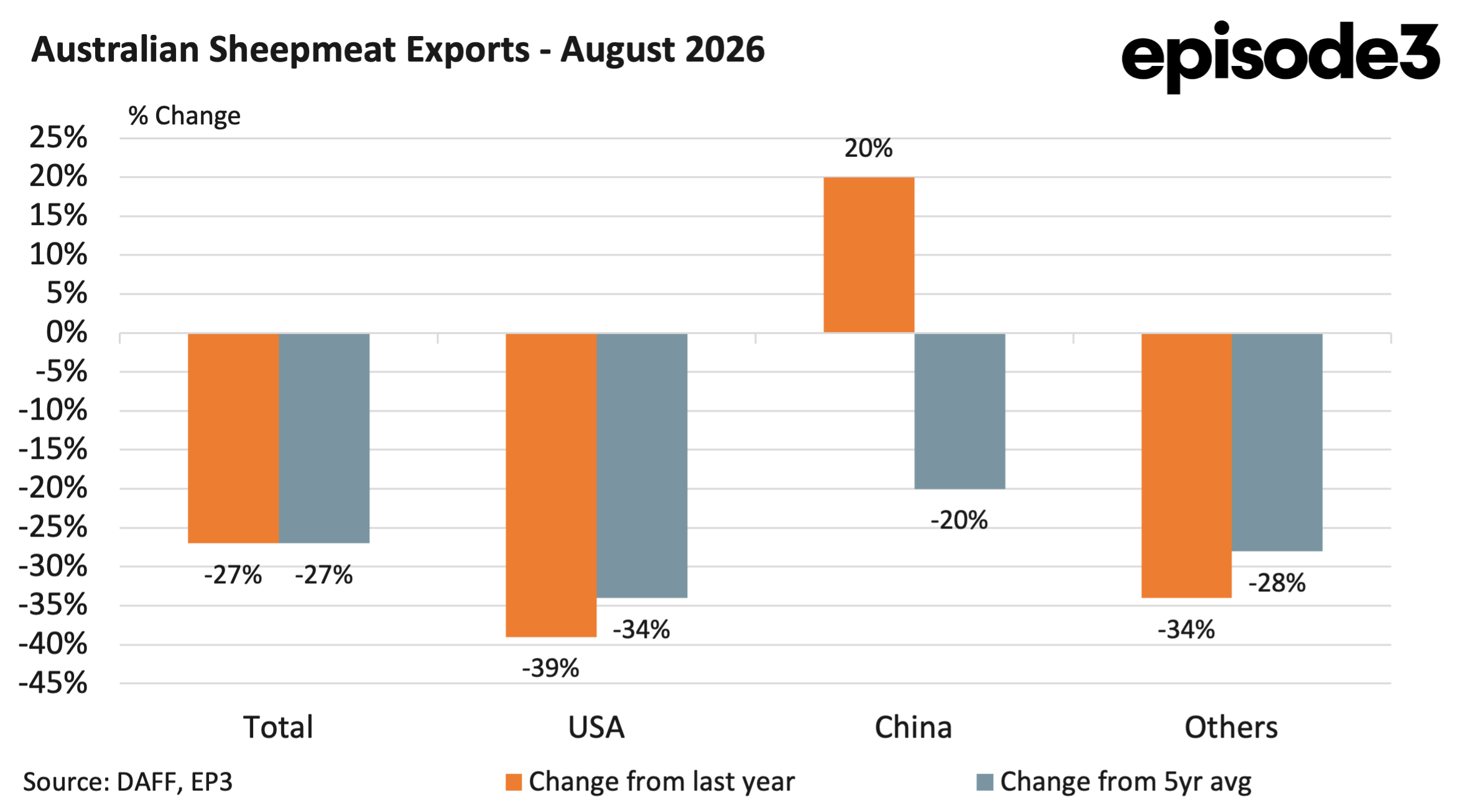
Australian sheepmeat exports remained well below the extraordinary volumes of recent years during August, with total shipments down 27pc compared with both August last year and the five-year average. Unlike the beef trade, where export volumes remain historically elevated, sheepmeat is now operating in a substantially tighter supply environment and the export numbers are reflecting that change.
The August result continues the softer pattern seen through the middle of 2026. July exports had already fallen 29pc year-on-year and 23pc below the five-year average, meaning August represents another month where considerably less Australian sheepmeat has been available to international customers. The interesting part of the August numbers is not simply that exports are lower, it is where the available product is going.
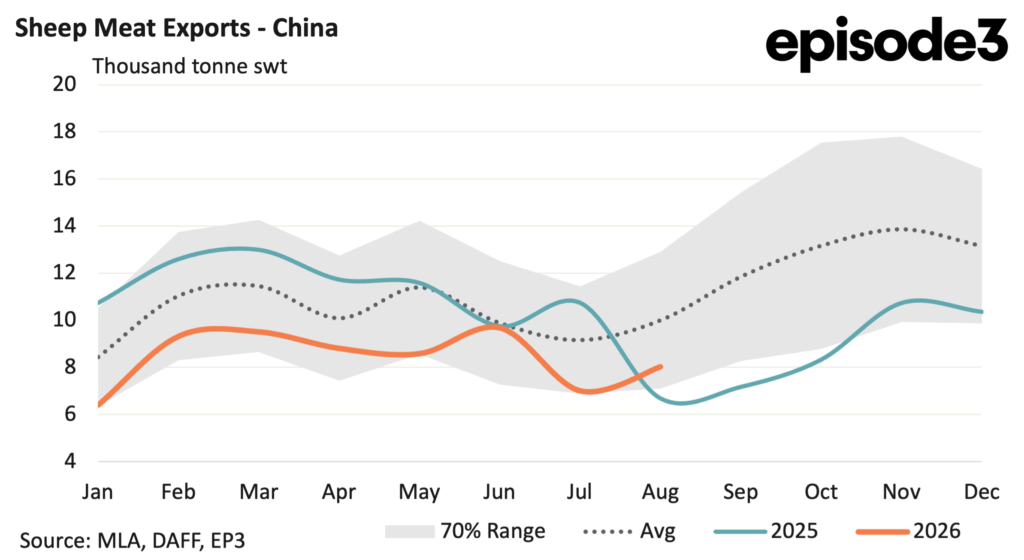
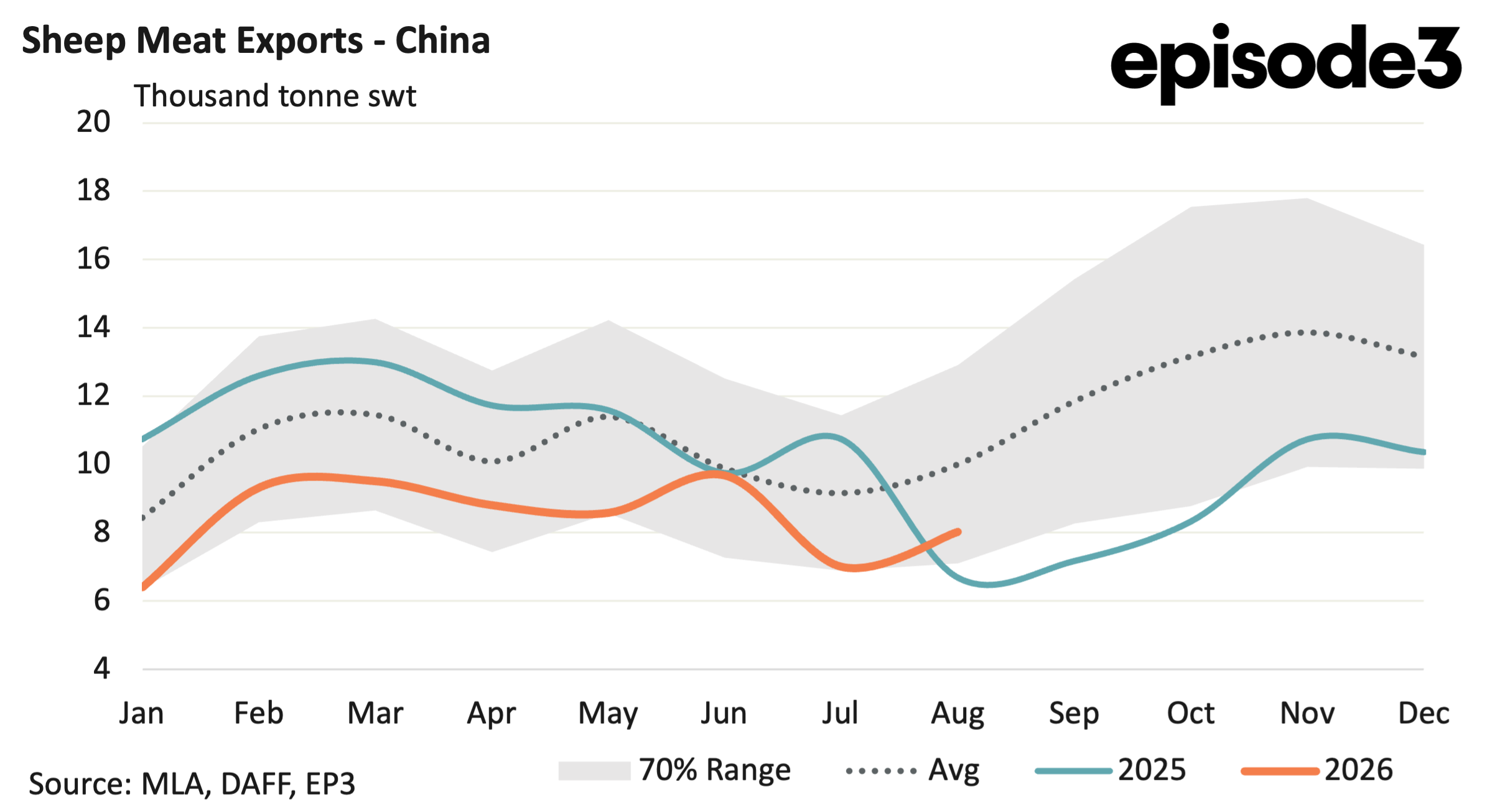
China was the clear exception to the broader decline. Australian sheepmeat exports to China during August were 20pc higher than the same month last year. That is a particularly strong result given the overall export pool was down by more than a quarter. Even with that year-on-year improvement, however, Chinese shipments remained 20pc below the five-year average. This highlights just how large Australian sheepmeat flows to China have been historically. China can post a sizeable improvement on 2025 and remain considerably below what would normally be expected for August.
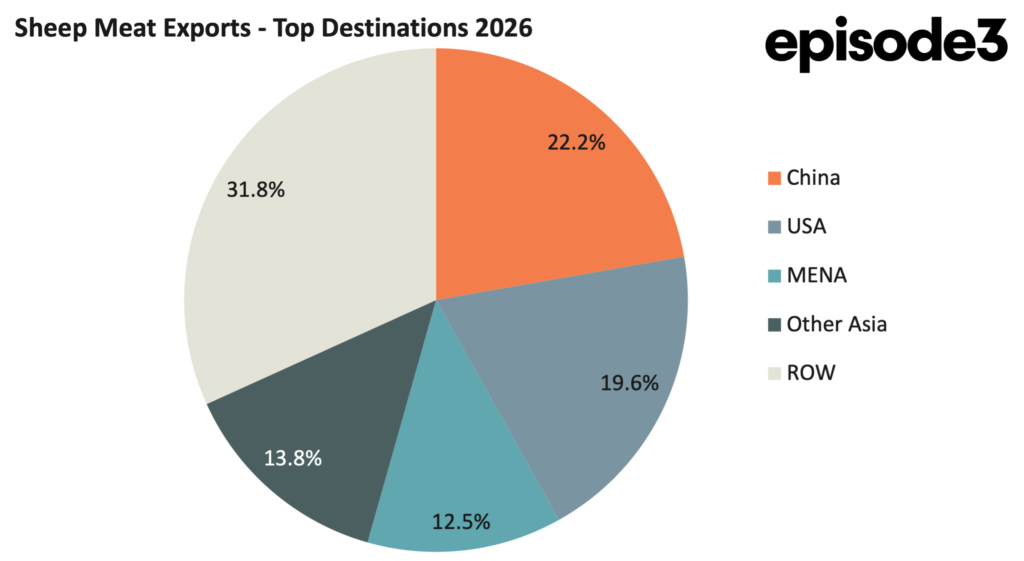
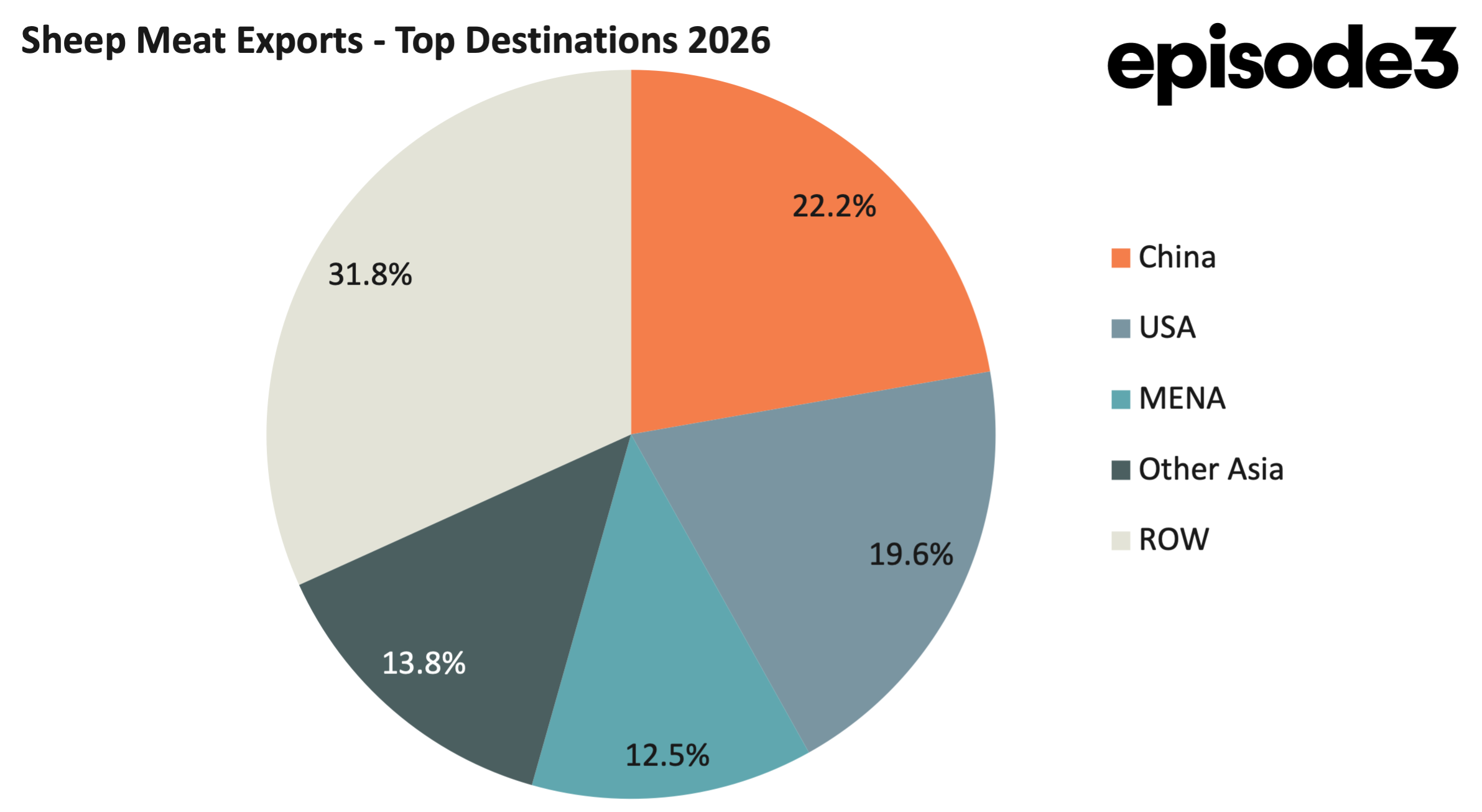
The strength in China has nevertheless continued to increase its importance within the Australian export mix. China now accounts for 22.2pc of Australian sheepmeat exports so far during 2026, up from 21.8pc at the end of July and 21.7pc at the end of June. It remains Australia’s largest individual sheepmeat destination.
The United States moved in the opposite direction during August. Exports to the US were 39pc below August last year and 34pc below the five-year average. This represents a substantial slowdown for a market that has been an important high-value destination for Australian lamb in recent years.
The US still accounts for 19.6pc of Australian sheepmeat exports so far during 2026, retaining its position as the second-largest individual destination. However, its share has slipped from 19.8pc at the end of July. The August result is also noticeably weaker than July, when US exports were only 5pc below the previous year, albeit 17pc below the five-year average. The deterioration in August therefore suggests the reduction in total Australian export availability is now being felt more heavily in the US market.
The broader collection of export destinations was similarly subdued. Shipments to markets outside China and the US were 34pc below last year and 28pc below the five-year average. This is important because the decline in Australian sheepmeat exports is clearly not being driven by weakness in one or two individual markets. Reduced volumes are being spread across much of the export customer base.
Looking at the year-to-date destination mix reinforces how diversified the Australian sheepmeat trade remains.China accounts for 22.2pc of exports and the US another 19.6pc. MENA destinations collectively represent 12.5pc, while other Asian markets account for 13.8pc, with the remaining 31.8pc is shipped across the rest of the world.
That diversification remains important when overall export availability contracts. There are plenty of customers competing for Australian sheepmeat, but there is simply less product available than during the exceptional export period experienced through 2024 and 2025. This is the key distinction when interpreting the August figures. A 27pc fall in exports compared with both last year and the five-year average could easily be read as evidence of weak international demand. The destination data does not necessarily support that conclusion. Instead, the numbers are consistent with a sheepmeat sector adjusting to reduced slaughter availability after the very high processing and export volumes of recent years.
Australian sheep and lamb prices have also risen sharply during 2026, increasing the cost of Australian product into international markets. China’s performance is particularly interesting in that environment. With the total export pie considerably smaller, China has managed to take more product than it did a year ago and has gradually increased its share of Australian shipments. For sheepmeat, the question over the remainder of 2026 is increasingly not whether overseas markets can absorb Australian product. It is how Australia’s customers compete for a smaller volume of sheepmeat, and which markets are prepared to pay enough to secure their share.