
Beef export update October 2026
October 2026 - Beef export update
Australian beef exports eased in October, with total shipments reaching 128,386 tonnes, down 8pc on the corresponding month last year. Despite the annual decline, export volumes remained 23pc above the five-year October average, underscoring the continued strength of Australian beef exports relative to historical levels. October shipments were also 3pc below the 132,146 tonnes exported in September, continuing the gradual decline in monthly volumes observed since the exceptionally strong export performance in June and July.
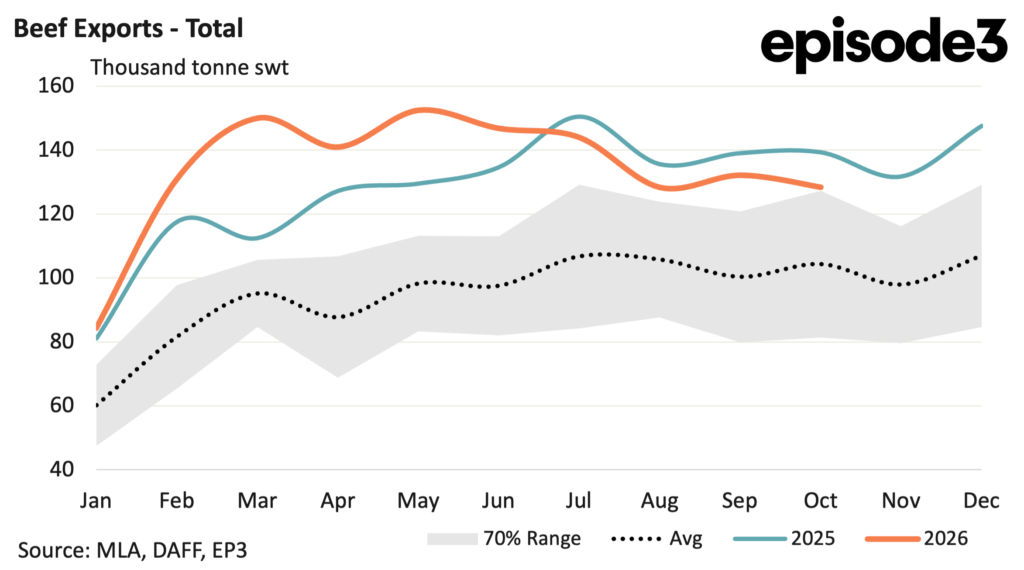
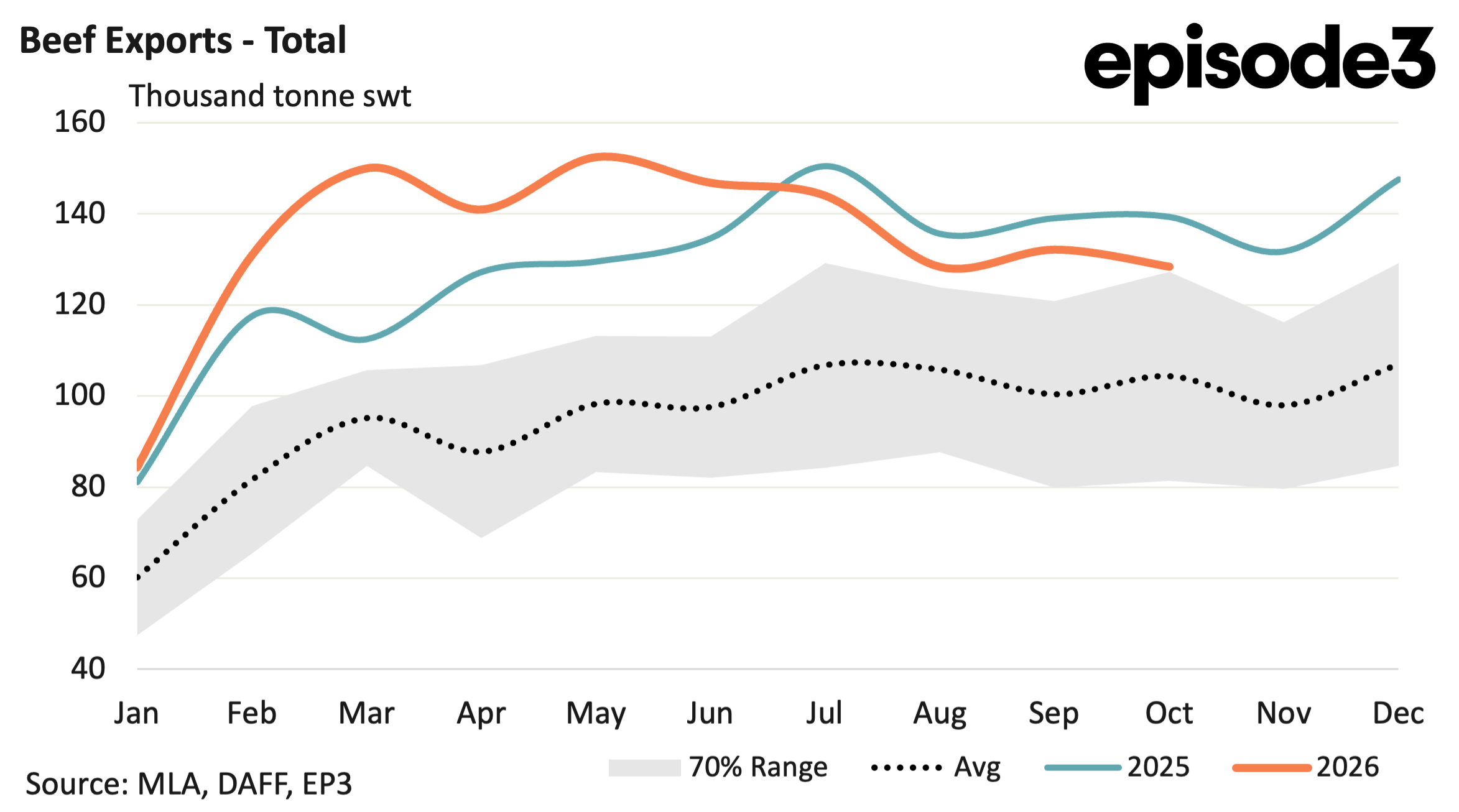
The decline reflects a combination of shifting export market conditions, particularly the safeguard tariffs affecting trade into China and South Korea, and shifts in demand across Australia’s other major destinations. However, the October figures also highlight the resilience of Australian beef exports, as stronger trade in smaller markets helped offset weaker shipments to several traditional customers. The most encouraging development during October was the recovery in Chinese demand.
Australian beef exports to China reached 10,852 tonnes, increasing by 40pc from the 7,778 tonnes shipped during September. This represents the strongest monthly volume recorded since China’s safeguard measures disrupted Australian beef trade earlier in the year. Despite this improvement, Chinese shipments remained 46pc below October last year and 34pc below the five-year average.
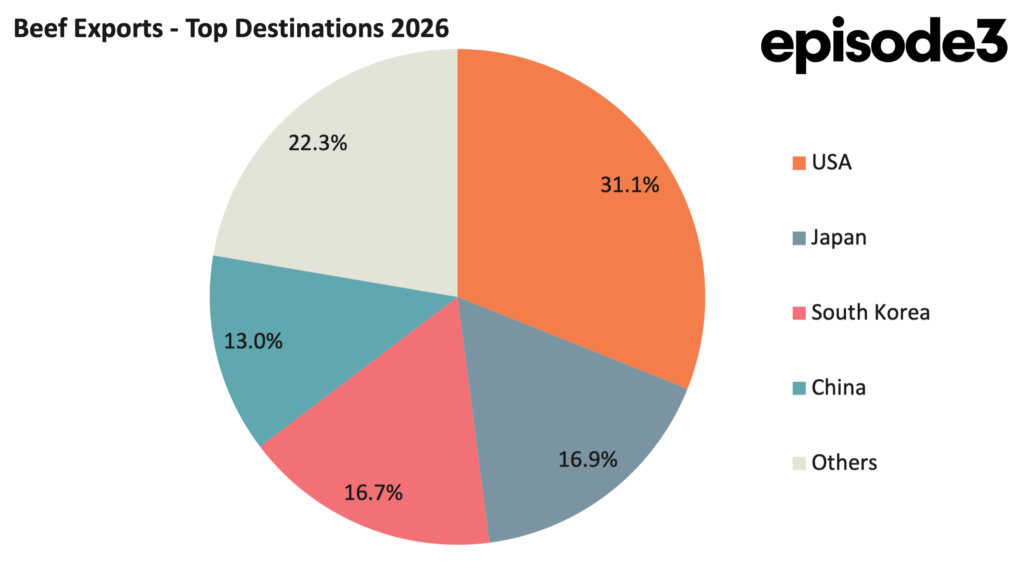
The safeguard tariff continues to weigh heavily on Australia’s competitiveness in China, although the October recovery suggests that some buyers remain willing to purchase Australian beef despite the additional costs. China’s share of Australian beef exports has fallen considerably during 2026. Having previously occupied second position among Australia’s largest export destinations, China now sits in fourth place, accounting for 13pc of year-to-date shipments.
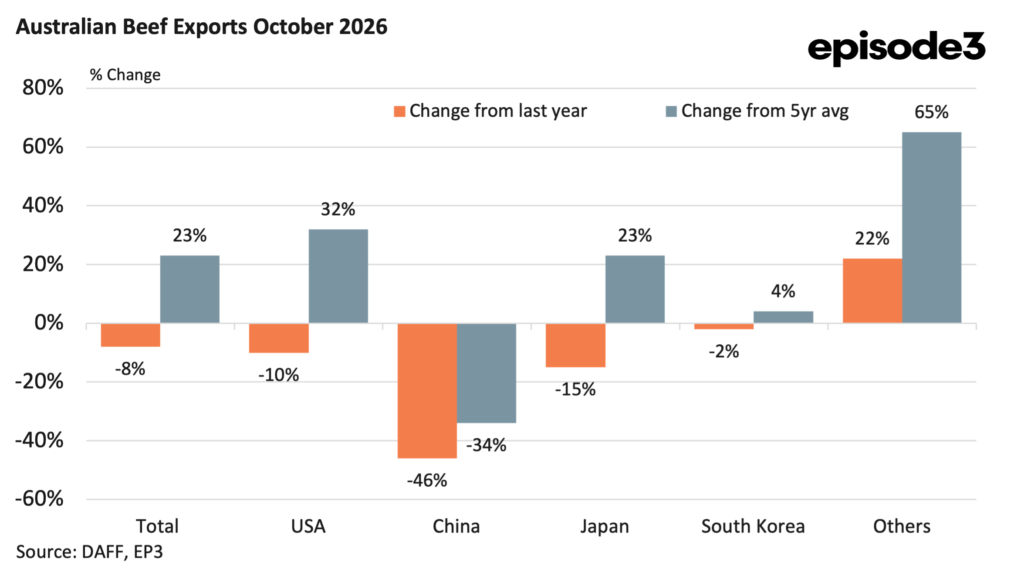
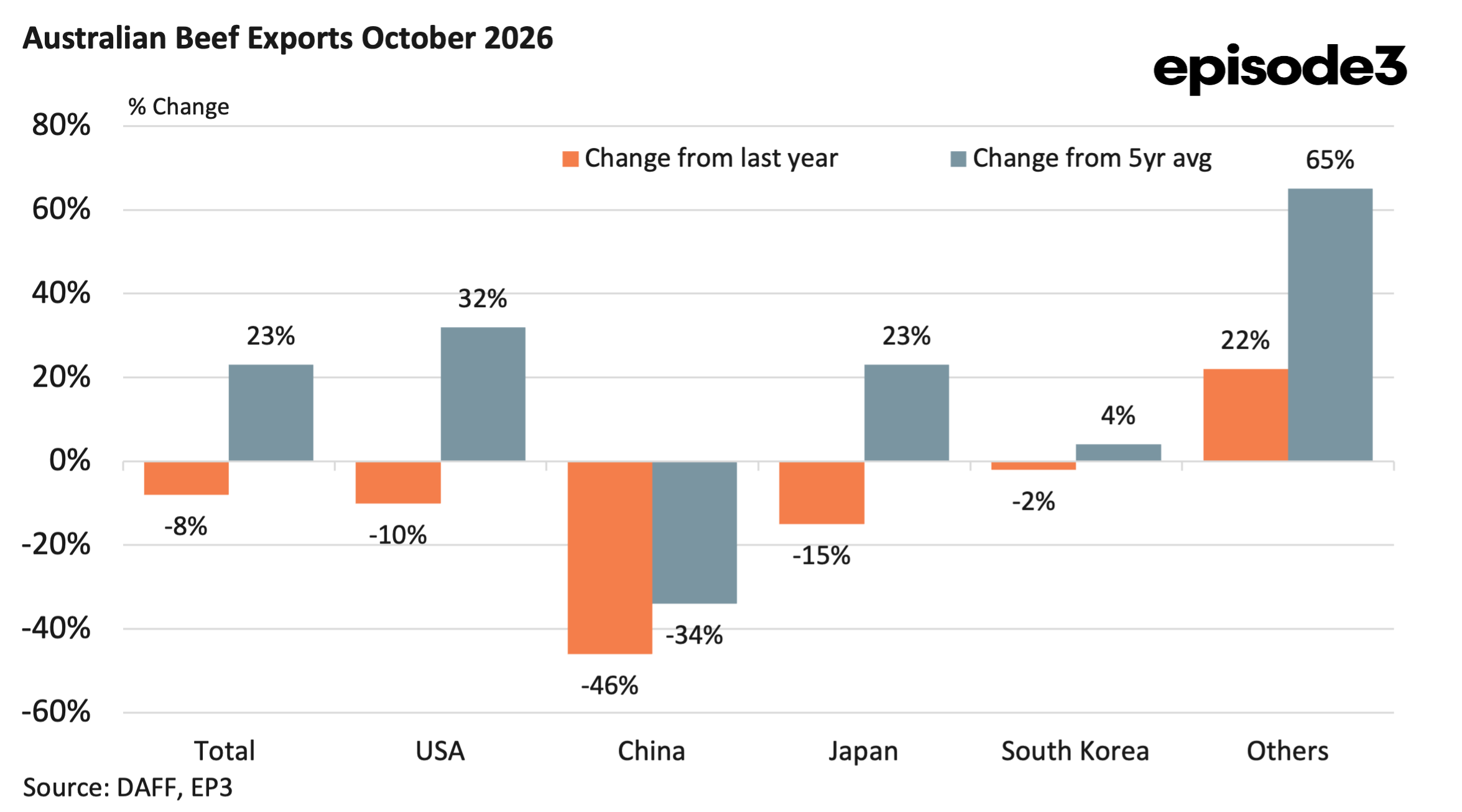
The improvement in October is encouraging, but volumes remain well below historical levels. A more substantial recovery is likely to depend on the resetting of safeguard arrangements and the restoration of more competitive trading conditions. The United States retained its position as Australia’s largest beef export destination during October, with shipments reaching 37,362 tonnes. This represented a decline of 14pc from September and was 10pc below October last year. Nevertheless, US shipments remained 32pc above the five-year average.
The US continues to underpin Australian beef export demand, supported by constrained domestic cattle supplies and the significant price differential between American and Australian cattle. Despite the recent easing in monthly shipments, the US has accounted for 31.1pc of Australian beef exports during 2026, almost double the share of the next largest individual destination.
Japan recorded shipments of 22,796 tonnes during October, down 16pc from September and 15pc below the corresponding month last year. However, Japanese exports remained 23pc above the five-year average, demonstrating that trade continues to perform relatively strongly against historical benchmarks. Japan has also benefited from the changing distribution of Australian beef exports during 2026, moving into second position among Australia’s largest destinations with 16.9pc of year-to-date shipments. This places Japan marginally ahead of South Korea, which accounts for 16.7pc.
South Korean exports reached 17,239 tonnes during October, a slight decline from the 17,927 tonnes shipped during September. The result was only 2pc below October last year and 4pc above the five-year average, a relatively encouraging performance given the 24pc safeguard tariff currently applying to Australian beef entering South Korea. The resilience of Korean demand suggests that buyers are continuing to source Australian beef despite the additional tariff burden. This is particularly important given the expectation that safeguard arrangements will reset as the calendar moves into 2027, potentially providing renewed opportunities for Australian exporters.
Perhaps the strongest result during October came from destinations outside Australia’s four largest individual markets. Exports to the broader ‘others’ category reached 40,137 tonnes, increasing by nearly 12pc from September. These shipments were 22pc above October last year and an impressive 65pc above the five-year average. The result highlights the increasing importance of Australia’s diversified beef export markets, particularly when trade barriers disrupt access to major destinations. The broader group of export customers now accounts for 22.3pc of Australian beef exports during 2026, providing an important alternative outlet for Australian product.
October’s export figures show that although total shipments have eased from the extraordinary levels recorded earlier in the year, international demand for Australian beef remains historically strong. China is showing early signs of recovery, South Korea continues to absorb substantial volumes despite safeguard tariffs, and alternative markets are performing exceptionally well. With the potential for improved access to China and South Korea as safeguard arrangements reset, the outlook for Australian beef exports to 2027 remains positive.