
Sheepmeat export update October 2026
October 2026 - Sheep Meat Export Update
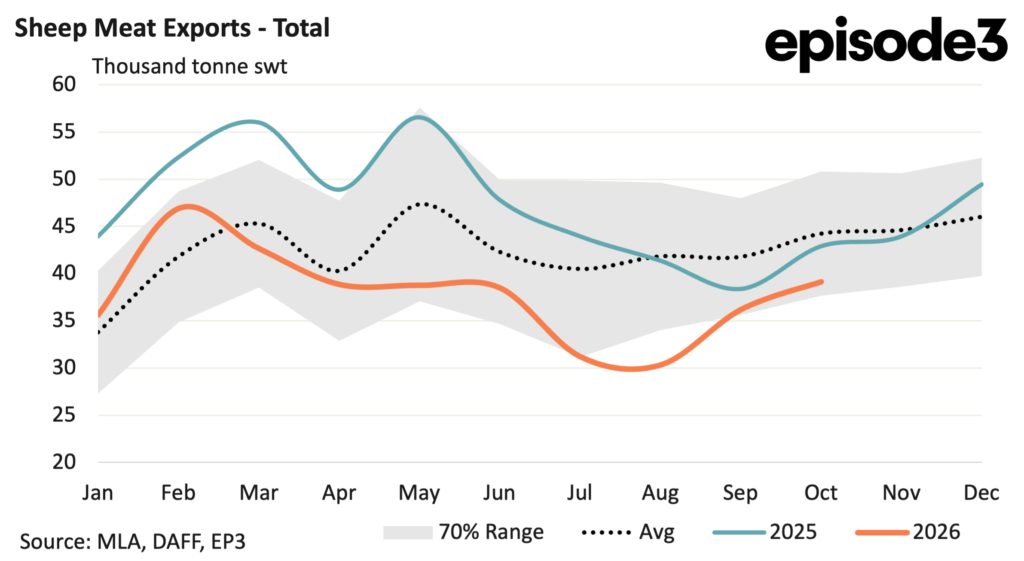
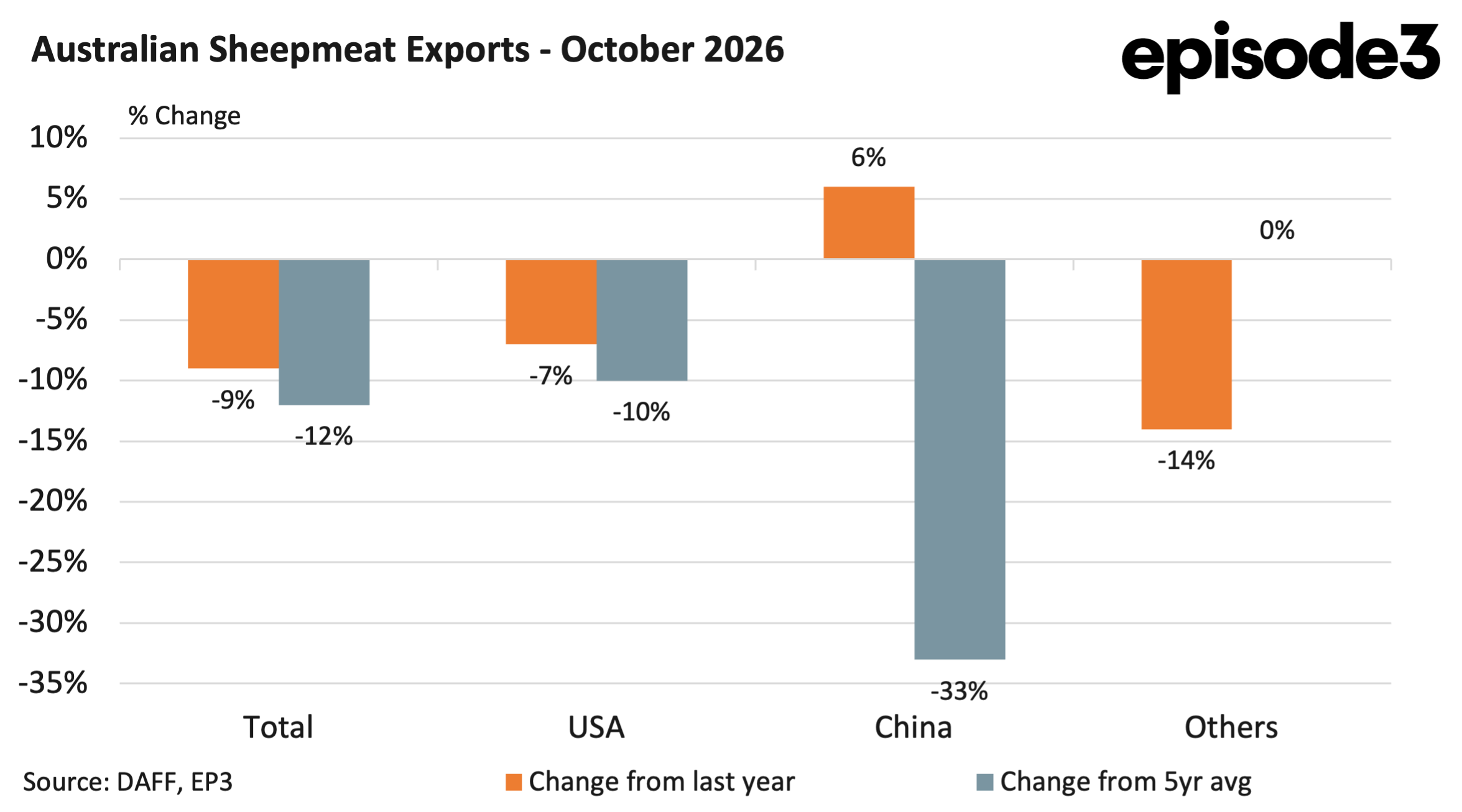
Australian sheepmeat exports improved in October, with total shipments reaching 39,132 tonnes, up 8pc on the 36,193 tonnes exported in September. Despite the monthly improvement, export volumes remained 9pc below October last year and 12pc under the five-year October average. The October result continues the recovery in export volumes from the particularly weak levels recorded during July and August. However, the improvement has not been sufficient to return Australian sheepmeat exports to historical levels, reflecting the reduced availability of sheep and lamb for processing during 2026. The latest figures also highlight some interesting differences between Australia’s major export destinations, with shipments to the United States recovering strongly, Chinese trade continuing to improve and other destinations showing a more subdued performance against last year.
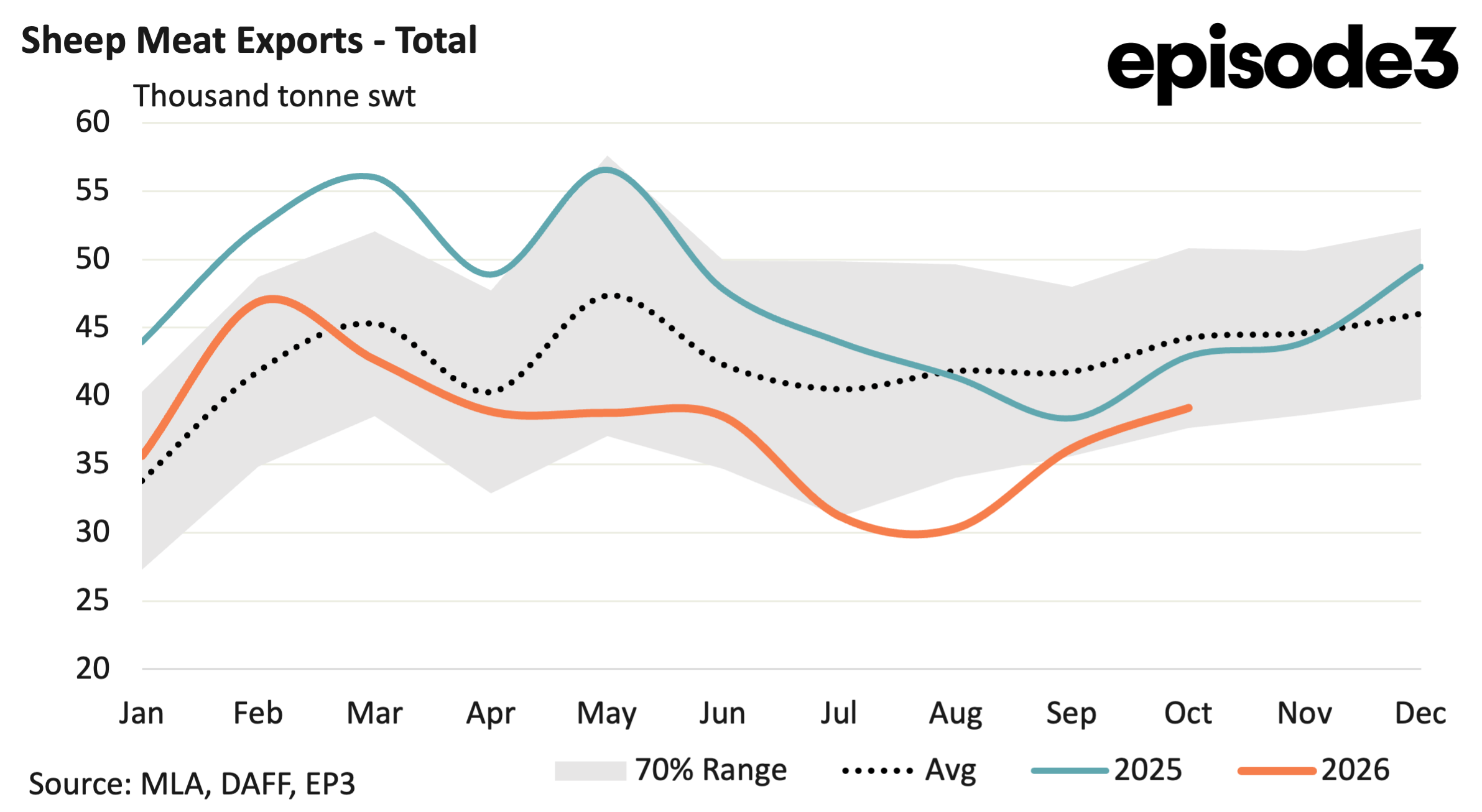
The United States recorded one of the more encouraging results during October, with Australian sheepmeat shipments reaching 7,280 tonnes, up 26pc from the 5,755 tonnes exported during September. Despite the monthly improvement, US exports remained 7pc below October last year and 10pc under the five-year average. The recovery is encouraging given the significant reduction in Australian sheepmeat exports to the US during recent months. September shipments were 41pc below the corresponding month last year, suggesting that October represented a considerable improvement in the annual comparison. The US continues to be Australia’s second-largest individual sheepmeat export destination, accounting for 19.2pc of total shipments during 2026. While American demand for Australian lamb remains an important part of the export market, recent volatility in shipments highlights the challenges of maintaining a consistent supply when Australian production volumes are constrained.
China also recorded an improvement in October, with sheepmeat shipments reaching 8,871 tonnes, increasing by 3pc from September. Chinese exports were 6pc above October last year, making China the only major destination category in the October comparison to record annual growth. However, shipments remained 33pc below the five-year October average, demonstrating how significantly trade into China has changed compared with historical patterns. This is an important distinction. Although Chinese export volumes are improving compared with last year, they remain considerably below the levels traditionally associated with the market. China continues to account for the largest individual share of Australian sheepmeat exports during 2026, representing 22.4pc of total shipments. The combination of rising monthly shipments and positive annual growth suggests that Chinese demand is providing some support for Australian sheepmeat exports, although the market has considerable ground to recover before returning to historical volumes. The broader group of other export destinations recorded shipments of 22,981 tonnes during October, increasing by approximately 5pc from September. However, these shipments were 14pc below October last year and broadly in line with the five-year average.
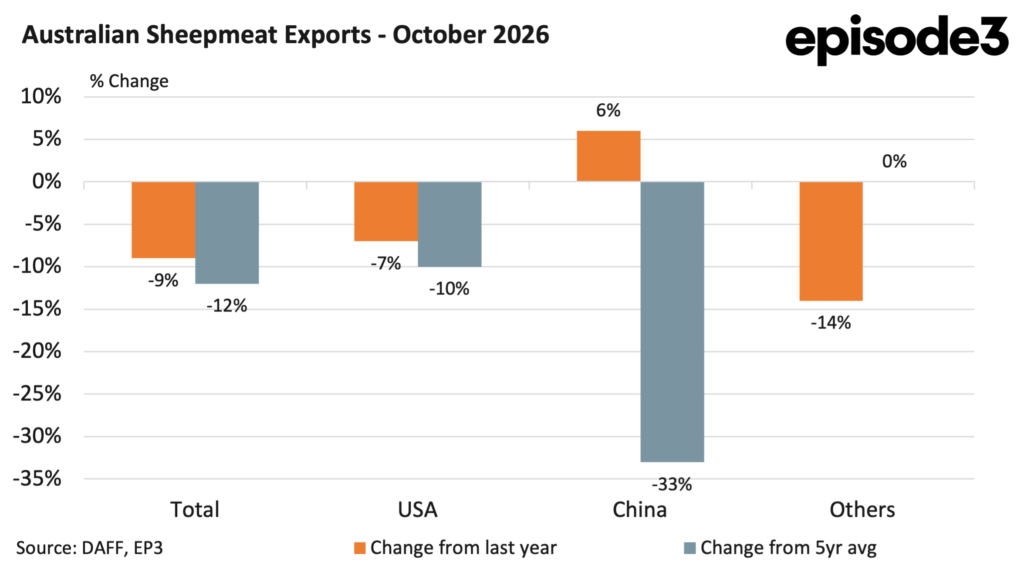
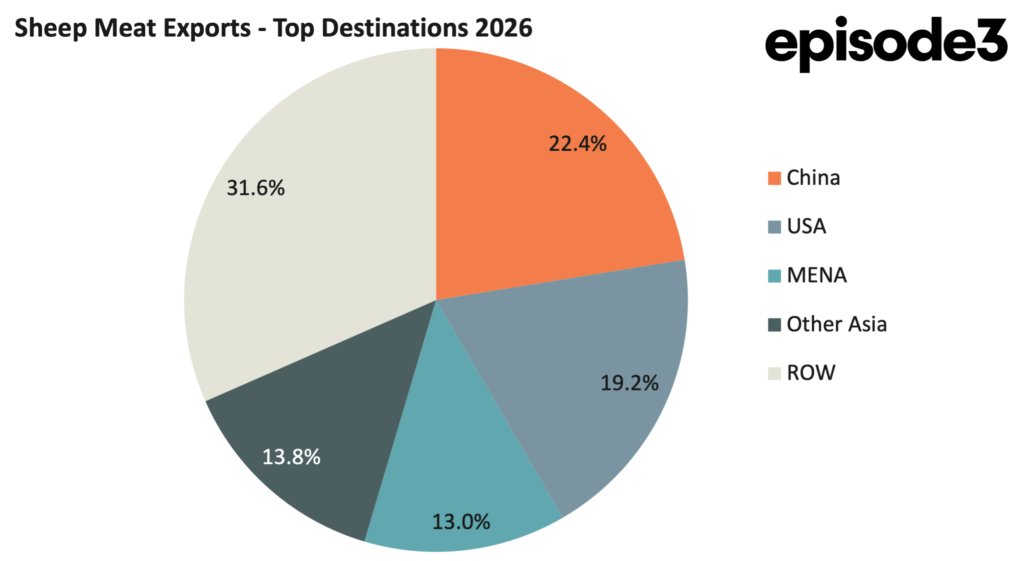
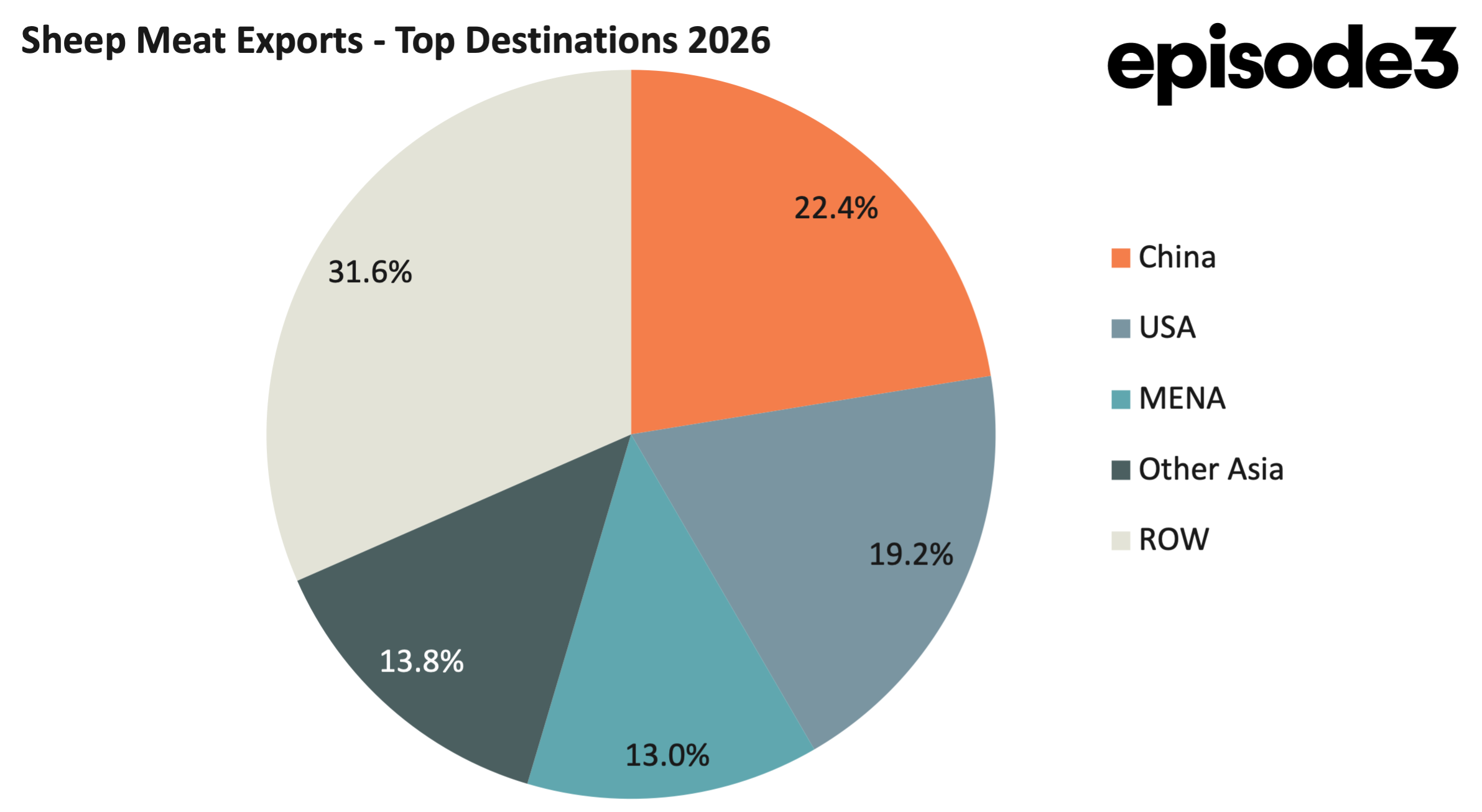
This suggests that the weakness in Australian sheepmeat exports is not confined to the United States or China, as the wider group of international customers is also receiving less product than in 2025. The distribution of Australian sheepmeat exports during 2026 demonstrates the importance of maintaining access to a diverse range of international markets. China accounts for 22.4pc of total shipments, followed by the United States at 19.2pc. The Middle East and North Africa region represents 13pc, while other Asian destinations account for 13.8pc. The remaining 31.6pc is distributed across the rest of the world.
This diversified export profile provides Australian sheepmeat exporters with considerable flexibility to direct product towards markets offering the strongest returns. Nevertheless, the October figures suggest that the primary constraint on Australian sheepmeat exports is increasingly likely to be supply rather than a widespread deterioration in international demand. Australian sheep and lamb slaughter volumes have been declining as the national flock adjusts after several years of elevated turnoff. With fewer animals available for processing and historically high livestock prices, export volumes have naturally come under pressure.
This is particularly relevant when considering the October result. Although exports were 12pc below the five-year average, this does not necessarily indicate that international demand has weakened by a similar amount. Instead, reduced Australian production is likely contributing significantly to the decline in shipments across multiple destinations. Looking ahead, the recovery in October export volumes is encouraging, particularly the stronger performance into the United States and continued improvement in Chinese shipments.