
Moving closer to rebuild

Market Morsel
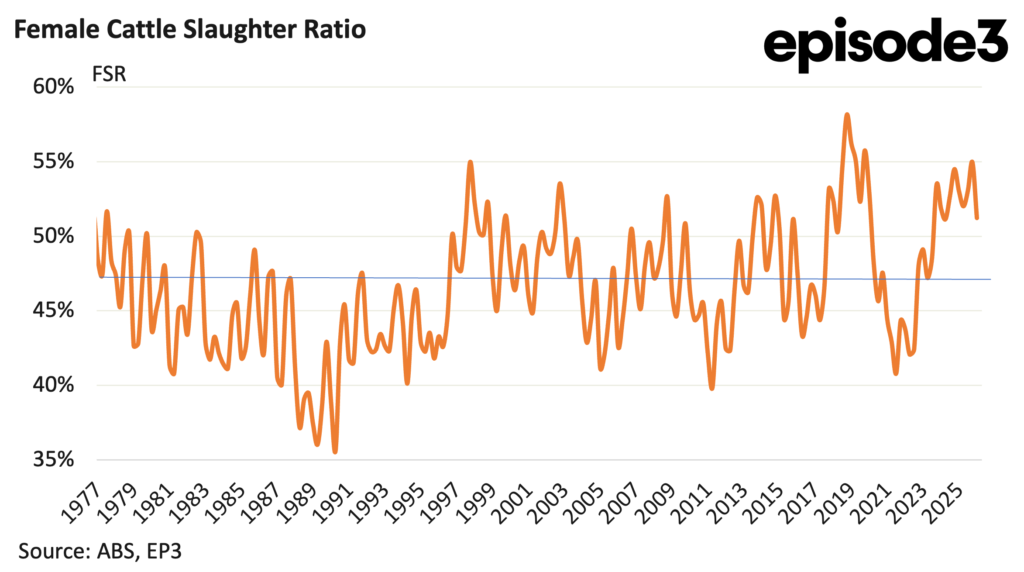
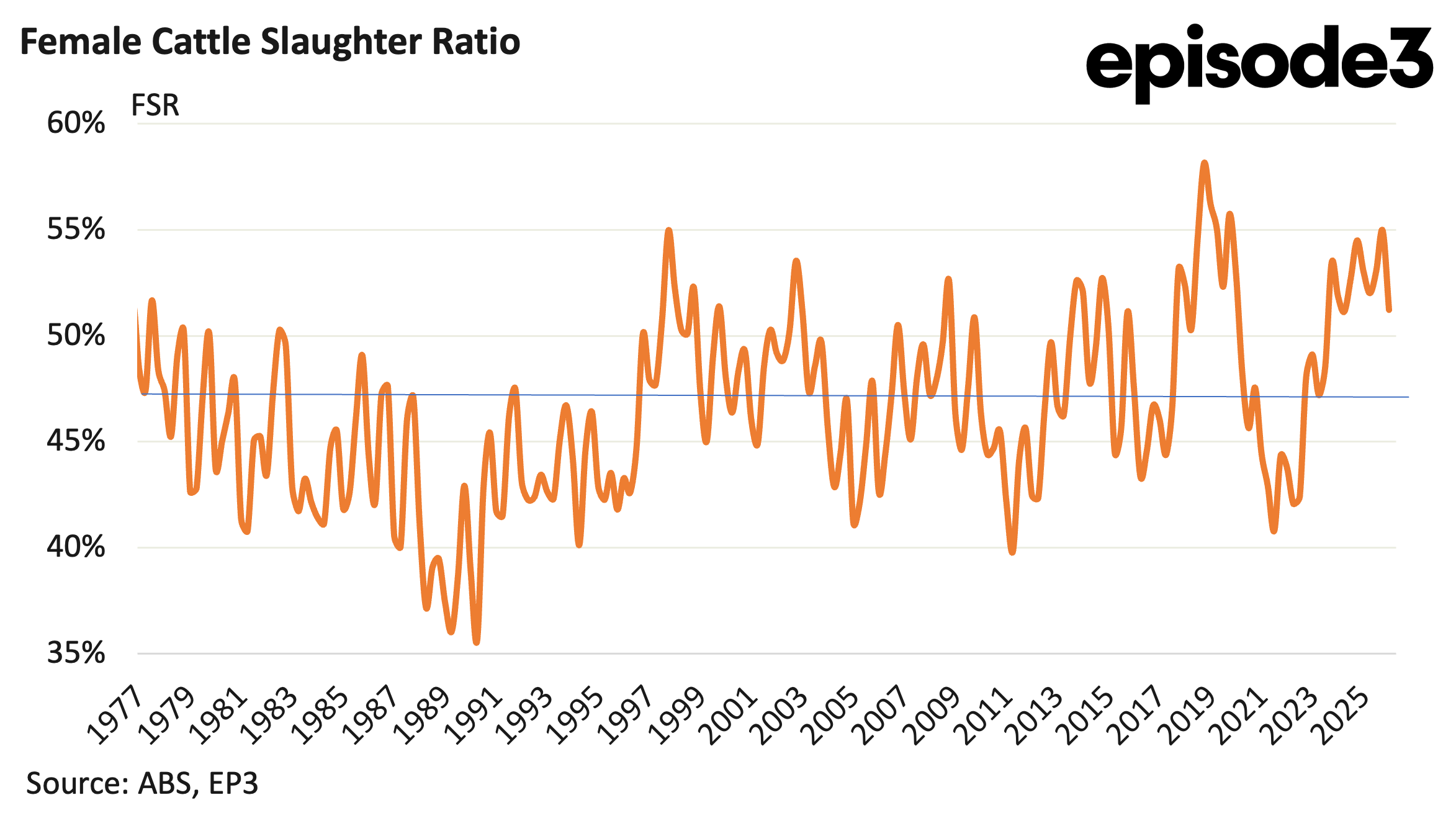
Australia’s cattle herd is showing some early signs of moving back towards a more neutral phase of the cycle, but the latest female slaughter ratio still suggests a genuine rebuild has not yet begun. The national female slaughter ratio, or FSR, dropped to 51.2pc during Q3 2026, down sharply from 55pc in Q2. That is a meaningful quarterly move and points to a reduction in the proportion of females being sent to slaughter. On an annual basis, the FSR has also eased, slipping to 53.1pc from 54pc at the mid-year analysis. That is movement in the right direction, but context remains important.
The FSR is one of the cleaner indicators of where Australia sits in the cattle cycle. When producers retain more breeding females, female slaughter falls as a proportion of total adult cattle slaughter. Historically, an FSR around or below 47pc has been associated with herd expansion, while sustained readings above that level are more consistent with herd liquidation or contraction. At 53.1pc on an annual basis, the indicator remains well above that 47pc threshold. So while Q3 has delivered a sizeable fall from the elevated Q2 reading, it is too early to suggest that Australia has moved into a genuine herd rebuild phase.
The latest result is nevertheless important because it interrupts the stronger liquidation signal seen through the first half of the year. At the mid-year point, the quarterly FSR had climbed from 53.1pc in Q1 to 55pc in Q2, with the annual measure reaching 54pc. That was pointing to continued heavy female turnoff despite strong cattle prices. The Q3 decline to 51.2pc changes the direction of travel.
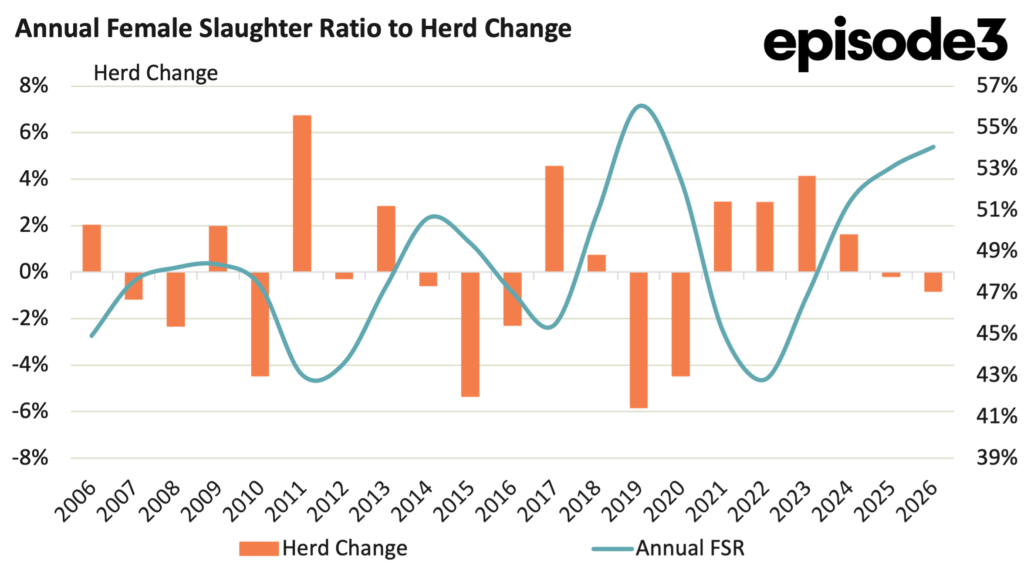
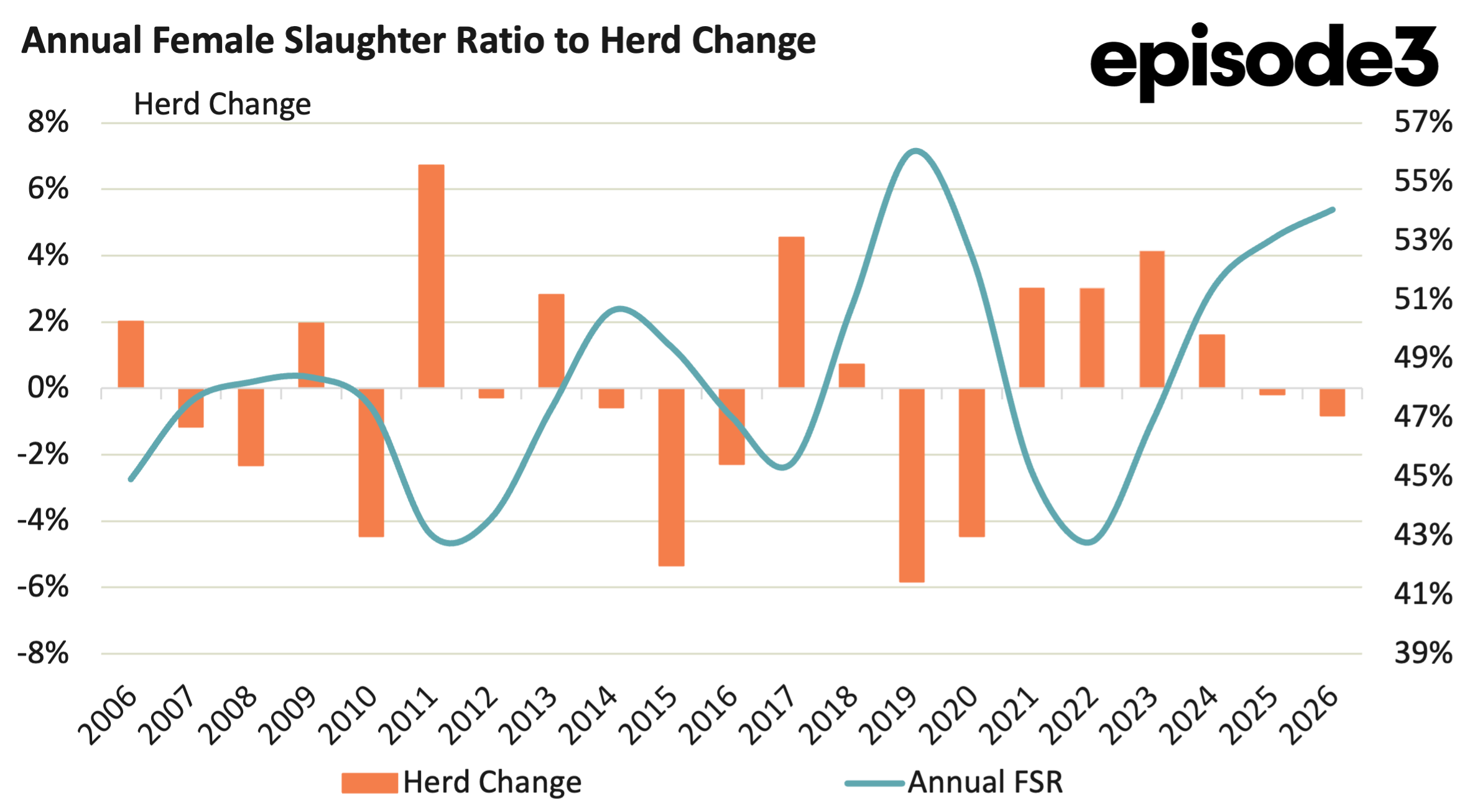
Producers appear to be retaining more females than they were earlier in the year, or at the very least the intensity of female turnoff has eased. If that trend continues through the December quarter and into 2027, the annual FSR should continue to move lower. The question is whether the improvement can be sustained.
Seasonal conditions remain central to that outcome. Earlier in the year, dry conditions across parts of Queensland and NSW likely contributed to the persistence of high female slaughter. Even with strong cattle prices, retaining additional breeding stock requires confidence in pasture, water and feed availability.N That seasonal constraint has helped explain why the cattle cycle has lagged behind the sheep cycle.
The Q3 FSR result suggests that position may now be starting to soften. For now, though, this looks more like an easing in herd liquidation than the start of a full rebuild. The quarterly FSR has taken a sizeable step lower, and the annual measure has followed it, but both remain well above the levels normally associated with expanding cattle numbers.
The next few quarters will be important. If female slaughter continues to retreat and the annual FSR begins moving towards the high-40pc range, the herd rebuild story will become much more convincing. For the moment, the cattle cycle has turned slightly, but not yet enough to say the rebuild is underway.