
Sheep turnoff pushes deeper into rebuild territory
Market Morsel
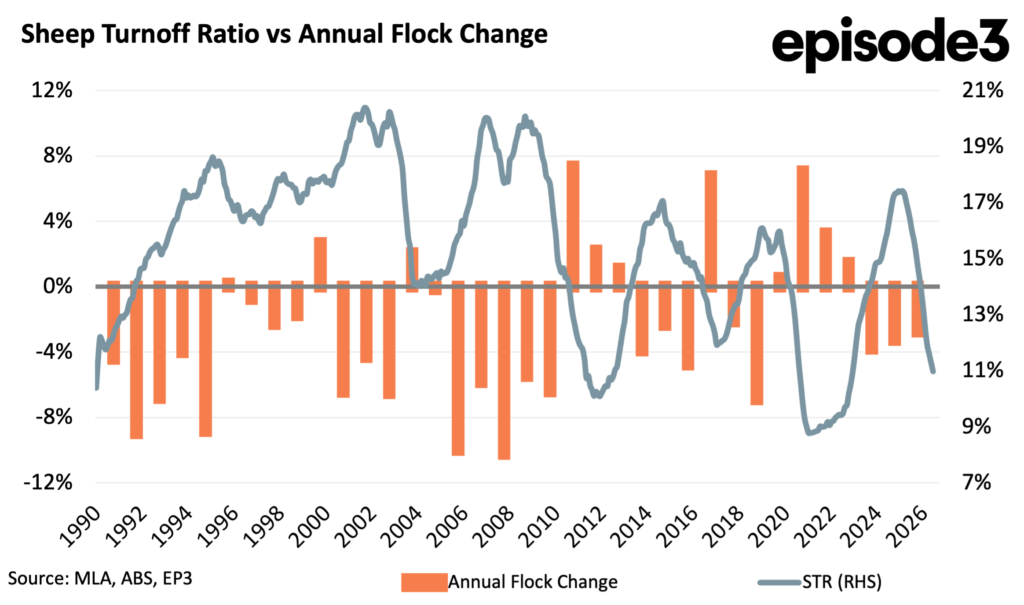
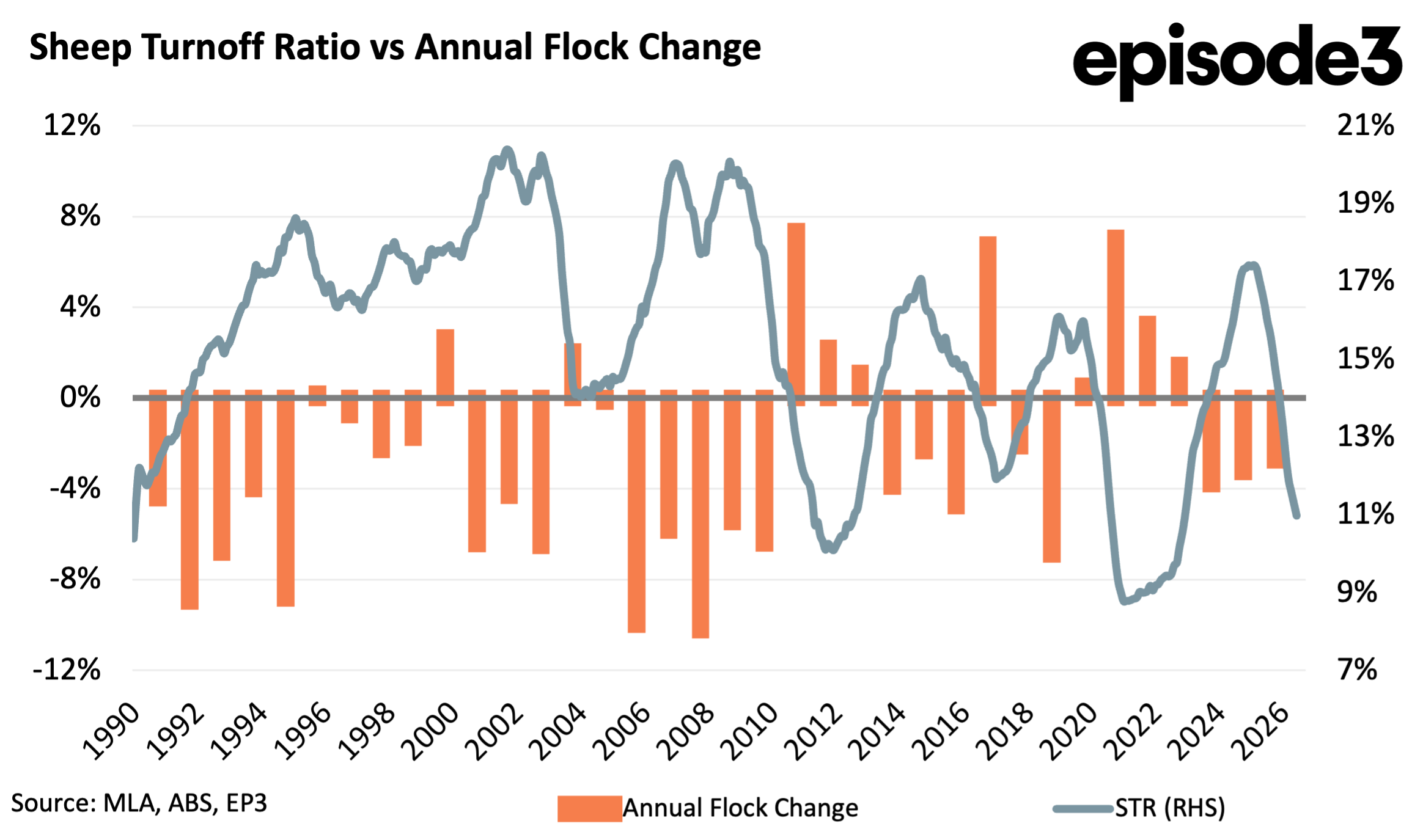
The signal from Australia’s Sheep Turnoff Ratio has strengthened again, with the September result pointing increasingly towards a return to flock growth. The STR fell to 11pc in September, down from 11.9pc at the end of June and from 13.8pc in March. That is a significant shift over a relatively short period and places the indicator firmly in territory historically associated with flock rebuilding.
The STR measures sheep slaughter and live exports relative to the size of the national flock. In simple terms, it shows how heavily producers are drawing down sheep numbers. When the ratio is high, turnoff is at levels typically associated with flock contraction. When it falls, more sheep are retained and the likelihood of flock growth increases. The STR climbed above 17pc in 2024 and 2025, as elevated sheep turnoff drove a significant reduction in flock numbers. Since then, the indicator has fallen rapidly, dropping through 14pc earlier this year, to 11.9pc in June and now to 11pc by September.
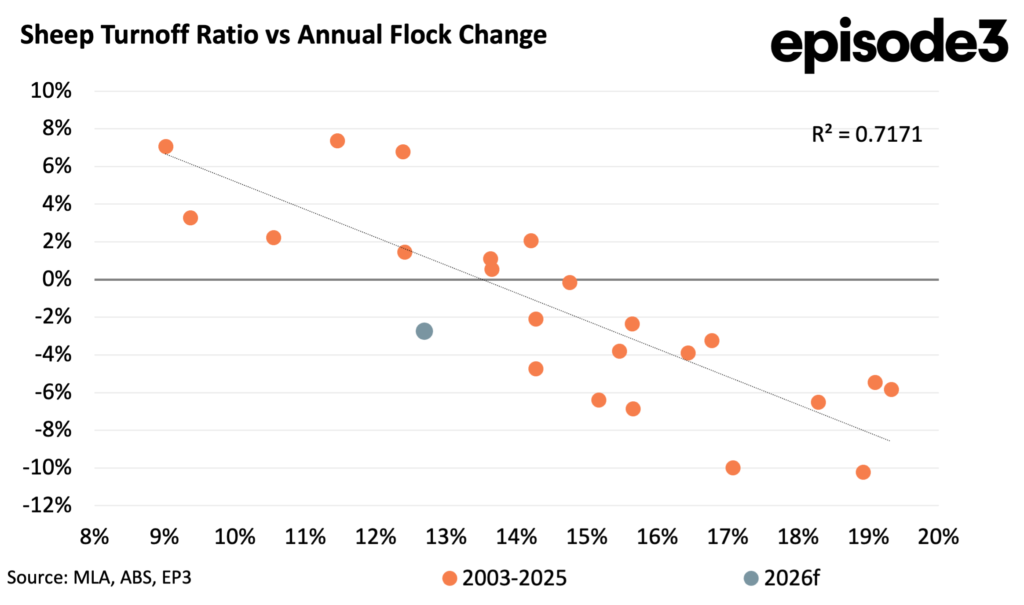
Historically, readings around current levels have generally been accompanied by flock growth rather than contraction. Comparing annual STR levels with annual changes in the national flock between 2003 and 2025 shows a reasonably strong inverse relationship, with an R-squared of nearly 0.72. As the STR rises, flock growth tends to weaken. As the ratio falls, flock growth generally improves. At an STR of around 11pc, the historical relationship points to flock growth of approximately 1pc. That is not an aggressive rebuild.
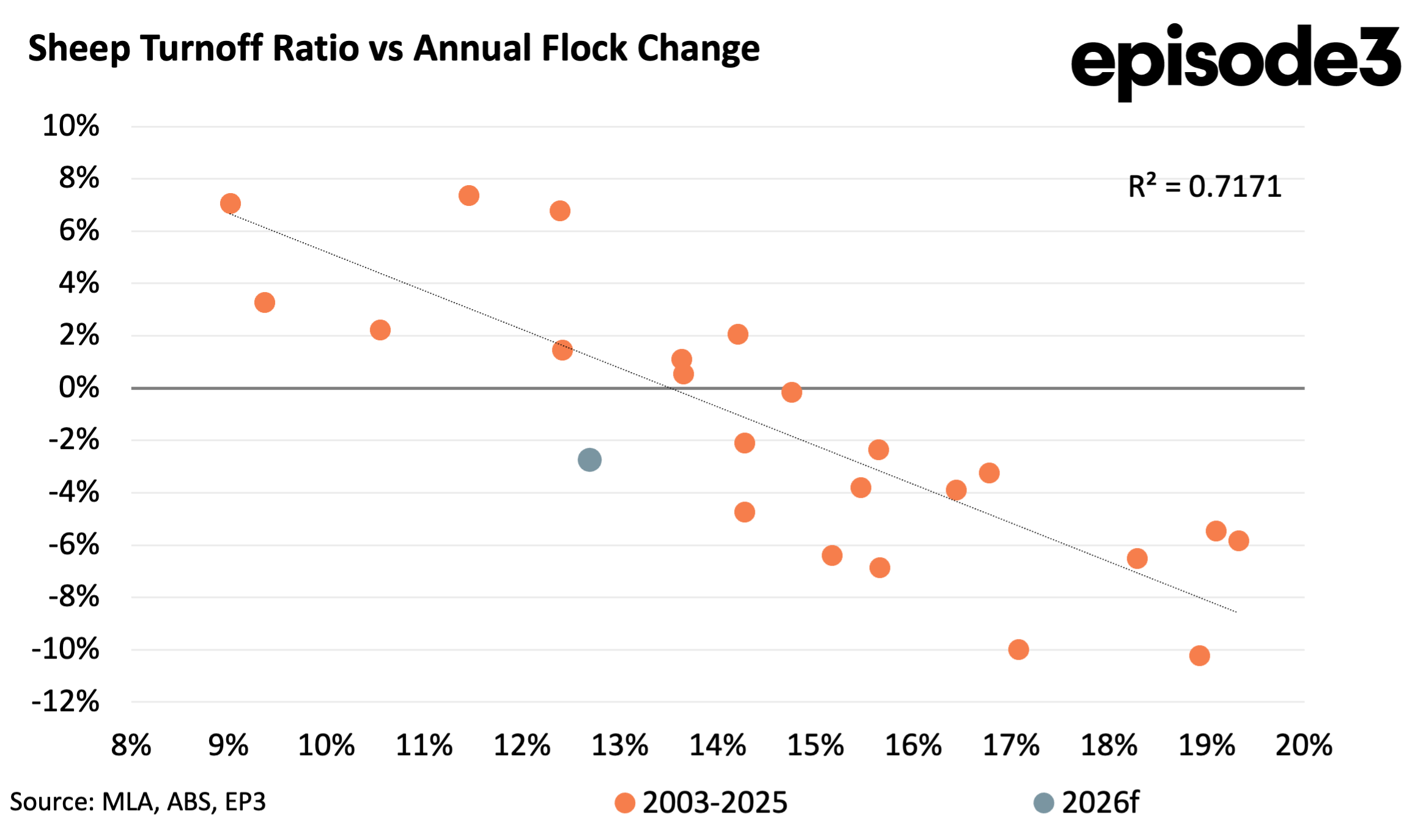
Previous periods of substantial flock expansion have generally required the STR to fall into single digits. During the 2021–2022 rebuild, for example, the ratio dropped to around 9pc as producers sharply reduced turnoff and retained substantially more stock. Nevertheless, the September reading suggests the industry has moved beyond simply stabilising numbers.
Earlier in the year, an STR in the 13pc to 14pc range suggested the flock was approaching a turning point. At 11pc, historical evidence increasingly points towards positive flock growth. The speed of the decline is also important. Turnoff has fallen substantially over three successive quarters, suggesting the move is more than a temporary fluctuation. Producers are retaining a greater proportion of the national flock, and, provided seasonal conditions remain supportive, that should begin to feed through into flock numbers.
There remains a considerable difference between a modest rebuild and the rapid expansion seen earlier this decade. An increase of around 1pc would mark the early stages of a new cycle rather than a dramatic recovery in sheep numbers. But that distinction matters. A rebuilding flock generally means fewer sheep available for slaughter in the near term, as producers retain females and younger stock. That can keep livestock availability tight even as the underlying breeding base begins to recover.
For producers, that remains supportive of sheep and lamb prices, so long as we don’t get a nasty surprise from the outcome of the US lamb import enquiry later this year. For processors, rebuilding can prolong tight supply conditions before additional retained breeding stock eventually delivers greater lamb production. The September STR reading therefore strengthens the message that emerged earlier in 2026. The liquidation phase appears to have ended, stabilisation has progressed quickly, and the Australian sheep flock is now showing increasingly convincing signs of returning to growth. At an STR of around 11pc, history suggests that growth could be in the order of 1pc by the end of 2026.