Food inflation Update
Food Inflation Update - Jan 2026
The latest Consumer Price Index data shows inflation increasingly concentrated in specific categories, particularly red meat and beverages, while fresh food prices have begun to soften. The shift suggests food inflation is moving away from the widespread increases seen earlier in the decade and toward a more fragmented environment driven by individual commodity cycles.
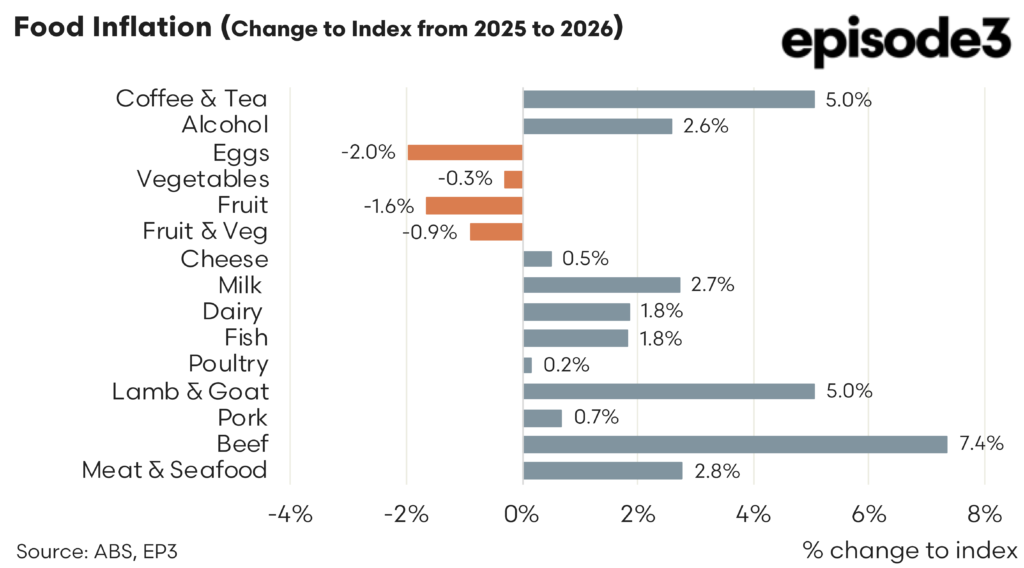
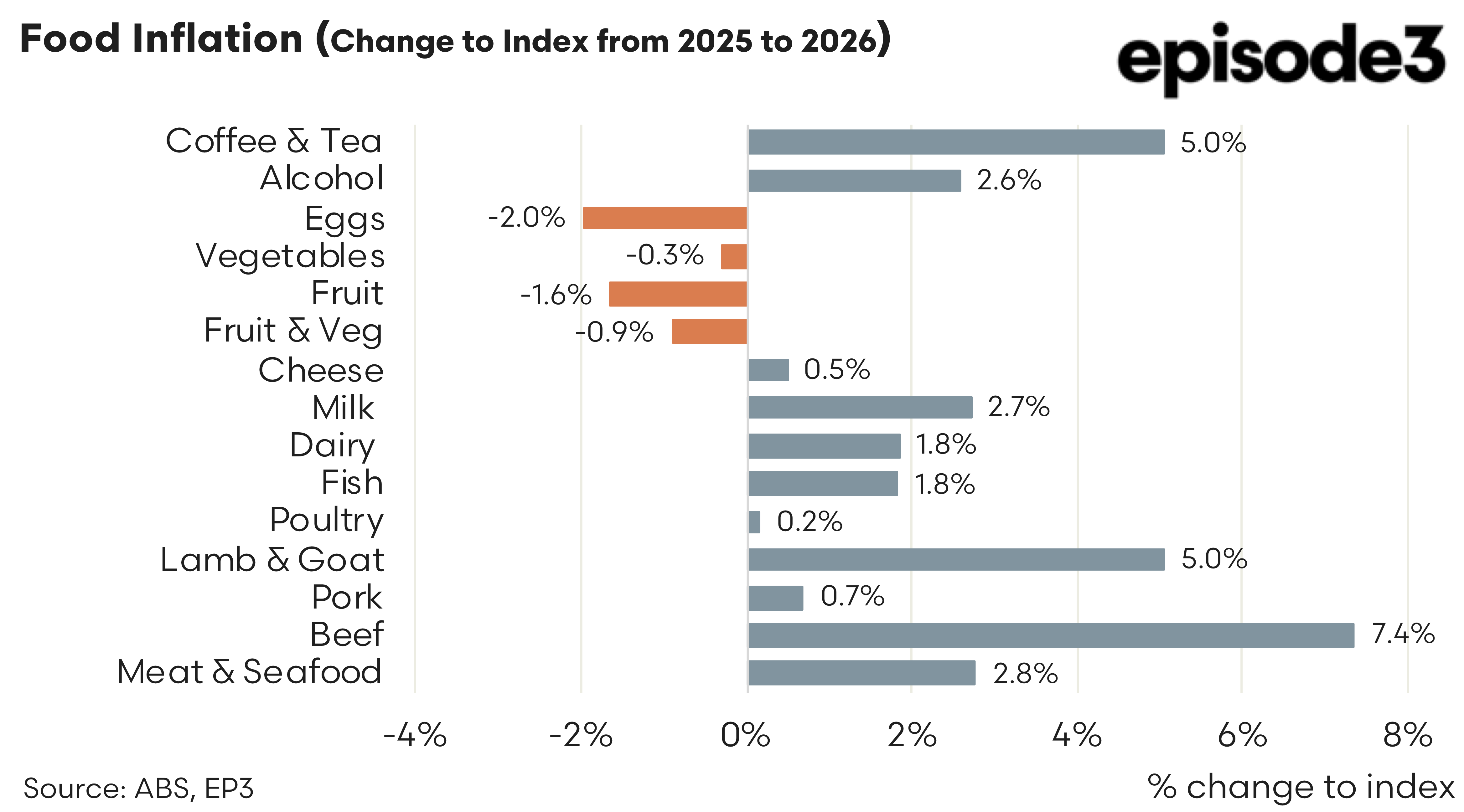
Annual data into 2026 shows meat prices continuing to provide the strongest upward pressure on food inflation. Beef recorded the largest increase, rising 7.4 percent over the year as firm export demand supported domestic retail pricing. Lamb and goat prices also lifted strongly, increasing 5.0 percent annually, reflecting tight lamb supply.
The broader meat and seafood category rose 2.8 percent overall. Pork prices increased modestly by 0.7 percent, while poultry remained largely stable, lifting just 0.2 percent. Beverages were another key contributor. Coffee and tea prices increased 5.0 percent annually, highlighting ongoing global supply tightness, while alcohol prices rose 2.6 percent amid continued cost pressures across production and retail.
Dairy prices showed more moderate growth. Milk rose 2.7 percent over the year, dairy overall increased 1.8 percent and cheese lifted 0.5 percent, suggesting conditions have largely stabilised compared with earlier inflationary periods. Fresh produce moved in the opposite direction. Fruit prices declined 1.6 percent annually, vegetables eased 0.3 percent and combined fruit and vegetable prices fell 0.9 percent, pointing to improved seasonal supply and fewer disruption-driven price spikes.
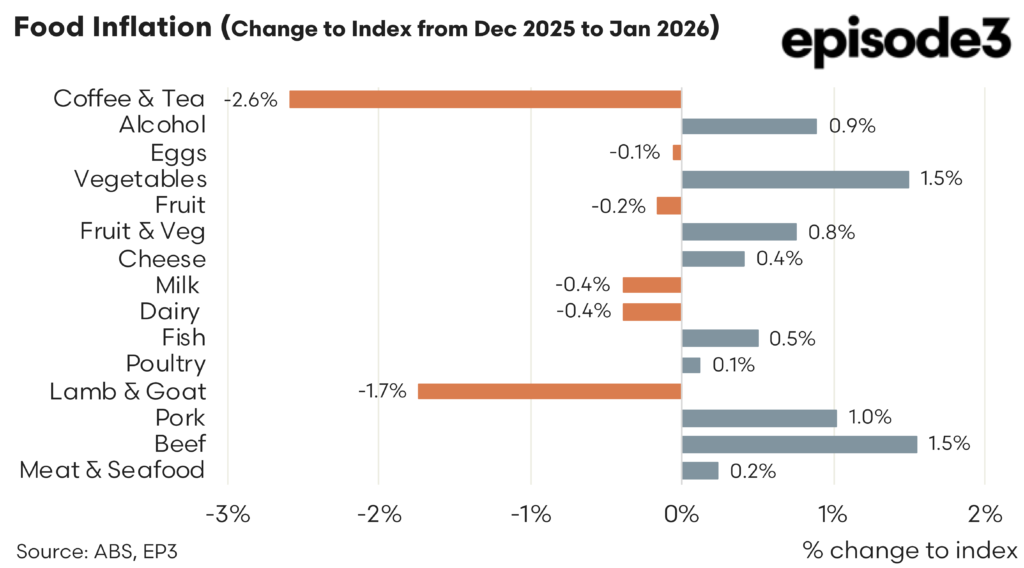
The monthly movement from December 2025 to January 2026 presents a more mixed picture, with short-term adjustments emerging across several categories. Beef prices continued to strengthen, rising 1.5 percent during the month, while pork increased 1.0 percent and poultry edged slightly higher. Lamb and goat prices fell 1.7 percent, likely reflecting seasonal price adjustment following stronger late-year conditions.
Fresh food movements were uneven. Vegetables increased 1.5 percent for the month, while fruit prices slipped 0.2 percent and eggs eased marginally. Overall fruit and vegetable prices rose 0.8 percent, reinforcing the typical volatility seen in produce markets. Dairy prices softened slightly, with milk and broader dairy categories both declining 0.4 percent in January. Fish prices rose 0.5 percent. Alcohol prices increased 0.9 percent over the month, while coffee and tea prices fell 2.6 percent after earlier strong gains.
Food inflation entering 2026 is no longer moving in a single direction. Red meat and beverages continue to drive annual price growth, while fresh produce and some dairy categories are showing signs of easing. Rather than broad inflation pressure, the data now points to divergence across the food basket and is a sign that the inflation cycle is transitioning toward more normal, commodity-specific pricing dynamics.