Food inflation update July 2026

Food Inflation Update - July 2026
Australia’s food inflation picture was considerably more subdued through July, with the latest Consumer Price Index data showing price falls across several categories. Fresh produce provided the largest downward movement during the month, while meat prices were mixed and dairy was relatively stable. However, the softer July result needs to be viewed against an annual picture where some food categories remain considerably more expensive than a year ago. Red meat continues to stand well above the rest of the food basket, with beef and lamb and goat prices both more than 9 percent higher.
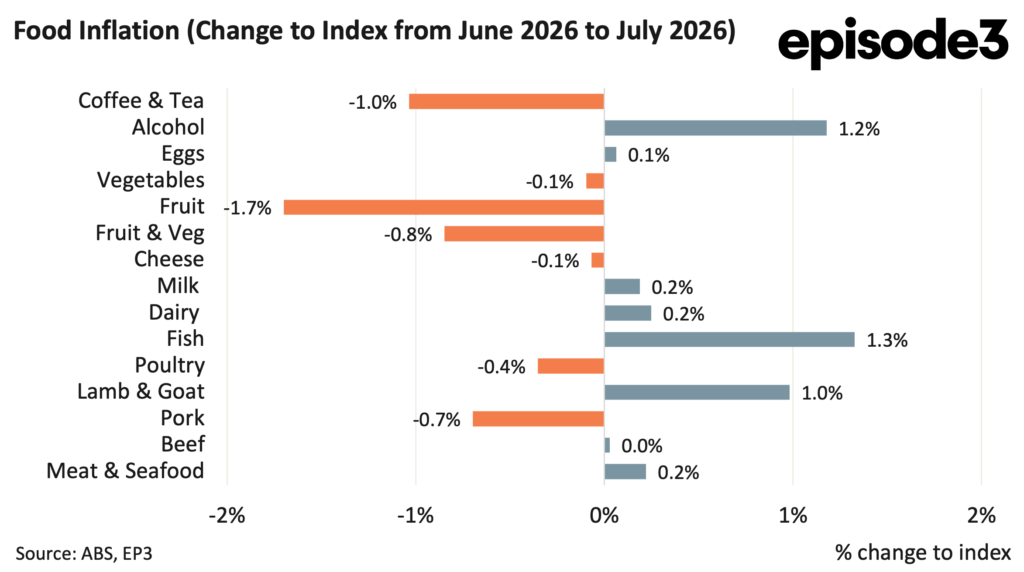
The monthly movement from June to July was characterised by falling prices across several categories, particularly fresh produce. Fruit prices declined 1.7 percent during the month, reversing some of the strong increases recorded during May and June. Vegetables eased 0.1 percent, leaving the combined fruit and vegetable category down 0.8 percent. Coffee and tea prices also fell 1.0 percent during July, while alcohol moved in the opposite direction with a 1.2 percent increase. Egg prices were effectively unchanged, edging just 0.1 percent higher. Dairy was similarly quiet following the stronger increases seen earlier in the year. Milk and the broader dairy category both increased 0.2 percent, while cheese prices eased 0.1 percent.
Lamb and goat prices rose 1.0 percent during July, continuing to reflect the strength evident in livestock markets. Beef retail prices were effectively unchanged despite strong cattle prices, while pork declined 0.7 percent and poultry fell 0.4 percent. Fish provided the largest protein increase, rising 1.3 percent, leaving the broader meat and seafood category just 0.2 percent higher for the month. Overall, July was a relatively benign month for food prices compared with the stronger gains seen earlier in 2026. Importantly, however, one softer month does not undo the increases that have accumulated over the past year.
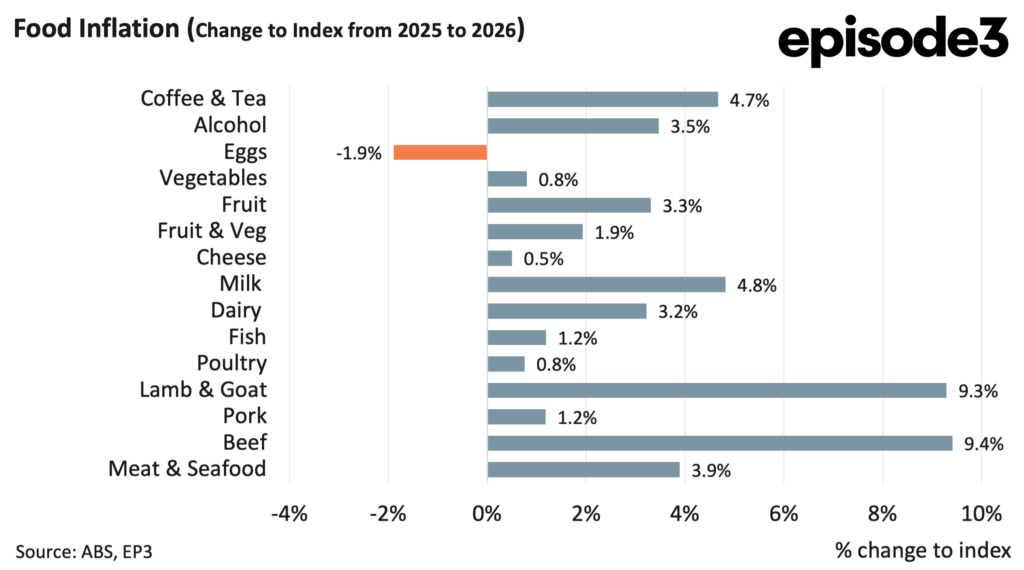
The annual numbers remain heavily influenced by beef and sheepmeat. Beef prices are now 9.4 percent higher than a year ago, up from 9.2 percent in June, while lamb and goat prices have reached 9.3 percent. This leaves the two red meat categories well ahead of almost everything else in the food basket. The broader meat and seafood category is 3.9 percent higher annually, although the increases across other proteins are considerably smaller. Pork is up 1.2 percent, fish 1.2 percent and poultry just 0.8 percent.
Dairy has also become a more significant contributor to food inflation during 2026. Milk prices are 4.8 percent higher than a year ago, while the broader dairy category is up 3.2 percent. Cheese remains comparatively stable, increasing just 0.5 percent.
Fruit prices are now 3.3 percent higher annually despite the July decline, while vegetables are up just 0.8 percent. Combined fruit and vegetable prices sit 1.9 percent above year-ago levels. Eggs remain the notable exception across the basket, with prices down 1.9 percent. Coffee and tea remain elevated at 4.7 percent above last year, while alcohol prices are now 3.5 percent higher.
July provided some welcome relief after stronger food price movements earlier in the year, particularly across fruit and several protein categories. It does not, however, change the broader story. Red meat remains the clear standout in Australian food inflation, with beef and lamb and goat prices now more than 9 percent above year-ago levels. Dairy and beverages are also adding pressure, while vegetables, poultry, pork and eggs remain relatively subdued. For consumers, that means food inflation is increasingly about what is in the shopping basket rather than a uniform increase across everything. The annual numbers also show that at least some of the strength seen at the farmgate is continuing to work its way through to retail prices.