
Food inflation update Sep 2026
Food Inflation Update - Sep 2026
Australian food prices continued to soften during September, with the latest Consumer Price Index data showing another month of declines across much of the meat and dairy categories. Beef and milk recorded the largest falls, while fruit prices rebounded following two months of declines. Despite the softer monthly results, the annual picture remains considerably stronger.
Beef and lamb prices are still more than 9pc higher than a year ago, highlighting the difference between recent price movements and the increases that have accumulated throughout 2026. The movement from August to September saw another round of retail meat price declines, extending the weakness recorded during August.
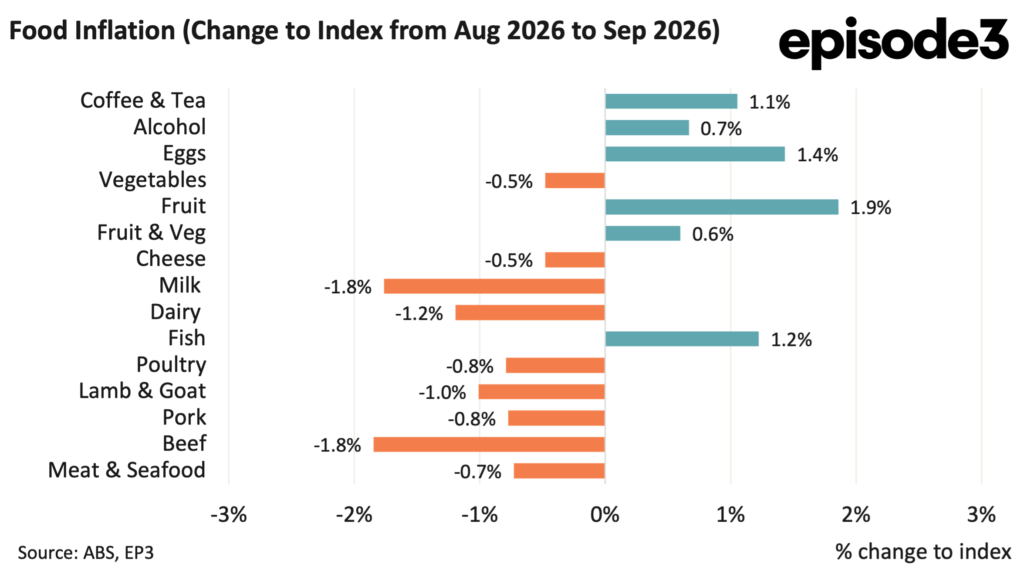
Beef prices fell 1.8pc during September, following a 1.1pc decline in August. Lamb and goat prices eased another 1.0pc, while pork and poultry both fell 0.8pc. Fish was the exception, increasing 1.2pc during the month, leaving the broader meat and seafood category down 0.7pc.
The continued easing in retail red meat prices is interesting given the strength that has characterised livestock markets over much of the year. This suggests farmgate movements are not necessarily reflected immediately at retail, with pricing decisions, supply arrangements, and margins potentially influencing the timing of changes.
Dairy provided another notable source of price relief. Milk prices declined 1.8pc during September, while the broader dairy category fell 1.2pc and cheese eased 0.5pc. This represents a significant turnaround from the strong dairy price increases recorded earlier in 2026.
Fruit prices rebounded 1.9pc following declines of 1.7pc in July and 2.1pc in August. Vegetables continued to ease, falling 0.5pc, although the combined fruit and vegetable category still increased 0.6pc during September. Egg prices rose 1.4pc, one of the larger monthly increases, while coffee and tea lifted 1.1pc and alcohol increased 0.7pc.
Despite three consecutive months of softer or relatively stable retail beef pricing, the annual numbers continue to show how much prices have increased compared with 2025.
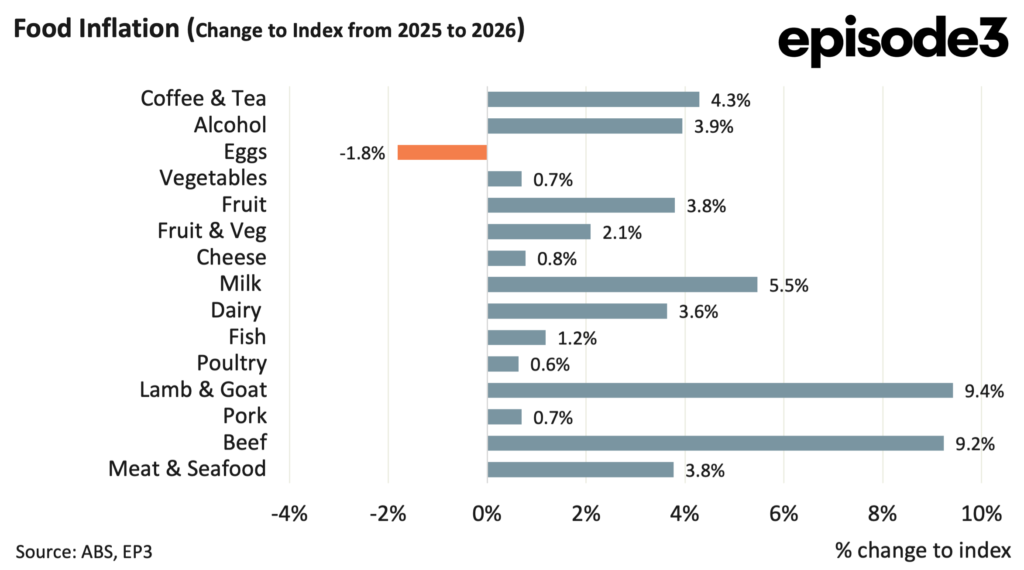
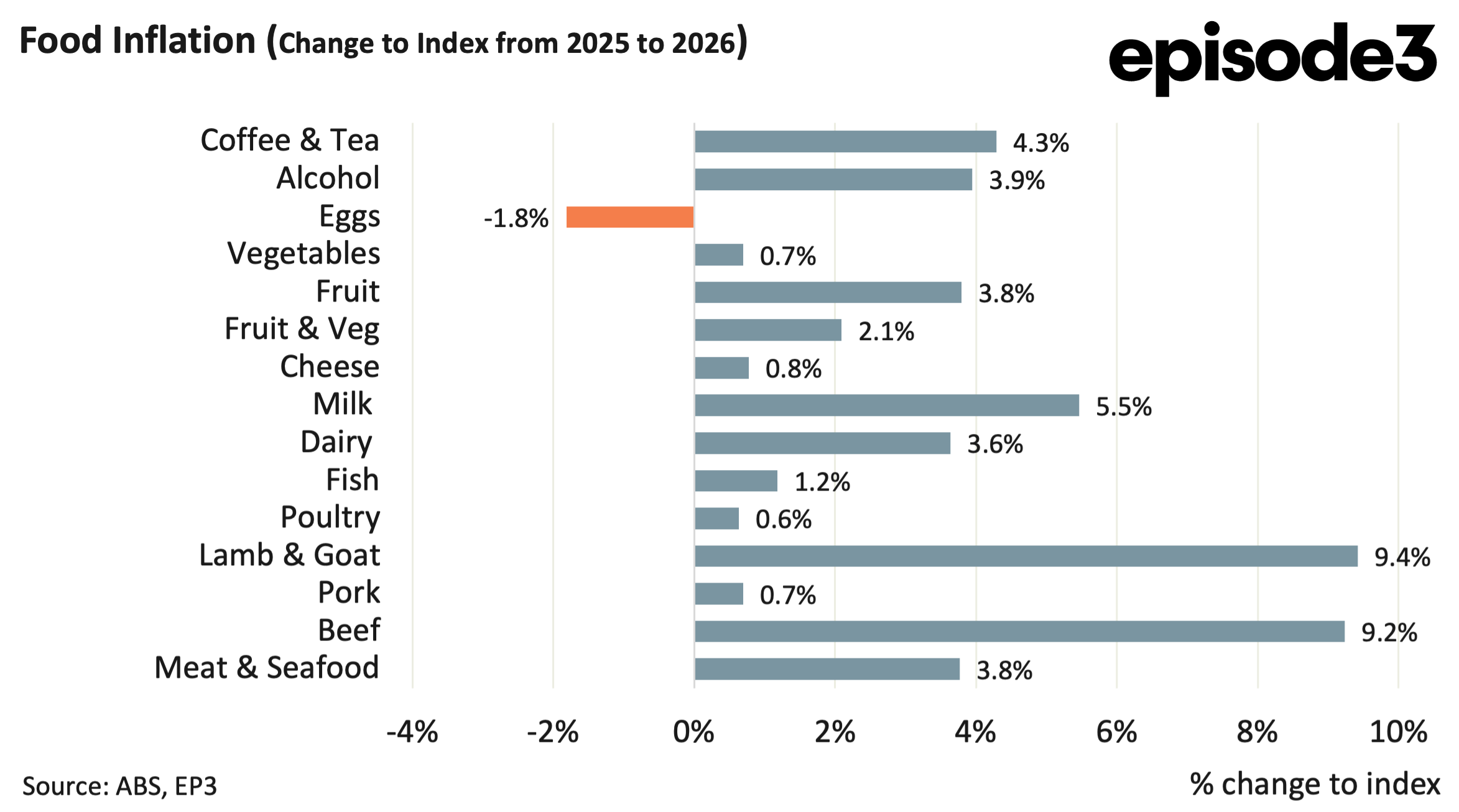
Beef prices are now 9.2pc higher than a year ago, easing slightly from 9.4pc in August. Lamb and goat prices remain 9.4pc higher, making sheepmeat the strongest annual performer across the food categories assessed. The broader meat and seafood category is 3.8pc higher annually, although other proteins have recorded much smaller increases. Fish prices are up 1.2pc, pork 0.7pc and poultry just 0.6pc.
Dairy inflation also remains relatively firm despite the September declines. Milk prices are still 5.5pc higher than a year ago, compared with 5.3pc in August, while the broader dairy category is up 3.6pc. Cheese prices have increased by a more modest 0.8pc.
Fresh produce continues to record relatively moderate annual inflation. Fruit prices are 3.8pc higher than a year ago, while vegetables have increased just 0.7pc. Combined fruit and vegetable prices are up 2.1pc, suggesting that recent monthly volatility has had a relatively limited impact on the longer-term picture. Eggs remain the only category recording an annual price decline, sitting 1.8pc below year-ago levels despite September’s monthly increase.
Coffee and tea prices are 4.3pc higher annually, while alcohol has increased 3.9pc, continuing to provide upward pressure outside the core food categories.
September marked another relatively soft month for Australian food prices, particularly across meat and dairy. Beef retail prices have now fallen by around 2.9pc over August and September combined, while lamb and goat prices have declined by approximately 1.8pc over the same period.
The annual numbers tell a different story, with red meat prices still sitting more than 9pc above year-ago levels and milk prices up 5.5pc. The recent easing is welcome for consumers, but it is worth distinguishing between prices falling and food becoming cheaper than it was a year ago. For most categories, the latter is still some distance away.