Russia’s missing wheat could become Australia’s problem

The Detail
Russia is exporting far less wheat than normal this season. At first glance, that sounds like exactly what Australian growers should be happy about. Less Russian wheat in the market should mean less competition. The problem is that the wheat has not disappeared.
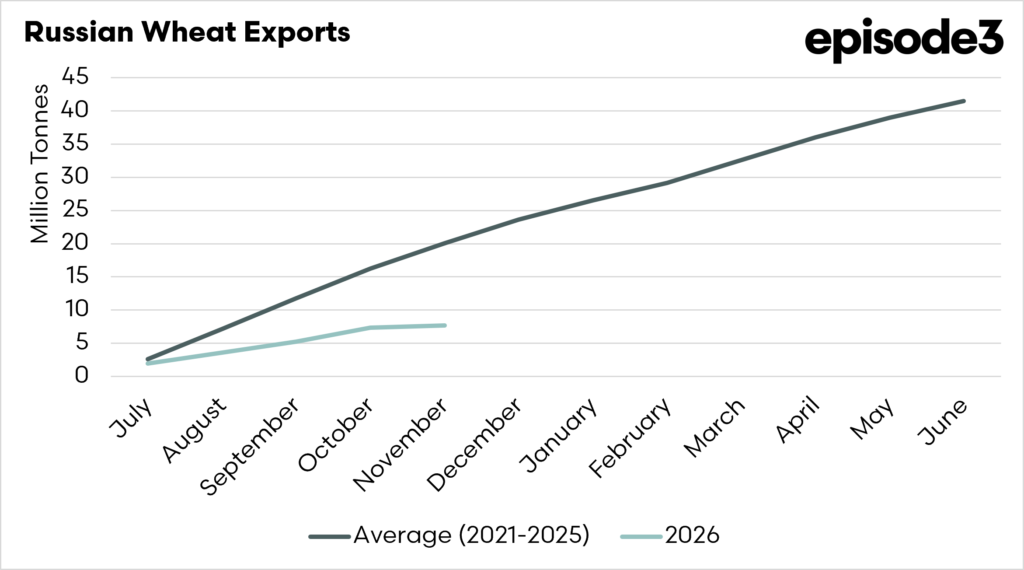
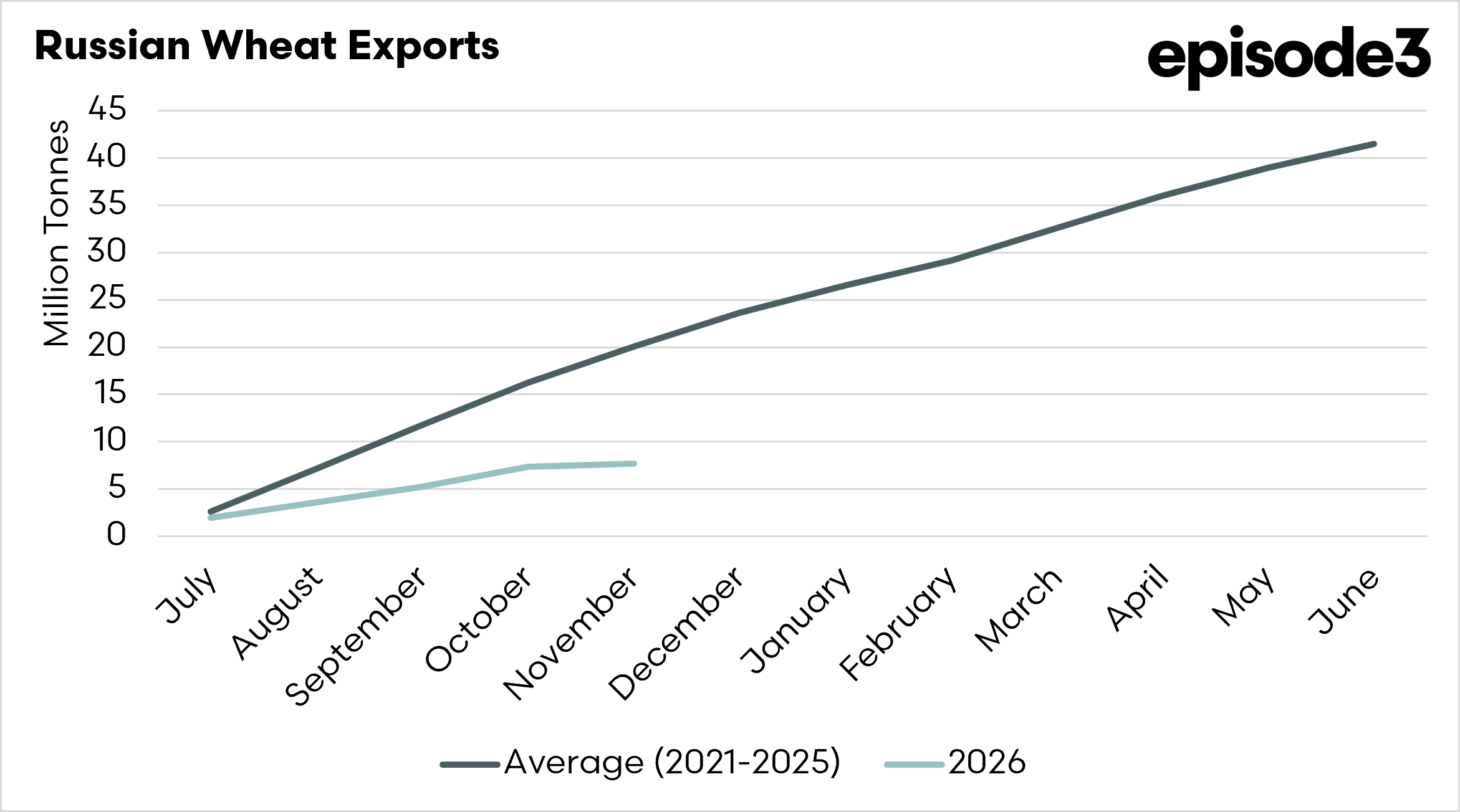
Since July, the start of the Russian season, wheat exports have reached roughly 7.5Mt, compared with around 20Mt at the same point in an average season since 2021. That leaves a gap of about 12.5Mt, with exports running more than 60pc behind the normal pace. For perspective, that missing volume is equivalent to more than 40pc of a 30Mt Australian wheat crop.
We cannot simply assume every tonne of that shortfall is sitting neatly in Russian storage. Production, domestic consumption and opening stocks all matter. But unless Russia has suddenly found a much bigger domestic appetite for wheat, slower exports mean more grain is being retained somewhere within the system. That creates a potential problem later.
Russia normally exports around 42Mt of wheat over a full marketing year. By this point in the season, close to half of that would usually already have left the country. This year, it has not. If Russia still wants to get anywhere near its normal annual export pace, the numbers become uncomfortable.
To reach roughly 42Mt for the year, Russia would need to export another 34.5Mt between December and June. That works out at close to 4.9Mt every month for the remaining seven months. Historically, Russia has shipped closer to 3.1Mt a month over that period, so catching up would require an export pace around 60pc faster than normal.
That is a big ask, but Russia does not need to catch up completely for Australian growers to feel the consequences. Even a partial recovery in exports could mean considerably more Russian wheat appearing on the world market during the first half of 2027. Unfortunately, that is exactly when Australia wants to be moving grain.
Australian harvest is now arriving and, as usual, the industry will want to push a large proportion of that crop through the system during the first six months after harvest. Storage fills quickly, exporters have shipping commitments, growers want cash flow, and the bulk-handling system needs grain to keep moving. The December-to-May period is therefore critical.
It is also the period when Russia may be under increasing pressure to shift grain. That’s what Australian growers should be watching. If Russian exports remain slow through the next few months, Australia potentially gets a useful window. Less Russian wheat in the market means buyers still need to source grain somewhere, and Australian wheat could benefit from that reduced competition.
The less attractive outcome is that Russia eventually finds a way to accelerate shipments and starts pushing a much larger volume of wheat into export markets just as Australian grain is trying to move. The market then has to absorb both. That does not automatically mean Australian wheat prices collapse, because quality, freight, currency, destination demand and local basis all matter, but more Russian wheat being aggressively offered into international markets is rarely something an Australian grower should celebrate.
There is another layer to this. The longer Russia fails to export at its normal pace, the greater the potential stock pressure becomes. Grain can sit in storage for a while, but it cannot sit there forever without becoming somebody’s problem. If exporters cannot move enough wheat before the next Russian harvest, storage space becomes more valuable, sellers become more motivated and discounted grain can start appearing in export markets.
That is when a current Australian advantage can quickly turn into future competition. Right now, slower Russian exports may support competing exporters, including Australia. Six months from now, the same missing wheat could be doing the exact opposite.
Russia could also never catch up and instead carry a much larger quantity of wheat into the next season. That might support prices in the short term, but it creates another problem later. A large carry-in sitting in Russia ahead of another Northern Hemisphere harvest would become an overhang hanging over the world wheat market.
So there is no particularly clean outcome. Either Russia starts exporting more aggressively and competes with Australia during our main export period, or it carries more wheat forward and potentially creates a larger stock problem later.
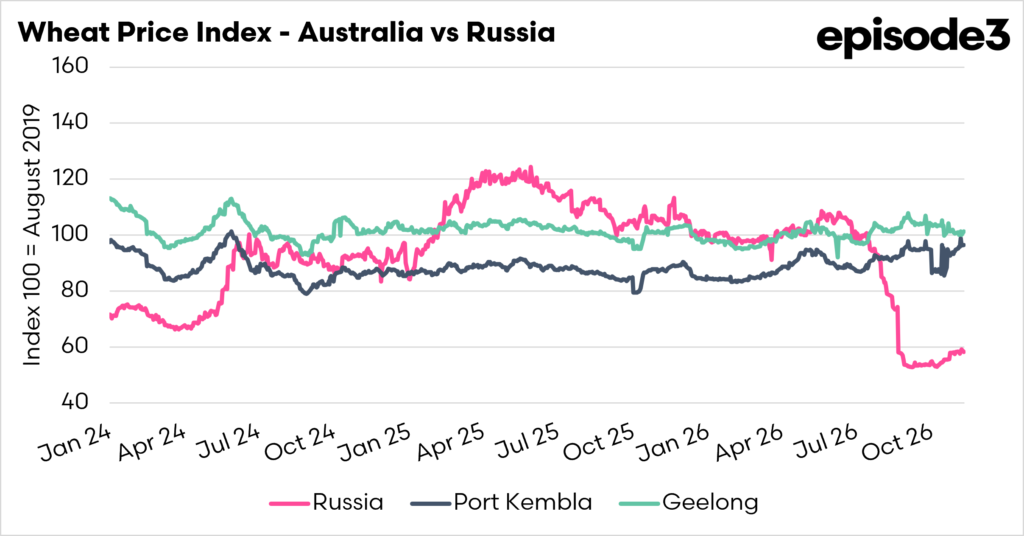
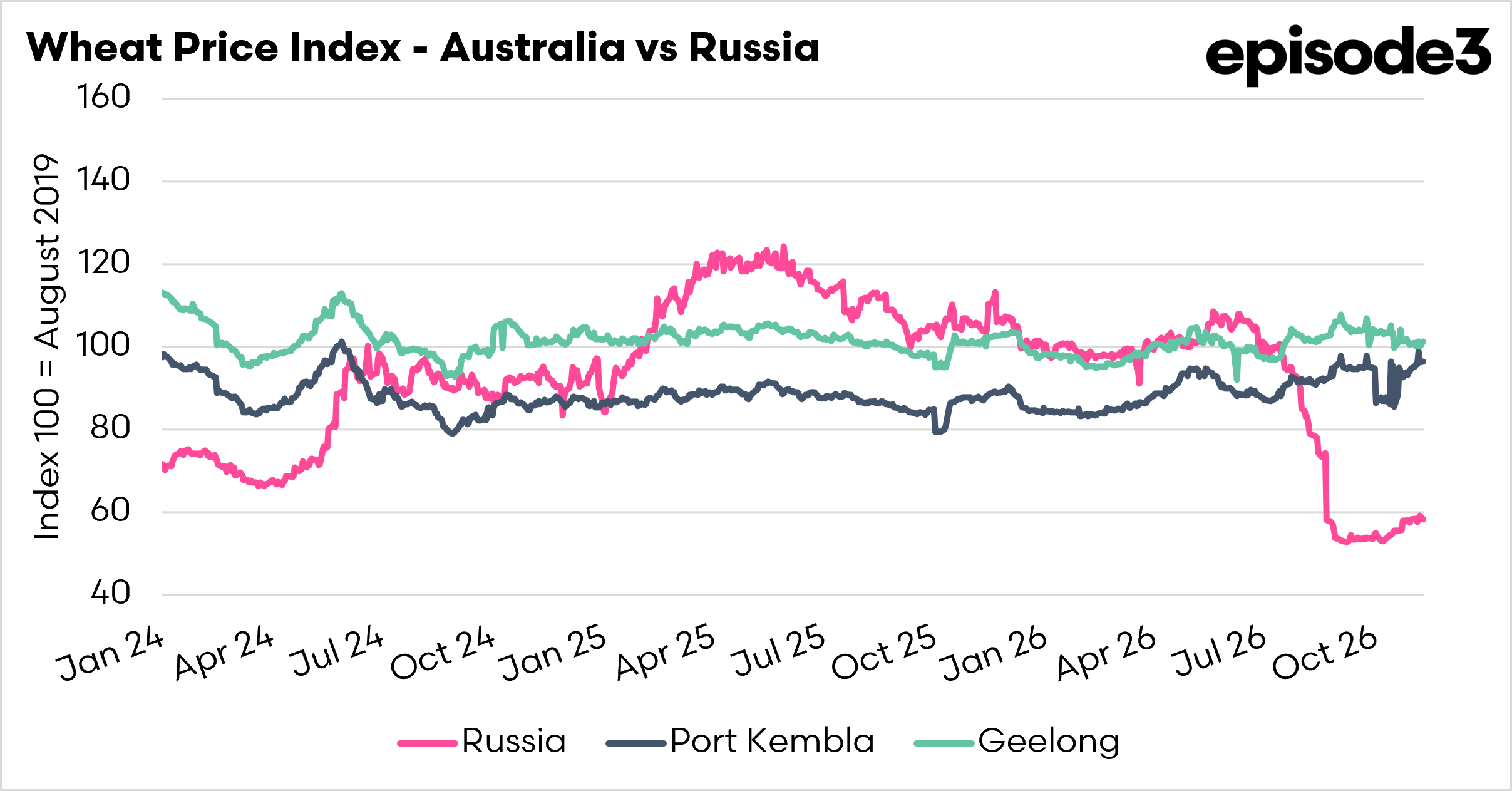
For Australian growers, that makes Russian export pace one of the more important numbers to watch over the next six months. The current slowdown may be helping us, but the question is whether we can get enough grain out of Australia before Russia gets its act together. Another key indicator is not just the export figures, but the prices of wheat in Russia; when they start to grow, that can be a sign that export flows are starting to prepare for movement.
Russia’s missing wheat might be supporting Australian prices today. The risk is that it becomes our competition tomorrow.