The crop is arriving faster than the competition

The Snapshot
- WA deliveries have reached 7.7Mt, while almost 2Mt has entered GrainCorp’s east-coast network.
- USDA lifted Australian wheat production to 32.5Mt and global stocks to 280.8Mt.
- Russian exports remain 39pc behind last year despite falling export prices.
- Australia has an export opportunity now, but Argentina and eventually Russia could increase competition.
The Detail
Australian harvest is starting to hit full stride, and so far, the market is doing a reasonable job of absorbing the tonnes.
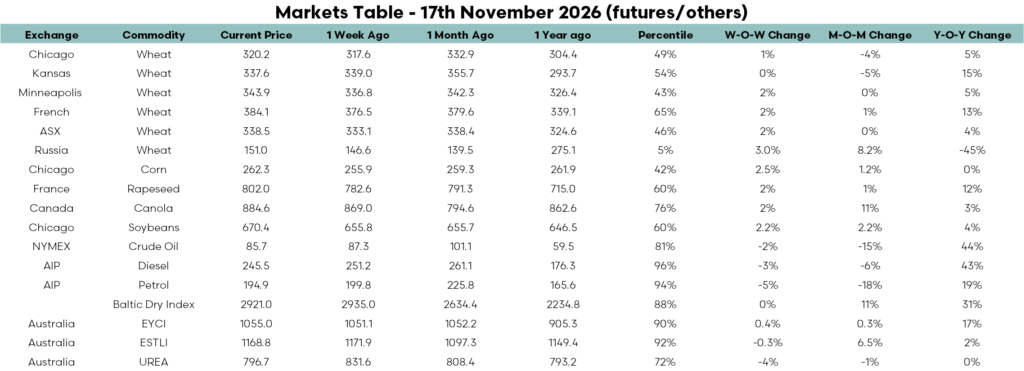
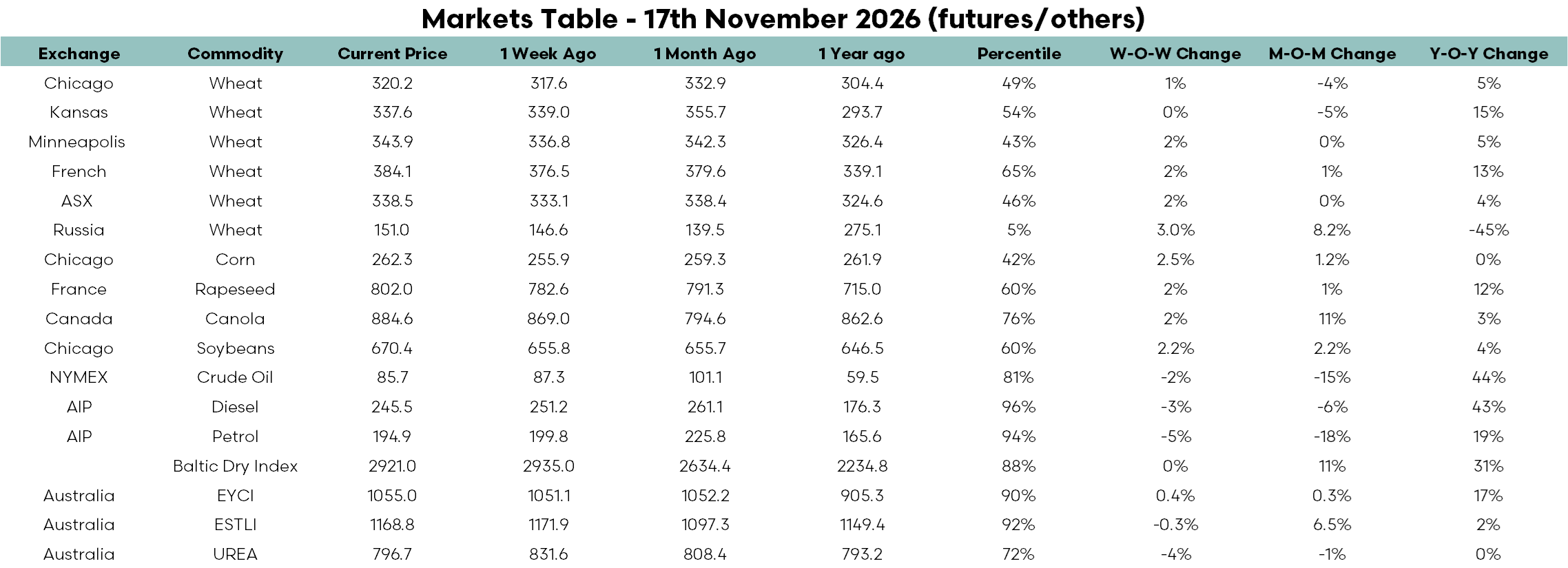
After several weeks of pressure, global grain markets found some support last week. Chicago wheat gained 1pc, Minneapolis wheat rose 2pc and French wheat was 2pc higher. Corn gained 2.5pc, soybeans rose 2.2pc, and ASX wheat finished the week 2pc higher.
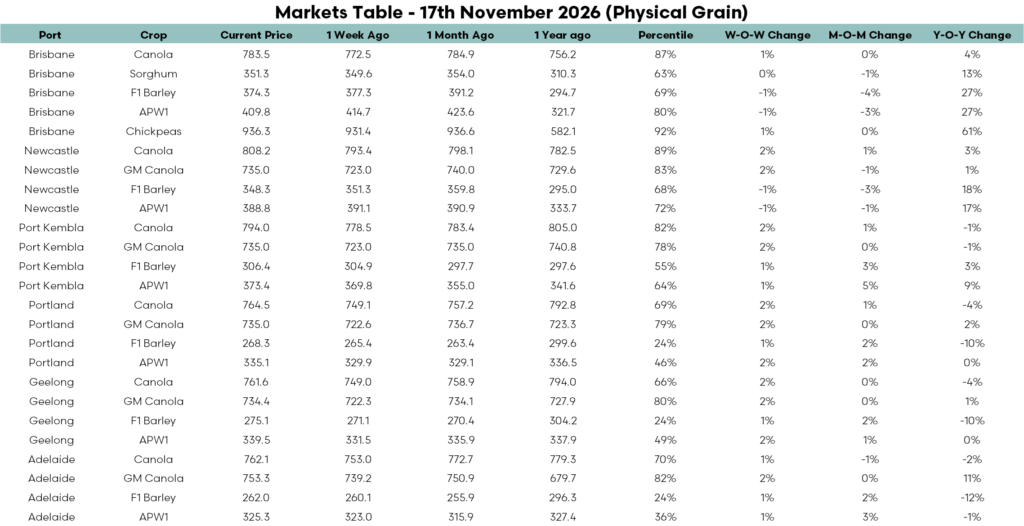
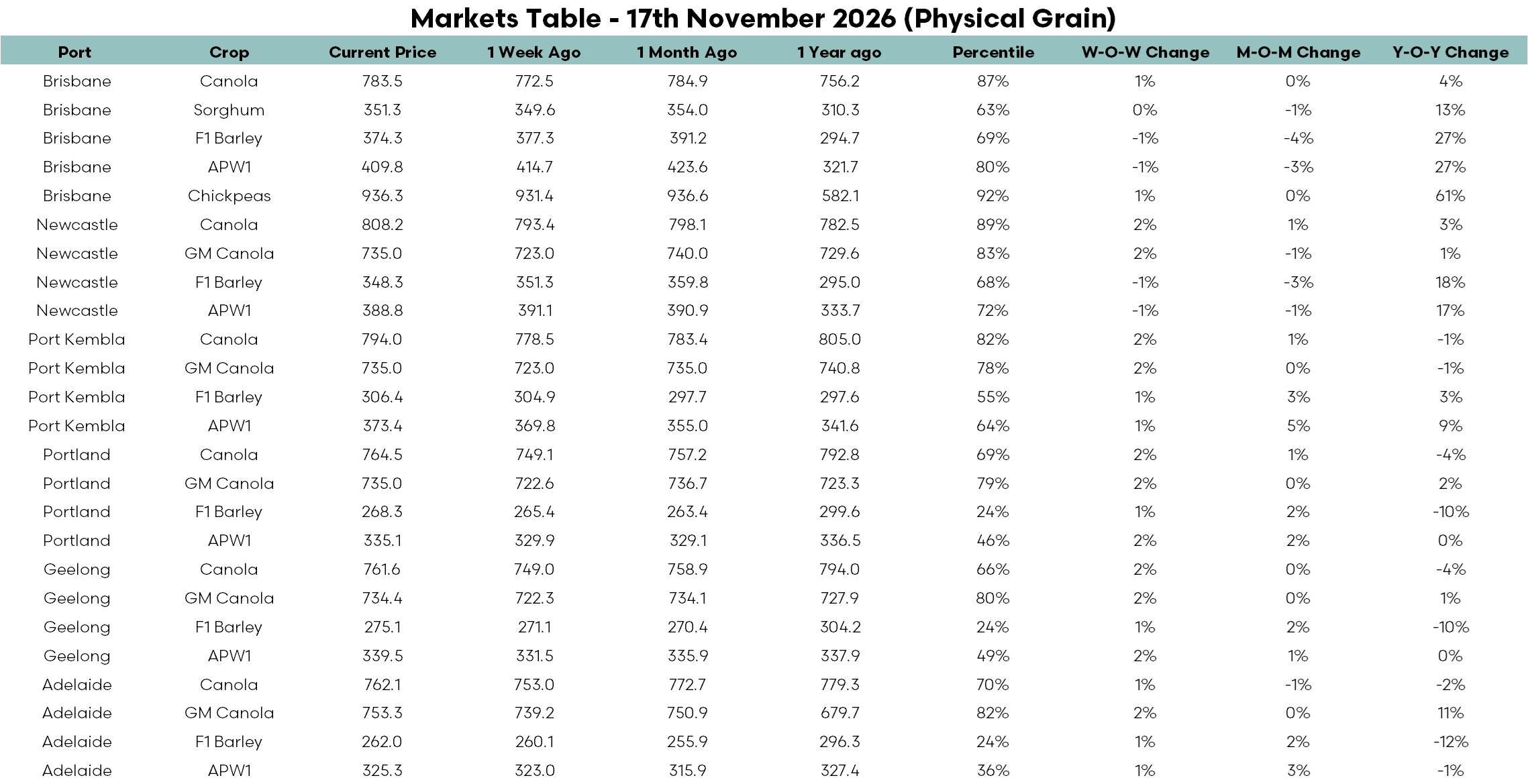
That improvement also flowed into southern Australian cash markets. Wheat, barley and canola values generally gained across Port Kembla, Portland, Geelong and Adelaide, despite accelerating harvest activity. Northern markets were slightly softer, with Brisbane and Newcastle wheat and barley generally easing around 1pc.
That is not enough to declare grain prices have found a bottom, but it is encouraging that southern prices have managed to firm as a large crop begins to arrive.
Western Australia is already moving serious volume. More than 2.5 million tonnes were delivered into the CBH network last week, taking deliveries to 7.7 million tonnes by 16 November. Rain has slowed harvest in some areas, but where conditions have allowed growers to continue, grain is arriving quickly.
The eastern states are also moving ahead. GrainCorp had received almost 2 million tonnes by 12 November, including more than 1.5 million tonnes from NSW. Queensland and northern NSW are moving toward the back end of harvest, while Victorian activity is starting to accelerate despite rain interruptions.
Early Victorian barley results have reportedly been strong, with some crops yielding as much as seven tonnes per hectare. That is excellent news for production, although perhaps less exciting for anyone hoping harvest pressure will quickly lift barley prices.
Southern barley remains cheap by historical standards. Portland, Geelong and Adelaide F1 barley are all sitting around the 24th percentile, despite prices lifting around 1pc last week.
The latest USDA numbers reinforce why the market remains cautious. Australian wheat production rose by 1.5Mt to 32.5Mt, while Argentina’s also rose by 1.5Mt to 23Mt. Global wheat production increased to 827.5Mt and forecast ending stocks jumped by almost 5Mt to 280.8Mt.
The world is not short of wheat. The problem is increasingly where that wheat is located and whether it can actually reach buyers.
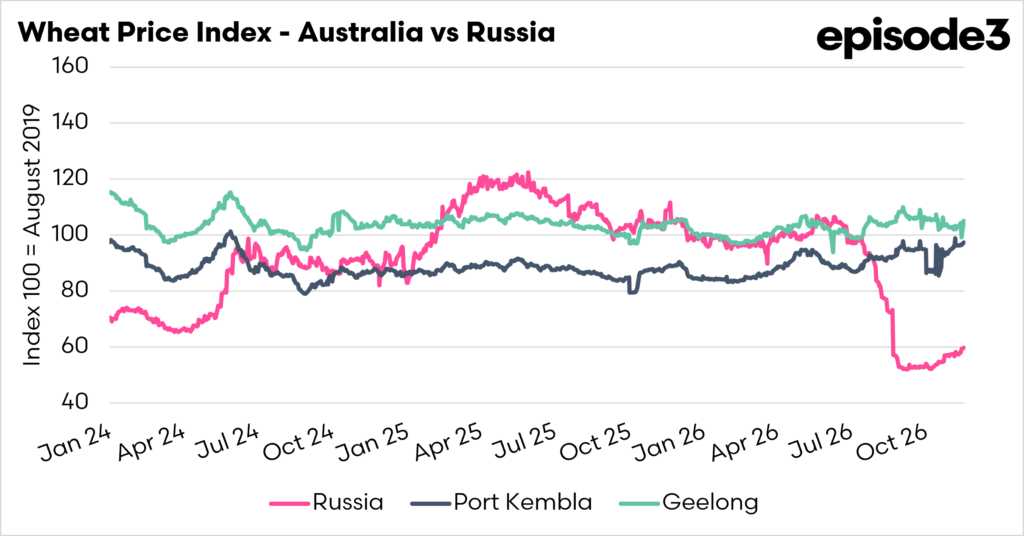
Russia provides the obvious example. Russian export prices fell another US$7–8/t last week, with January wheat through Baltic ports quoted around US$243–250/t FOB. Yet exports remain well behind normal, with approximately 10.3Mt shipped since the start of the season, around 39pc below the same stage last year.
That combination is worth watching. Russia has plenty of wheat, export prices are falling, but that grain is not easy to access. For Australian exporters, that reduces immediate competition, but it also increases the risk that Russian wheat continues to accumulate and eventually must be pushed aggressively onto world markets.
USDA made a similar adjustment, cutting projected Russian wheat exports by 1Mt to 39Mt and Ukrainian exports by 1Mt to 11.5Mt. Australian exports were lifted to 24.5Mt and Argentina to 16.5Mt, showing where some of that lost Black Sea trade could be replaced.
Peace negotiations between Russia and Ukraine add another variable. Any genuine improvement in Black Sea trade conditions could eventually make it easier for Russian and Ukrainian grain to reach world markets. That would be positive geopolitically, but potentially less exciting for wheat prices.
Australia also has competition closer to home. Argentina’s new crop is reportedly coming in at lower protein levels, putting more wheat into Southeast Asian and feed markets where Australian ASW and lower-grade wheat will also be looking for demand.
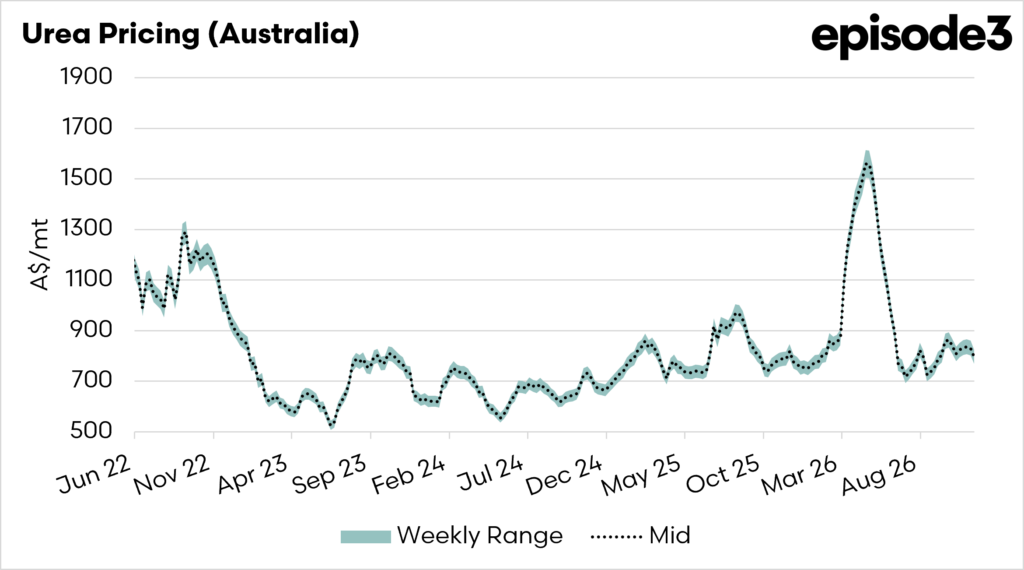
There are some positives on the cost side. Australian urea fell 4pc last week to around A$797/t, while diesel also eased 3pc. Neither input is particularly cheap historically, but both are moving in the right direction.
The Australian crop is now arriving quickly, and so far prices are holding up better than expected. The challenge is that Australia is not harvesting in isolation. Argentina has a large crop, global wheat stocks have increased, and Russia still has plenty of grain waiting to move.
The next few months will therefore be about more than how much grain Australia produces. It will be about how quickly we can sell it before everyone else starts trying to do the same thing.