
Beef export update August 2026
August 2026 - Beef export update
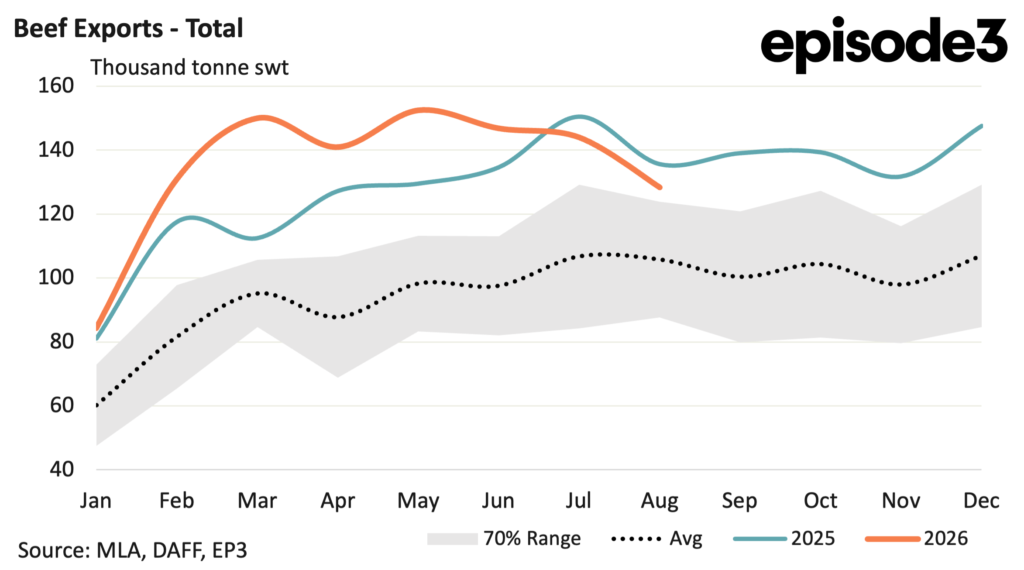
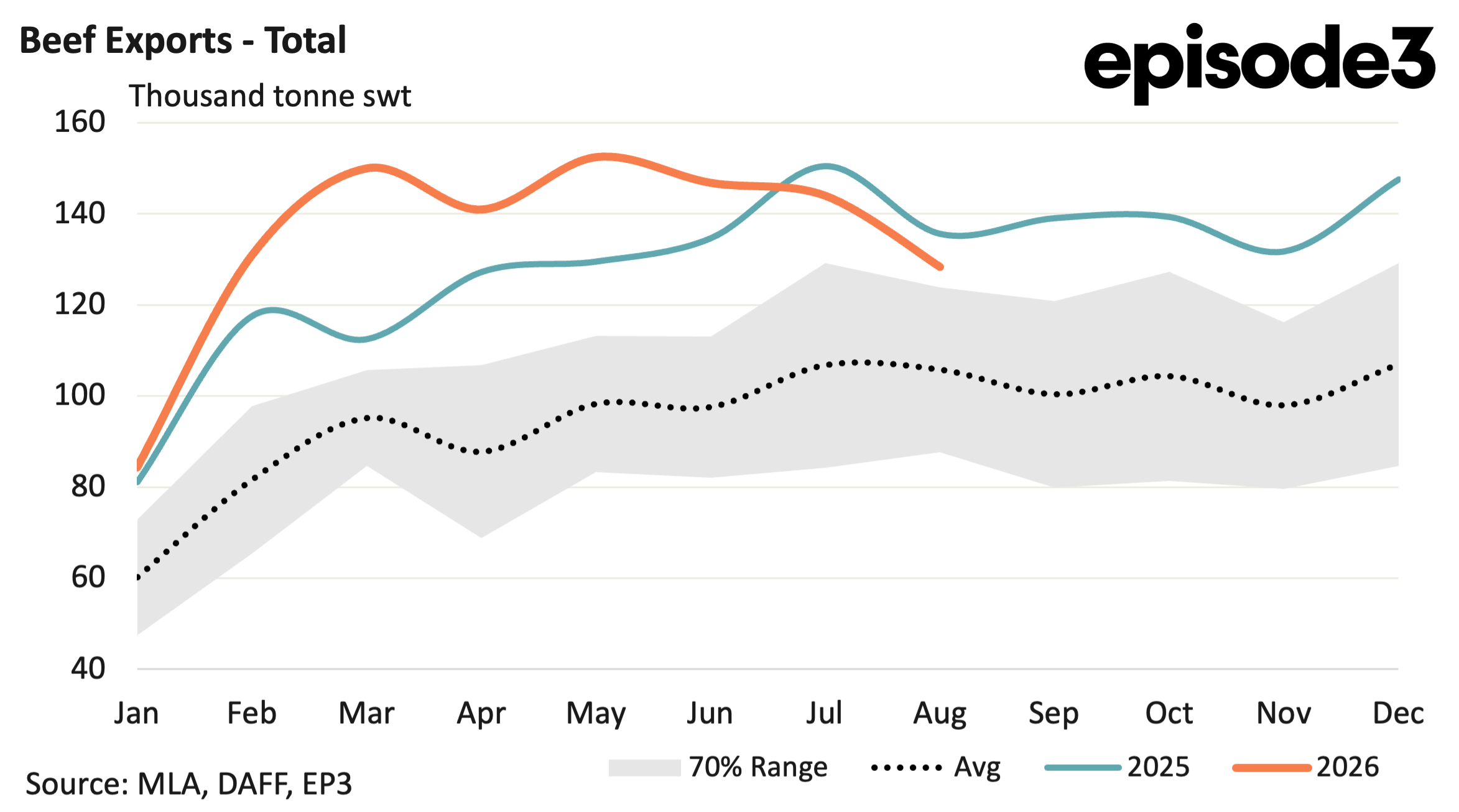
Australian beef exports remained at historically elevated levels during August, despite total shipments easing slightly from the extraordinary volumes recorded a year ago and the South Korean safeguard tariff beginning to have a noticeable impact on trade. Total Australian beef exports during August were 5pc below the same month last year. That sounds relatively subdued after the records set earlier in 2026, but the longer-term comparison tells a very different story. August shipments remained 21pc above the five-year average, demonstrating that Australian beef continues to move into international markets at an exceptionally strong rate.
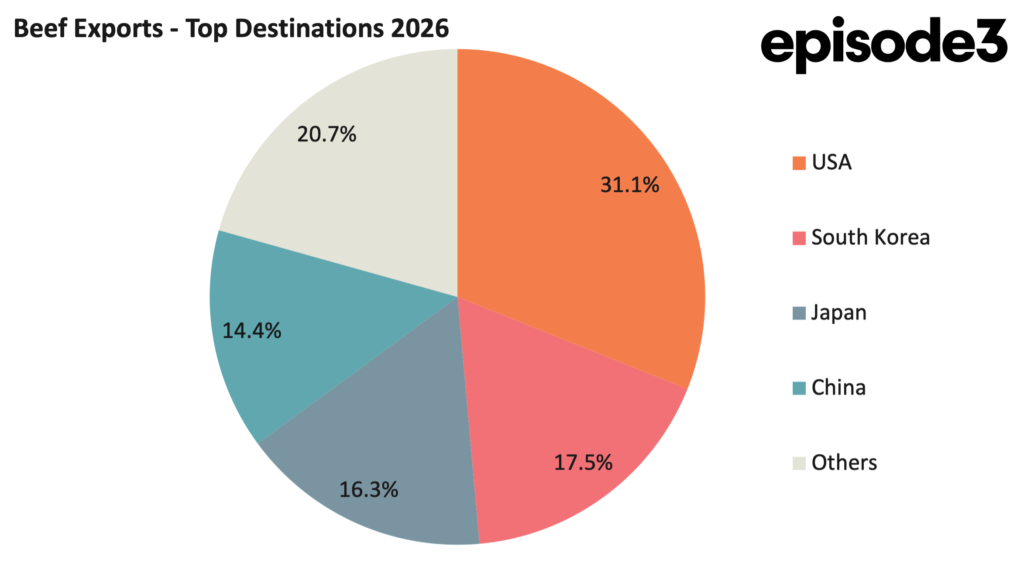
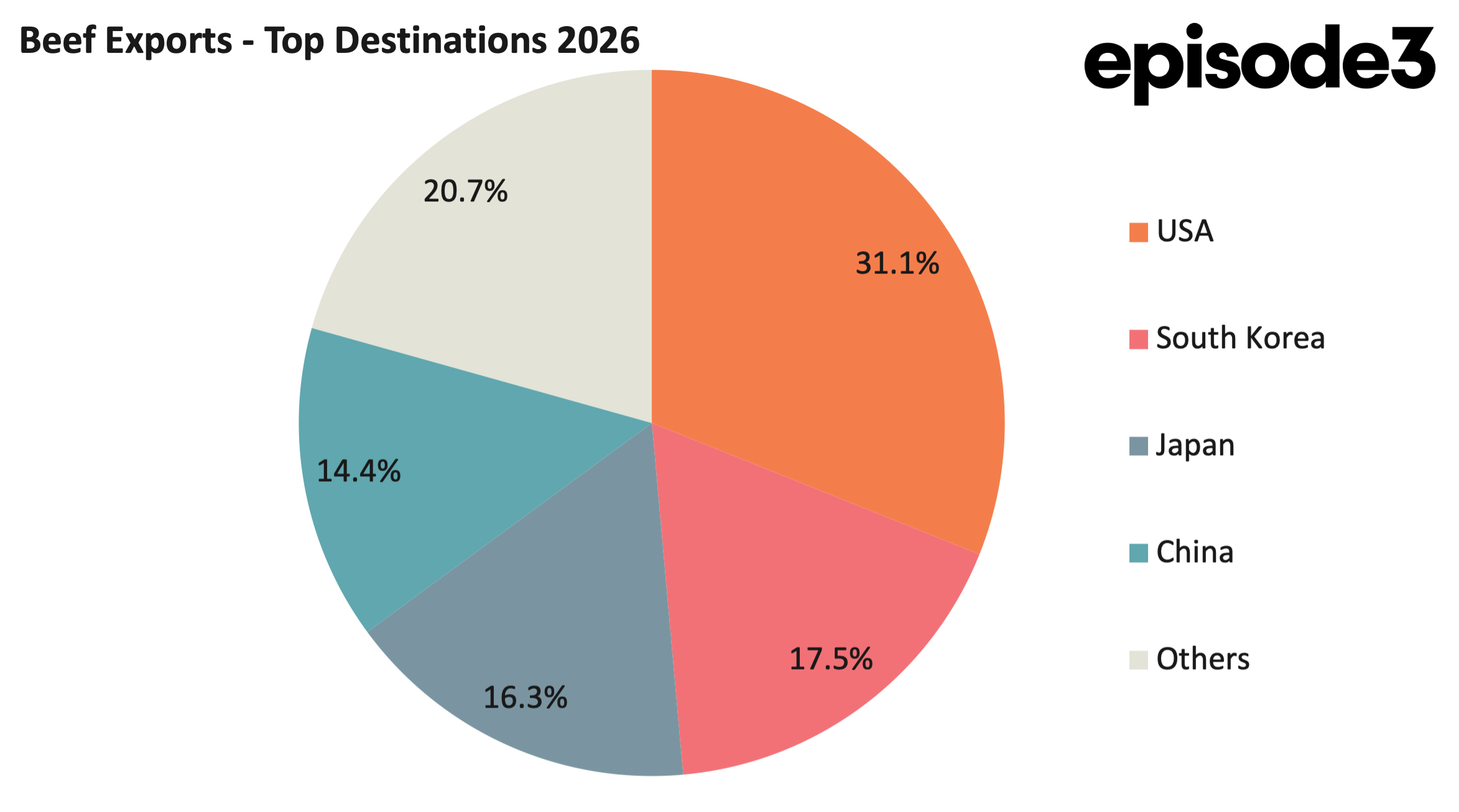
The United States remains the standout market. Australian beef exports to the US during August were 8pc higher than last year and an enormous 62pc above the five-year average. It continues a remarkable period of demand from the US, where constrained domestic beef production and reduced cattle availability have provided Australian exporters with an opportunity to substantially increase shipments. The US now accounts for 30.6pc of Australian beef exports so far during 2026, making it comfortably Australia’s largest beef export destination. Almost one in every three tonnes exported this year has headed to the US.
Japan was another strong performer during August and provided an important counterweight to weakness elsewhere. Exports were 33pc above August last year and 31pc above the five-year average. Japan has now moved back into an increasingly important position within Australia’s export mix. It accounts for 15.8pc of shipments so far in 2026 and, following the collapse in Chinese trade after its safeguard was triggered, has overtaken China to become Australia’s third-largest destination.
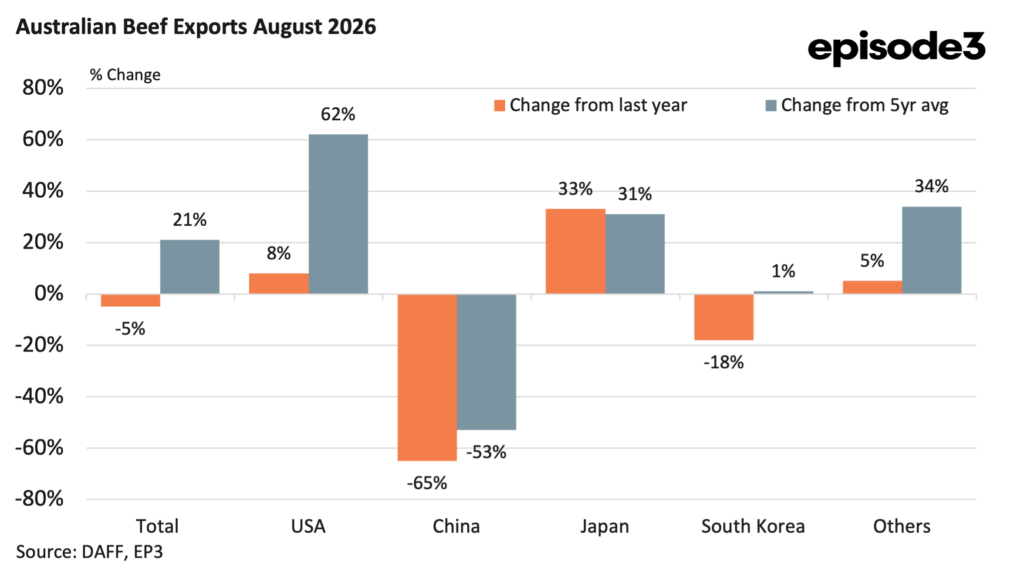
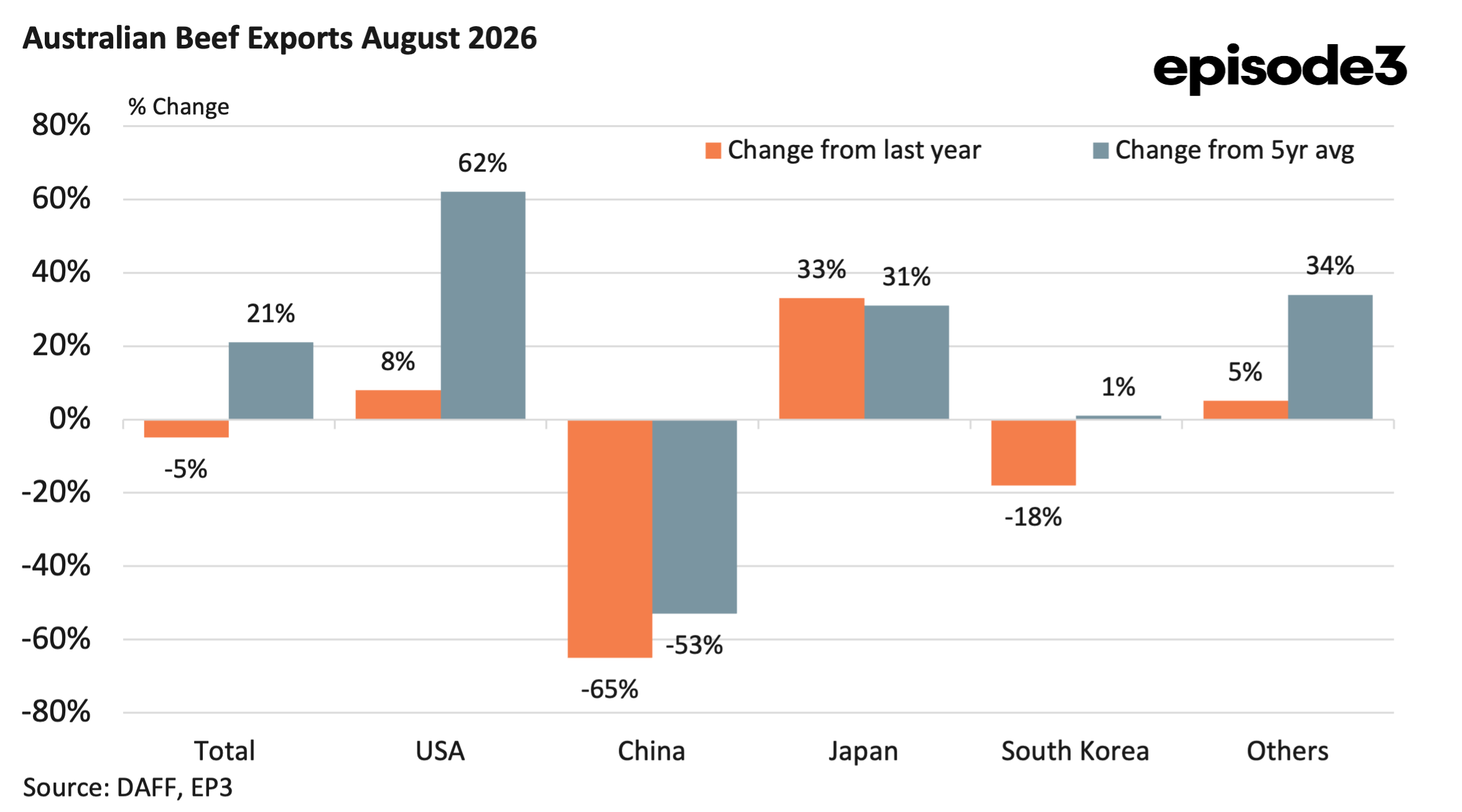
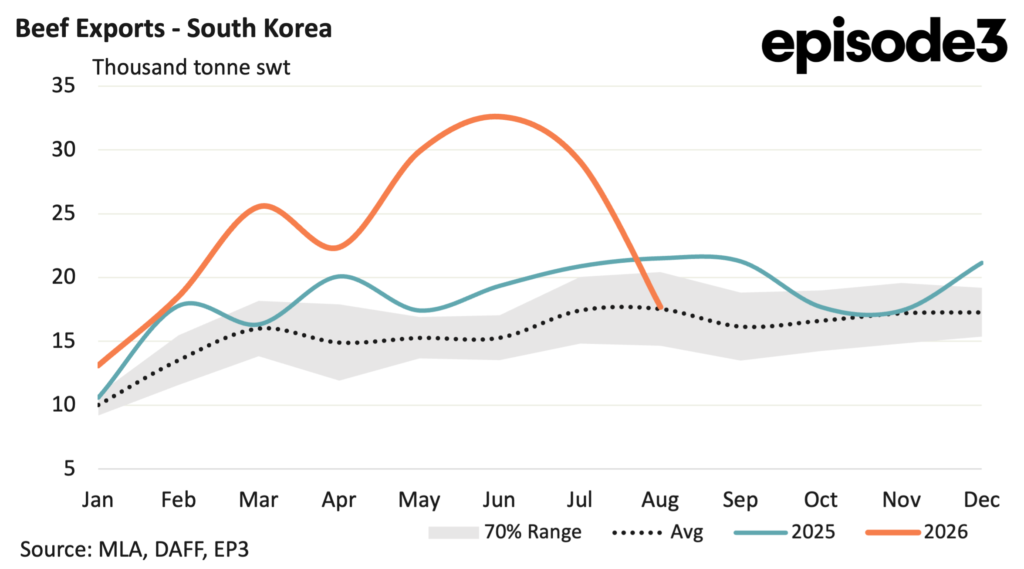
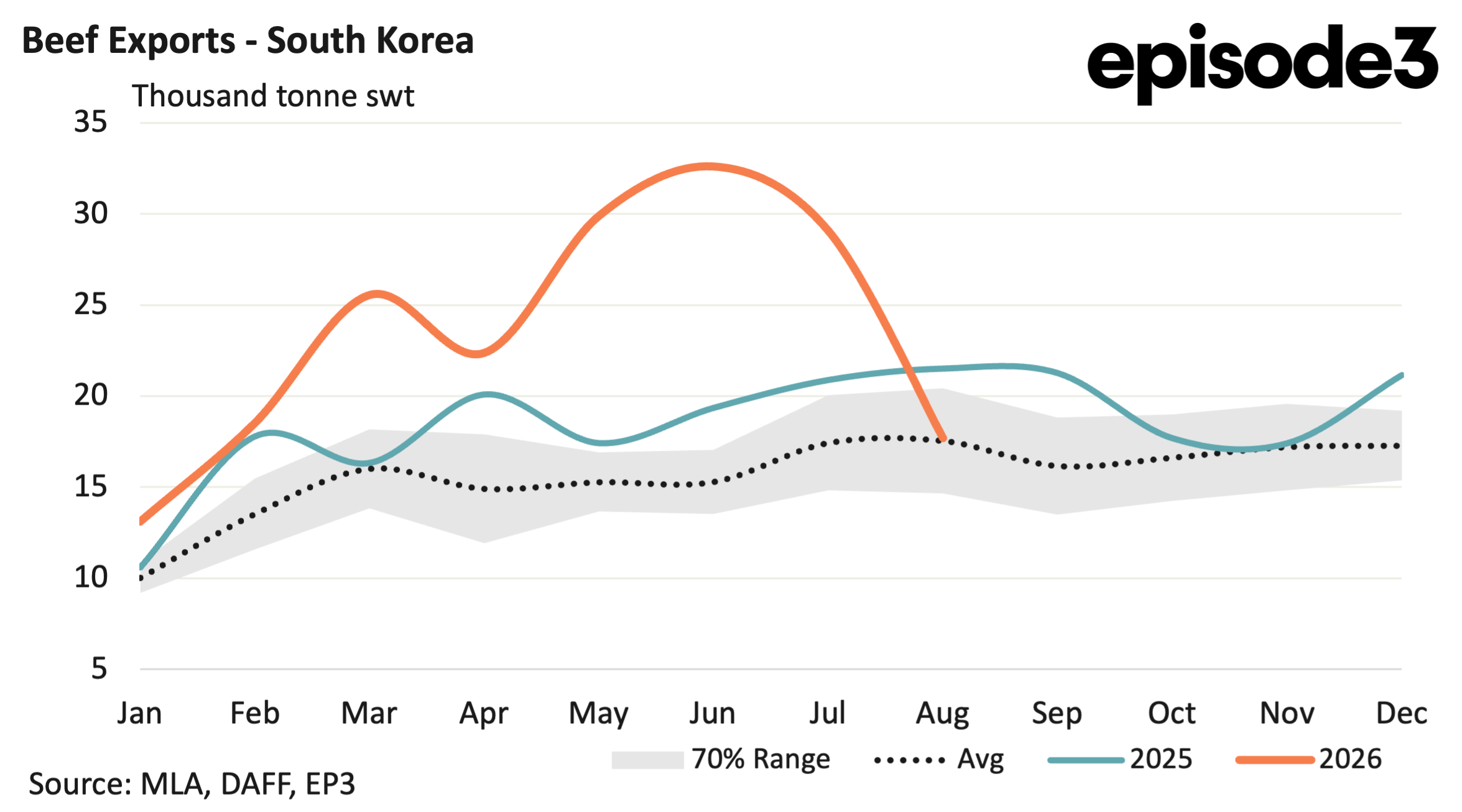
The most interesting development during August, however, was South Korea.August represented the first full month with the South Korean beef safeguard in place, resulting in a 24pc tariff being applied to Australian beef. The impact is beginning to show in the export figures. Shipments to South Korea were 18pc below August last year. However, they were still 1pc above the five-year average.
The tariff has clearly taken some heat out of a market that had been running exceptionally strongly, but it has not stopped trade. South Korea had been one of the standout destinations earlier in 2026. June exports, for example, were 69pc above the previous year and 113pc above the five-year average. By August, the year-on-year comparison had swung firmly negative. Despite that slowdown, South Korea remains Australia’s second-largest beef destination so far in 2026, accounting for 18pc of exports. Given the additional tariff now being applied, maintaining flows around the five-year average is arguably a reasonably resilient result.
China remains the major weak spot. Exports during August were 65pc below the same month last year and 53pc below the five-year average.
This follows the triggering of China’s safeguard earlier in the year and represents another month of dramatically reduced trade. China had been Australia’s second-largest beef export destination earlier in 2026, but has now fallen to fourth position. It still accounts for 15.5pc of year-to-date exports, although that share increasingly reflects the large volumes shipped before the safeguard was triggered rather than the current pace of trade.
The contrast between China and South Korea is particularly interesting. Both markets have now been affected by safeguards, but the initial trade response has been markedly different. Chinese shipments have collapsed to around half their normal level, whereas South Korean exports during August managed to remain broadly in line with the five-year average. South Koreans have historically imported around 80pc of their beef from either Australia or the USA, and with cattle pricing the USA still almost double Australian values the impact of the safeguard on Australian competitiveness is somewhat muted.
Meanwhile, the collection of other export destinations continues to provide useful diversification. August shipments to these markets were 5pc above last year and 34pc above the five-year average.Collectively, markets outside the four major destinations account for around 20pc of Australian beef exports during 2026.
The August numbers therefore demonstrate both the strength and changing shape of Australia’s beef export trade.Australian beef exports remain exceptionally strong. The challenge is increasingly not whether the world wants Australian beef, but which markets can take it without a tariff getting in the way.