
Beef export update June 2026
June 2026 - Beef export update
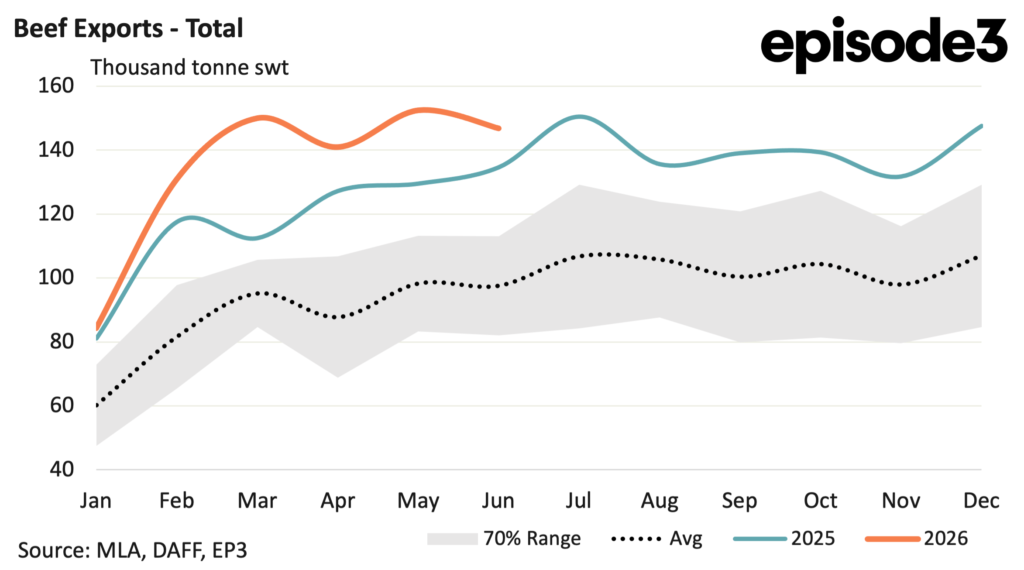
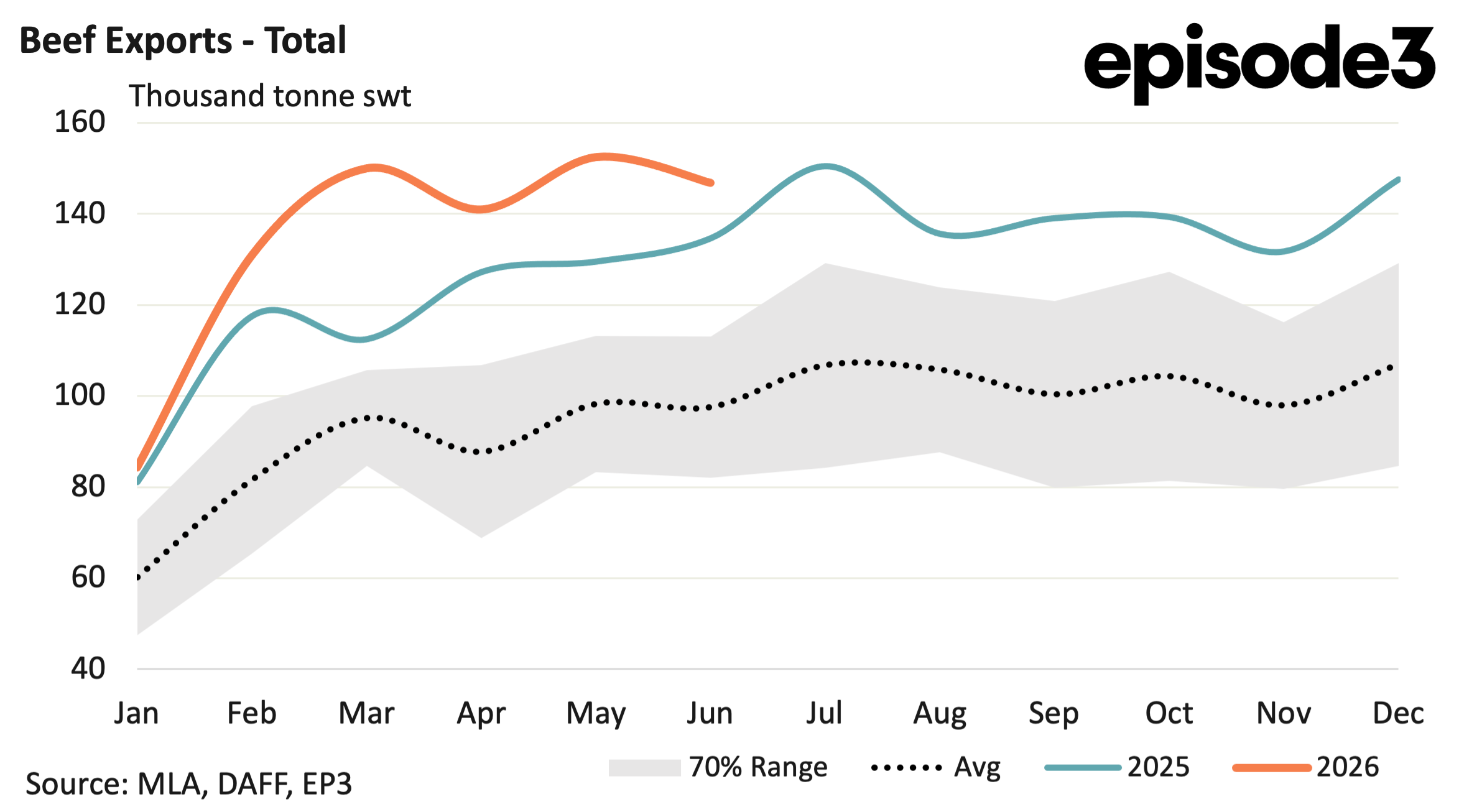
Australian beef exports remained exceptionally strong during June 2026, with shipments reaching 146,798 tonnes shipped weight. While slightly below the record set in May, June still ranks among the strongest export months on record, sitting 9 percent above June last year and 50pc above the five-year average.
The June result highlights two major themes emerging in Australia’s beef trade. The first is that global demand remains exceptionally robust despite rising cattle prices. The second is that trade flows are already beginning to adjust following the activation of China’s safeguard tariff, with exporters redirecting product into alternative premium markets.
The United States remained Australia’s largest beef customer during June, importing 49,182 tonnes and accounting for just over 30pc of total exports. Shipments were 40pc higher than the same month last year and an extraordinary 129pc above the five-year average. The US continues to underpin Australia’s export performance. Australian exporters have continued to capitalise on that structural shortage, with the US remaining the cornerstone of the export portfolio.
The most significant development during June was South Korea moving ahead of China to become Australia’s second-largest beef destination. Exports to South Korea reached 32,599 tonnes, representing 17.6pc of total exports. Volumes were 69pc above June last year and an impressive 113pc above the five-year average, making Korea one of the standout growth markets of 2026. The timing is notable, as access into China became more expensive following the safeguard trigger, exporters have increasingly directed product towards alternative high-value markets. South Korea has emerged as one of the principal beneficiaries of that shift, supported by strong consumer demand and Australia’s favourable competitive position relative to US beef.
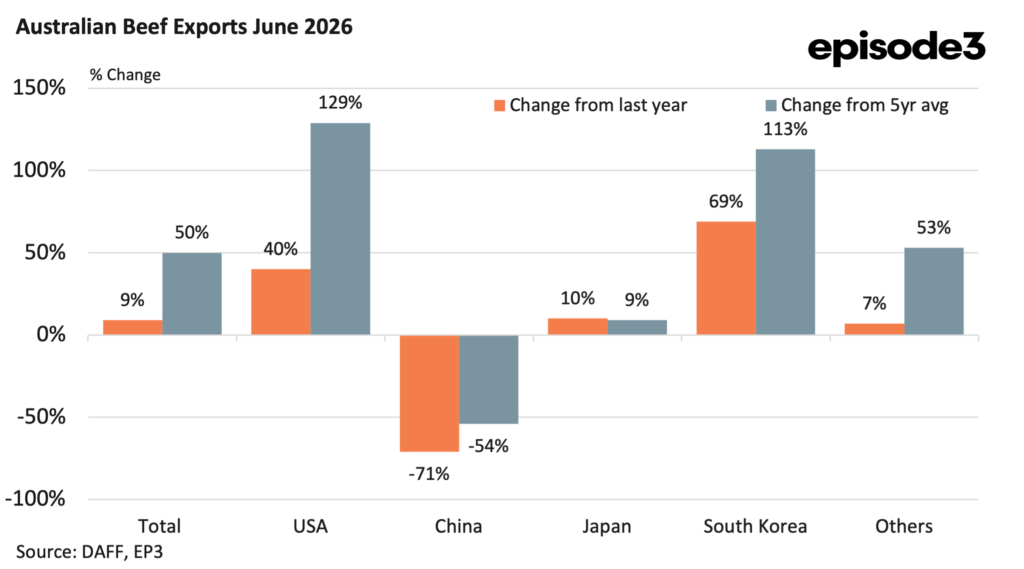
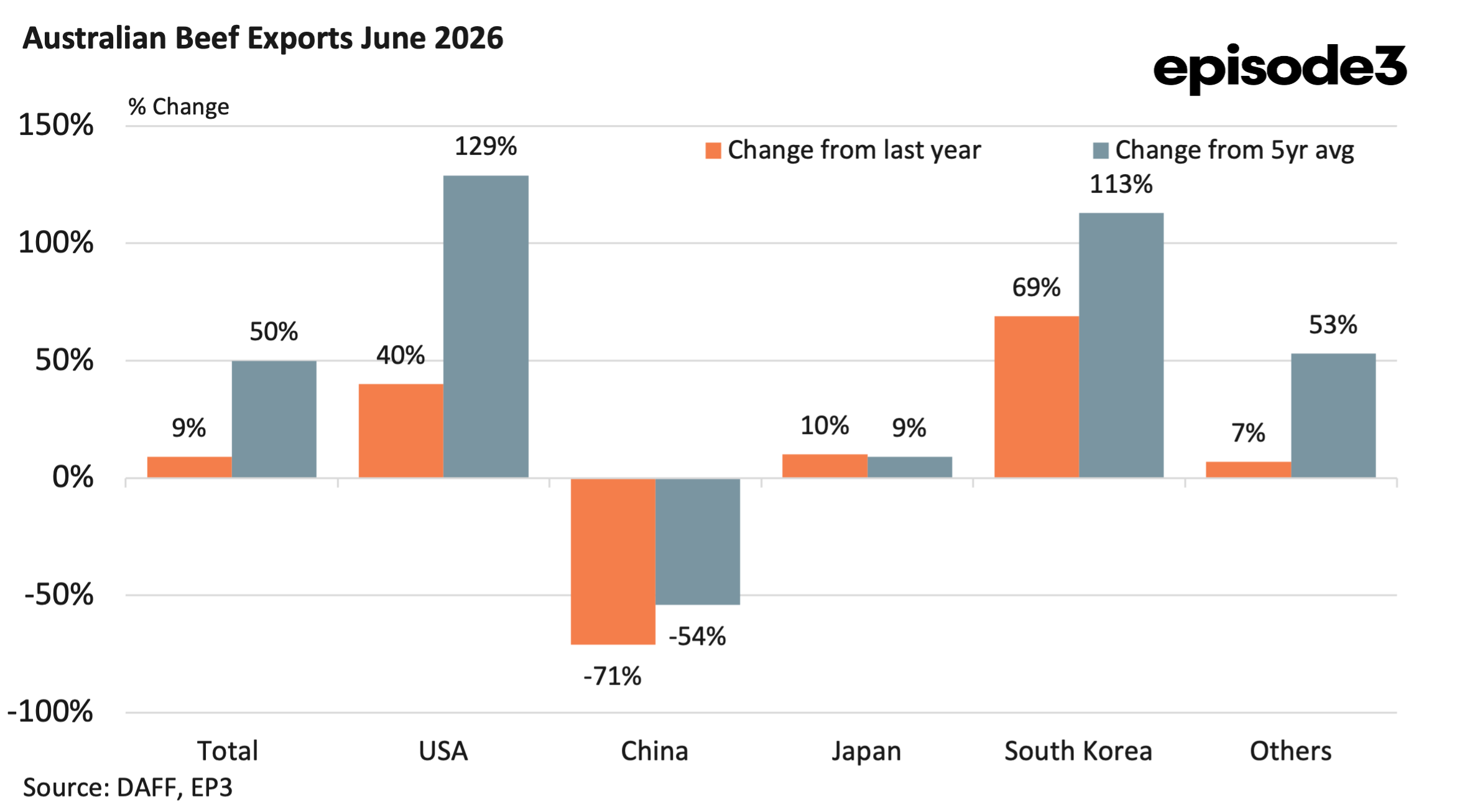
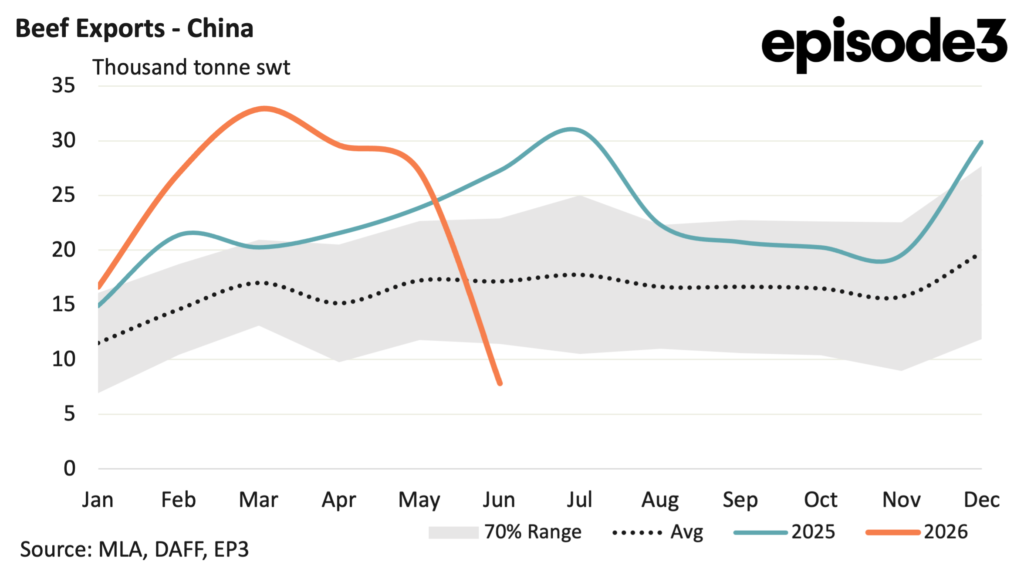
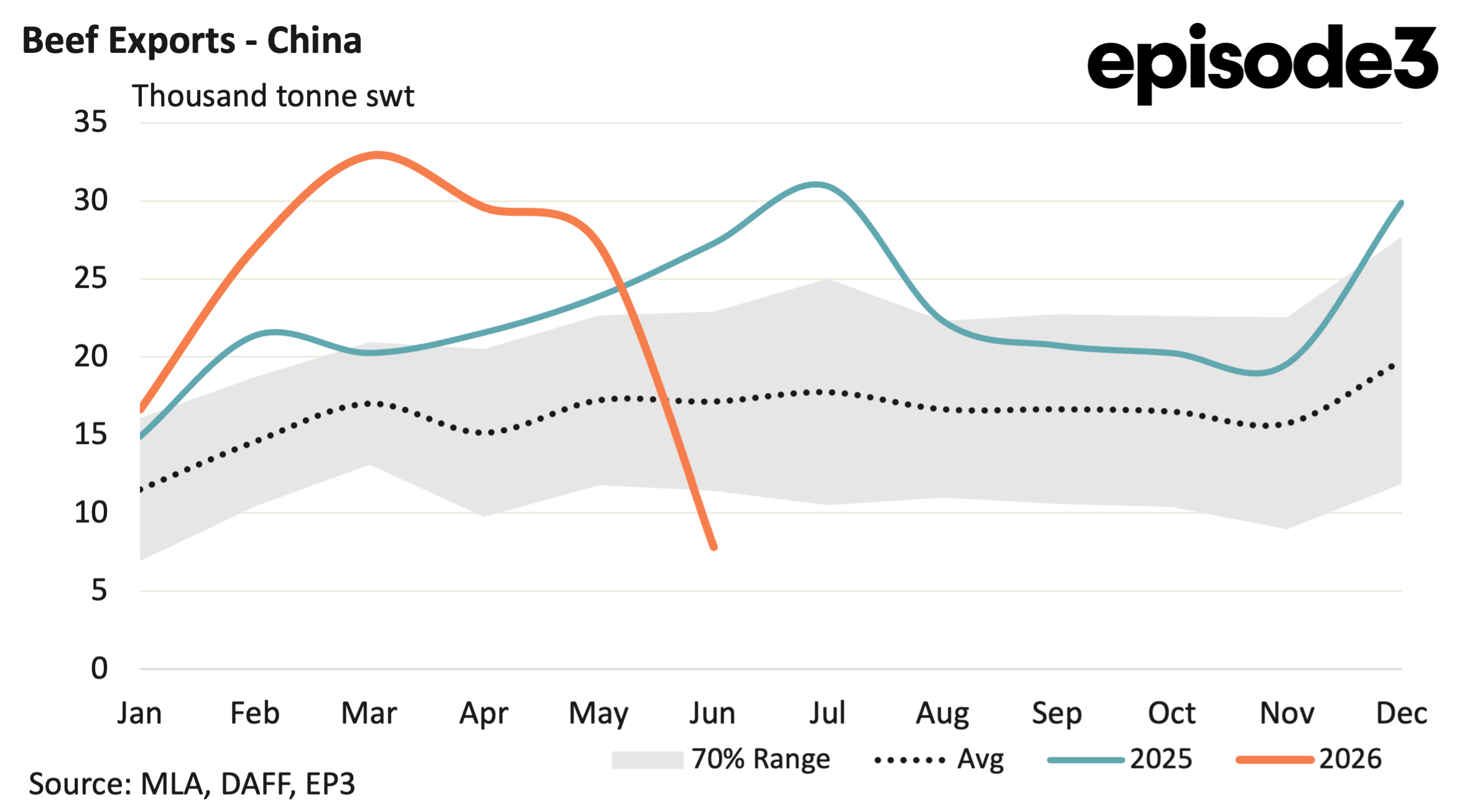
China experienced the sharpest change of any major market during June. Exports collapsed to just 7,814 tonnes after the safeguard quota was triggered during the month, causing Australian beef to attract substantially higher tariffs. Monthly shipments were 71pc below June last year and 54pc below the five-year average. While the June figures clearly demonstrate the immediate impact of the higher tariff, they should not necessarily be interpreted as a loss of underlying demand.
Chinese buyers continue to value Australian beef, but the additional tariff has significantly reduced its competitiveness relative to earlier in the year. As a result, many exporters appear to have either delayed shipments or redirected product into alternative markets.
Japan continued to provide stable support, receiving 24,012 tonnes during June. Exports were 10pc above last year and broadly in line with longer-term trade patterns, sitting 9pc above the five-year average. Japan remains Australia’s fourth-largest destination in 2026, although it has now been overtaken by South Korea as Korean demand has accelerated. Despite that change in rankings, Japan continues to provide an important premium outlet for Australian beef and remains one of the industry’s most dependable markets.
The “other markets” category accounted for 33,191 tonnes, representing around 23pc of total exports. Combined shipments were 7pc above last year and 53pc above the five-year average, highlighting that demand remains broad-based across a wide range of export destinations.
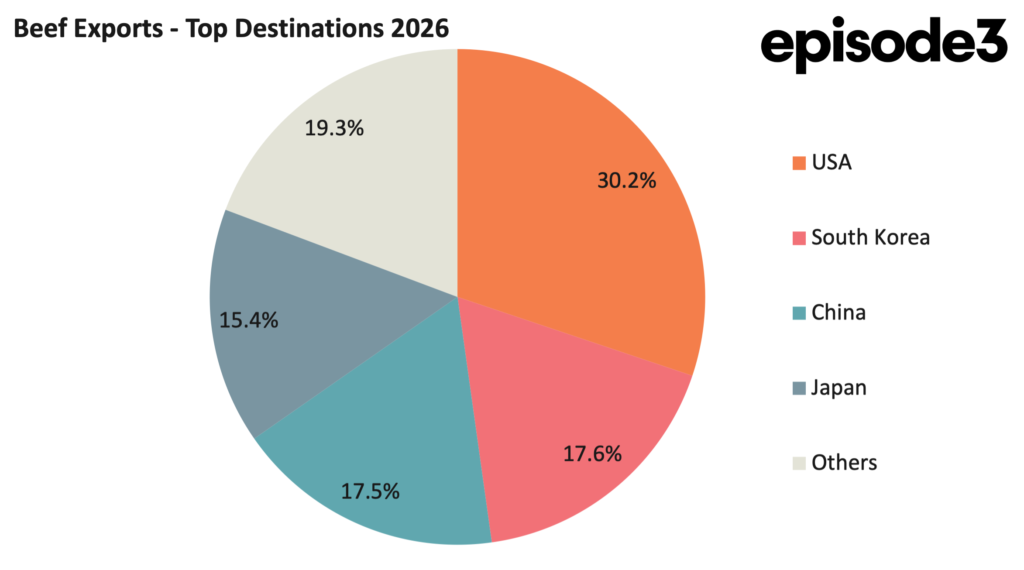
Looking at cumulative exports for 2026, the trade remains remarkably well diversified despite the disruption caused by the Chinese safeguard. The United States now accounts for around 30pc of exports, South Korea 18pc, China 18pc and Japan 15pc, with the remaining 19pc spread across numerous other destinations. Rather than relying heavily on any single destination, Australian exporters have demonstrated the ability to redirect product quickly as market conditions change.
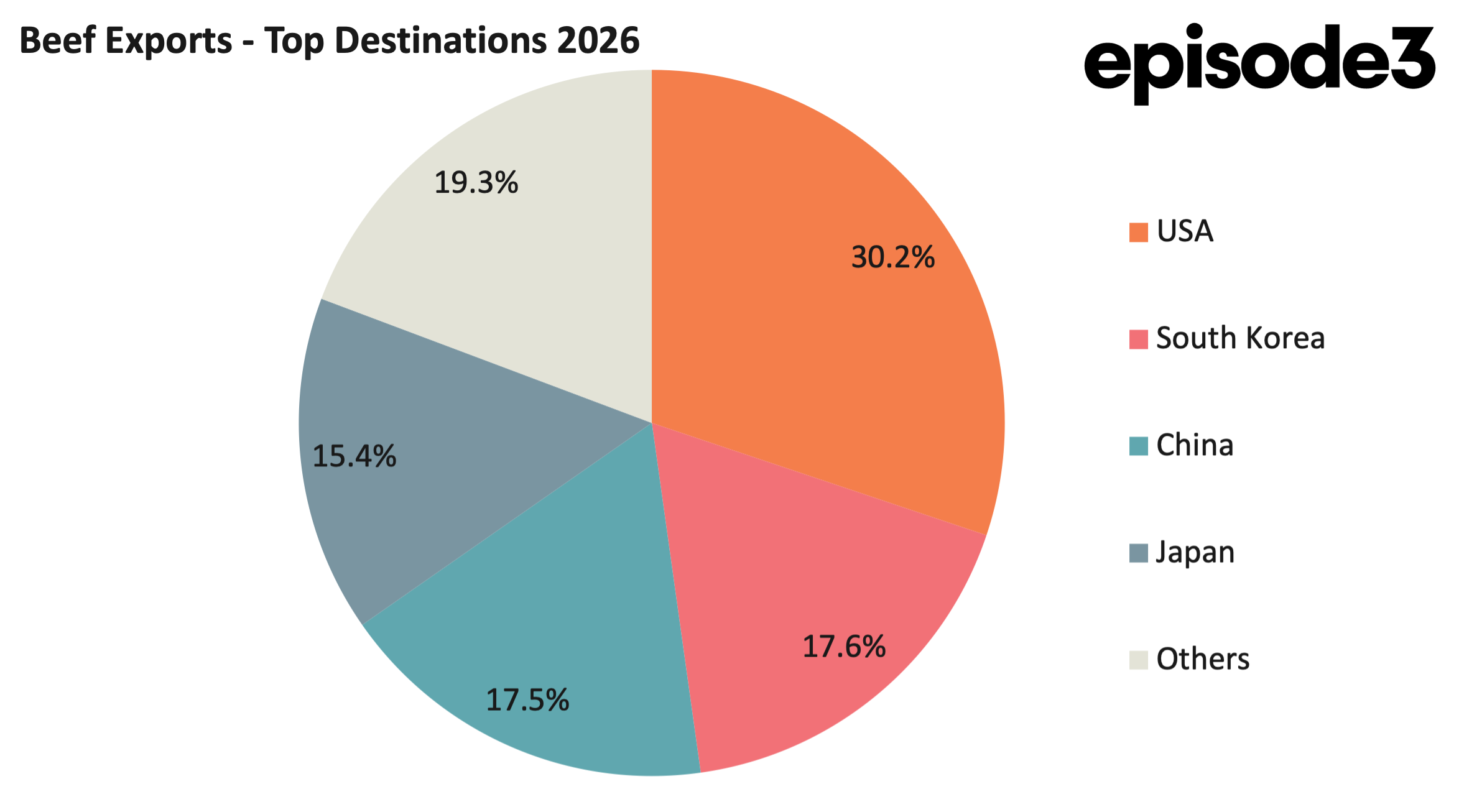
Although the Chinese safeguard tariff has materially reduced shipments into that market, record demand elsewhere has enabled overall exports to remain historically strong. The key question for the second half of 2026 will be whether alternative markets can continue absorbing additional product while China remains subject to elevated tariffs.
View this post on Instagram