
Beef export update May 2026
May 2026 - Beef export update
Australian beef exports continued their extraordinary run in May 2026, reaching a new monthly record of 152,438 tonnes shipped weight. That figure eclipsed the previous record set in March and sits 18pc above May last year and 55pc above the five-year average for the month. The result reinforces just how strong global demand for Australian beef remains despite elevated prices and growing concerns around market access into China as safeguard quota utilisation accelerates.
The United States remained Australia’s largest beef customer during May, taking 46,947 tonnes. Shipments to the US were 23pc above the same month last year and an extraordinary 113pc above the five-year average. The continued strength of US demand reflects ongoing structural shortages within the American cattle herd.
With US cattle numbers still sitting near multi-decade lows, import demand remains elevated as processors and retailers seek additional beef supplies to fill domestic requirements. Australian beef continues to benefit from that supply gap. While the US remained the largest market, the standout feature of May was the continued strength across multiple major destinations rather than reliance on any single export customer.
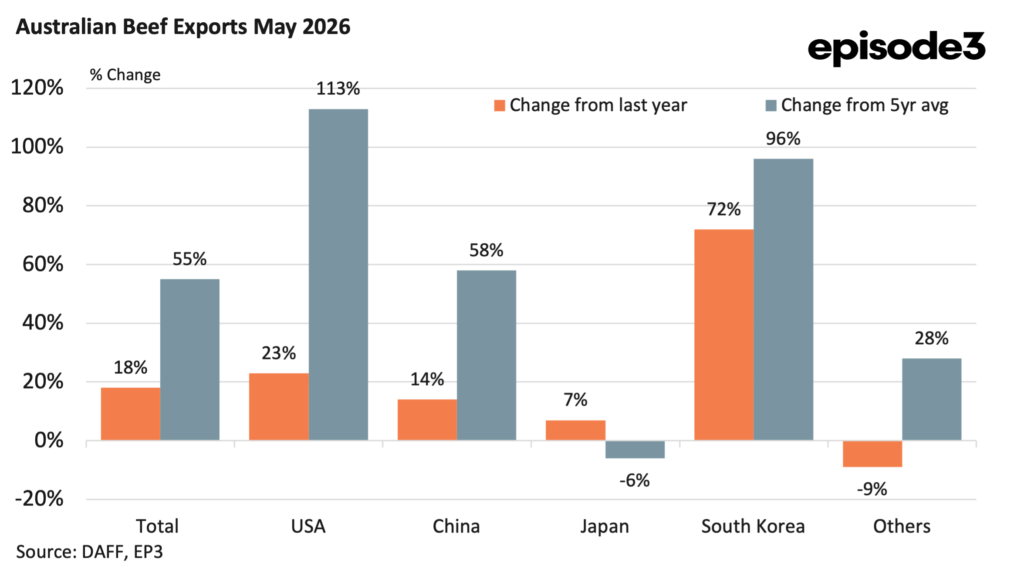
South Korea shipped into second position for the month, overtaking both China and Japan. Exports to Korea reached 29,886 tonnes with volumes coming in 72pc higher than a year ago and 96pc above the five-year average. The Korean market has quietly become one of the strongest growth stories for Australian beef over the past 12 months.
China slipped back to third position in May with exports totalling 27,187 tonnes. Exports to China were still 14pc above last year and 58pc above the five-year average, highlighting that demand remains robust despite growing concerns around quota availability. By the end of May, Australia had utilised around 90pc of its annual safeguard allocation, leaving only around 10pc remaining for the balance of the year. Just one month earlier, quota utilisation stood at 66pc.
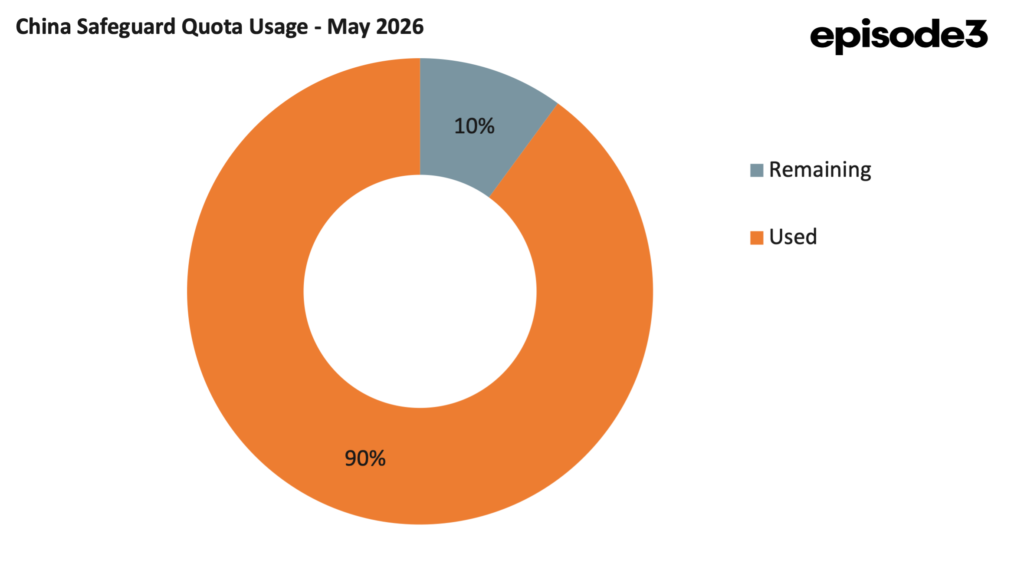
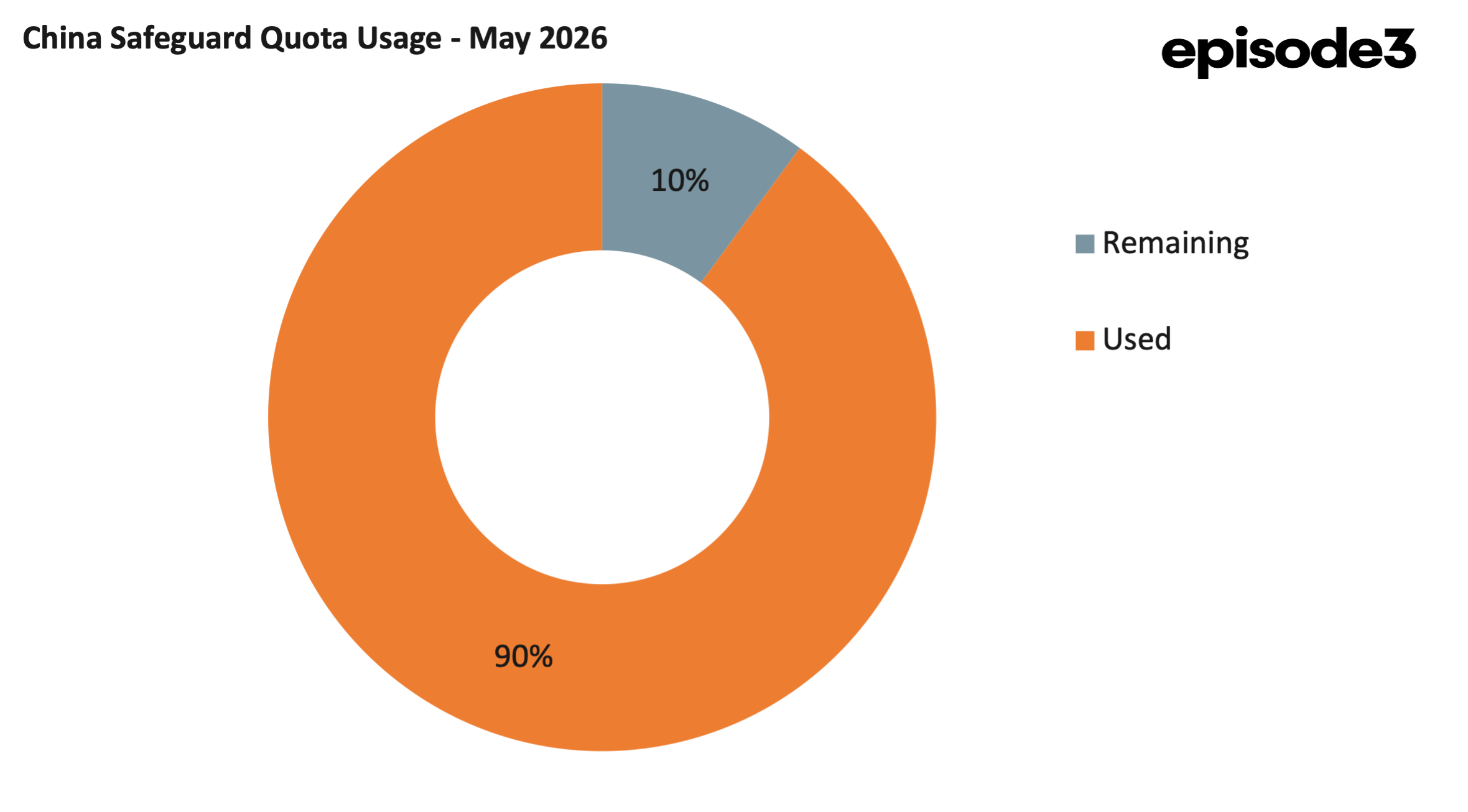
That rapid increase means exporters are likely to become increasingly cautious in managing shipments into China during coming months. While exports can continue beyond the quota threshold, higher tariff rates apply once the safeguard mechanism is triggered, potentially impacting competitiveness.
Japan received 21,160 tonnes during May with volumes sitting 7pc above last year, but 6pc below the five-year average. While Japan remains a critical premium market, it has been overtaken by both South Korea and China during recent months as growth in those destinations has accelerated. The broader diversification story remains one of the most encouraging aspects of Australia’s export performance.
The “other markets” category accounted for 28,258 tonnes. While shipments into this group were 9pc below last year, they remained 28pc above the five-year average, illustrating the breadth of demand outside the traditional major destinations.
Looking at the distribution of trade so far in 2026, Australia’s beef export portfolio remains remarkably balanced. The US accounts for roughly 29pc of exports, China 20pc, South Korea 17pc and Japan 15pc, with the remaining 19pc spread across a diverse range of other markets.
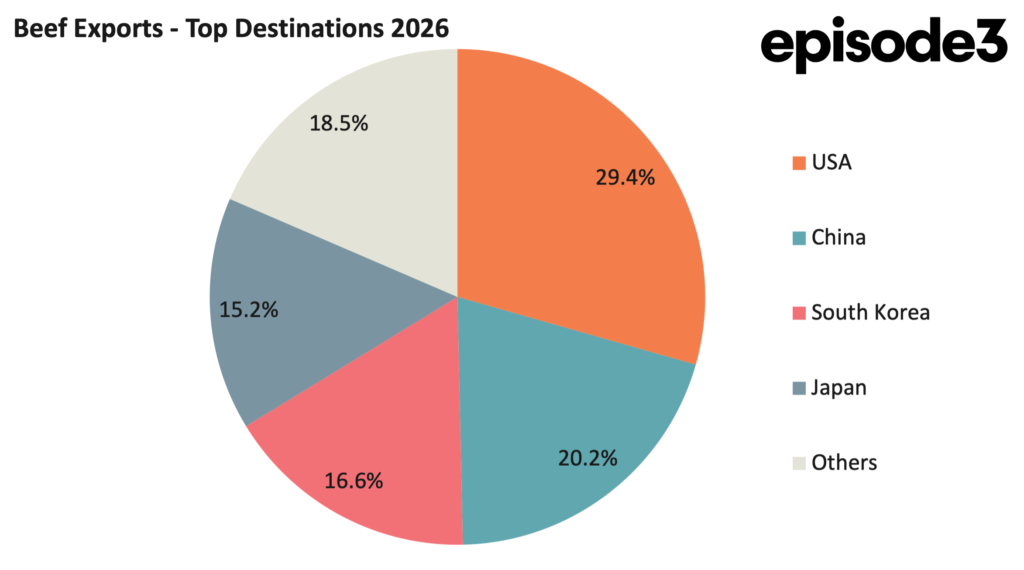
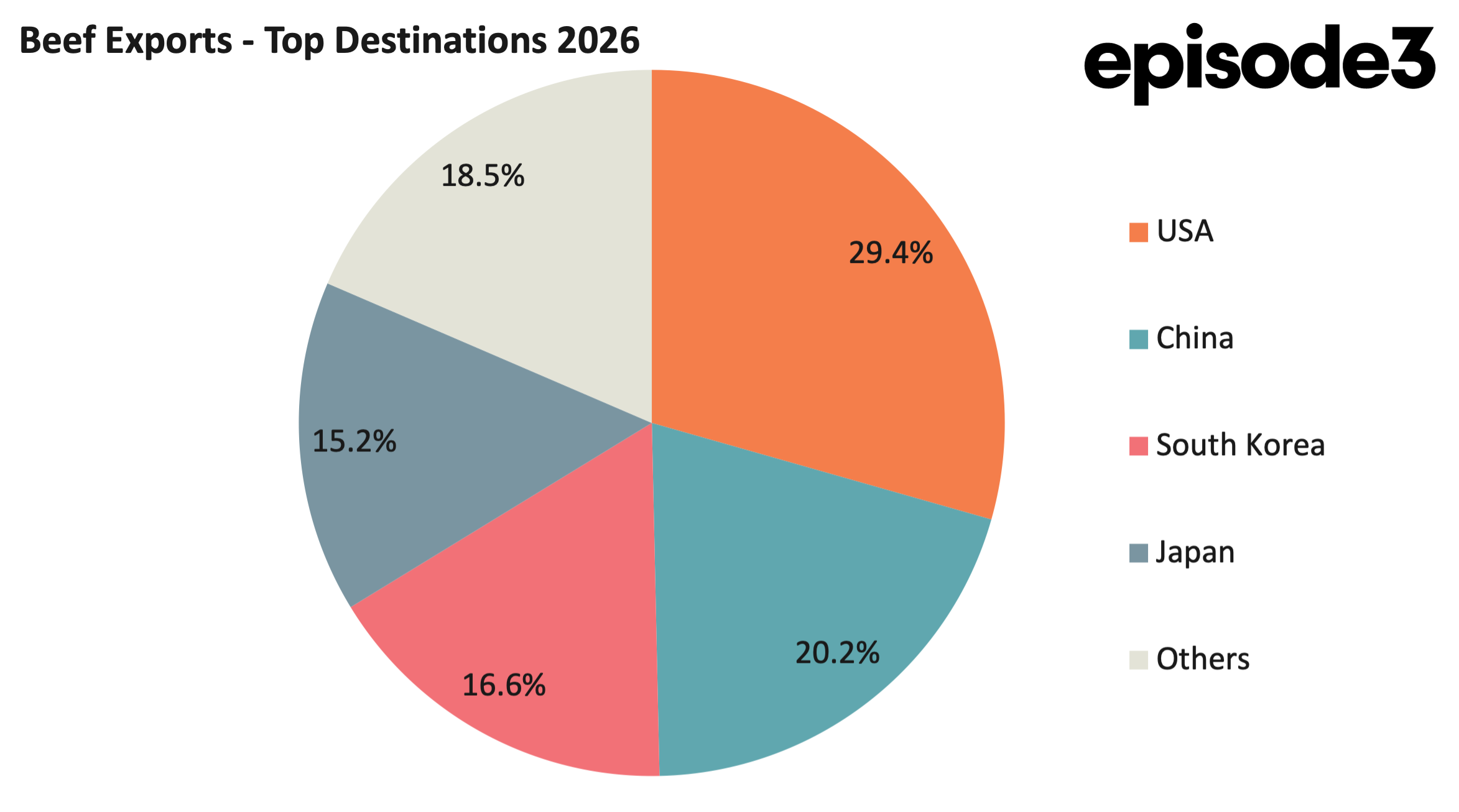
That relatively even distribution provides a degree of insulation against disruptions in any one destination. It also helps explain why total exports have continued to rise even as uncertainty around China has increased.
The latest export figures demonstrate that global demand for Australian beef remains exceptionally strong. Record exports, robust demand from the US, continued growth in South Korea and resilient buying from China have combined to push shipments to unprecedented levels.
The challenge now is whether this momentum can be maintained through the second half of the year as China quota constraints tighten and Australian cattle supplies remain under pressure. For now, however, the export engine continues to run at full throttle.