
Sheep numbers dry up as processors chase supply
Market Morsel
The latest Sheep and Lamb Slaughter Index data shows that processor throughput tightened considerably during June, reinforcing the picture of a market where livestock availability remains constrained despite softer export conditions. Unlike previous months where movements differed noticeably between regions, the latest slaughter data shows reductions across most of the country, particularly for sheep, indicating that the modest lift in processing seen during May has now faded.
Sheep slaughter recorded declines in every major producing state, with the exception of Victoria, where throughput improved only marginally from an exceptionally low base. New South Wales experienced the sharpest contraction, with the sheep slaughter index falling from 28pc in May to just 9pc in June. The result indicates processors found it substantially more difficult to source sheep than they had only a month earlier.
Queensland also recorded lower throughput, easing from 52pc to 47pc. South Australia slipped from 19pc to 15pc, continuing the pattern of subdued processing that has characterised much of the year. Tasmania recorded a significant decline, falling from 53pc to 27pc, while Western Australia dropped sharply from 24pc to just 7pc. Victoria was the only state to improve, lifting from 5pc to 6pc. However, even after that increase, Victorian sheep slaughter remains the lowest in the country and continues to highlight the exceptionally tight supply conditions affecting the state.
The sheep data points to a broad based tightening in availability rather than isolated regional shortages. The states that had previously helped support national throughput have also moved lower, suggesting the supply squeeze is becoming more widespread.
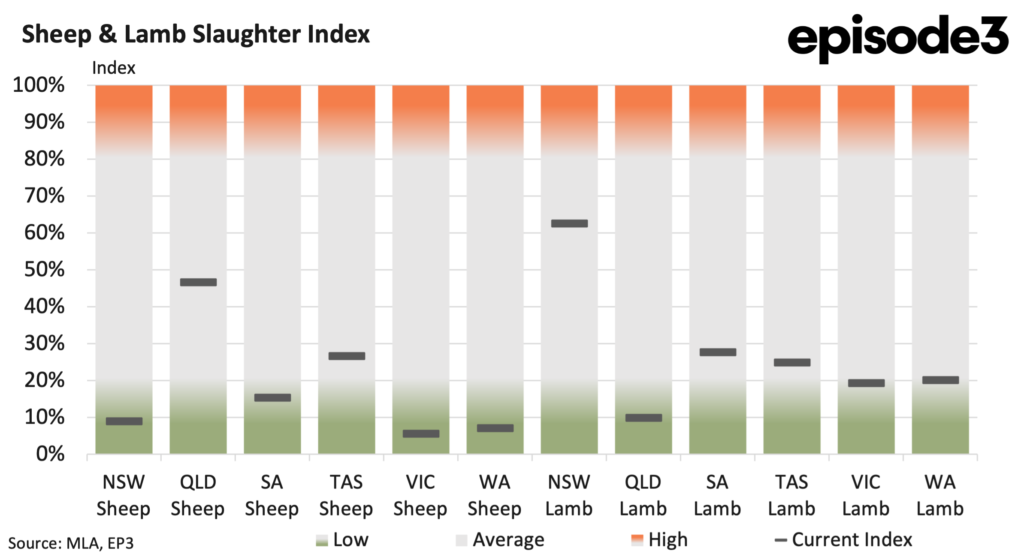
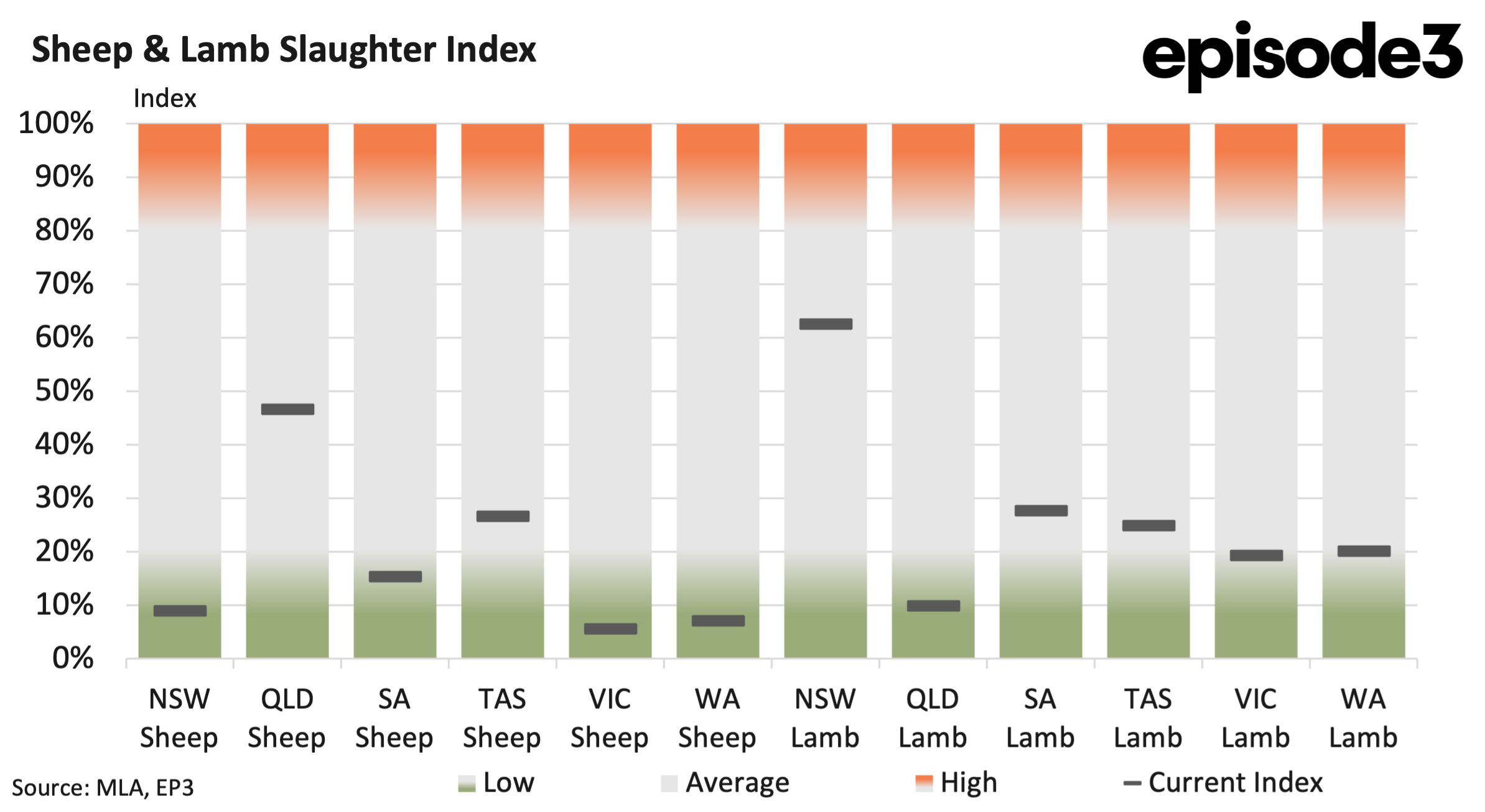
Lamb slaughter also softened during June, although the pattern was less severe than for sheep. New South Wales remained the strongest lamb processing state despite easing from 71pc in May to 62pc in June. That result suggests processors in the state were still able to source relatively good numbers of lambs compared with historical averages, although availability is beginning to moderate.
Queensland experienced one of the largest declines, falling from 33pc to 10pc, indicating a significant tightening in northern lamb supply. Western Australia also recorded a notable reduction, dropping from 52pc to 20pc after several months of relatively elevated throughput. South Australia edged slightly higher from 27pc to 28pc, effectively remaining stable over the month, while Tasmania eased from 28pc to 25pc. Victoria declined from 28pc to 19pc, reinforcing that lamb availability across the southern mainland continues to tighten.
The reduction in Western Australian lamb slaughter is particularly significant. For much of the year the west has been providing stronger throughput than most eastern states, helping to offset tightening supply elsewhere. The June figures suggest that advantage is beginning to diminish as Western Australian availability also contracts.
The slaughter data broadly aligns with the Sheep and Lamb Yarding Index released earlier, which showed fewer sheep and lambs being offered through saleyards across almost every major producing state. The yarding data pointed to tightening supply, while the latest slaughter figures confirm that processors have now been unable to fully maintain previous kill levels. This provides stronger evidence that livestock availability is becoming increasingly constrained rather than simply shifting between selling channels.