
Sheep turnoff drops into rebuild territory
Market Morsel
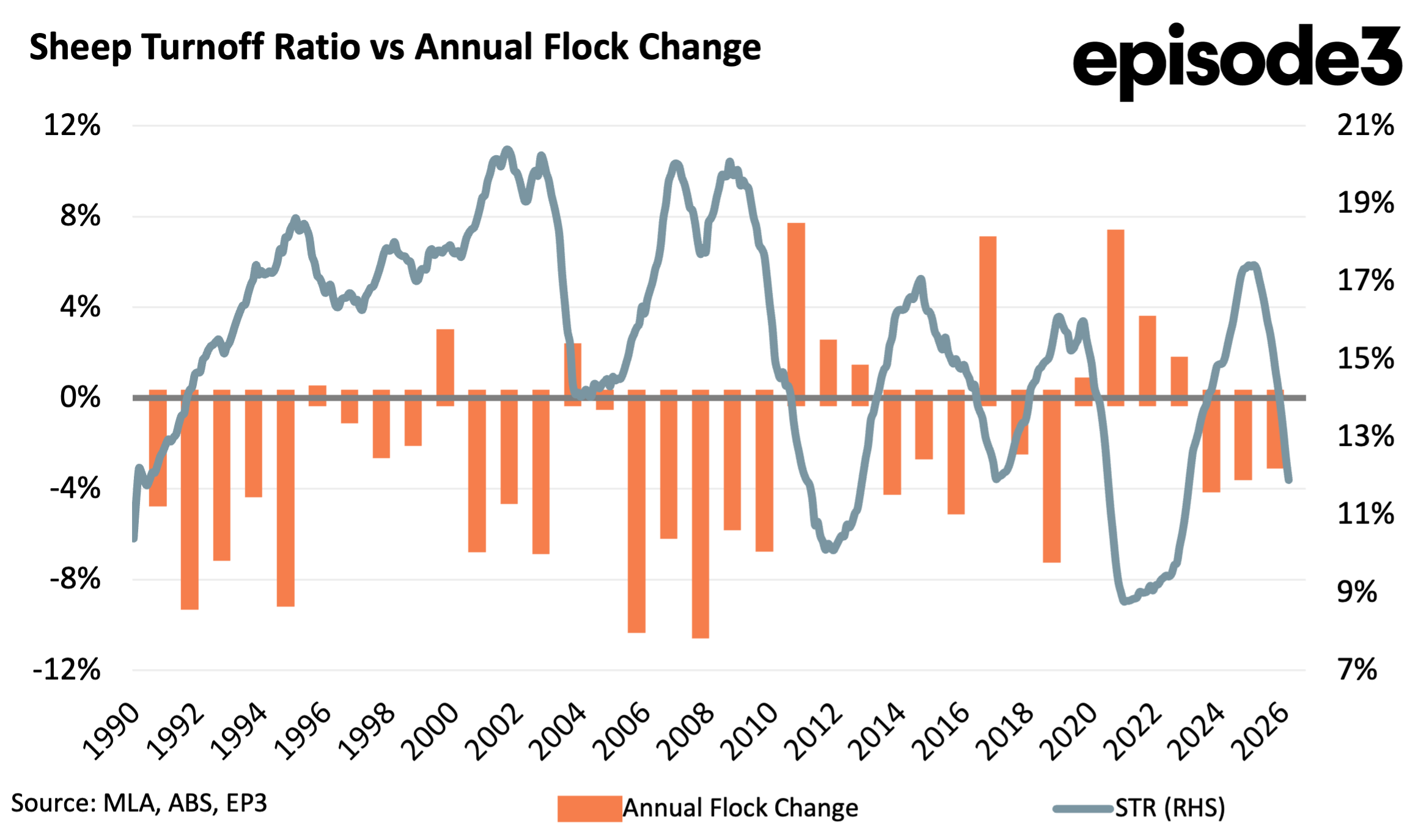
Australia’s sheep industry has taken another meaningful step towards flock rebuilding, with the Sheep Turnoff Ratio falling sharply through the second quarter of 2026. The STR declined from 13.8pc at the end of March to 11.9pc by the end of June, pulling the average ratio for 2026 down to 13.4pc. That is an important shift. The STR measures sheep slaughter and live exports relative to the size of the national flock, providing a useful indication of whether producers are liquidating sheep or retaining them. Higher readings tend to coincide with flock contraction, while lower readings are generally associated with stabilisation and rebuilding.
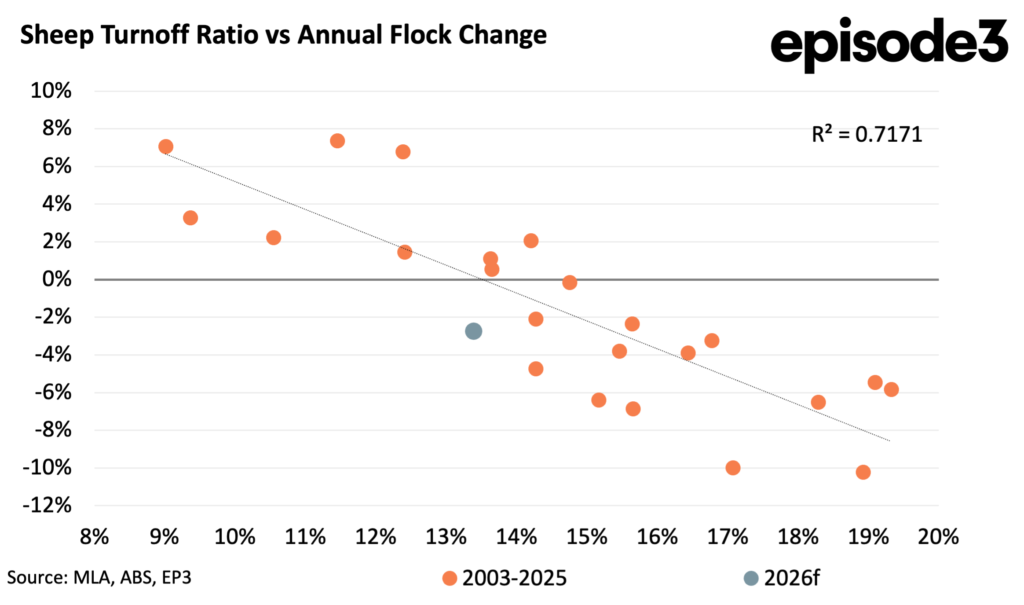
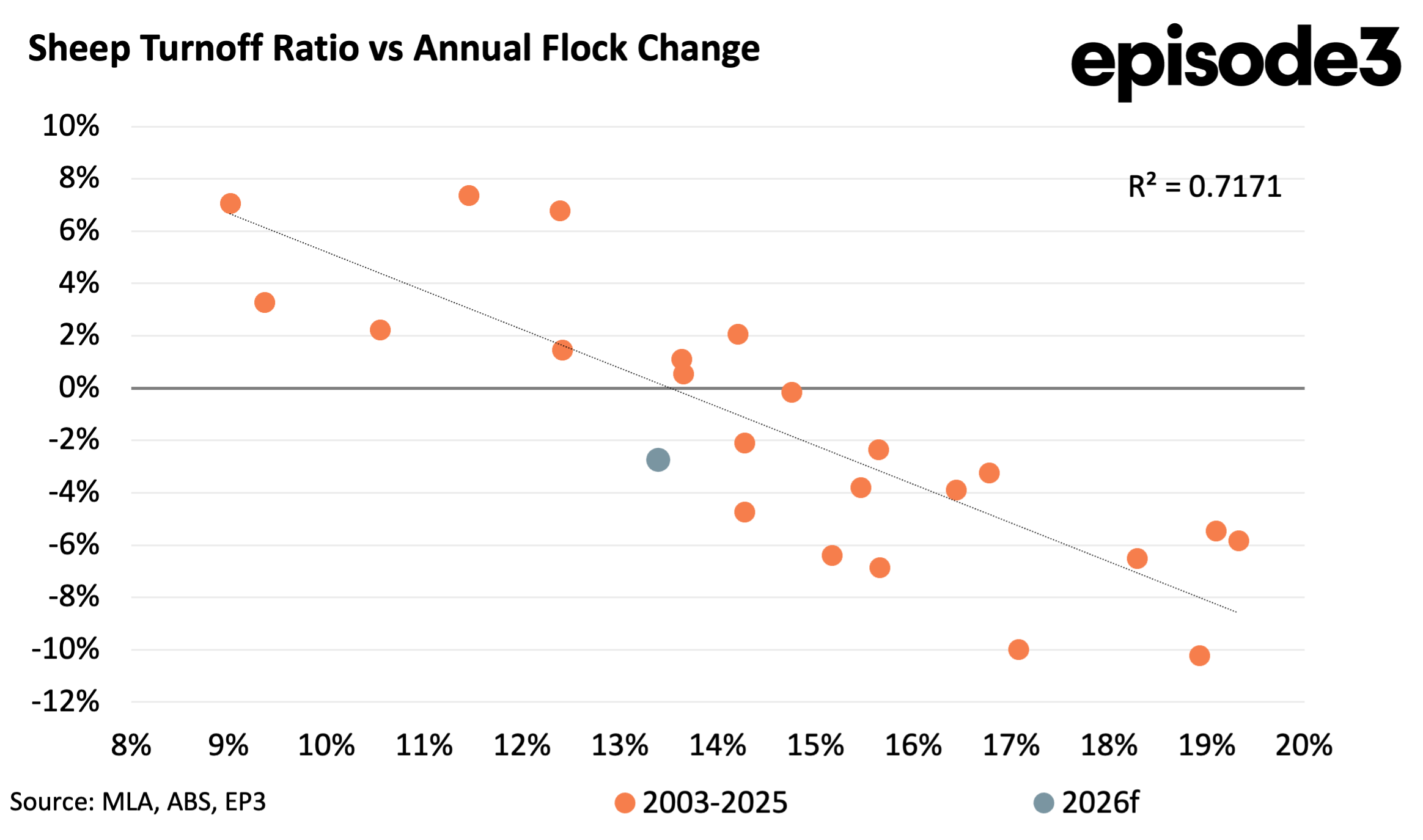
The relationship is reasonably strong. Looking across the period from 2003 to 2025, movements in the STR explain around 72pc of the variation in annual flock growth, making it a useful guide to the direction the flock is likely to travel. At an annual STR of around 13.4pc, the historical relationship points towards the Australian flock being broadly stable to slightly higher.
Based on previous years, a ratio around current levels would be consistent with flock growth of approximately 0.5pc to 1pc. That is considerably stronger than MLA’s current forecast for a 2.7pc decline in the national flock during 2026. It does not guarantee that the flock will grow. Seasonal conditions, lamb marking rates, ewe mortality and producer intentions will ultimately determine the final number. However, the turnoff data are increasingly difficult to reconcile with the idea that Australia remains in a significant flock liquidation phase. The direction of travel is clearly towards retention.
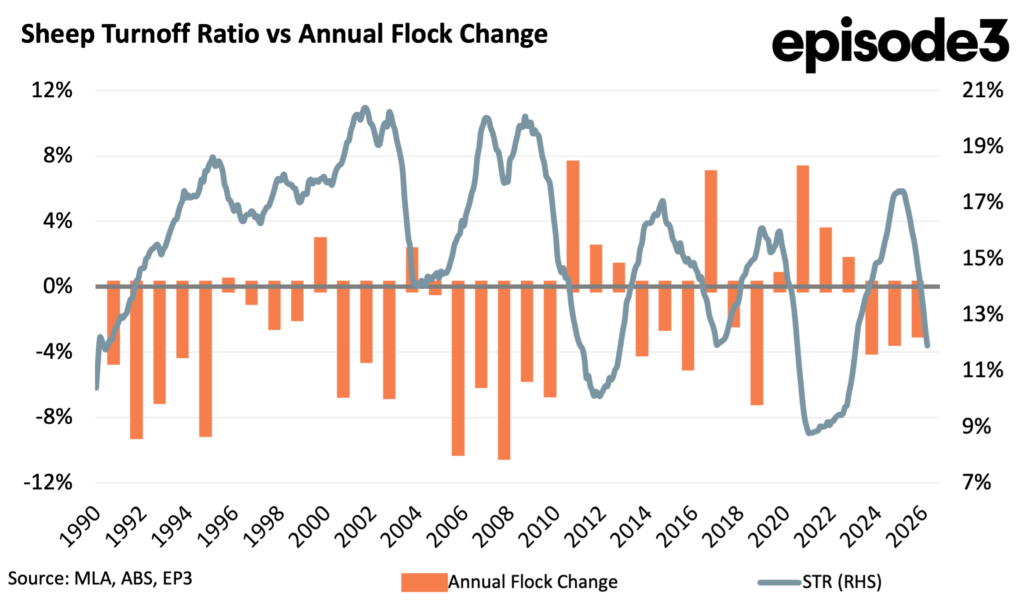
The most important development is what occurred during Q2. An STR of 13.8pc at the end of March was already sitting near the area where flock numbers have historically begun to stabilise. The fall to 11.9pc by June pushes the indicator much more decisively into rebuild territory.
At those levels, the proportion of the flock being removed through slaughter and live export is relatively low by historical standards. The last major rebuilding phase provides some context. During 2021 and 2022 the STR fell below 10pc as producers retained significantly more sheep following the drought-driven liquidation of the preceding years.
The current reading is not yet that low, suggesting the industry is not moving into an aggressive rebuild. But it does indicate that producers are retaining enough stock for modest flock growth to become increasingly plausible. There is also a price signal sitting behind the shift. Sheep and lamb prices strengthened significantly through the first half of 2026 as available supplies tightened. Higher values provide producers with a stronger incentive to retain breeding females, particularly where seasonal conditions allow additional stock to be carried. That creates the potential for the STR to remain relatively subdued through the remainder of the year. A sustained period near current levels would strengthen the case for the flock reaching its cyclical low earlier than presently forecast.
The qualification is that rebuilding a sheep flock takes time. Retention today reduces slaughter supply immediately, but the additional lamb production generated from those retained females does not arrive until later. That means a move towards rebuilding can initially make already tight sheep and lamb supplies even tighter.
For producers, that remains broadly supportive of prices. For processors, it presents the opposite challenge, with reduced turnoff potentially tightening livestock availability further before additional breeding numbers eventually translate into higher production. The Q2 STR result therefore represents more than another quarterly movement in an indicator. It suggests the Australian sheep cycle is changing direction.
Australia may not yet be entering the type of aggressive rebuild seen earlier this decade, but the numbers increasingly point towards the liquidation phase being finished. If the STR remains around current levels, a small increase in the flock during 2026 looks increasingly achievable. The sheep flock may finally be moving from stabilisation into genuine rebuild territory.