Market Morsel: Grain prices rally! Finally some good news!

The Snapshot
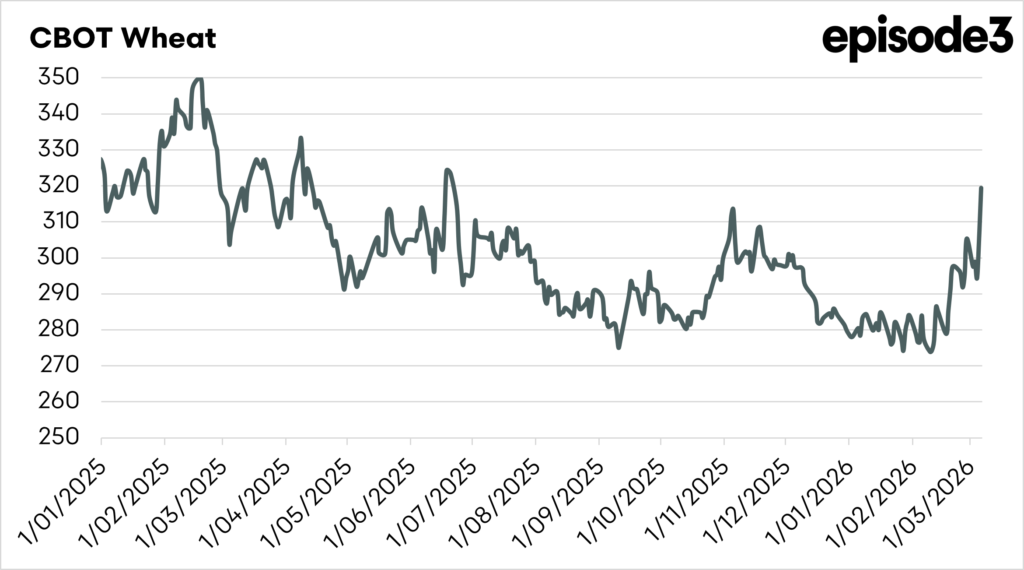
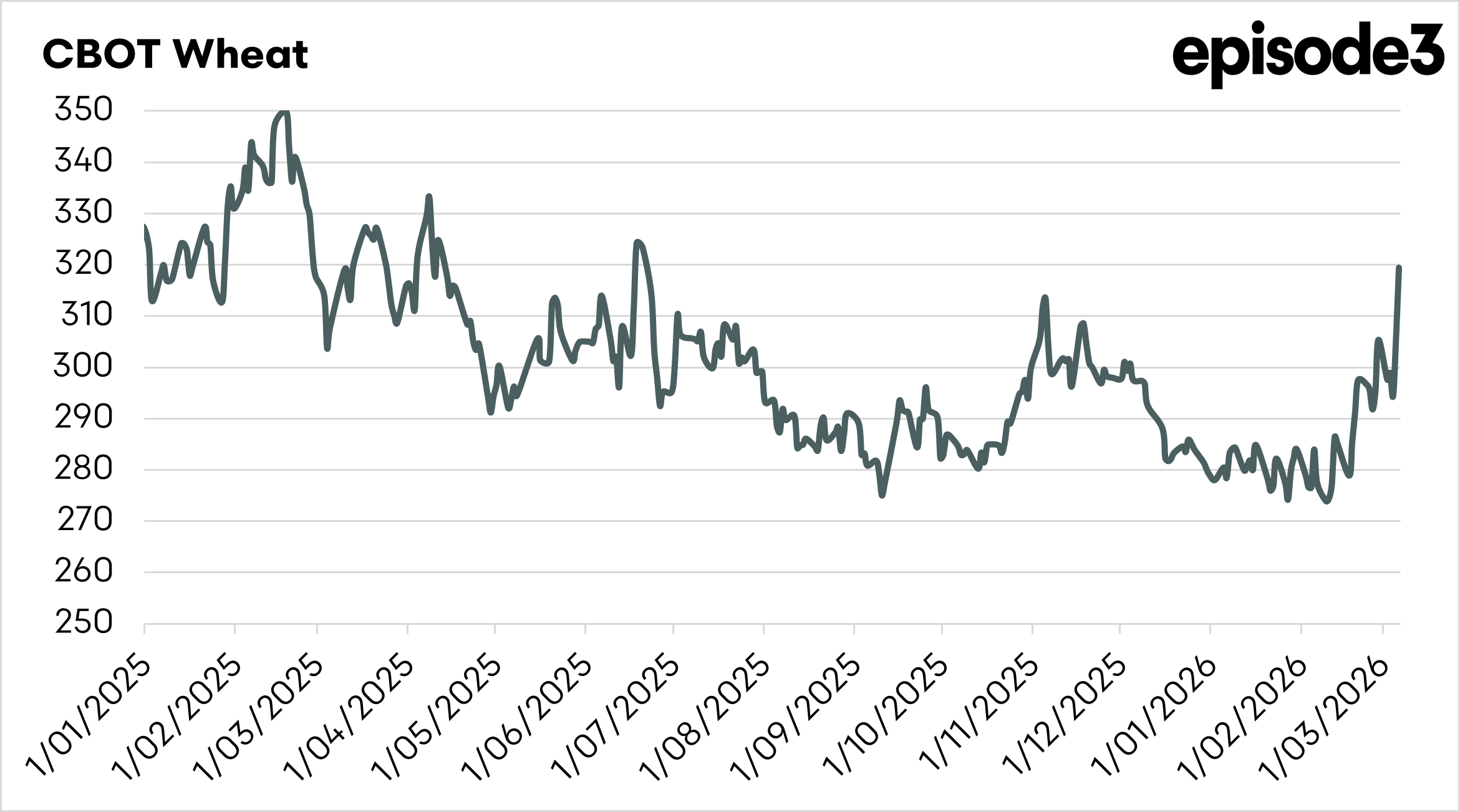
The past couple of days have been bad news, after bad news, and finally, we have something positive to include in our updates: A welcome rise in wheat pricing, with CBOT wheat futures up A$22 since the end of February.
The wheat market was initially slow to react to the escalating conflict involving Iran, as analysts expected grain prices to rise, but they didn’t or at least didn’t immediately. Unlike the Russia-Ukraine war, which directly involved two major wheat exporters, Iran itself is not a significant wheat producer or exporter. As a result, the early stages of the conflict did not immediately threaten global wheat supply or trade flows, and markets remained relatively calm. There were some analysts and traders expecting a quick resolution, which we experienced in June 2026 with the first Israel-US strikes on Iran.
Sentiment shifted towards the end of the week as energy markets surged sharply. Crude oil prices jumped dramatically as fears grew over disruptions to Middle Eastern energy production and shipping routes, particularly through the Strait of Hormuz, one of the world’s most critical oil chokepoints. Oil prices have risen above US$100 per barrel for the first time in several years amid the conflict’s escalation.
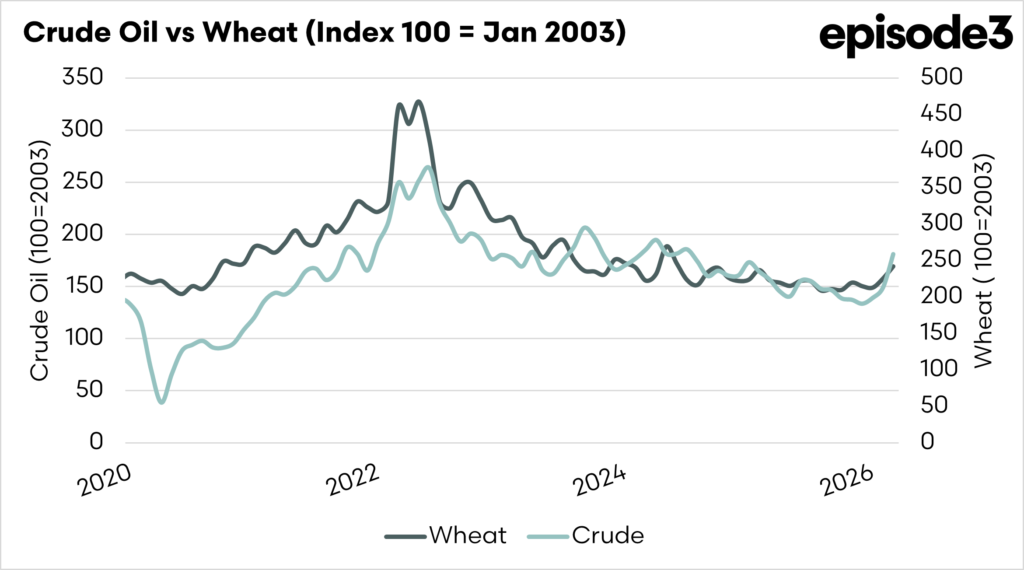
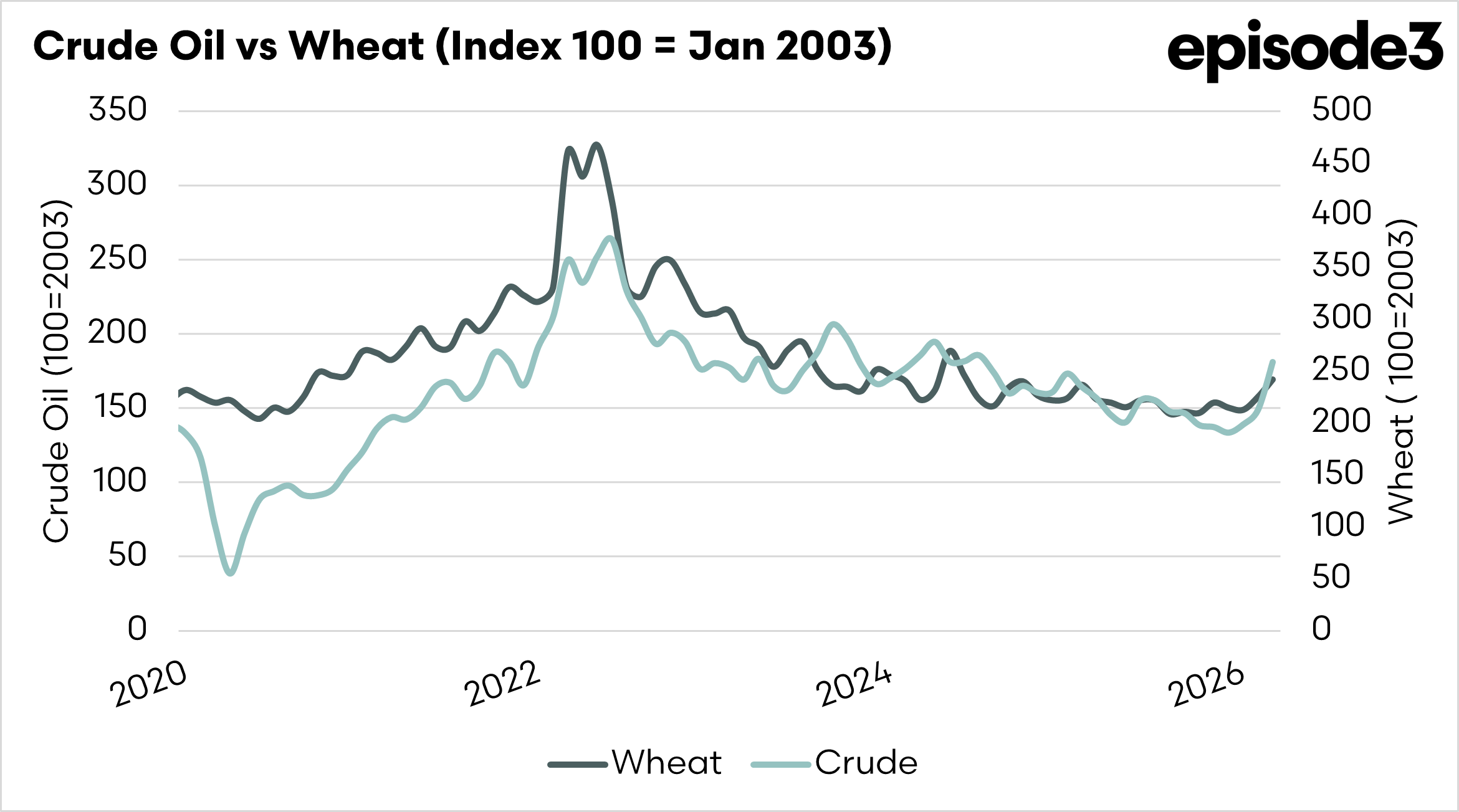
On Episode3.net, we have discussed the relationship between crude oil and grain prices extensively, and we expected higher grain prices. Higher oil prices tend to ripple through agricultural markets in several ways. Energy is a key input for farming, influencing the cost of diesel, fertiliser, freight and processing. Secondly, significant quantities of grain are used in renewable fuel production, and as crude oil prices rise, the value of biofuels rises, which flows through to the grain sector.
As crude oil rallied strongly, it provided indirect support to grain markets, with wheat futures moving higher alongside the broader commodity complex.
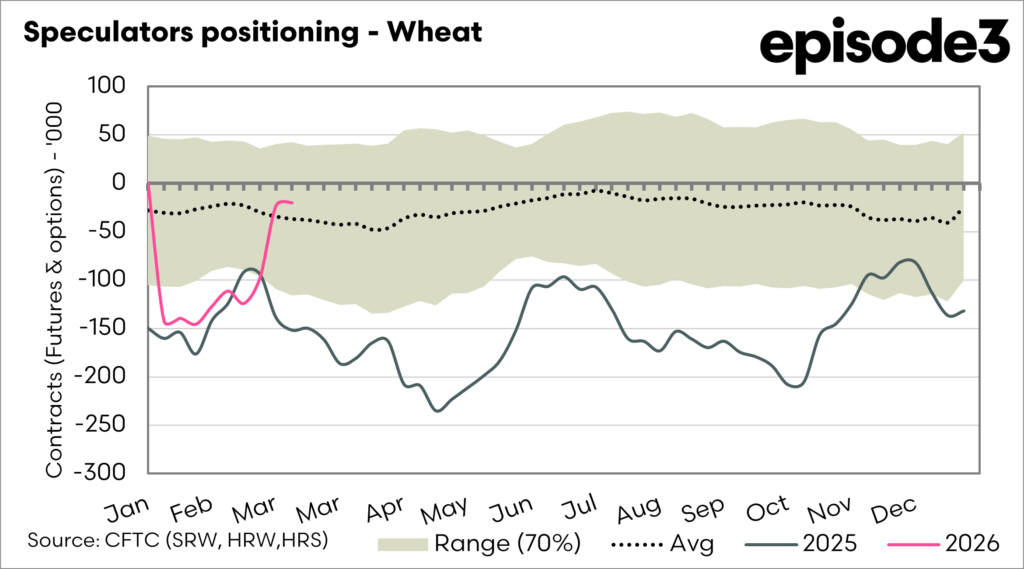
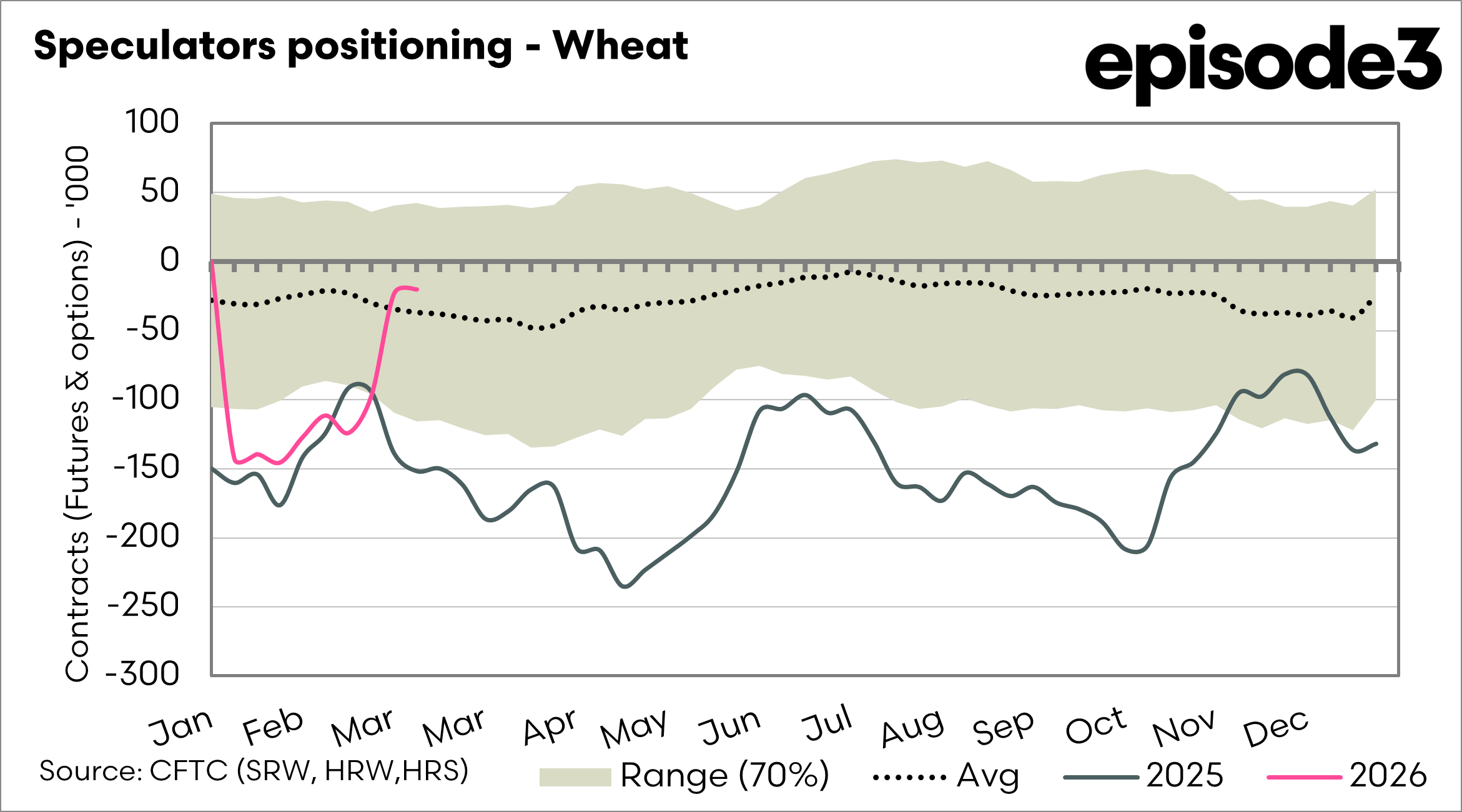
Another major factor behind the rally was the behaviour of speculative traders, who were short in the market. These are the traders that were betting on a falling market. As geopolitical risk pushed commodity markets higher, many of these traders were forced to buy back their positions to close out their shorts. This process, known as short covering, can accelerate price movements by creating sudden bursts of buying in the futures market.
As a result, the end of week rally in wheat was less about a sudden change in global supply and more about the combination of rising energy prices and speculative positioning rapidly unwinding. The world is unfortunately still sitting on quite ample grain supplies, but how long will that last if farmers around the world start reducing their acreage or fertiliser applications?
Whilst this rise in grain prices is welcome, and will start to take away some of the pain from the increased inputs, please ensure you read our analysis today on the disconnect between seeding and harvest pricing (see here).
Quicker Updates
For quicker updates as markets move, follow @thewheatwatcher on Instagram. I regularly post short summaries and charts breaking down what’s happening in grain, fertiliser and broader ag markets so you can stay across the key moves without having to read through pages of analysis. If markets are moving quickly, that’s usually where the updates will land first.