
AgWatchers: Better Call Saul
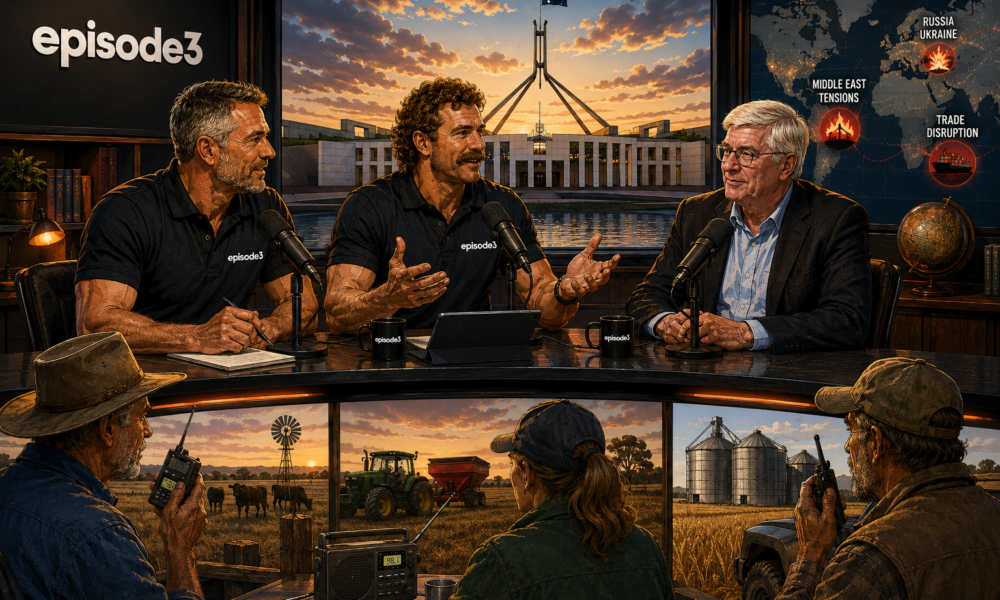
AgWatchers: Tariffs, trade wars and Australia caught between giants
Australia’s agricultural prosperity depends on global trade, but the system supporting those exports is becoming increasingly unpredictable.
This week on AgWatchers, veteran economist Saul Eslake joins Matt and Andrew to discuss tariffs, China’s slowing economy and Australia’s difficult position between its largest trading partner and closest strategic ally.
Saul, a former chief economist at ANZ Bank and Bank of America Merrill Lynch Australia, argues free trade remains critical to Australian agriculture.
“Trade is about specialising in what we do best, and agriculture is one of those things, as is mining,” he says.
Australia produces far more food and fibre than its domestic market can consume, making access to overseas buyers essential. In return, the country benefits from importing machinery and other products that can be produced more efficiently elsewhere.
Saul says tariffs are frequently misunderstood. Rather than being paid by foreign exporters, their cost is generally passed through to businesses and consumers in the country imposing them.
“Tariffs and quotas are not things that governments make foreigners pay,” he says. “They’re something that they make their own consumers pay.”
For Australian farmers, retaliatory tariffs on US goods could increase the cost of tractors, harvesters, machinery parts and agricultural chemicals.
The discussion then turns to Australia’s increasingly complicated relationships with the United States and China. Both countries have shown they are willing to push trade agreements aside when domestic political interests take priority.
Australia successfully redirected much of its barley, beef and other trade when China imposed restrictions, but the experience highlighted the risks of relying too heavily on a small number of buyers.
Saul believes Australia should build stronger relationships with middle powers including Canada, Japan, South Korea, Singapore and European nations.
“We probably, given the risks entailed in being as dependent as we are on China for a market, need to be thinking more actively about how we diversify our markets,” he says. “And that includes agricultural products.”
Closer to home, Saul also discusses inflation, interest rates, tax reform and Australia’s weak productivity performance.
There is still plenty of AgWatchers nonsense, including strong opinions on black pudding and haggis, questionable compliments and a psychological test Saul only narrowly survives.
Listen to the full episode now by clicking below or visiting episode3.net/links