Digital parts warehouses: the future of farm repairs
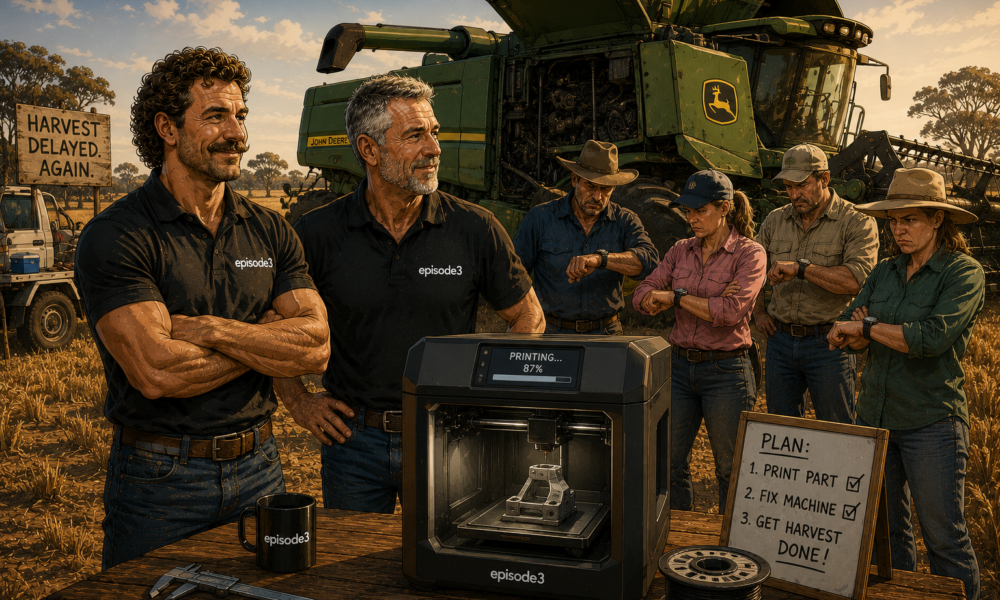
The Snapshot
- Small, low-cost parts can leave expensive farm machinery idle for days, making downtime far more costly than the component itself.
- 3D printing can reproduce unavailable parts locally, reducing reliance on distant warehouses and long freight delays.
- Stronger polymers and metal printing are expanding the range of practical components that can be produced for machinery repairs.
- Locally printable parts could help Chinese and other new machinery brands compete without first building large dealer and parts networks across Australia.
- As access improves, 3D printers could become a standard farm workshop tool and shift more control over repairs back towards farmers and regional engineers.
The Detail
Every farmer knows the scenario. It is the middle of harvest, rain is forecast, and the header has stopped because of a broken bracket, housing, clip or fitting.
The dealer knows exactly what is required, but there is not one sitting on the shelf locally. The nearest part might be in Perth, Melbourne or overseas, leaving a machine worth hundreds of thousands of dollars parked because of a part that may cost less than $100.
The true cost of a spare part is rarely the price written on the invoice. It is the time lost waiting for it while the crop stays in the paddock, and the weather window continues to narrow.
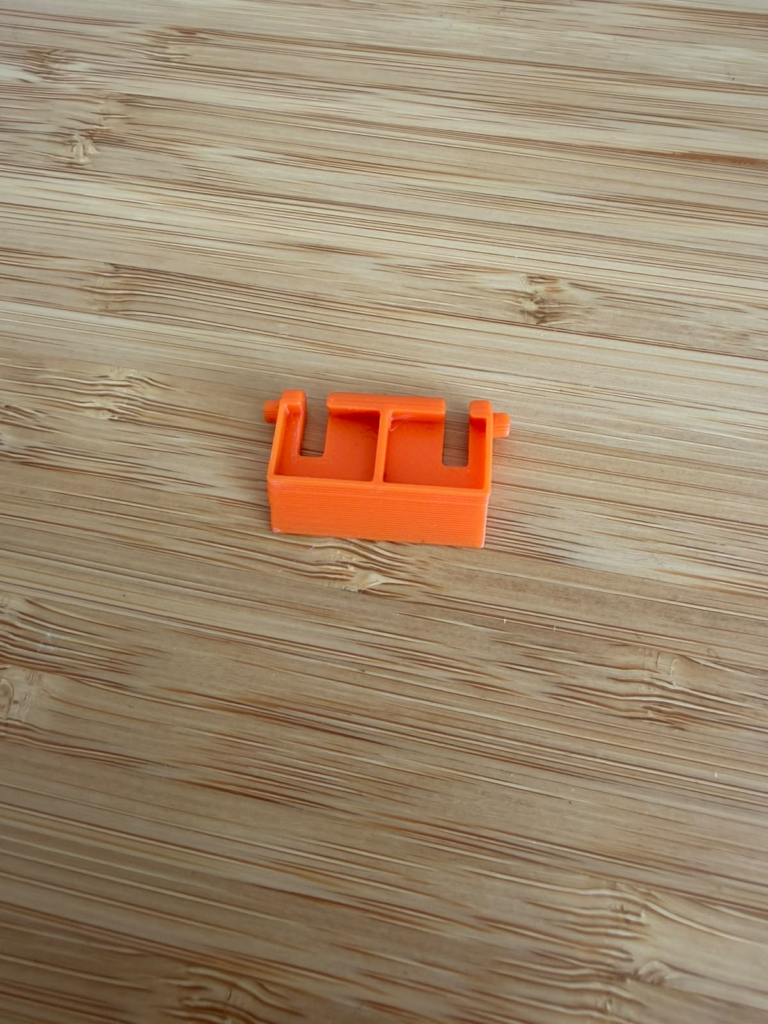
I recently experienced a much smaller version of this problem after breaking one of the plastic legs underneath my expensive computer keyboard. The keyboard still worked perfectly, but without the leg it rocked from side to side whenever I typed.
I searched for a replacement but could not find one. Replacing the entire keyboard because of one small piece of plastic seemed ridiculous, so the original leg was scanned, and a replacement was produced using a 3D printer.
It was a simple repair, but the result changed how I thought about replacement parts. I had something that worked perfectly apart from one unavailable part, and rather than waiting for a warehouse or throwing the product away, we copied the part and made another one locally.
That has obvious implications for agriculture.
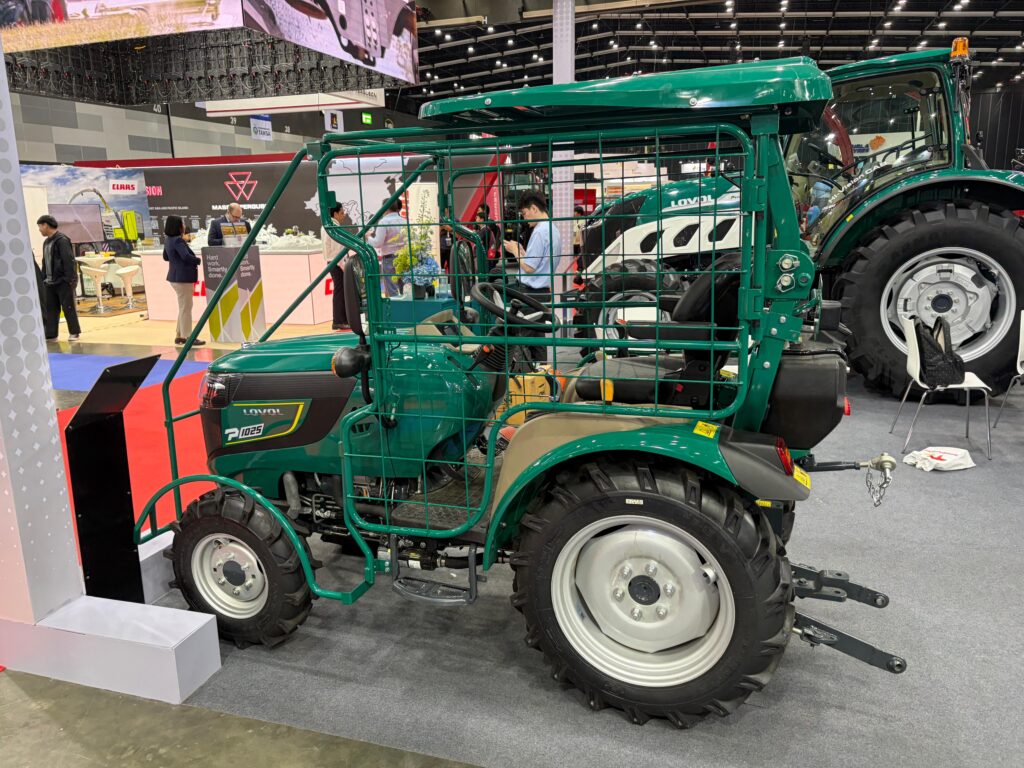
(The tractor below might not be an example of the best in practice!)
Earlier this year, I wrote about the challenge that new Chinese machinery brands could pose to the companies that have dominated Australian farming for decades (read here). Chinese manufacturers are producing increasingly capable tractors, loaders and other equipment at prices that can be significantly below those of established Western brands.
Price alone will not win over Australian farmers. A farmer buying a tractor is not merely buying steel, horsepower and technology, but confidence that someone will answer the phone when it stops, that a mechanic understands the machine and that the required part can be found quickly.
This is where the established brands are still strongest. John Deere, Case IH, New Holland, CLAAS, AGCO and others have spent decades building dealer networks, workshops, warehouses and relationships across regional Australia.
A new Chinese brand might build a capable and competitively priced machine, but it cannot instantly recreate 50 years of parts and service infrastructure. That is arguably the biggest barrier preventing newer machinery brands from gaining serious traction in Australia.
3D printing could begin to weaken that advantage.
The immediate opportunity is not printing an entire gearbox in the machinery shed. It is producing the many smaller parts that can still interrupt work, leave a machine difficult to operate or turn a relatively minor breakdown into several days of downtime.
Covers, clips, knobs, brackets, guards, spacers, hose guides, electrical housings, cab fittings and sensor mounts are all potential candidates. Printers can now work with engineering polymers, reinforced materials and, at the industrial end, metals, greatly expanding the range of parts that can be produced.
Agricultural machinery manufacturers are already exploring this space. CNH Industrial, which owns Case IH and New Holland, has produced 3D-printed parts for agricultural equipment and found local, on-demand manufacturing as one of the main benefits.
John Deere has also used industrial metal printing to manufacture a valve for its tractors. This was not simply a plastic prototype for a trade show, but a production part developed through commercial additive manufacturing.
That is where the machinery market could start to change.
A new brand entering Australia currently faces an expensive choice. It can import and warehouse a huge range of spare parts before it has sold many machines or carry limited stock and risk leaving its first customers waiting when something breaks.
Neither choice is particularly attractive. A poor experience with one unavailable part can quickly damage a new brand’s reputation across an entire farming district.

Locally printed parts offer a different model. A Chinese manufacturer could establish agreements with engineering businesses, machinery workshops, and dealers across regional Australia, allowing those businesses to produce approved components when needed.
The manufacturer would not need every bracket, housing and fitting sitting in an Australian warehouse. The farmer would not need to wait for a small component to travel halfway around the world before the machine could return to work.
This matters everywhere, but it has value in remote Australia. A farmer in Western Australia can be thousands of kilometres from the warehouse holding the required part, and even when a part is technically available in Australia, freight time can still leave machinery parked during a critical period.
Printing more parts locally would not eliminate every delay, but it could remove distance from the equation for a growing range of components. It could also give new machinery companies a way to provide national parts support without first building a warehouse and dealership network in every agricultural region.
Older machinery may benefit as much as new equipment. Companies cannot economically store every minor part forever. Once a machine reaches a certain age, farmers are regularly told that the required part is obsolete or no longer available.
A computer design does not require shelf space. A broken part could also be scanned, adjusted and reproduced by a local engineering business, much as the leg from my keyboard was copied.
The biggest change may not be the printer itself. It may be who controls access to replacement parts.
For decades, machinery companies have held enormous power through their dealer networks, diagnostic systems and parts supply. Buy outside the established brands, and the warning has always been the same: what happens when it breaks?
A new machinery company could answer that question differently. It could offer access to hundreds of locally printable components as part of the sale, partner with existing regional engineering firms and make rapid access to replacement parts a selling point rather than a weakness.
This would not remove the need for mechanics, dealers or conventional spare parts. Major components would still need to be manufactured, stocked and transported in the usual way, but fewer expensive machines would be immobilised by small and unavailable items.
It could also change the economics of entering the Australian machinery market. Established companies have spent decades building a powerful advantage around parts and service, yet if more components can be produced locally, that advantage becomes less absolute.
New Chinese brands do not necessarily need to build the same support system as the companies they are challenging. They may be able to build a different one, based on local engineering businesses, printable parts and faster access rather than vast warehouses of slow-moving stock.
My keyboard leg was a trivial repair, but the principle behind it was not. The part was unavailable, so I scanned it, printed it and kept an expensive product working.
As printers become more capable and stronger materials become more accessible, that process will increasingly move into farm workshops and regional engineering businesses. A 3D printer may eventually become as normal in a farm workshop as a welder, grinder or compressor.
More importantly, the technology could change one of the oldest rules in farm machinery buying. Farmers have traditionally bought the brand with the strongest parts network, but in future they may buy the brand most willing to let them produce the parts they need, close to home and before the rain arrives.