
Selling a Head Start on Government Decisions
The Snapshot
- Truth Social’s new paid API could give financial firms machine-readable access to presidential posts within milliseconds, creating a valuable trading advantage.
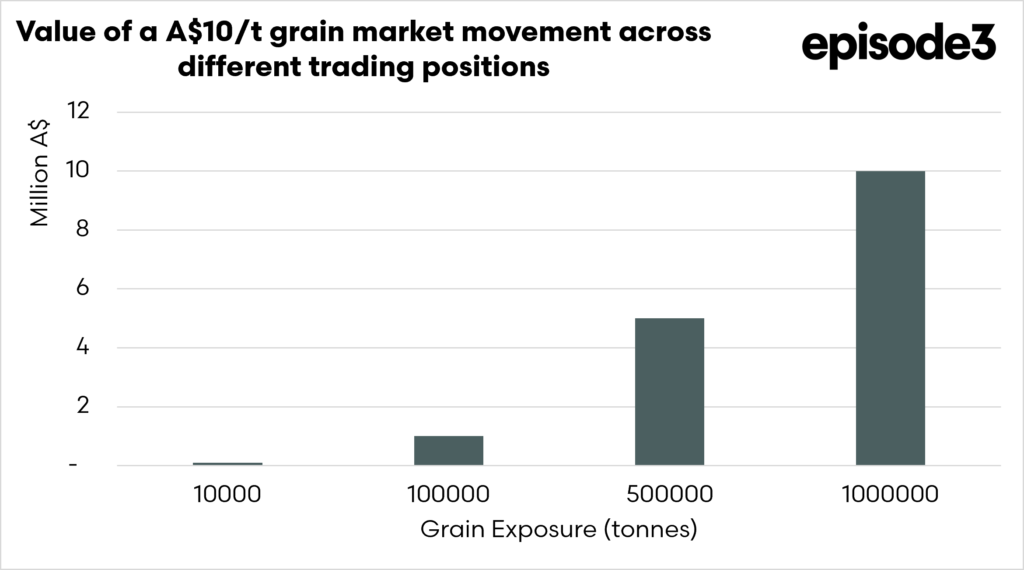
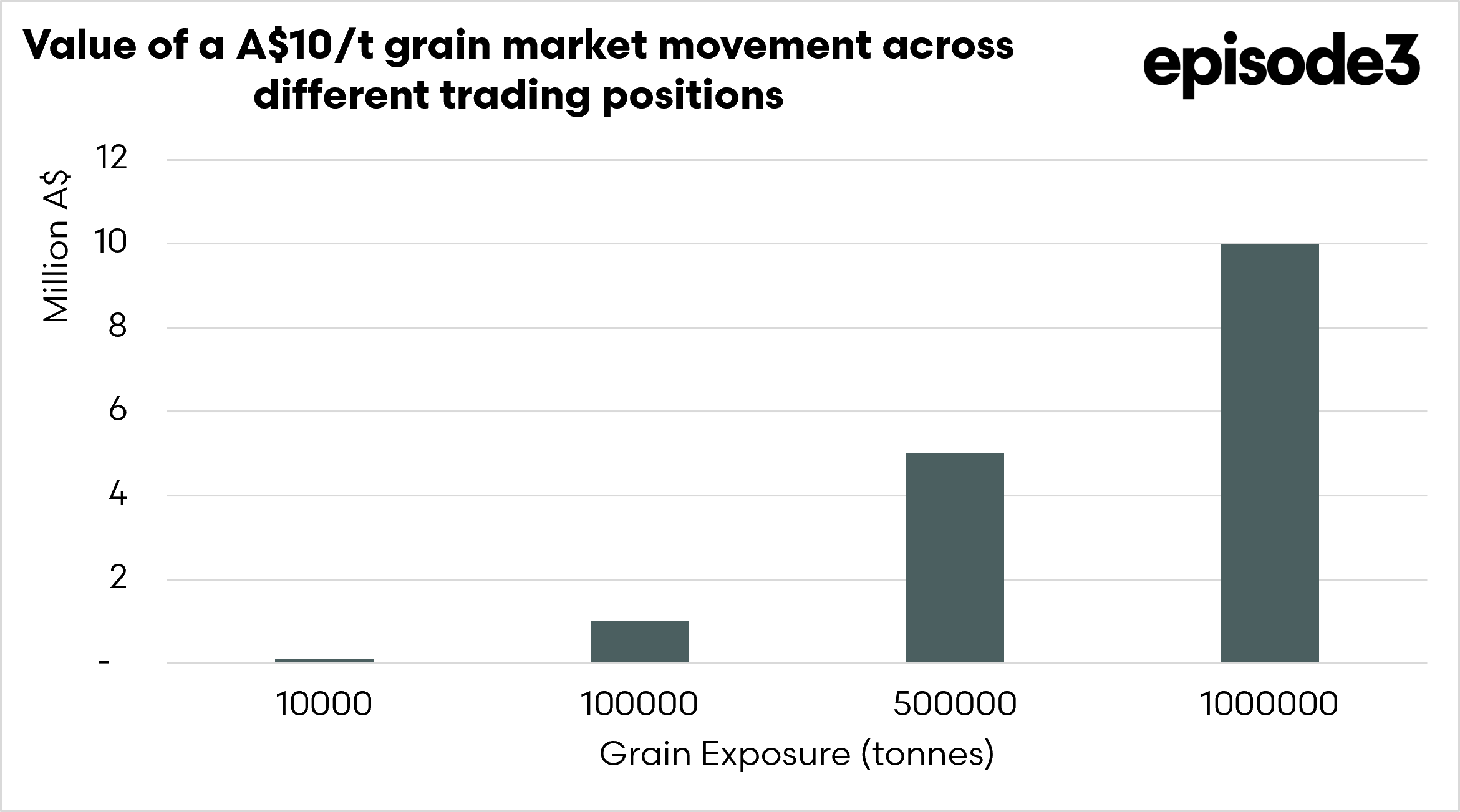
- That advantage can be worth millions. A A$10/t move across a one-million-tonne grain position represents A$10 million in market value.
- Agricultural markets already favour large traders with superior data, analysts and technology, while farmers receive the price impact later through global futures and local bids.
- It has not been determined that the arrangement is illegal, but a president-linked company profiting from faster access to market-moving government decisions raises serious fairness concerns.
- The core issue is bigger than Trump: government policy should not become a premium data product sold to wealthy traders with the deepest pockets.
The Detail
A millisecond does not sound like much. It takes longer to blink, click a mouse or glance at a grain price on your phone. In most parts of life, a thousandth of a second is completely meaningless, but in financial markets it can be worth millions of dollars.
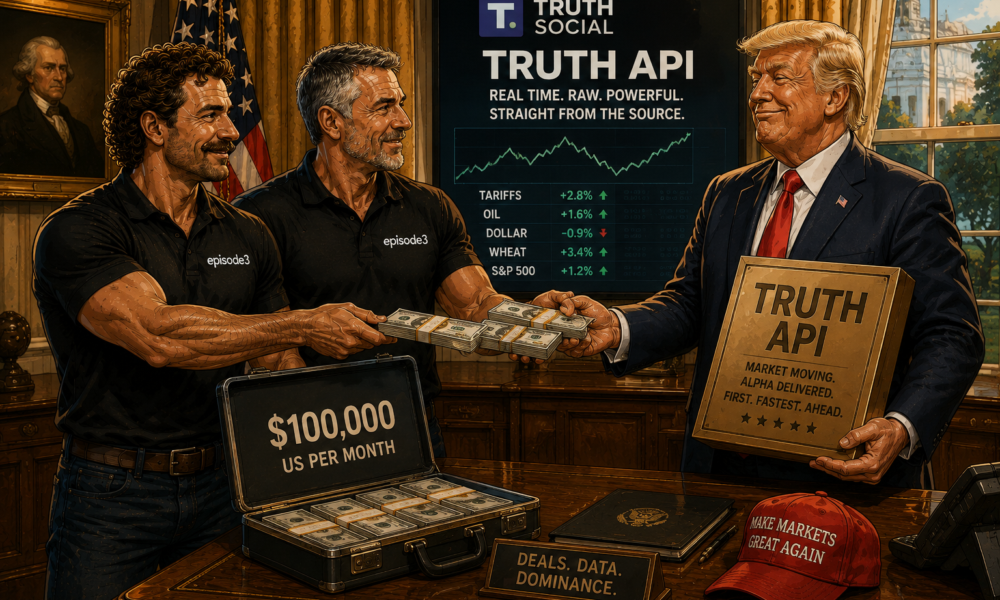
That is why a new service being offered by Donald Trump’s Truth Social platform deserves more attention than another unusual story from US politics. Trump Media, owned by Trump and his family, has launched Truth API, a direct data feed offering financial institutions faster and more usable access to posts from influential Truth Social accounts, including the US president. Reports suggest the service could cost as much as US$100,000 a month, equivalent to around A$150,000.
That is a substantial subscription fee, but it starts to make sense when the potential trading advantage is considered. Trump regularly uses Truth Social to announce or threaten changes involving tariffs, military action, energy policy, central bank leadership and individual companies. These posts move shares, currencies, bonds, oil and other commodity markets.
Consider a hypothetical grain example. The president posts that the United States will introduce a major new biofuel mandate, immediately increasing expected demand for corn. At almost the same moment, traders paying for the direct feed receive the post in a format that can be read automatically by their computer systems.
Those systems do not need someone to read the post, consider its meaning and phone a broker. An algorithm can recognise terms such as ethanol, biofuel and corn, estimate the likely direction of the market and begin buying futures within milliseconds. By the time the post appears through ordinary social media feeds, news services or market commentary, the first round of buying may already be complete.
Suppose corn prices rise by the equivalent of A$10/t once the broader market understands the announcement. A trading position of 100,000 tonnes would have moved by A$1 million. A position covering one million tonnes would have moved by A$10 million. The trader would not necessarily capture the entire increase by getting into the market. At the same time, the old price was still briefly available and could produce an enormous return from a very small head start.
This does not mean the trader received the information a day, an hour or even a minute before everyone else. The commercial value comes from receiving, interpreting and acting on it before the market has fully adjusted. When computers are competing against other computers, the difference between first and fifth can be measured in fractions of a second.
Agricultural markets already contain substantial information asymmetry. Large commodity traders and financial firms have teams of analysts, private crop forecasts, satellite data, shipping intelligence and automated market connections. Australian farmers generally do not compete directly in this high-frequency futures race. A family farm deciding whether to plant corn or canola next season has no algorithmic advantage. They might see a tariff announcement or biofuel mandate on the news at dinner time, after making planting decisions that morning based on yesterday’s prices. Yet the resulting price movements still matter because global futures influence international grain values and eventually flow through to local trader bids.
The Truth API does not create this imbalance. It adds another layer to it. This time, the product being sold is not better crop forecasting or faster shipping information. It is a more direct route to statements from the person capable of changing government policy and moving markets with a few sentences.
Truth Social argues that its posts are released to paying traders and the public at the same time. That distinction may be important legally, because the information is not necessarily being provided privately before its public release. Yet in a high-speed market, when information is received can matter more than the moment it is technically published. A direct machine-readable feed is much more valuable than a post that must first appear in an app, be noticed by a person and then interpreted.
It has not been determined that this arrangement amounts to insider trading or breaks US law. Fast data feeds are also not new, with financial firms already paying heavily for direct access to news, exchange prices and social-media information. What makes this case highly unusual is that Truth Social does not simply distribute news. Its most important user is the president, who can create the news and influence the policies that move markets.
It is difficult to imagine another major democracy accepting a similar arrangement without considerable scrutiny. Imagine if Anthony Albanese, Angus Taylor or members of their families owned a private platform that charged hedge funds and major banks for the fastest access to announcements on tariffs, energy policy, export restrictions or government support.
Even if the information became publicly available at the same instant, Australians would reasonably question why a political family was personally profiting from selling wealthy traders a better opportunity to act on government decisions. It might ultimately be found to follow the law, but it would struggle badly with the pub test. This isn’t specific to Donald Trump. The same concern would apply if any sitting leader, regardless of party or whether farmers supported them, owned a platform selling Wall Street a head start on policy announcements. The issue is the arrangement itself.
That is the distinction at the centre of this issue. Something can be legal without being fair, sensible or proper. Financial markets will always reward speed, technology and superior information. Still, government policy should not become a premium data product sold by a business connected to the person making the decisions.
A millisecond may be meaningless to most people, but it can be worth millions to a trader with the right computer and enough money. For farmers already navigating tariff swings and policy uncertainty, it compounds an unfair race they cannot win. The harder question is whether government policy should become a premium data product sold only to those with the deepest pockets.