
Food Inflation Update August 2026
Food Inflation Update - August 2026
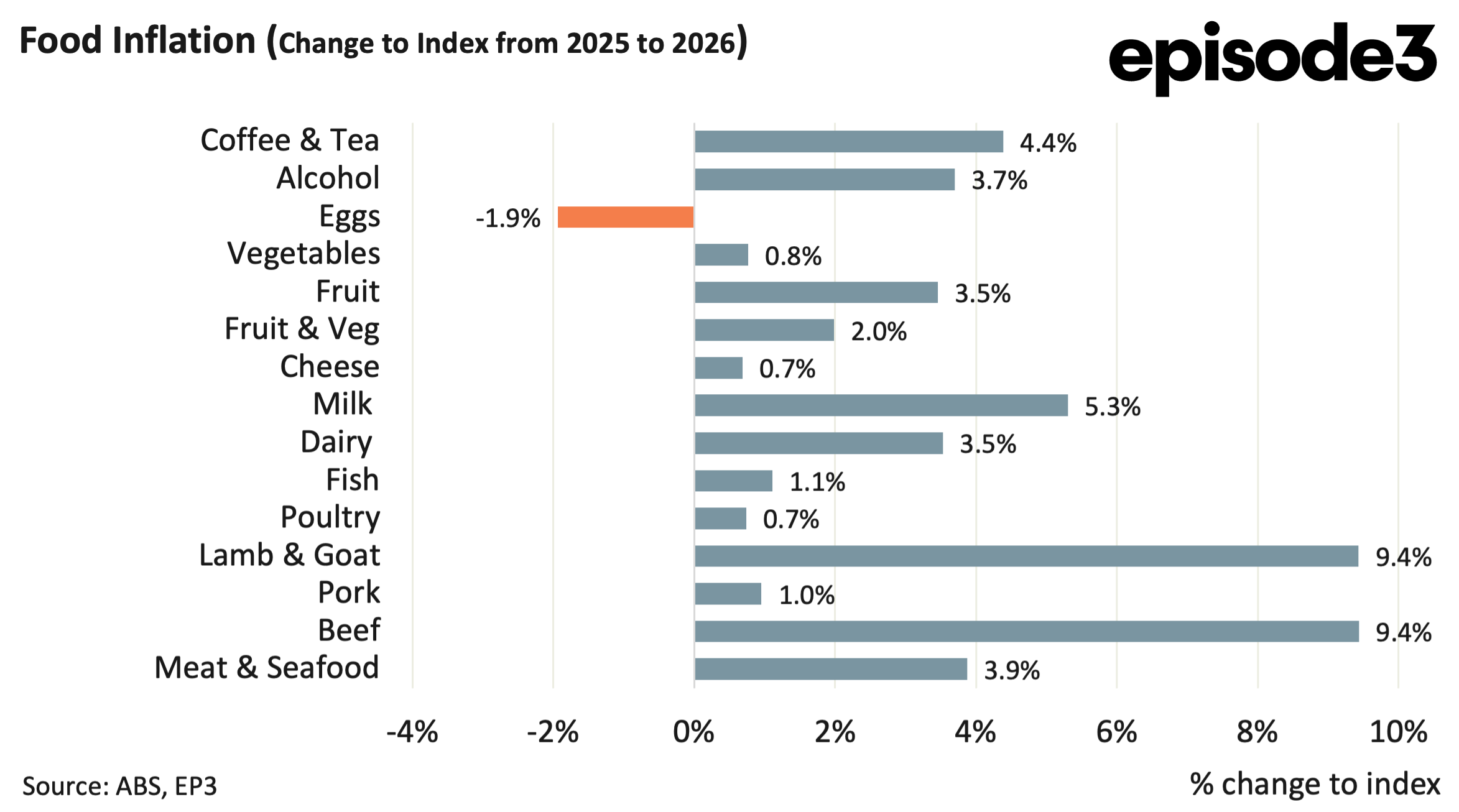
Australian food prices took a noticeable breather during August, with the latest Consumer Price Index data showing declines across much of the food basket. Fresh produce, meat, seafood and coffee all moved lower during the month, providing some relief after the stronger price increases recorded earlier in 2026. The softer monthly result has not yet shifted the annual picture significantly. Beef and lamb and goat prices remain 9.4pc higher than a year ago, while milk, coffee and tea and alcohol are also recording relatively strong annual increases.
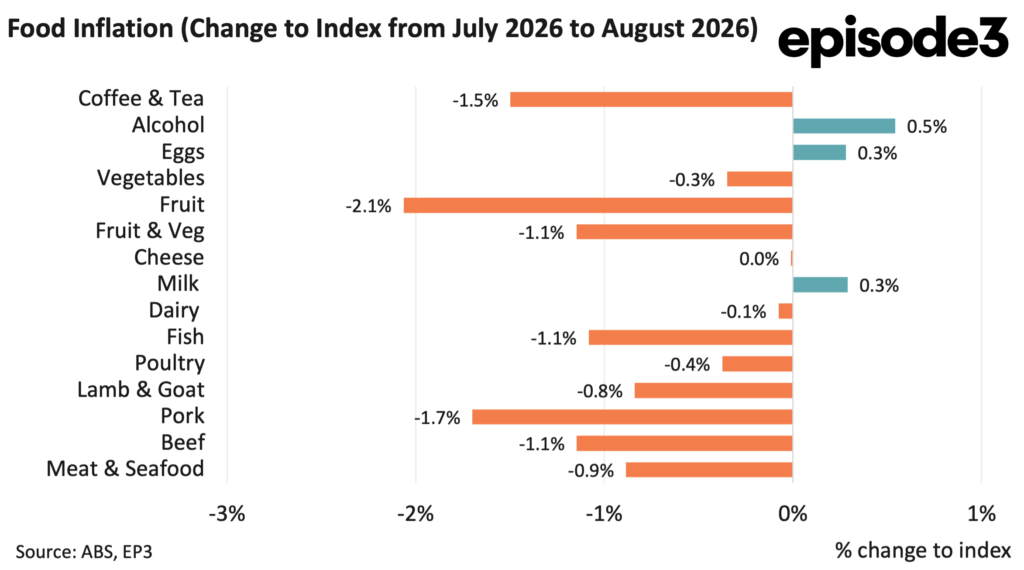
The movement from July to August was notable for the number of categories recording lower prices. Fresh produce provided some of the largest falls. Fruit prices declined 2.1pc during August, following a 1.7pc fall in July. Vegetables eased 0.3pc, leaving the combined fruit and vegetable category down 1.1pc for the month. After the strong fruit price increases recorded through May and June, the past two months have provided some welcome relief.
Protein prices were also broadly softer with pork recorded the largest decline, falling 1.7pc, while beef prices eased 1.1pc and lamb and goat fell 0.8pc. Poultry declined 0.4pc and fish prices dropped 1.1pc, leaving the broader meat and seafood category down 0.9pc during August. That is a reasonably significant shift from earlier in the year, when rising livestock prices were increasingly flowing through into retail meat prices. One month does not establish a new trend, but August suggests some of that momentum has temporarily eased at the consumer end.
Dairy prices were comparatively stable. Milk increased 0.3pc, cheese was unchanged and the broader dairy category eased just 0.1pc. Coffee and tea prices fell 1.5pc during August, extending the volatility seen in this category throughout the year. Alcohol moved in the opposite direction, increasing 0.5pc, while egg prices edged 0.3pc higher.
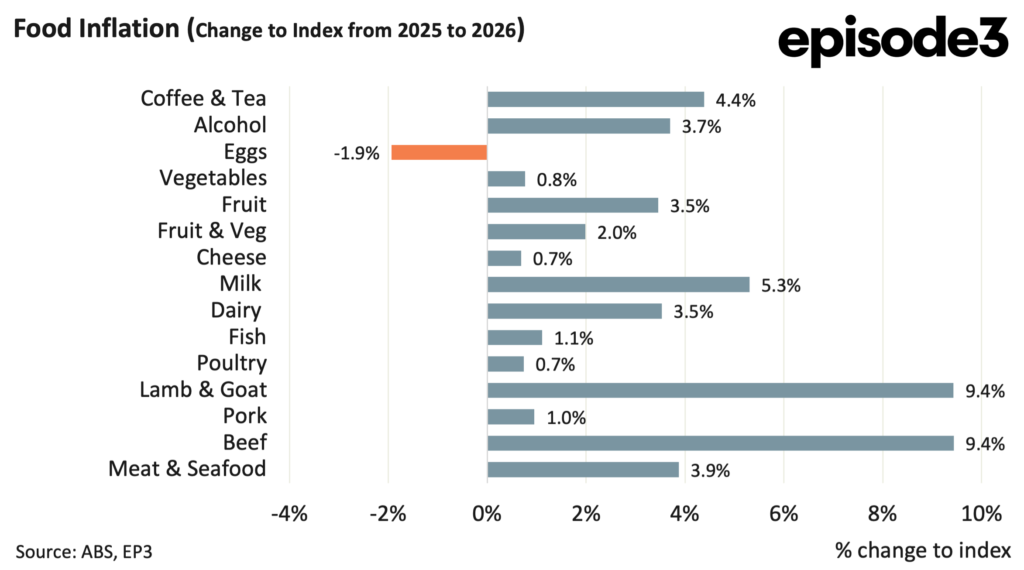
Despite the widespread monthly declines, the annual data continues to tell a very different story. Beef prices remain 9.4pc higher than a year ago, unchanged from the annual rate recorded in July. Lamb and goat prices have also reached 9.4pc annual growth. These two categories remain comfortably ahead of the rest of the food basket and highlight how strongly the livestock price environment has shifted over the past year. The broader meat and seafood category remains 3.9pc higher annually. The much smaller increases elsewhere show how heavily that figure is being influenced by red meat, with fish up 1.1pc, pork 1.0pc and poultry just 0.7pc.
Dairy has become another important contributor to food inflation. Milk prices are now 5.3pc above year-ago levels, up from 4.8pc in July, while the broader dairy category is 3.5pc higher. Cheese prices have increased by a more modest 0.7pc.
Fresh produce remains considerably less inflationary than red meat or dairy. Fruit prices are 3.5pc higher than a year ago despite falling during both July and August, while vegetables are up only 0.8pc. Combined fruit and vegetable prices are 2.0pc higher annually. Eggs remain the clear outlier, with prices sitting 1.9pc below year-ago levels. Beverage inflation also remains relatively firm. Coffee and tea prices are 4.4pc higher than a year ago despite the recent monthly falls.
August provides a good example of why the monthly and annual CPI measures can tell quite different stories. Consumers saw price relief across a wide range of food categories during the month, particularly in meat and fresh produce, but those falls are coming from price levels that have already risen considerably over the previous year.
This is particularly evident in red meat. Beef fell 1.1pc and lamb and goat declined 0.8pc in August, yet both remain 9.4pc more expensive than a year earlier. The same, although to a lesser extent, applies to fruit, which fell sharply during August but remains 3.5pc higher annually. August was one of the softer months for food prices seen recently, with declines across fruit, vegetables, coffee and almost the entire protein complex.b That should provide some short-term relief for household grocery bills after the stronger increases recorded earlier in 2026.
The annual story, however, has not changed substantially. Red meat remains the standout source of food inflation, with beef, lamb, and goat prices all 9.4pc above year-ago levels. Milk, coffee and alcohol are also recording relatively strong increases. For now, the Australian food inflation story is therefore one of short-term price relief against a considerably higher annual price base.