
Beef export update July 2026
July 2026 - Beef export update
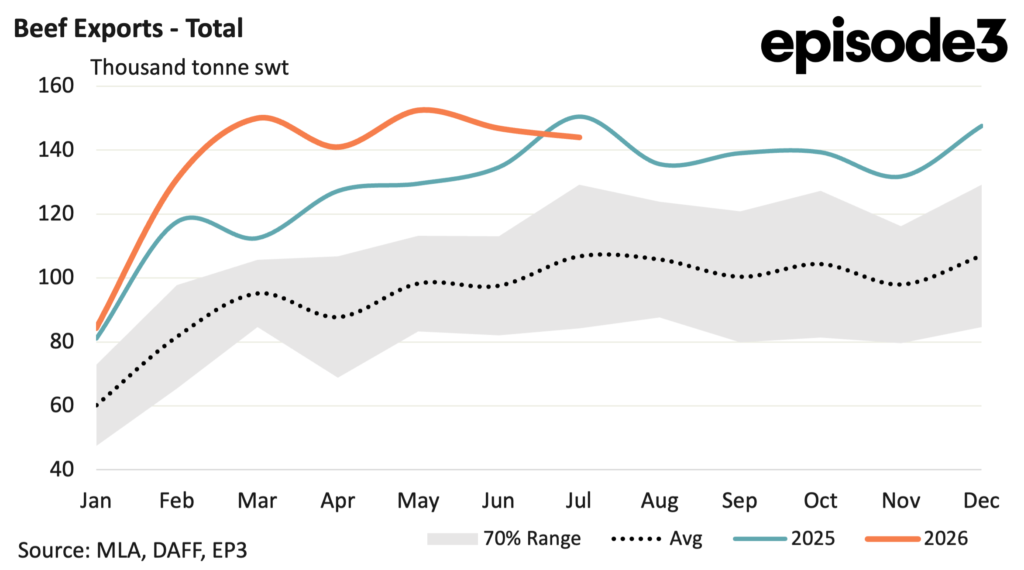
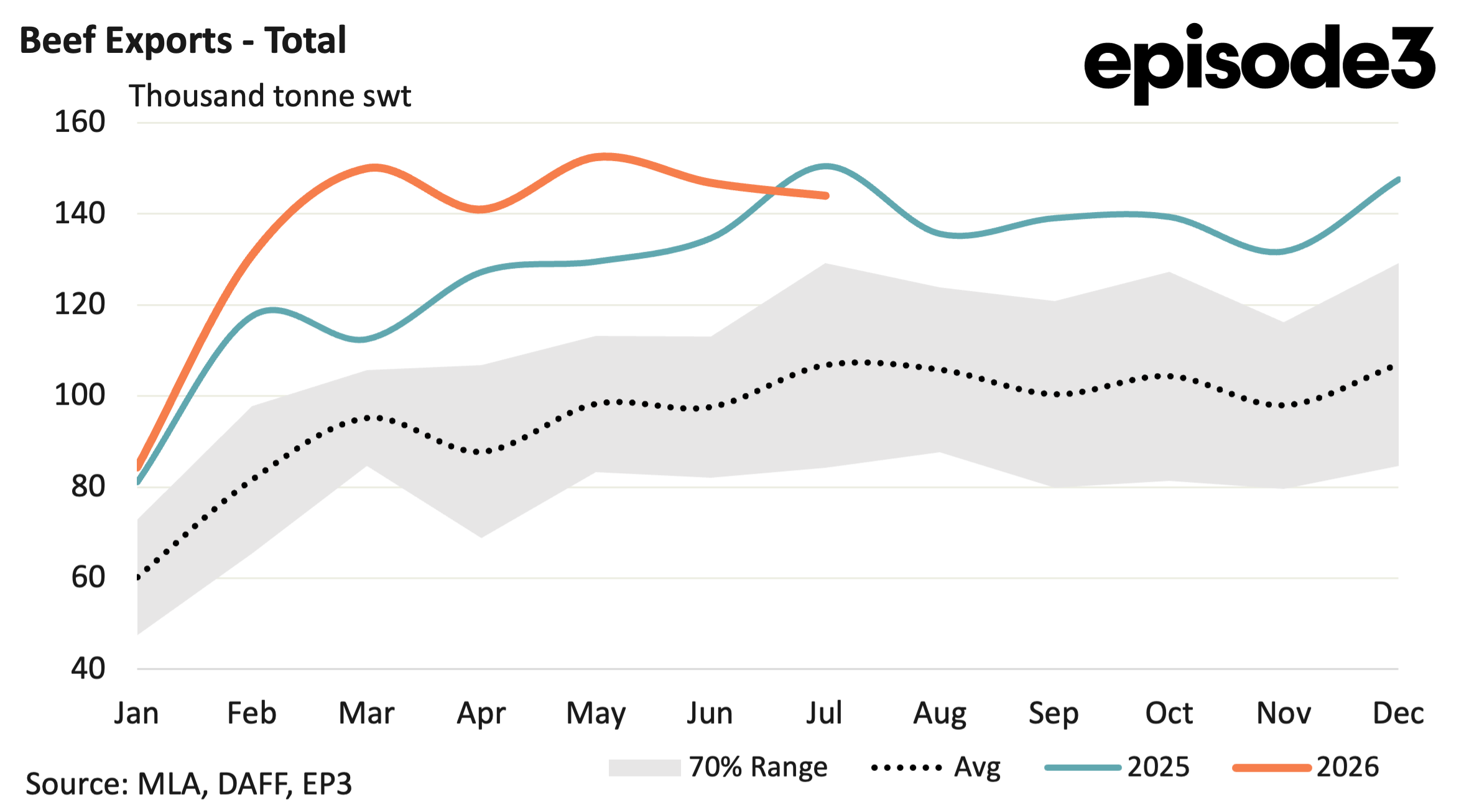
Australian beef exports remained exceptionally strong during July 2026, with total shipments reaching 143,962 tonnes shipped weight.
While volumes were 4 percent below the record levels seen in July last year, they still sat 35pc above the five-year average for the month.
That result is significant given the disruption created by China’s safeguard tariff. Rather than producing a sharp fall in total trade, the safeguard has instead triggered a rapid reshuffling of Australia’s major beef destinations. China has fallen from second to fourth place in the year-to-date export rankings, while South Korea has moved into second and Japan has climbed into third.
The United States remained the dominant market during July, taking 47,986 tonnes of Australian beef. Shipments were 11pc higher than July last year and 83pc above the five-year average. The strength of US demand continues to anchor the export program. Tight domestic cattle supplies, reduced beef production, low cold stores and historically high prices are supporting strong import requirements across both manufacturing beef and higher value cuts. Australia remains well placed to fill that gap, and the US now accounts for 30.6pc of total beef exports so far in 2026.
South Korea again delivered one of the strongest results of the month, receiving 29,068 tonnes despite also triggering their own safeguard tariff with Australia. Volumes were 39pc above last year and 67pc above the five-year average. That performance has pushed South Korea into second place in the year-to-date rankings, with an 18.0pc share of total exports. Approximately 80pc of beef imports into South Korea either come from Australia or the USA and with US prices so elevated Australian product will still likely remain reasonably competitive even despite the 24pc safeguard tariff now being applied.
Japan also recorded a solid month, taking 26,135 tonnes. Exports were 13pc above July last year and 19pc above the five-year average. The strength of the July result has moved Japan into third place in the cumulative rankings, with a 15.8pc share of total exports. Japan has traditionally been one of Australia’s most stable and dependable beef markets, and that consistency has become increasingly valuable as the trade adjusts to the safeguard tariff in China.
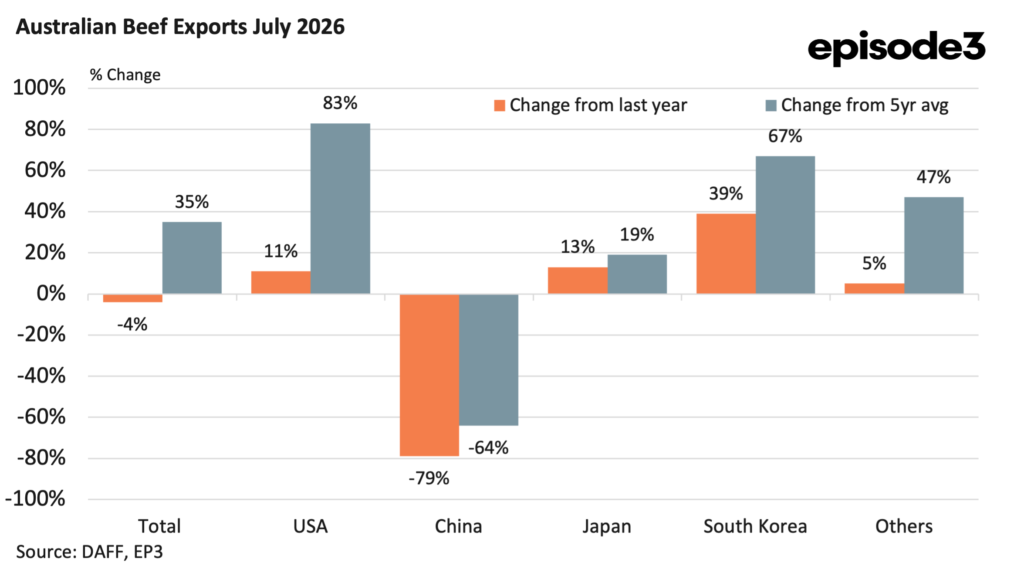
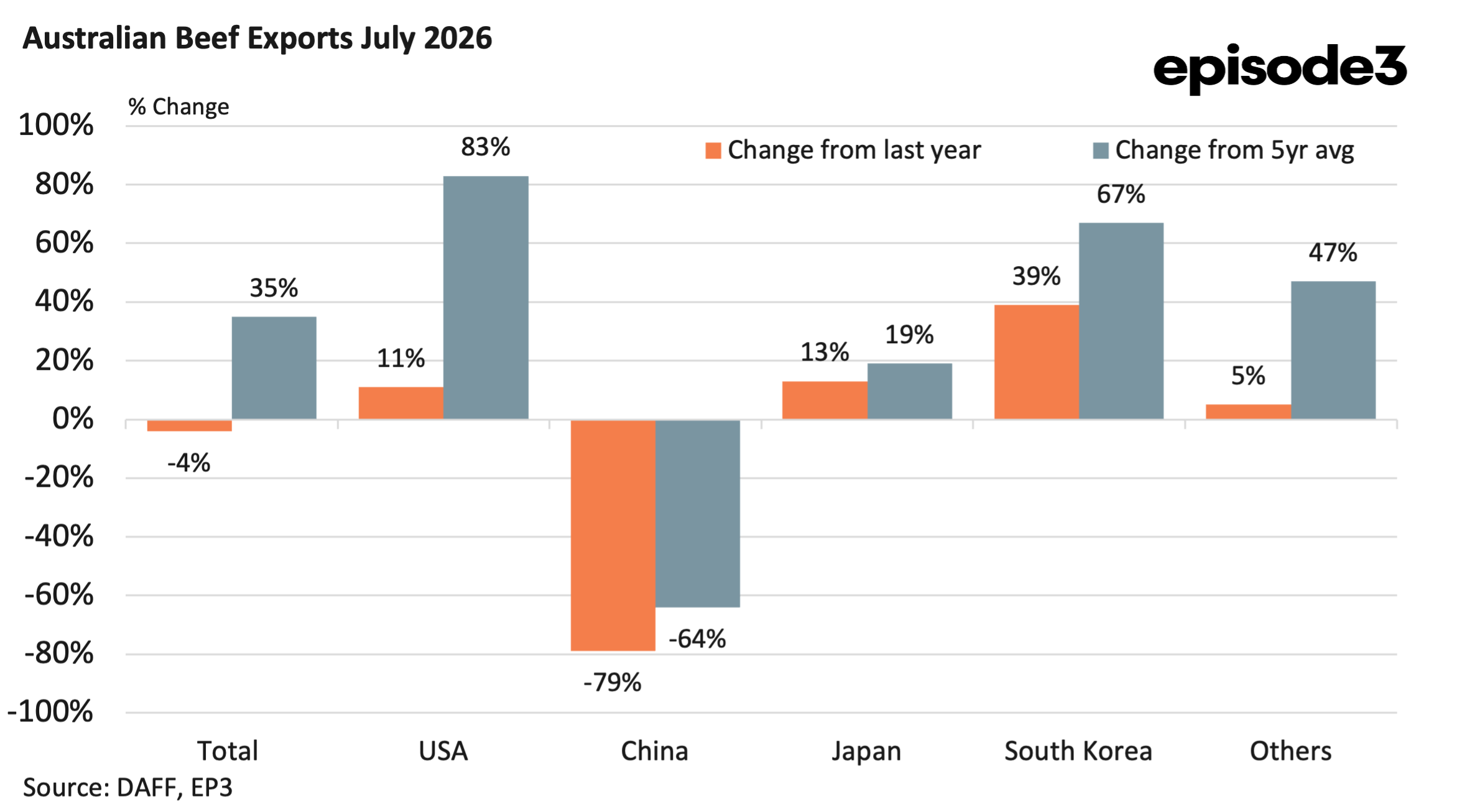
China remained the clear weak point during July with exports falling to just 6,458 tonnes, down 79pc on last year and 64pc below the five-year average. The decline follows the triggering of the safeguard tariff in June, which sharply reduced the competitiveness of Australian beef into the Chinese market. China began the year as Australia’s second largest destination but has now slipped to fourth place with a 15.5pc share of year-to-date exports. The speed of that change is notable. In the space of only a few months, China has gone from being one of the main drivers of export growth to a much smaller monthly outlet. The fall does not necessarily suggest underlying Chinese demand has disappeared, but the higher tariff has materially altered trade economics and encouraged exporters to redirect product elsewhere.
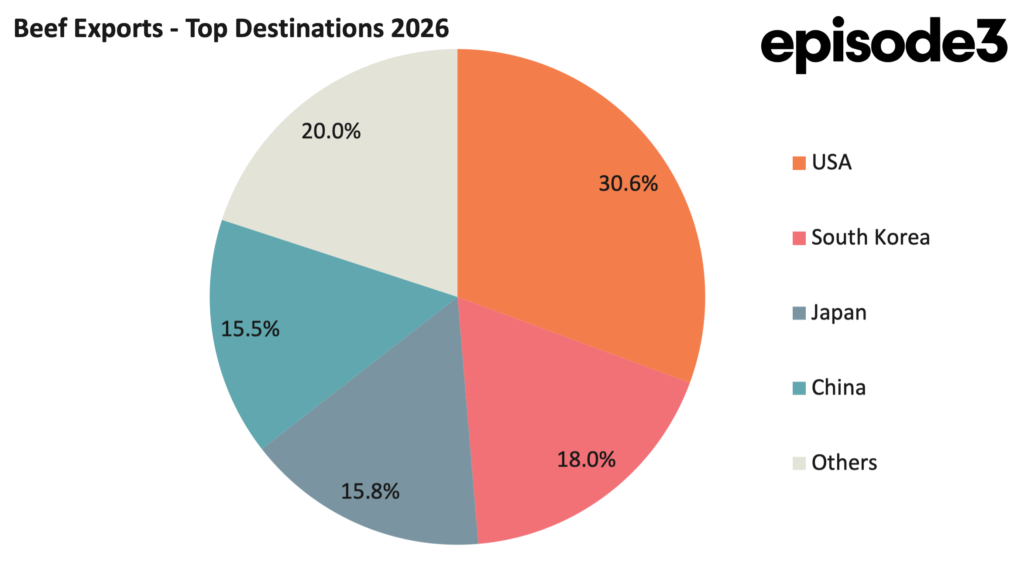
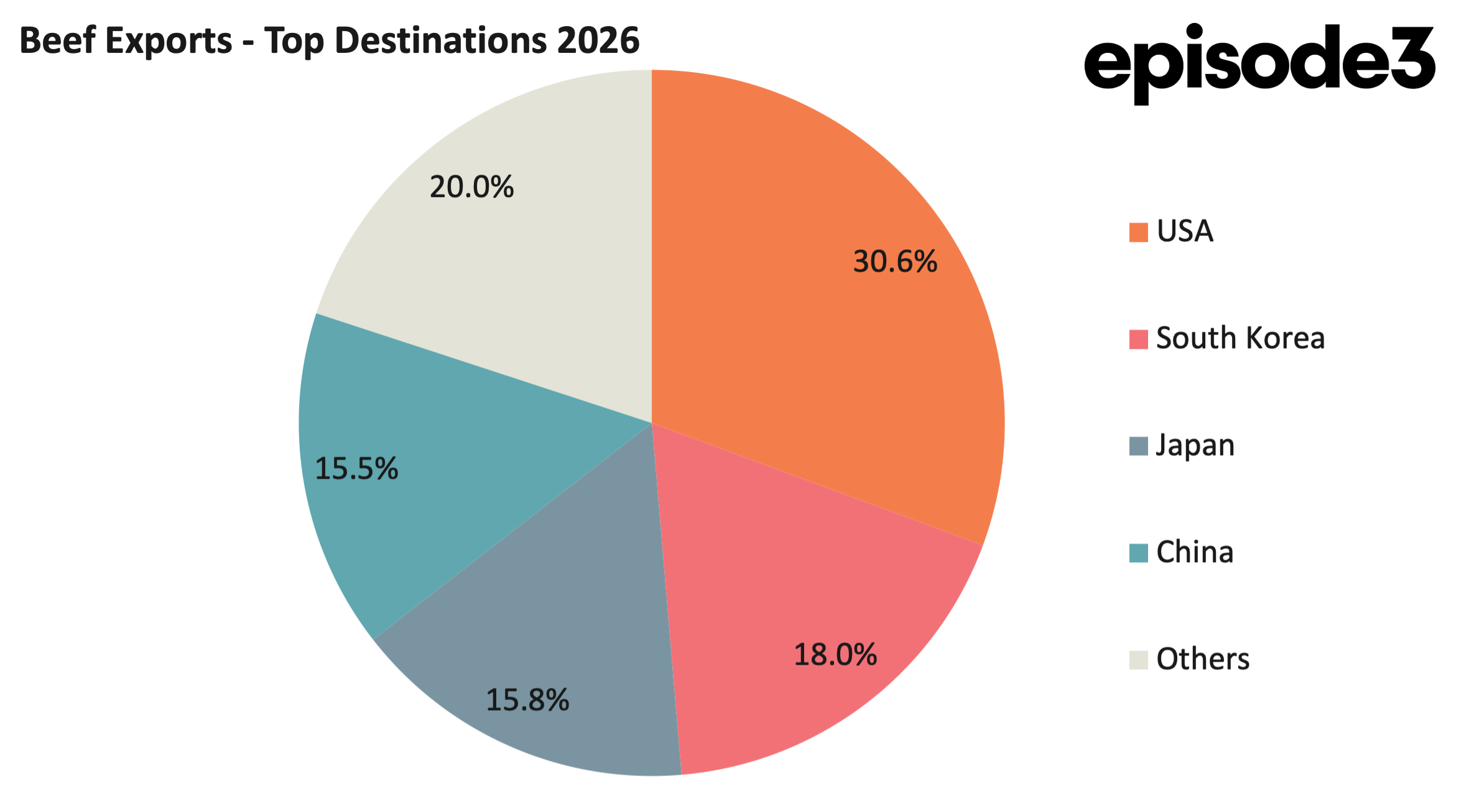
Exports to all other destinations combined reached 34,315 tonnes during July. That was 5pc higher than last year and 47pc above the five-year average. The strength of those secondary markets has also helped insulate the trade from the drop in China. Collectively, other destinations account for 20.0pc of year-to-date exports, providing a broad and increasingly important base of demand outside the four largest markets. Looking across the first seven months of 2026, the export mix is now led by the United States at 30.6pc, followed by South Korea at 18.0pc, Japan at 15.8pc and China at 15.5pc. Other markets account for the remaining 20.0pc.
Japan continued to provide stable support, receiving 24,012 tonnes during June. Exports were 10pc above last year and broadly in line with longer-term trade patterns, sitting 9pc above the five-year average. Japan remains Australia’s fourth-largest destination in 2026, although it has now been overtaken by South Korea as Korean demand has accelerated. Despite that change in rankings, Japan continues to provide an important premium outlet for Australian beef and remains one of the industry’s most dependable markets.
The “other markets” category accounted for 33,191 tonnes, representing around 23pc of total exports. Combined shipments were 7pc above last year and 53pc above the five-year average, highlighting that demand remains broad-based across a wide range of export destinations.
Looking at cumulative exports for 2026, the trade remains remarkably well diversified despite the disruption caused by the Chinese safeguard. The United States now accounts for around 30pc of exports, South Korea 18pc, China 18pc and Japan 15pc, with the remaining 19pc spread across numerous other destinations. Rather than relying heavily on any single destination, Australian exporters have demonstrated the ability to redirect product quickly as market conditions change.
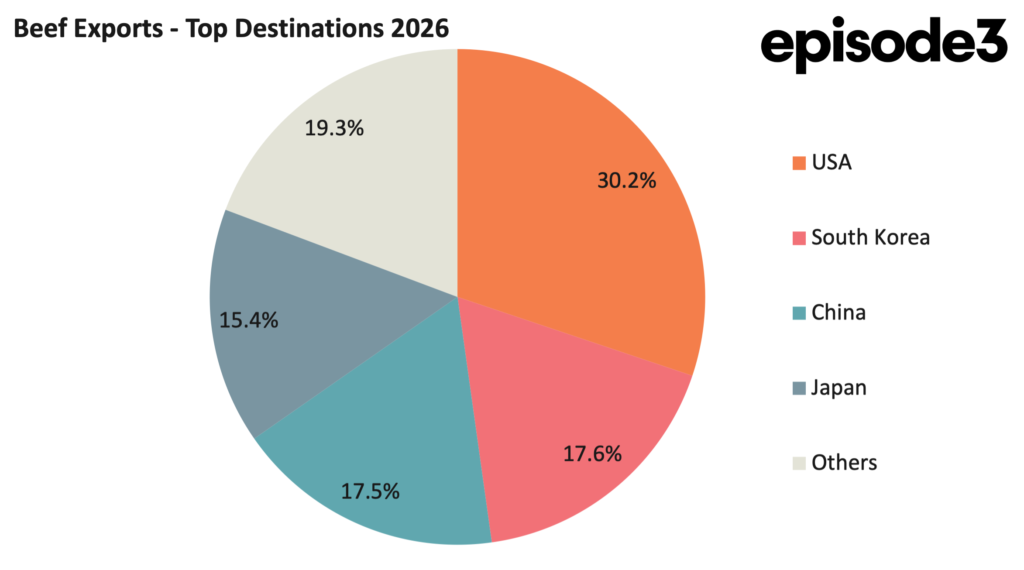
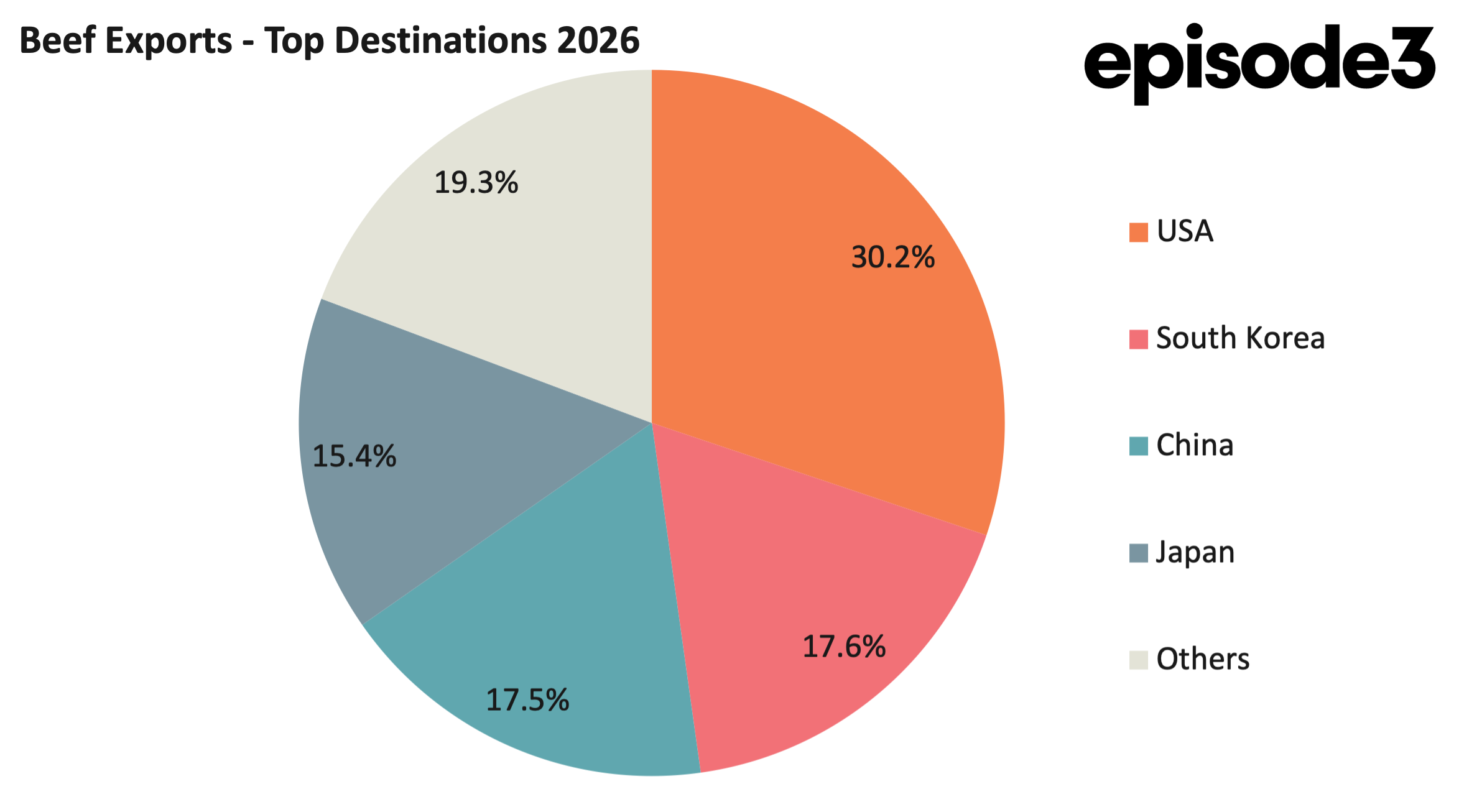
That distribution highlights how quickly the trade has adjusted. The China safeguard has clearly reshaped the rankings, but it has not derailed overall export performance. South Korea and Japan have absorbed more product, while the US remains exceptionally strong and a wide range of secondary markets continue to take elevated volumes.
The July result reinforces the resilience of Australia’s beef export sector. Total shipments remain well above historical averages despite the sudden loss of momentum into China. The industry has been able to redirect product into alternative destinations without a major collapse in overall trade. The key question for the months ahead is whether the US, South Korea, Japan and other markets can continue absorbing higher volumes while China remains constrained by the safeguard tariff. July suggests they can, at least for now. Australia’s export program remains diversified, flexible and supported by strong global demand, even as the order of its top destinations continues to change.