
Sheep meat processors crunched in June

Sheep Processor Trading Conditions Model
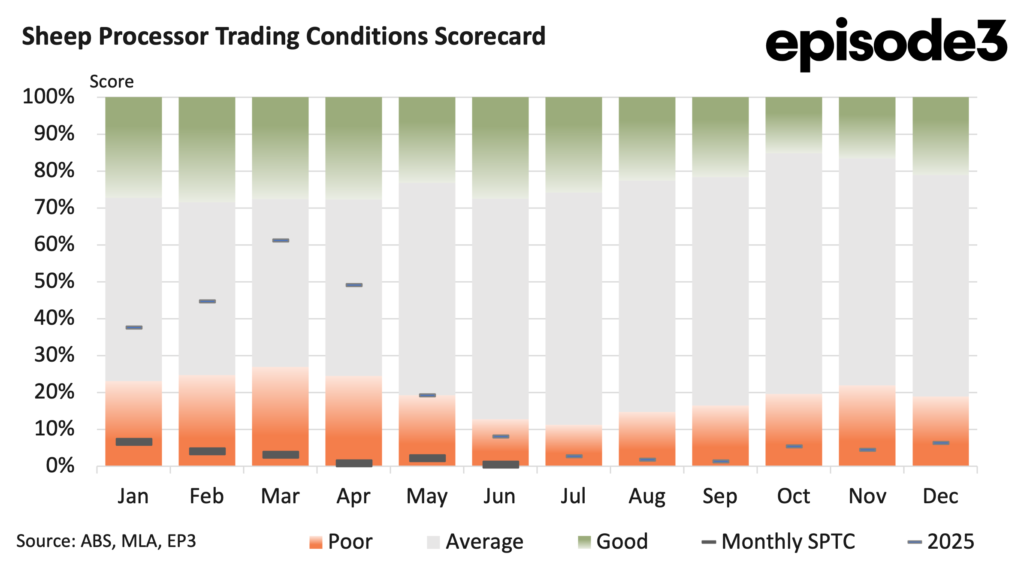
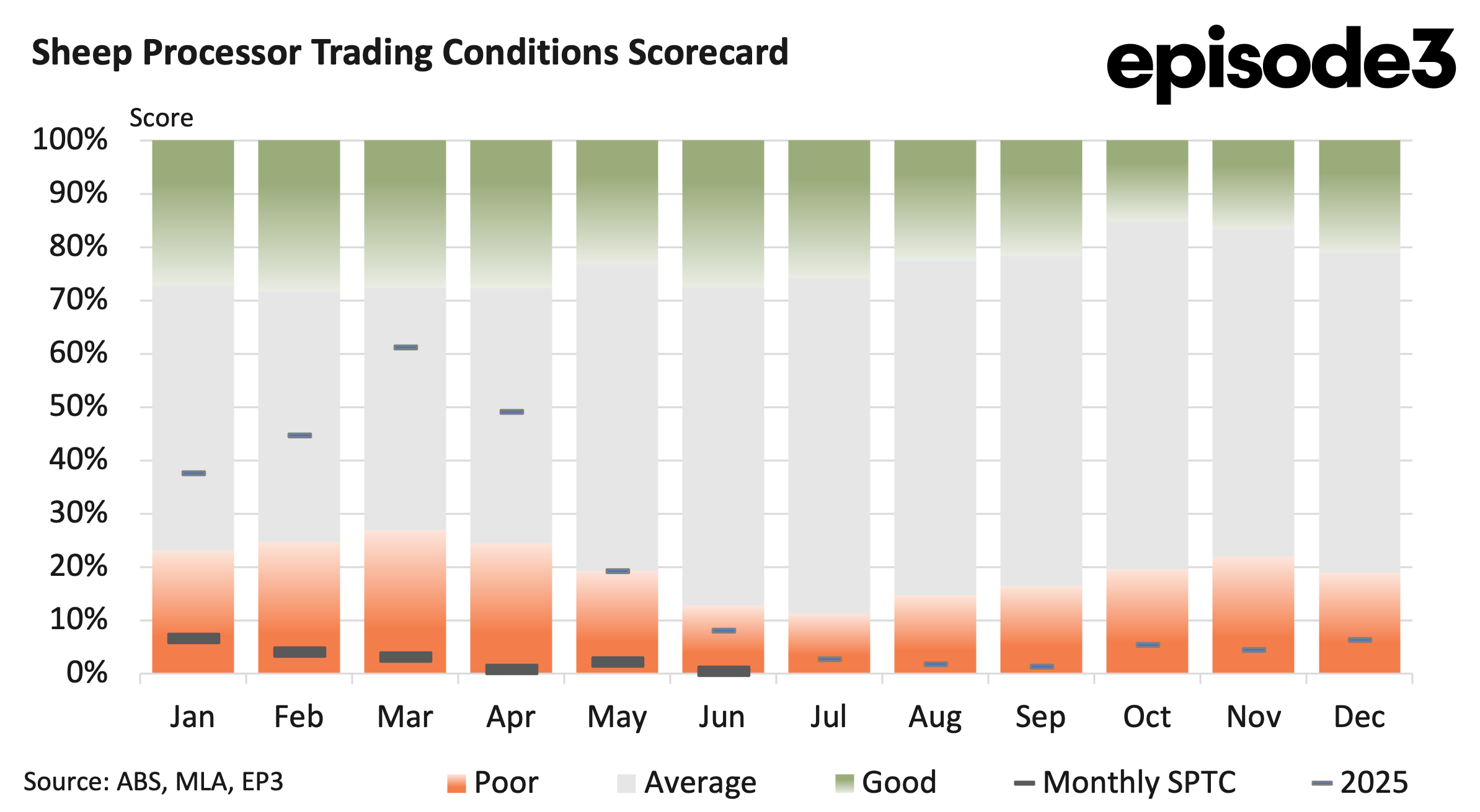
Sheep processor trading conditions deteriorated further through June, with the Sheep Processor Trading Conditions index falling to just 0.4pc. The June result pushed the average SPTC score for the first half of 2026 down to only 2.9pc, compared to 3.3pc previously. That is an exceptionally subdued result and stands in stark contrast to the first half of 2025, when the index averaged 37pc. The comparison highlights just how dramatically the sheep processing margin environment has changed over the past twelve months.
Strong livestock prices have been the major challenge for processors during 2026, and June provided little relief. Procurement costs increased across every major sheep and lamb category during the month, with mutton recording by far the largest move. Mutton prices increased by around 10pc during June, placing considerable pressure on processor margins. Trade and light lamb prices both increased by around 4pc, while heavy lamb values gained approximately 3pc. Those movements matter because livestock procurement represents the largest cost component for processors.
When livestock prices rise rapidly, processors need corresponding improvements in export, domestic meat and co product returns simply to maintain margins.
June delivered some improvement on the export side, but nowhere near enough to match the increase in procurement costs. Average export values across Australia’s four major sheepmeat destinations increased by around 5pc during the month. The United States provided the strongest improvement, with average export values rising by 7pc. China also strengthened, increasing by 3.5pc, while export values into the United Arab Emirates lifted by 4.4pc. Malaysia rounded out the major destinations with a 2.6pc increase.
This was a reasonably positive month for sheepmeat export values. Under different circumstances, a 5pc increase across the major destinations would provide a meaningful boost to processor trading conditions. The problem during June was that livestock costs were moving just as quickly, and in the case of mutton, considerably faster. This meant much of the benefit from improving export values was absorbed before it could flow through to processor margins. The situation was particularly challenging for sheep processors exposed to mutton. A 10pc monthly increase in procurement costs is difficult to absorb, even when export returns are moving in the right direction. This helps explain why the SPTC fell towards the bottom of its historical range despite apparently supportive conditions in international markets.
The domestic market offered little assistance. Australian retail lamb prices eased by 0.5pc during June. The movement was modest, but its direction was important given the substantial increase occurring in livestock prices. Processors were effectively paying considerably more for lamb and sheep without receiving a corresponding improvement from the domestic consumer.
That widening disconnect between livestock procurement costs and downstream meat values sits at the heart of the current SPTC result. It is also worth considering how unusual the current operating environment has become. An average SPTC reading of 37pc during the first half of 2025 indicated processor conditions that, while hardly spectacular, provided considerably more room for margins than processors are experiencing today. The 2.9pc average recorded during the first half of 2026 represents an almost complete erosion of that margin buffer. June’s 0.4pc reading pushes conditions even closer to the bottom of the range. This does not necessarily mean every processor is losing money on every animal.
Plant efficiency, procurement strategies, product mix, export exposure and individual customer relationships mean profitability varies considerably between businesses. What the SPTC demonstrates is how difficult the broader trading environment has become.
The improvement in export values is nevertheless important. Strong returns from the United States continue to provide valuable support, while improvements across China, the UAE and Malaysia show that demand has not disappeared from Australia’s major sheepmeat markets.
Indeed, the export side of the equation performed reasonably well during June. The problem is simply that Australian livestock prices performed even better. That is a good outcome for producers selling sheep and lambs, but it creates an increasingly difficult equation further down the supply chain. Processors cannot indefinitely absorb livestock price increases that exceed improvements in the value of the meat they sell. Eventually the adjustment needs to occur through higher meat values, lower livestock prices, improved co product returns, greater processing efficiencies or some combination of all four. For now, the pressure remains firmly on processors.