
Red meat is getting more expensive

Market Morsel
Australian shoppers have probably noticed something unusual happening in the meat aisle over the past year. Beef and lamb prices have climbed noticeably, while chicken and pork have barely moved. It would be easy to assume retailers are simply charging more for red meat, but the numbers suggest the price pressure is actually starting much earlier in the supply chain.
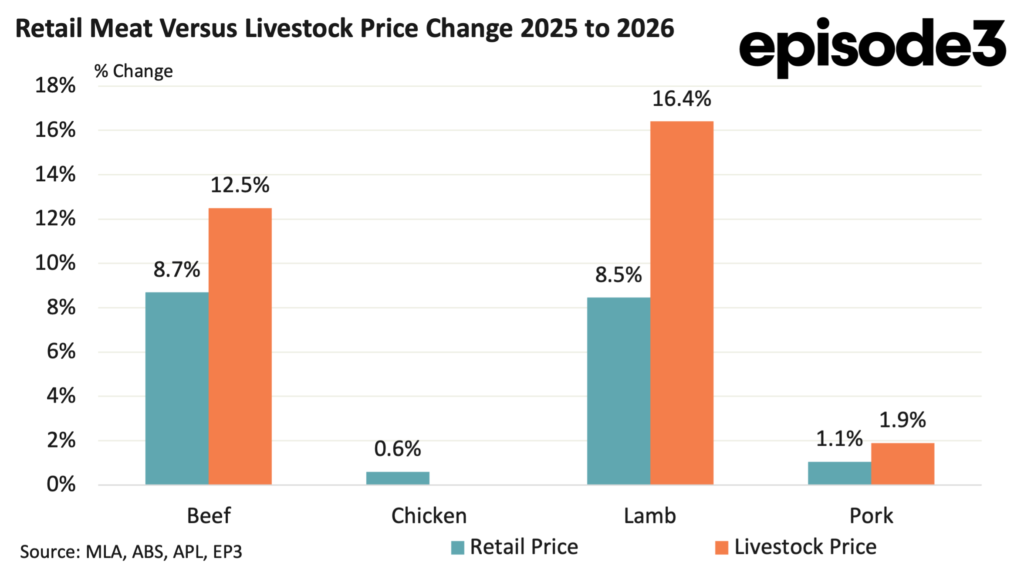
Between 2025 and 2026, Australian cattle prices increased by an average of 12.5pc. Over the same period, average retail beef prices rose by 8.7pc, from $27.32/kg to $29.69/kg. In other words, the price of cattle has risen faster than the price consumers are paying for beef. That matters because a 12.5pc rise in cattle prices does not automatically mean a 12.5pc rise in the price of steak. There are plenty of costs between a farm and a supermarket shelf, including processing, freight, wages, packaging and retailing. Different parts of the animal also sell for very different prices.
There can also be a delay. Livestock markets can move quickly when cattle supplies tighten or processors compete more aggressively for available animals. Retail prices usually move more slowly, particularly when supermarkets and other retailers are reluctant to suddenly increase shelf prices.
The same story is even more obvious in lamb. Trade lamb prices increased by 16.4pc between 2025 and 2026, making lamb the largest livestock price increase of the meat categories examined. Retail lamb prices increased by 8.5pc over the same period, rising from $20.18/kg to $21.89/kg.
Again, the livestock price has risen almost twice as quickly as the retail price.
For consumers, that suggests some of the increase in the underlying cost of lamb has yet to flow completely through to the checkout. It does not necessarily mean another 8pc rise in retail lamb prices is around the corner, because the relationship between livestock and retail pricing is not that simple. But it does suggest the pressure pushing lamb prices higher has been genuine. Seasonal conditions, sheep and cattle availability and competition between processors can all push livestock prices higher. When that happens, supermarkets, butchers and processors are ultimately competing over a more expensive animal.
Pork has been a very different story. Australian slaughter pig prices increased by only 1.9pc, while average retail pork prices rose by just 1.1pc. In dollar terms, average retail pork moved from $15.03/kg to $15.19/kg, an increase of only 16 cents per kilogram.
Chicken has been flatter again. Average retail chicken prices increased from $6.59/kg to $6.63/kg, a rise of only four cents per kilogram, or 0.6pc. Comparing chicken directly with cattle, lamb and pigs is difficult because Australia does not have the same transparent livestock market for poultry. Chicken production is largely vertically integrated, with processors generally owning the birds and feed and contracted growers paid to raise them. There is therefore no equivalent national saleyard or farmgate chicken price that can be neatly compared with cattle and sheep markets.
But from a shopper’s perspective, the important comparison is obvious. Beef and lamb are becoming more expensive much faster than pork and chicken.
That price gap could increasingly influence what Australians put on the dinner table. A household that once bought steak, lamb chops or a roast every week may begin swapping some of those meals for chicken or pork, particularly as cost-of-living pressures remain front of mind. It may also change which parts of the animal consumers buy. Mince, slow-cooking beef, lamb shoulder and other less expensive cuts can become more attractive when premium steaks and lamb cutlets move beyond what households are comfortable paying.
There is sometimes a temptation when food prices rise to look at the supermarket shelf and assume somebody in the supply chain is simply taking a bigger margin. In this case, the livestock numbers tell a more complicated story. Cattle prices rose 12.5pc while retail beef rose 8.7pc. Lamb prices rose 16.4pc while retail lamb rose 8.5pc. Pork and chicken, meanwhile, have experienced nothing remotely comparable. For shoppers wondering why their lamb chops and steak are becoming more expensive, at least part of the answer can be found well before the meat reaches the supermarket. It starts with the price of the animal.