
Sheepmeat export update September 2026
September 2026 - Sheep Meat Export Update
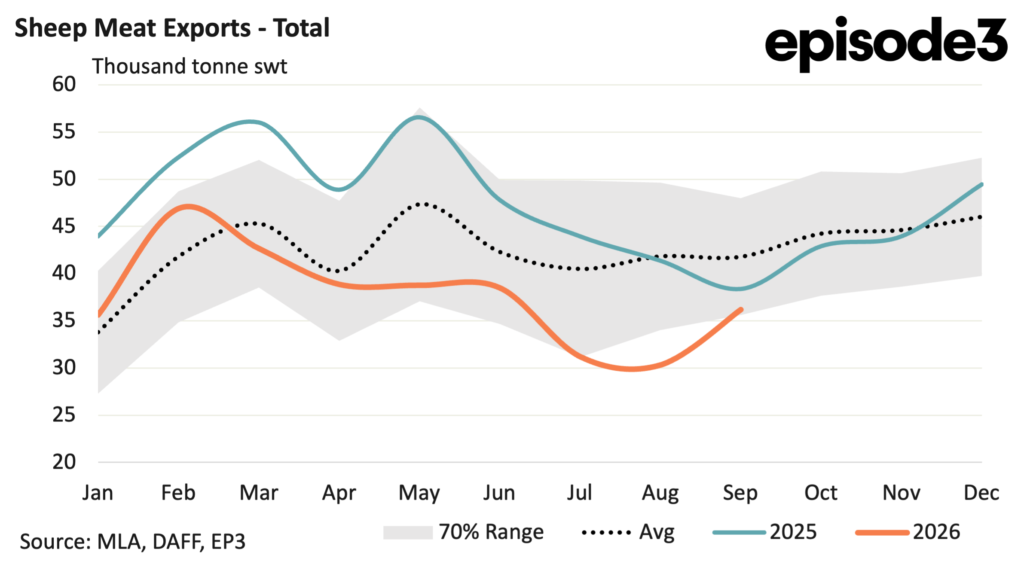
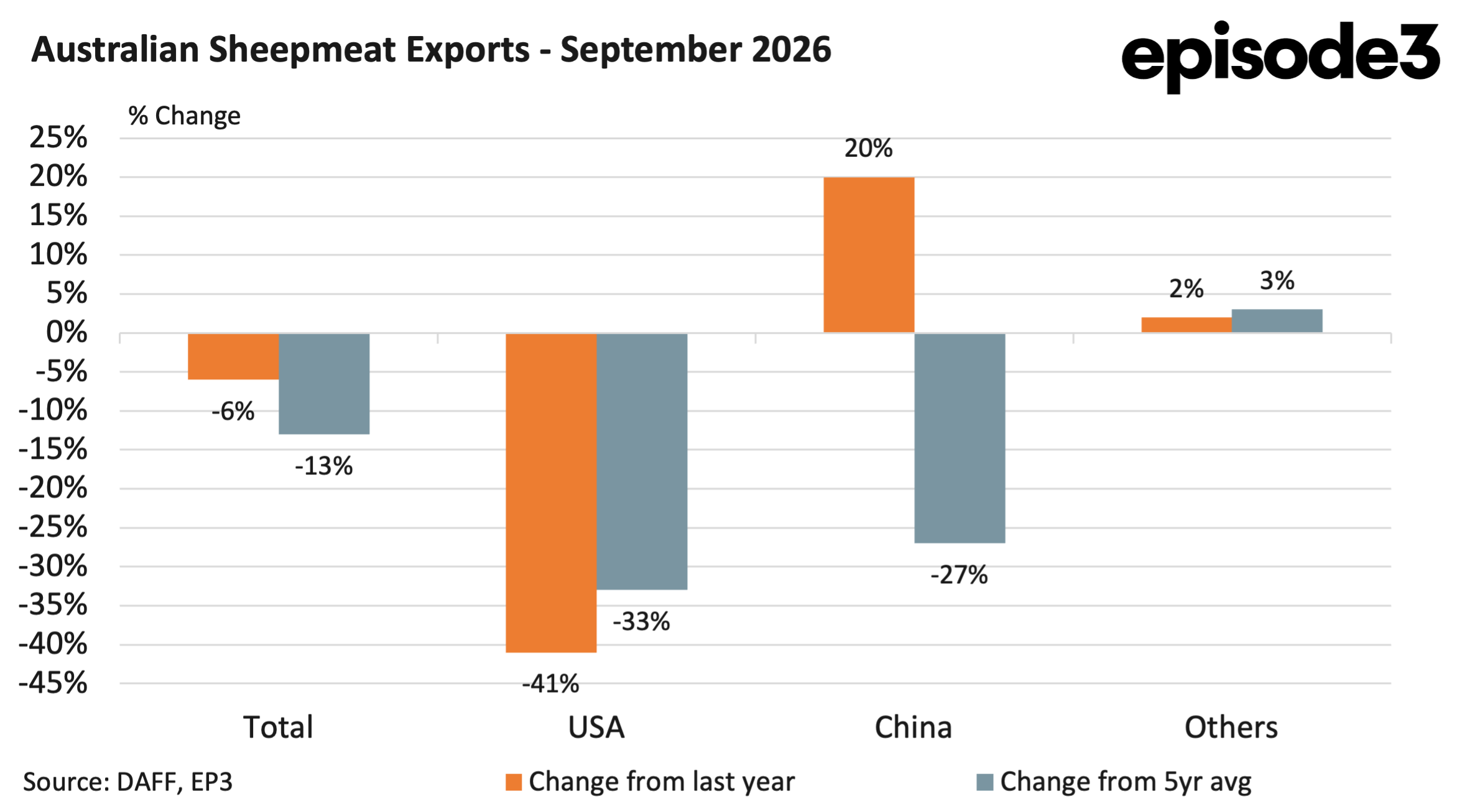
Australian sheepmeat exports recovered in September after particularly soft volumes in July and August, although shipments remain below both last year’s and longer-term seasonal levels. Total sheepmeat exports reached 36,193 tonnes in September, up from the subdued levels of recent months but still 6pc below September last year and 13pc below the five-year average. The result marks a noticeable improvement on August, when total shipments were 27pc below both last year and the five-year average. It suggests some export demand is returning as Australia moves out of the winter supply squeeze, although the September figures remain well below the enormous volumes shipped in 2025.
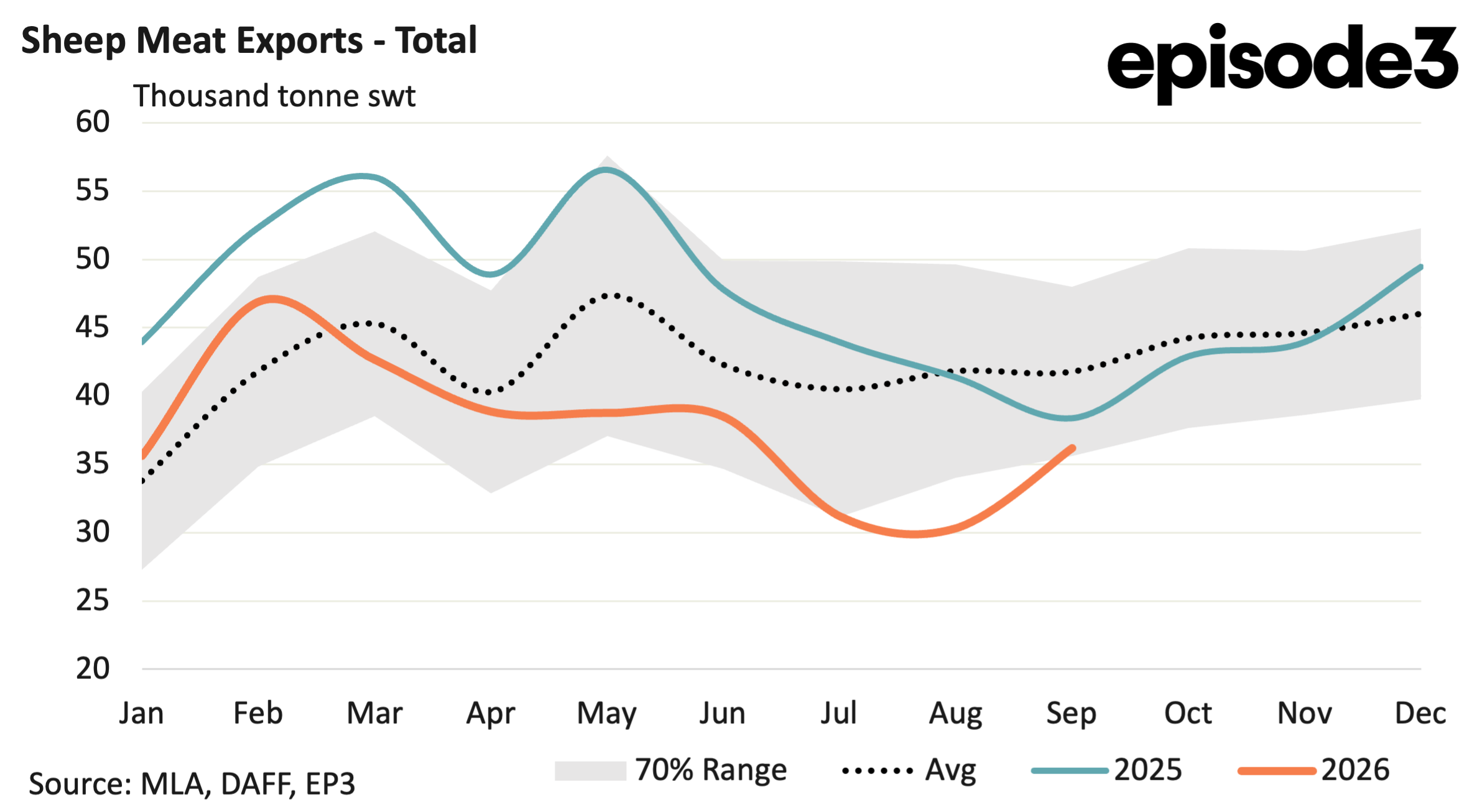
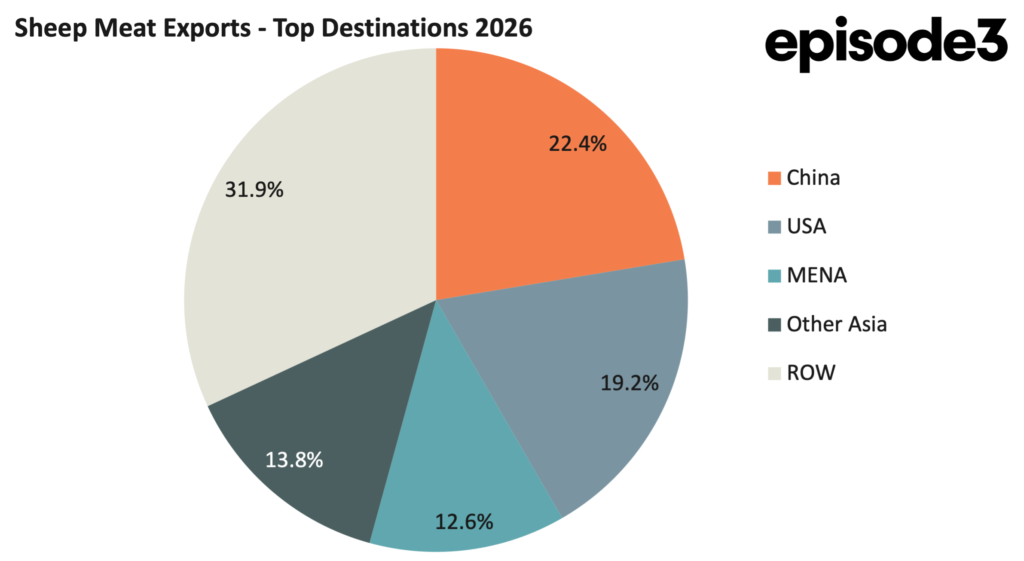
The biggest improvement came from China. Australian sheepmeat exports to China reached 8,616 tonnes in September, 20pc higher than the same month last year. That marked a significant turnaround from August and continued the stronger year-on-year performance in China seen over recent months. However, there is an important qualification to that result. Despite being 20pc above September last year, Chinese shipments were still 27pc below the five-year average. This reflects just how unusual recent Chinese sheepmeat trade patterns have been. Last year’s relatively weak September creates a low comparison point, while the longer-term figures show that current demand remains well below the levels Australia has historically shipped into the market at this time of year. China nevertheless remains Australia’s largest individual sheepmeat destination in 2026, accounting for 22.4pc of exports so far this year. Its importance to the trade therefore remains substantial, particularly as Australian sheepmeat supply begins to increase seasonally.
September exports to the US were 5,755 tonnes, down 41pc from last year and 33pc below the five-year average. This follows similarly weak numbers during August, when US shipments were 39pc below last year and 34pc below average. Rather than a single soft month, there is now a clear run of weaker trade into what has become one of Australia’s most important high value sheepmeat markets. Despite the recent slowdown, the US still accounts for 19.2pc of Australian sheepmeat exports so far in 2026, making it the second-largest individual destination after China. That makes the recent weakness worth watching closely. A sustained reduction in US demand would become increasingly important as Australian lamb supplies rise through spring and exporters need to find homes for additional product. The positive part of the September numbers was the performance outside the two largest individual markets.
The broad “others” category accounted for 21,823 tonnes during September, representing around 60pc of total shipments. These exports were 2pc above last year and 3pc above the five-year average. That is a considerably healthier result than the overall headline number and demonstrates the value of Australia’s increasingly diverse sheepmeat customer base.
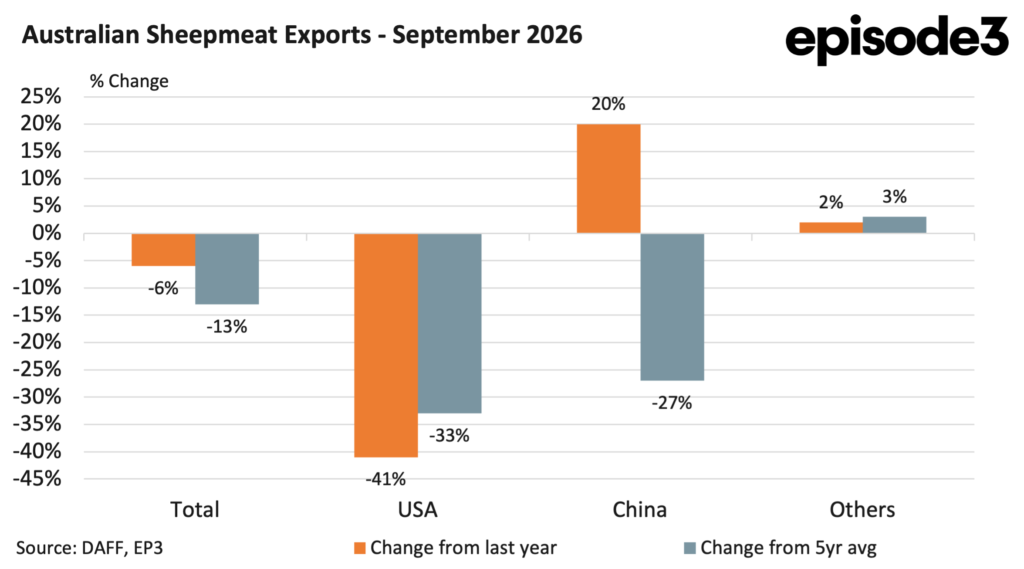
While the US has weakened and China remains below longer-term norms, demand across the broader collection of export markets has held up relatively well. The year-to-date destination split reinforces that diversification. China currently accounts for 22.4pc of exports, followed by the US at 19.2pc. MENA markets represent another 12.6pc and Other Asia 13.8pc, while the rest of the world accounts for the remaining 31.9pc. That leaves almost 60pc of Australian sheepmeat exports heading somewhere other than China or the US.
September therefore presents a mixed picture rather than an outright weak one. Total volumes remain below normal, and US demand is clearly softer. However, China has staged a significant year-on-year recovery, and the wider export market is absorbing volumes at levels slightly above historical norms.
With spring lamb supplies beginning to build, that broader demand will become increasingly important. Australian sheepmeat exports have spent much of winter constrained by tight domestic availability and exceptionally high livestock prices. As seasonal supply improves, the question now shifts from how much product Australia has available to how readily international customers can absorb the additional tonnes. September provides some encouragement on that front, but the continued weakness in the US means the export market is not firing evenly across all cylinders.