
Sheep processors remain under pressure

Sheep Processor Trading Conditions Model
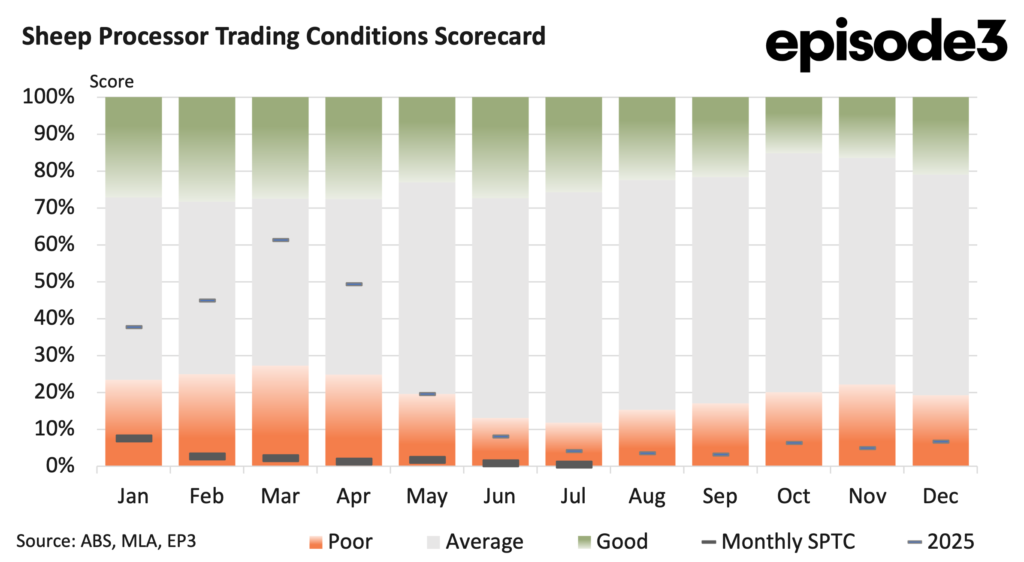
Updated co-product values have prompted revisions to the Episode 3 Sheep Processor Trading Conditions (SPTC) index, providing a clearer picture of the challenges facing Australian sheepmeat processors throughout 2025 and into 2026. While the historical adjustments have altered some monthly scores, the underlying message remains unchanged. Sheep processors have endured exceptionally difficult trading conditions during 2026, with the latest July reading falling to just 0.4pc. The revised index shows that processor conditions were generally stronger during 2025 than previously reported, particularly through the second half of the year.
July 2025 was revised upwards from 2.6pc to 4.0pc, while August and September increased by 1.8 percentage points each, reaching 3.5pc and 3.1pc respectively. October also improved from 5.3pc to 6.2pc, with smaller upward revisions recorded during November and December. The adjustments were less pronounced during the first half of 2025, when the index was already considerably stronger.
January increased from 37.5pc to 37.7pc, February from 44.6pc to 44.8pc and March from 61.1pc to 61.3pc. Overall, the revised 2025 annual average increased from approximately 20.1pc to 20.7pc. The revisions for 2026 were more mixed, with some months improving and others deteriorating. January increased from 6.6pc to 7.5pc, but February was revised downwards from 4.0pc to 2.6pc and March slipped from 3.1pc to 2.2pc. April improved from 0.8pc to 1.3pc, while May eased from 2.2pc to 1.7pc and June increased from 0.4pc to 0.8pc. These changes reduced the January to June 2026 average slightly, from approximately 2.9pc to 2.7pc.
Importantly, these historical revisions do not represent fresh changes in processor profitability, but rather an updated assessment of conditions using revised co-product information. The latest July data, however, provides a new indication of the pressures currently confronting the sector. The SPTC declined from 0.8pc in June to just 0.4pc in July, matching the lowest monthly reading in the revised 2026 series. Livestock procurement costs were again moving against processors, with lamb prices increasing by 0.5pc and mutton prices rising by a more substantial 3.1pc. While these movements were relatively modest compared with the extraordinary livestock price increases experienced earlier in the year, they nevertheless added further pressure to an already constrained processing margin.
The situation was made more difficult by softer export returns. Average sheepmeat export values across the four major destinations declined by 0.4pc during July, although individual markets displayed different trends. China recorded a modest increase of 0.2pc, while Malaysia improved by 0.4pc. However, these gains were outweighed by weaker returns from the United Arab Emirates, where export values declined by 0.7pc, and the United States, which recorded a 1.0pc fall. The divergence highlights the difficulty processors face when livestock prices continue increasing but returns from major export markets are either stagnant or declining.
Co-product values also moved against processors during July, falling by 1.1pc. These secondary revenue streams, including products generated alongside the primary meat cuts, can provide valuable additional income and help offset livestock procurement and operating costs. When co-product prices decline, processors lose some of that additional revenue at precisely the time they need it most. Domestic retail lamb prices provided little relief either, declining by 0.8pc during July. Although retail price movements do not translate directly into processor returns, the softer domestic pricing environment reinforces the limited capacity for higher livestock costs to be recovered further along the supply chain.
The combined effect was a familiar imbalance. Processors were paying more for livestock while export values, co-product returns and domestic retail lamb prices were all moving lower. This helps explain why the July SPTC deteriorated despite the relatively small increase in lamb procurement prices. The contrast with 2025 remains particularly stark.
During the first half of 2025, the revised SPTC averaged approximately 36.7pc, compared with just 2.7pc during the corresponding period of 2026.
That represents an extraordinary deterioration in the underlying trading environment. The latest co-product revisions have refined the historical picture, but they have not changed the broader conclusion. Australian sheepmeat processors remain caught between historically expensive livestock and limited opportunities to recover those costs through meat and co-product sales. With July recording another exceptionally weak SPTC result, there is little evidence yet of meaningful or sustained relief for the processing sector.