Market lessons: What is basis risk?

Market Lessons
Last week we looked at the difference between a forward contract and a swap. One key difference is that a forward contract usually locks in the full cash price, while a swap locks in only the futures component. That means another part of the price is still moving: basis.
The simplest way to think about basis is this:
Cash grain price = futures price + basis
Basis is the difference between the futures market and the price being offered for physical grain in your local market. It can be positive or negative, and it can change independently of futures.
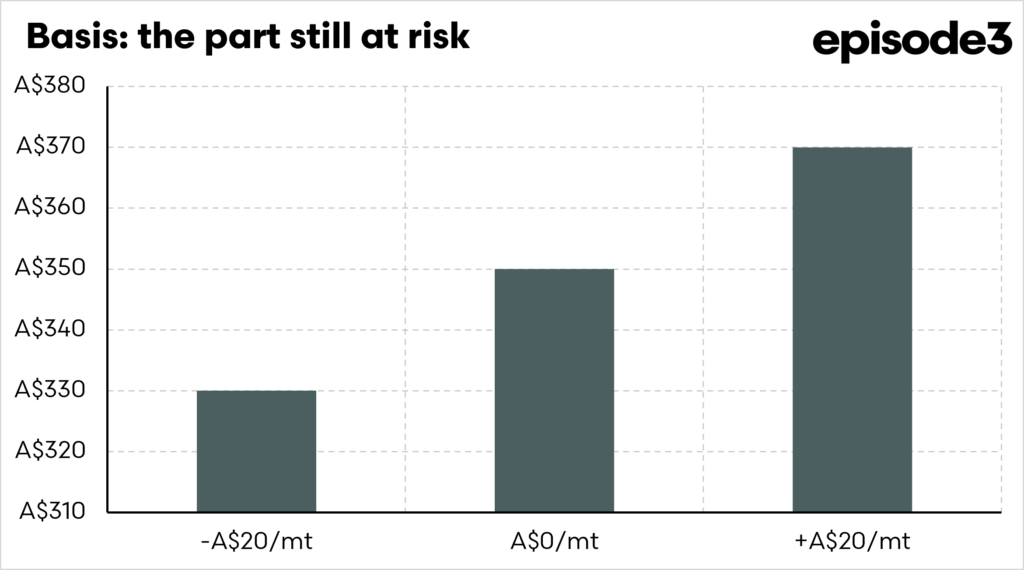
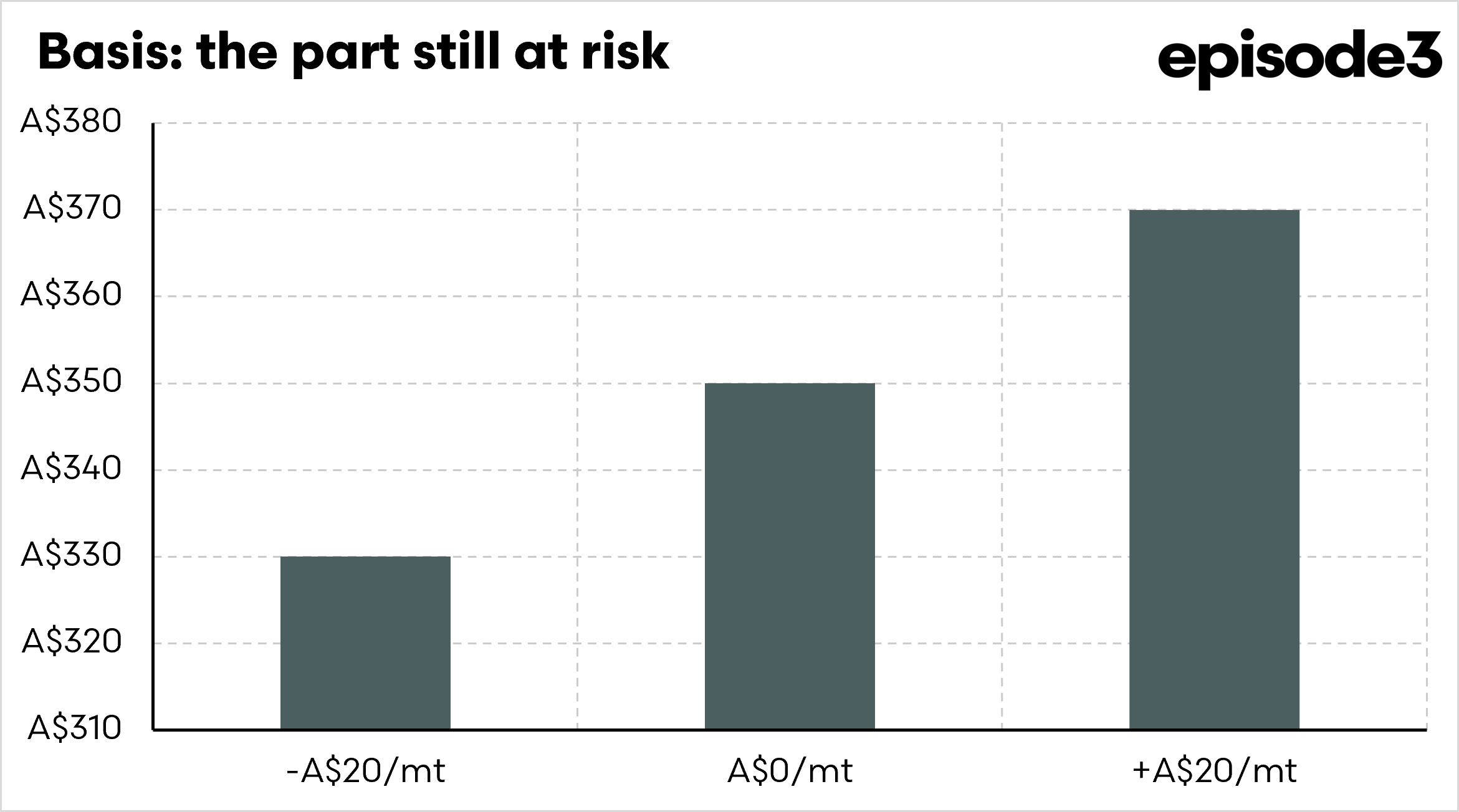
Assume a grower has fixed the futures component of their wheat price at A$350/mt using a swap. If the local basis is -A$20/mt when the grain is eventually sold, the cash value is around A$330/mt. If basis is A$0, the value is around A$350/mt, while a +A$20/mt basis would lift the cash value to around A$370/mt.
The futures component has not changed in any of those examples. The difference in the final price comes entirely from basis.
This is what we mean by basis risk. A grower may have protected themselves against movements in international futures, but they are still exposed to changes in the local physical market.
Basis can move for many reasons. A large harvest can put pressure on local prices as more grain competes for storage and buyers. Strong exporter or processor demand can have the opposite effect. Freight, local quality, storage capacity, delivery location and competition between buyers can all influence the basis being offered.
That is also why a swap should not be thought of as locking in the final grain price. It locks in one component of that price while leaving the physical side open.
That flexibility can be valuable. A grower may like the futures value available today but believe there is no need to commit the physical grain yet. A swap lets them separate those two decisions.
But it also means the final result still depends on what happens to basis between when the swap is established and when the grain is sold.
The key lesson is simple: locking in futures does not mean locking in your final cash price. Basis can still improve or deteriorate, and that movement matters to the final