Market Morsel: The Wheat Market’s Danger Window Has Arrived

Market Morsel
Australian growers have only just finished getting much of the crop into the ground, but the global wheat market is already moving into one of its most important pricing windows of the year. That might seem odd from an Australian perspective. Locally, the crop is still young. In many regions, it is barely out of the ground. Growers are watching rainfall, weeds, fertiliser decisions and the early establishment of the season. But the wheat market does not wait for the Australian crop.
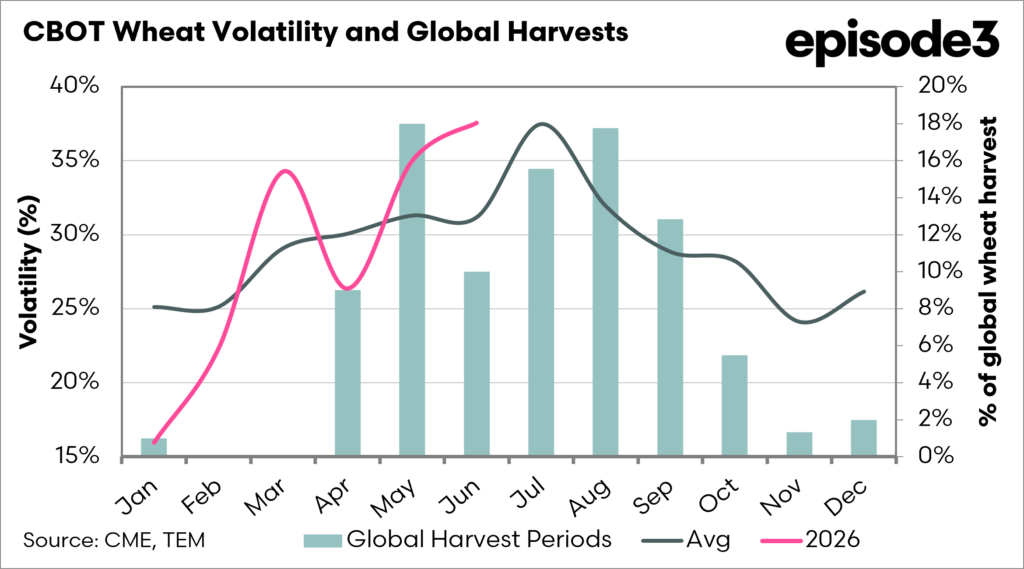
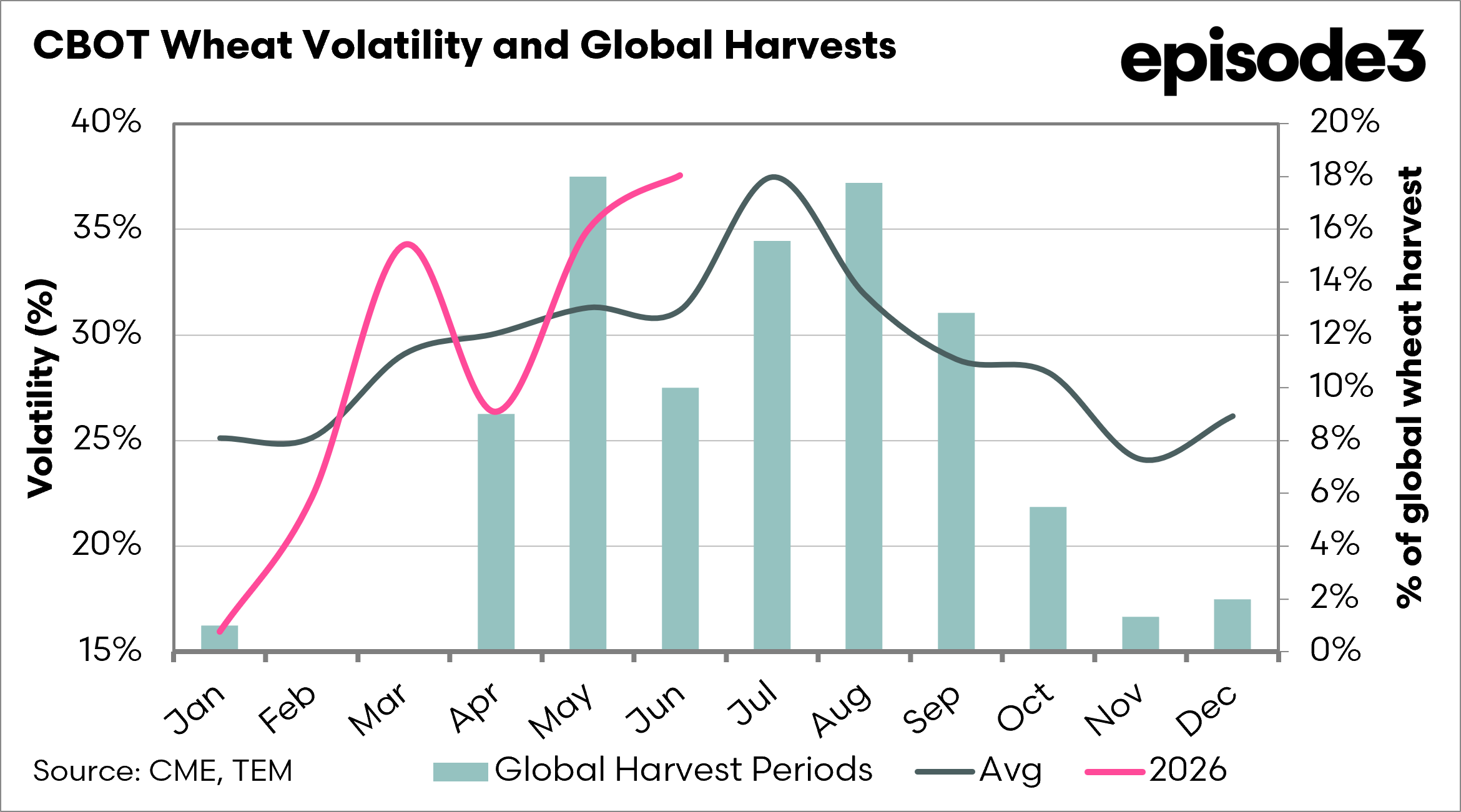
Around 90pc of the world’s wheat is grown in the northern hemisphere, and a large share of that crop is now either being harvested or moving through its most important yield-forming period. That means the market’s attention is firmly on Russia, Europe, the US, Canada and other major producing regions. When production concerns appear in those regions, prices can move quickly.
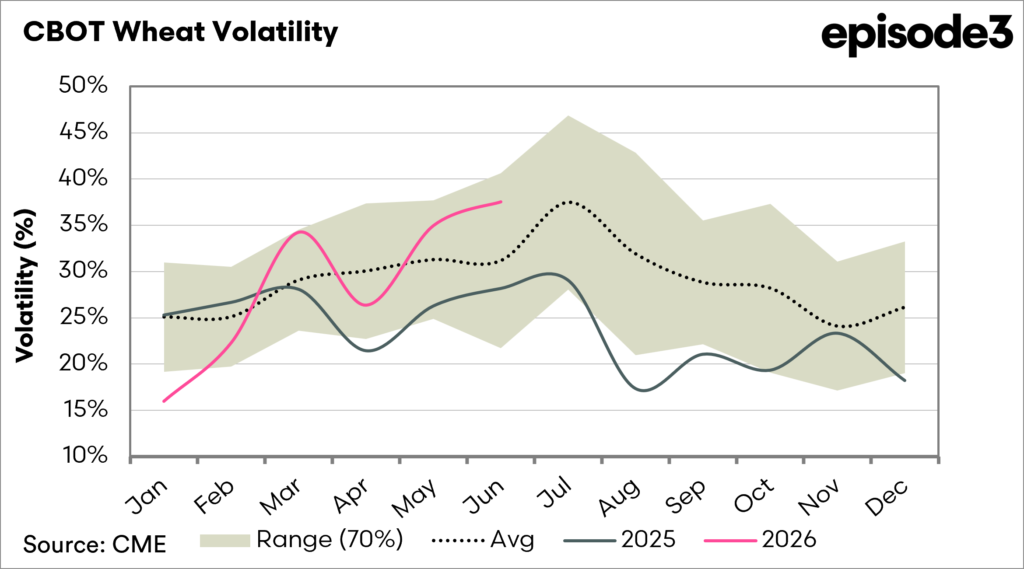
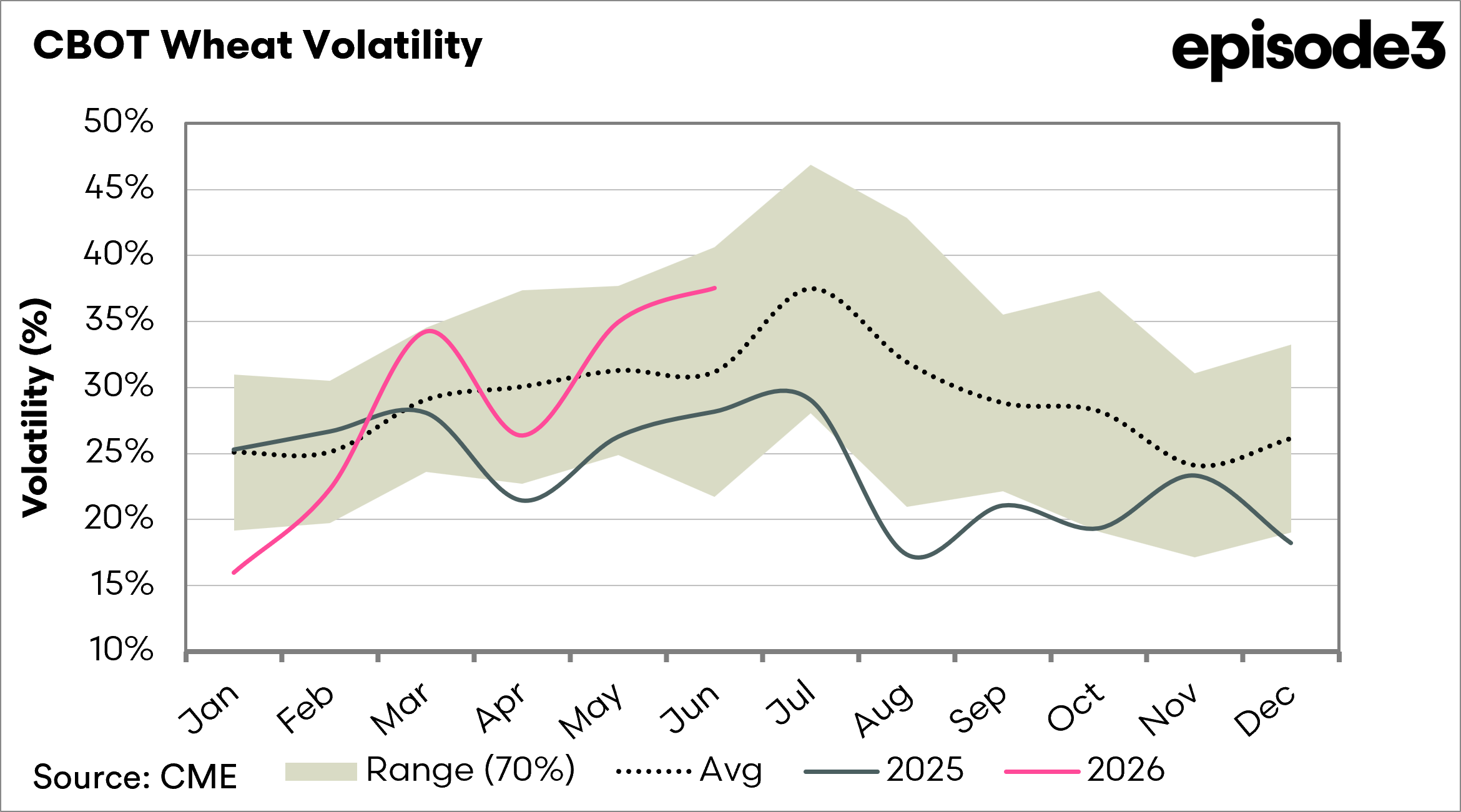
That is why volatility tends to rise through the middle of the year. CBOT wheat futures are a useful indicator of global wheat market sentiment, and historically, volatility tends to lift into June and July as the market digests northern hemisphere weather, crop condition reports, harvest results and export competition. The latest volatility picture shows that 2026 is already running hot.
CBOT wheat volatility started the year at relatively low levels, sitting near 16pc in January. But by March it had lifted sharply into the mid-30pc range. After a brief pullback in April, volatility rose again through May and June. By June, volatility was sitting around 37pc, above the long-term average and near the upper end of the normal historical range.
That matters because volatility does not simply mean higher prices. Volatility means bigger movement. It means the market is more reactive. A poor crop report, a downgrade in Russian production, a worsening US wheat condition number, a Black Sea disruption or a shift in corn markets can all spark sharp price moves. But the reverse is also true. Improved weather, better harvest results or weaker demand can quickly take heat out of the market.
For Australian growers, the lesson is not that prices must rise from here. The lesson is that the market is now in the part of the year where pricing opportunities can appear quickly and disappear just as fast. The Australian crop still has a long way to go, but global wheat pricing is being shaped right now. In seasons where volatility is already above average before July, it can pay to stay alert. Taking small bites during periods of strength is rarely a bad strategy when the market is this jumpy.