Wheat falls, but offshore markets take the bigger hit

The Snapshot
- Chicago wheat has now fallen for nine consecutive weeks.
- Strong US export demand has done little to stop the selling.
- Australian grain values are under pressure, but losses have been smaller than offshore.
- Southern crops are shaping up strongly, while northern rain creates quality risk.
- Fuel and fertiliser costs remain elevated as harvest ramps up.
The Detail
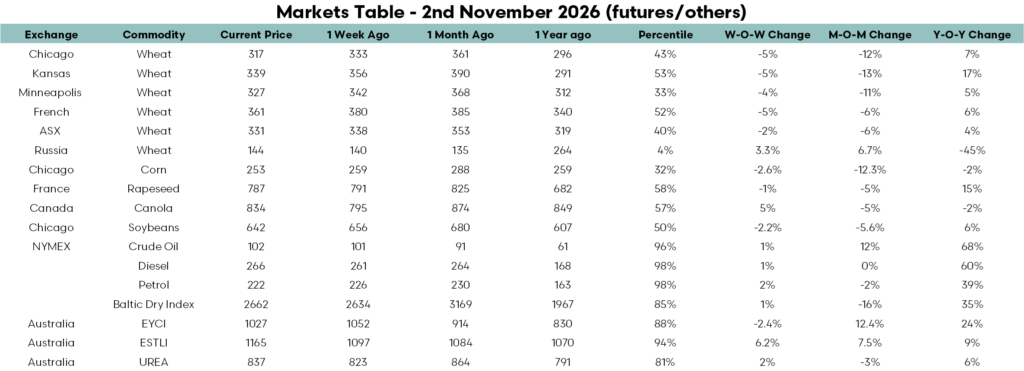
Wheat markets have been impressively consistent lately, unfortunately all in the wrong direction. Chicago wheat has now fallen for nine consecutive weeks, losing more than 23pc over that period, while Kansas and Minneapolis wheat have followed it lower. Corn has chalked up five consecutive weekly declines and soybeans three, leaving most of the major US grain complex firmly on the defensive.
What makes the wheat move interesting is that demand has not disappeared. US wheat export sales reached a marketing-year high of 849,800t in the latest reporting week, while Chinese buyers have reportedly been seeking offers for US soft red winter wheat. That has not been enough to stop the selling, with funds continuing to build very large short positions and traders steadily stripping risk premium from the market.
Genuine reasons underpin the weakness. Russian grain vessels have been allowed to leave the Sea of Azov for the first time since July, improving the prospect of more Russian wheat reaching export markets. Argentine new-crop wheat is also becoming more competitive. The reopening of Russian routes is hardly a return to normal, with some vessels expected to require naval escorts and security risks across the region remaining obvious.
The European Commission cut EU maize production to 47.0Mt, from 48.3Mt last month, while trimming soft wheat production to 123.7Mt. Forecast wheat ending stocks fell to 10.6Mt from 11.4Mt, while projected exports remained unchanged at 29Mt. Kazakhstan has completed a sizeable 24.3Mt grain harvest, down from last year’s record 27.1Mt, with early quality results reasonably strong and exports running ahead of last year.
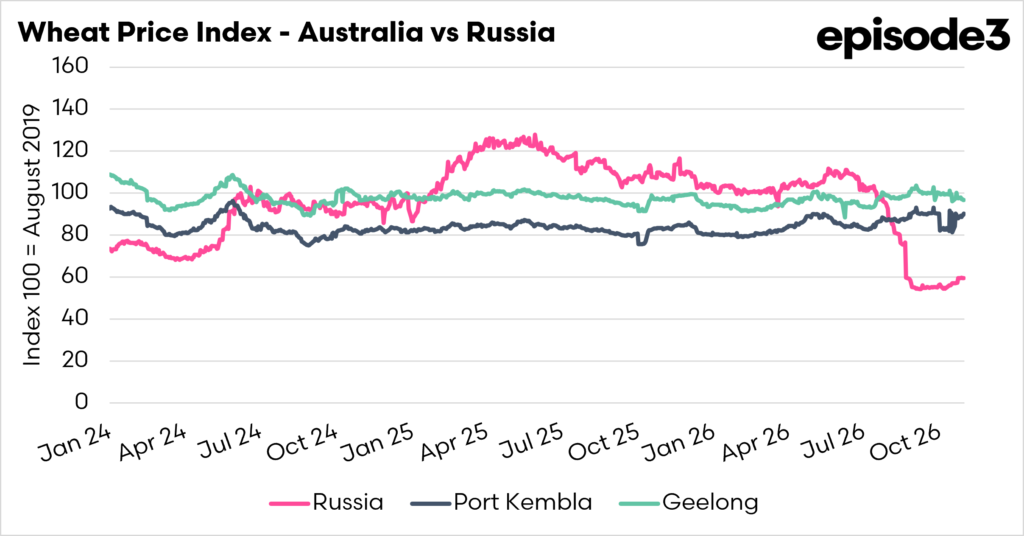
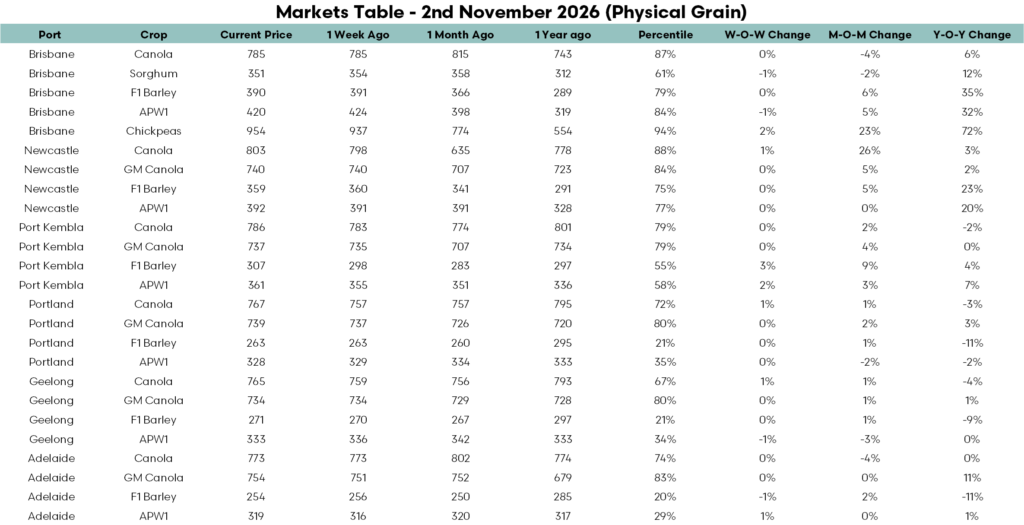
That leaves a market where supply is comfortable, but perhaps not quite as bearish as nine consecutive weekly losses would suggest. Chicago wheat dropped another 5pc this week and is now 12pc lower over the month, with Kansas down 13pc and Minneapolis down 11pc. French wheat is also 6pc lower over the month.
Australian prices have certainly not escaped the pressure, but the move has been much less severe. ASX wheat fell another 2pc this week and is 6pc lower over the month. Physical markets have been more mixed, with Brisbane APW1 easing to A$420/t and Geelong to A$333/t, while Portland sits at A$328/t. Newcastle has been relatively steady, and Port Kembla actually strengthened over the week. The direction is still generally softer, particularly through southern markets, but Australian values have so far avoided the scale of the sell-off seen offshore.
Harvest prospects are also becoming clearer. Heavy October rain across eastern Australia and South Australia has produced very different outcomes depending on location. Across the Victorian and South Australian Mallee, crops are shaping up exceptionally well, with some traditionally lower-rainfall areas looking at cereal yields around 3–4t/ha and expectations of a very large harvest.
Further north, the same rain arrived at a much less convenient time. Drought-breaking falls across Queensland and northern New South Wales are excellent for soil moisture and summer crop prospects, but winter crops were already approaching harvest. That creates greater risk of yield losses, quality downgrades and harvest delays. In the south, the potential crop size is creating a different concern, with storage and grain-handling capacity likely to be tested.
Input costs are not offering much relief. Australian urea has edged up another 2pc to A$837/t, although Australia appears well supplied. Global urea itself remains relatively subdued, but ammonia prices have risen sharply as high European gas prices force production curtailments. Phosphates remain expensive but stable, while potash and sulphur have been moving lower.
Fuel is another cost growers will notice as headers start moving. Diesel is around 266c/L, 60pc above year-ago levels, while crude oil remains close to the top of its recent range.
Grain prices remain under pressure both overseas and at home, but the size of the move matters. Offshore wheat has fallen much harder than Australian cash values, even as a potentially large domestic harvest approaches.
The next major event for markets is the US midterm elections on 3 November. With sizeable speculative positions, elevated geopolitical tensions and nervous financial markets, the midterms are one to watch.