Freight costs are becoming a farmgate issue

Market Morsel
The cost of shipping goods around the world has become one of the most important, and often overlooked, drivers of agricultural profitability. When freight rates rise, farmers feel it from both directions. Inputs become more expensive coming in, while export competitiveness can weaken heading out.
When shipping costs rise sharply, those increases eventually work their way through supply chains and into consumer prices. That is why freight markets are watched so closely by commodity traders, manufacturers and increasingly by farmers.
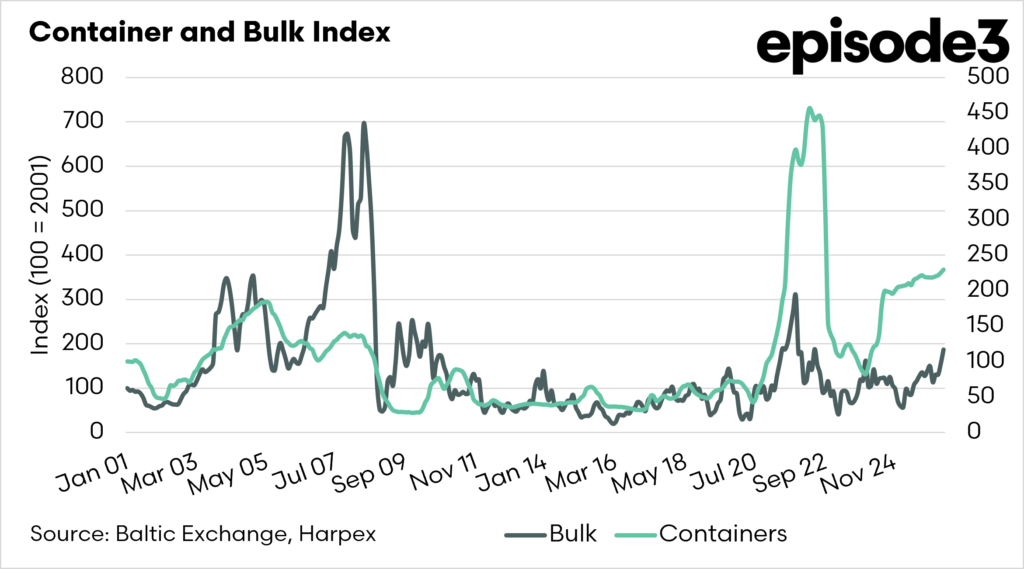
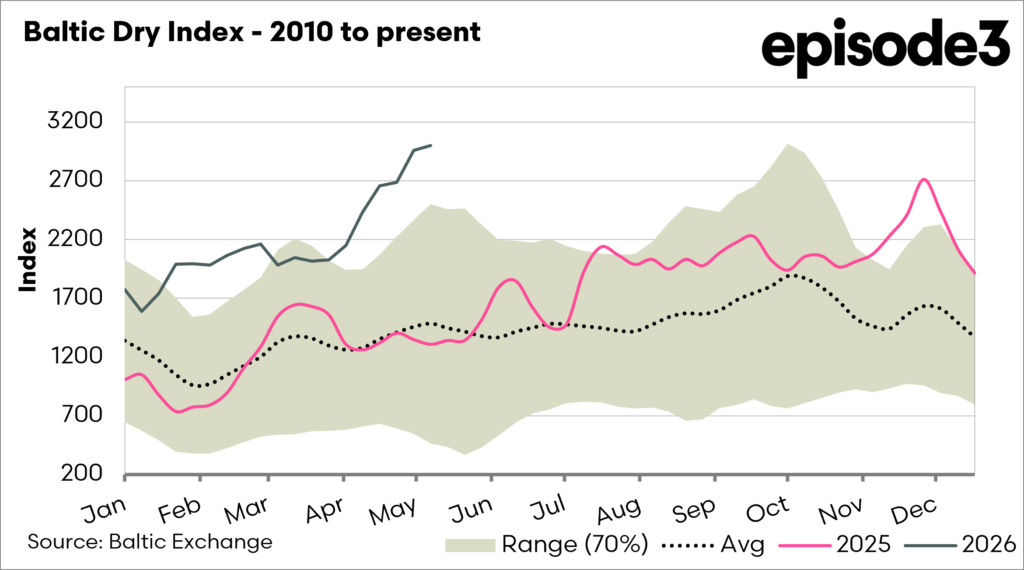
One of the best-known measures of global freight costs is the Baltic Dry Index, or BDI, which tracks the cost of moving bulk commodities such as grain, fertiliser, coal and iron ore around the world. It focuses on dry bulk shipping rather than container freight, but together the two markets provide a useful snapshot of how expensive it is becoming to move goods globally.
Australia is a large exporter of bulk commodities but also heavily reliant on imports for fuel, fertiliser, chemicals, machinery and consumer goods. When shipping rates rise, the impact is felt in both directions. Exporters can become less competitive in overseas markets, while imported products become more expensive domestically.
Container shipping provides some of the clearest examples. During COVID, container freight rates exploded as port congestion, lockdowns and vessel shortages disrupted global supply chains. The cost of moving a container from Asia to Europe or Australia increased several-fold in some cases, pushing up the price of everything from building materials to household goods.
Bulk shipping behaves slightly differently, but the principle is the same. Higher freight costs increase the cost of moving grain, coal, fertiliser and feed ingredients between countries. Importers pay more to secure supply, exporters receive less after freight costs are deducted, and consumers ultimately absorb much of the price increase.
Fuel costs are one of the biggest drivers. Ships consume enormous volumes of fuel, so higher crude oil prices quickly feed into freight markets. Congestion at ports, weather disruptions, war risk and vessel shortages can all add further pressure.
That is part of the reason shipping rates have become a growing focus again in 2026. Conflict in the Middle East, disruption in the Strait of Hormuz, and elevated fuel prices have all heightened concerns about global freight flows. The Baltic Dry Index recently climbed to more than double year-ago levels, reflecting tighter shipping conditions and higher transport costs.
For agriculture, the impact can be significant. Rising freight costs simultaneously influence fertiliser prices, feed costs and export competitiveness. A grower may receive stronger grain prices during periods of global disruption, but they are often paying more for inputs and transport at the same time.
Shipping costs are sometimes overlooked because they sit in the background of the economy. But when freight markets tighten, the effects quickly become visible in the prices of almost everything people buy.