
A changing diet
Market Morsel
The US beef market has spent the better part of three decades moving in one direction, toward more marbling, more quality and more premium product.
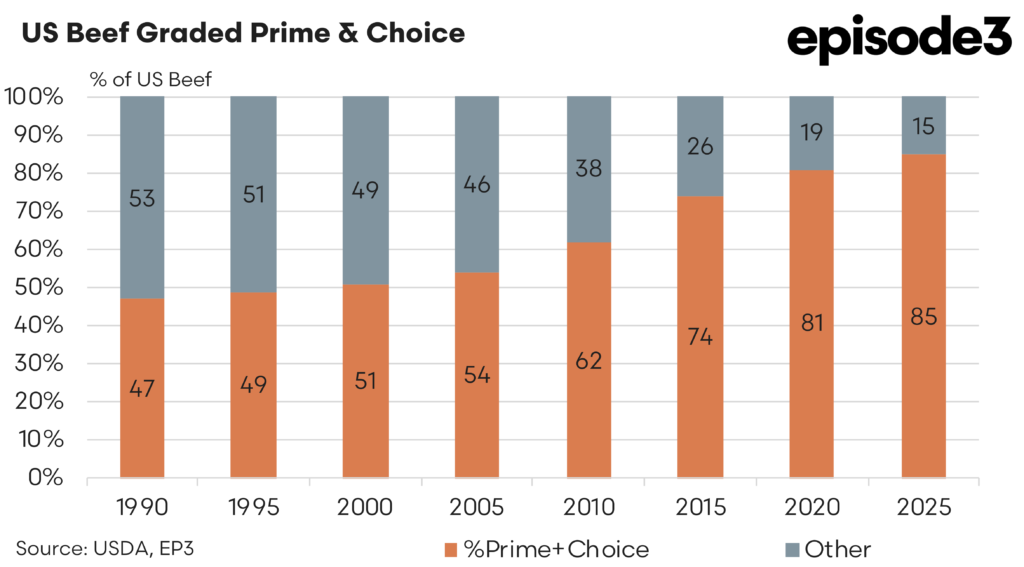
As the chart below shows, Choice and Prime now account for around 85 percent of US beef production, up from less than 50pc in the early 1990s. At the same time, Wagyu systems in both the US and Australia have been pushing further up the marbling curve, with a growing share of carcasses grading 7MS and above.
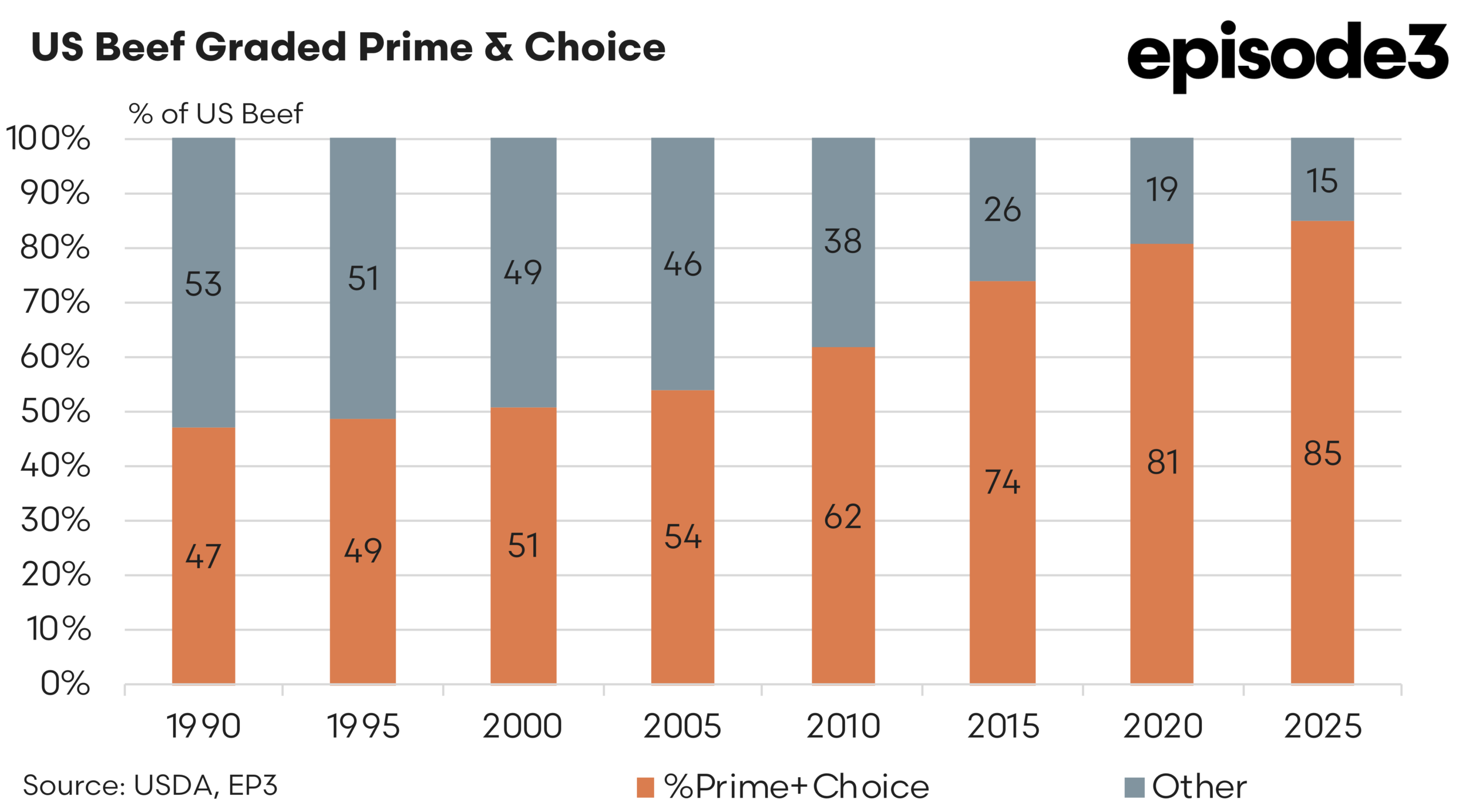
This has not happened by accident. It has been driven by genetics, feeding systems and grid pricing, all aligned toward producing a richer eating experience. The industry has effectively optimised for flavour, tenderness and consumer willingness to pay for higher quality beef.
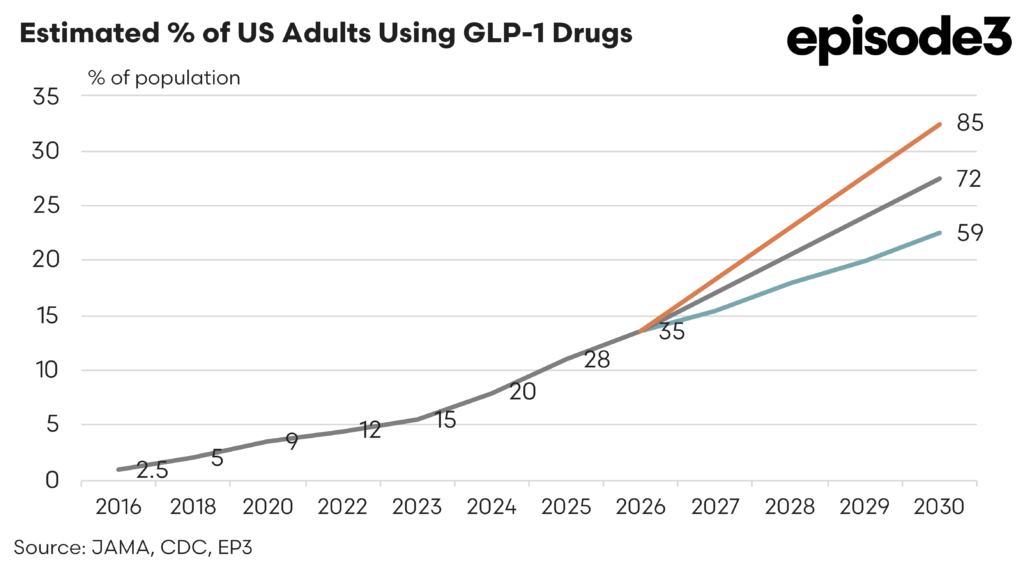
At the same time, a new force is emerging on the demand side. The rise of GLP-1 drugs (like Ozempic, Wegovy, etc) is beginning to reshape how consumers think about food, not just in terms of how much they eat, but how they construct their diets.
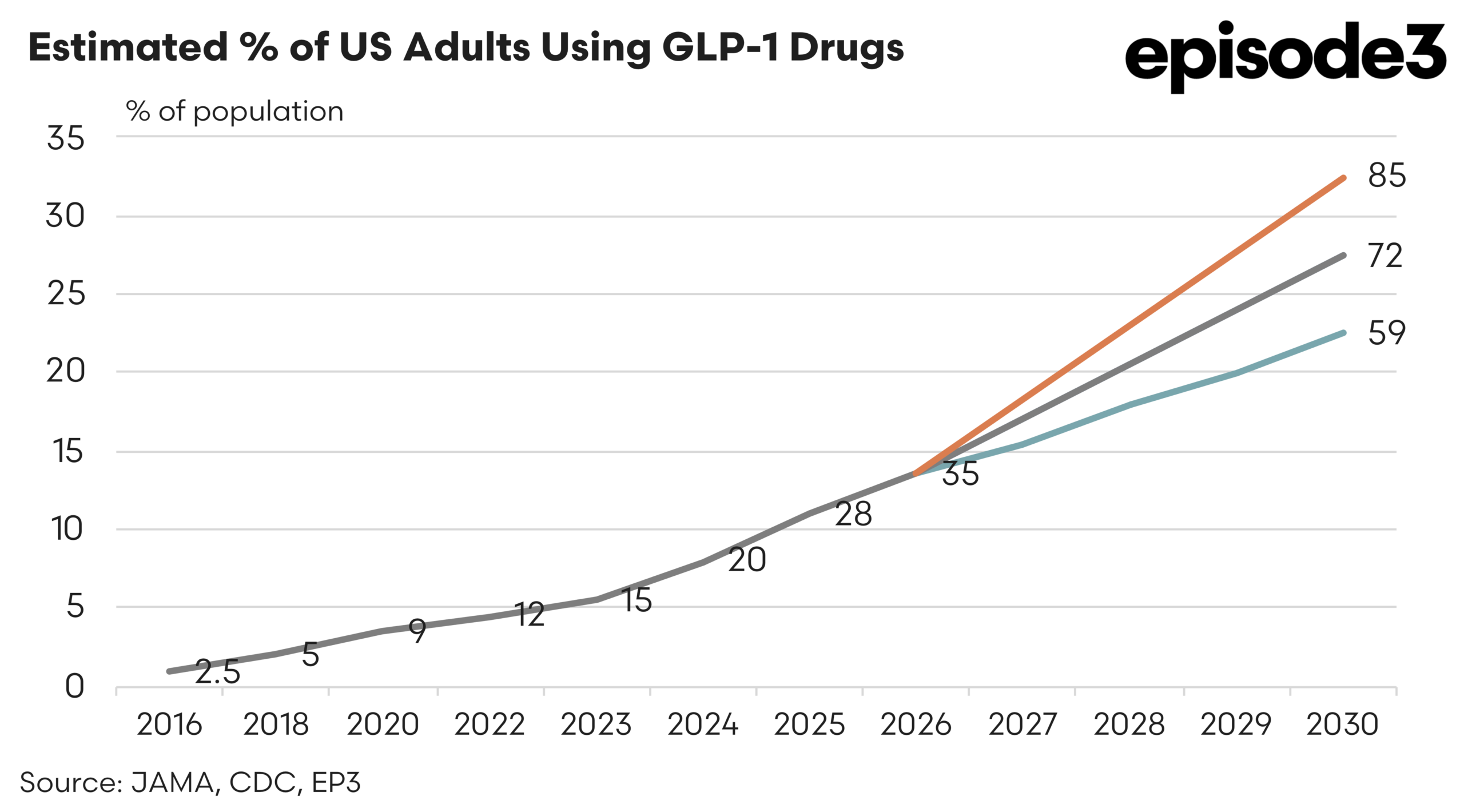
Estimates suggest that by the end of the decade somewhere between 59 million and 85 million US consumers could be using these drugs. That is not a marginal cohort, it would be between 22-32% of the adult US population. That is a structural shift in how a large share of the population interacts with food.
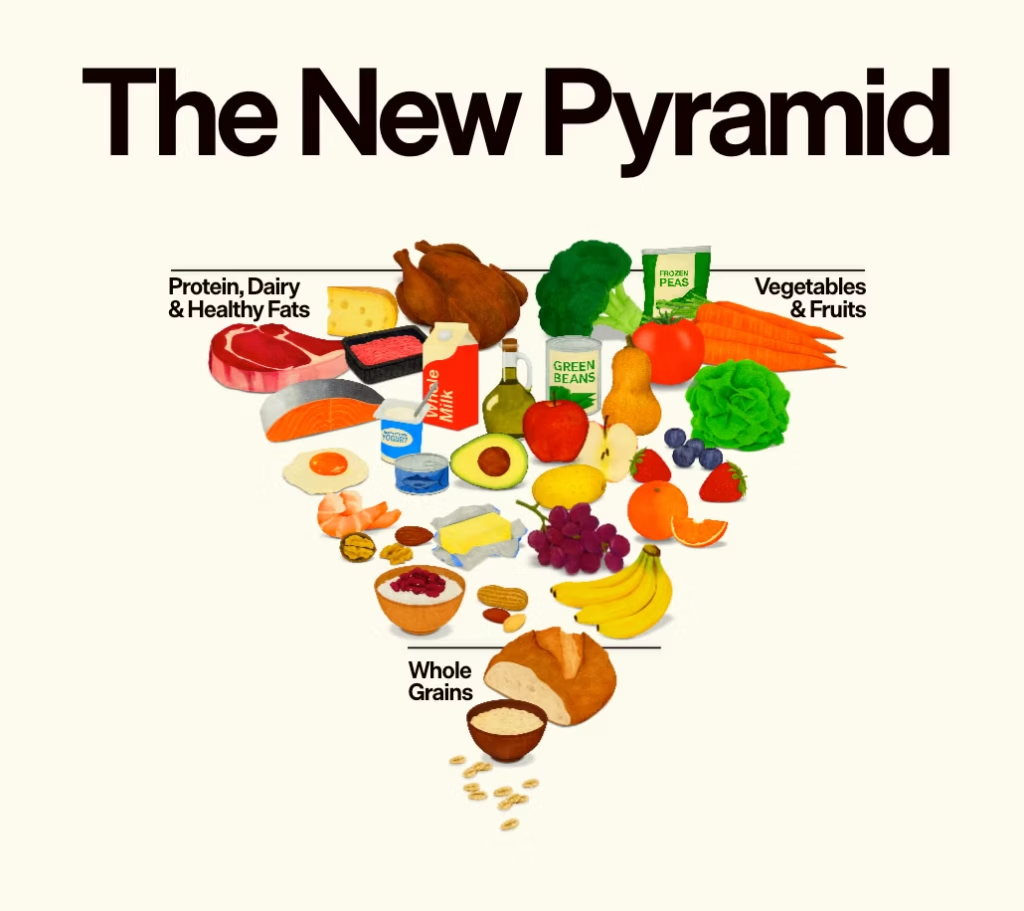
Layered on top of this is a significant change in official dietary advice in the United States. The latest 2025 to 2030 Dietary Guidelines represent a clear break from the traditional carbohydrate heavy food pyramid that dominated for decades.
The new framework effectively flips that model on its head, placing protein, dairy and healthy fats at the top of the dietary hierarchy, while reducing the emphasis on refined carbohydrates and ultra-processed foods .
Consumers are now being encouraged to prioritise protein at every meal, build diets around whole nutrient dense foods and actively avoid highly processed items and added sugars . In simple terms, the guidance has shifted from volume based eating toward quality and composition.
This matters because it aligns, at least directionally, with the behavioural changes being driven by GLP-1 use. The simple narrative is that people on these drugs eat less. That is true, but it misses the more important point. These consumers are not just reducing intake, they are recalibrating what they choose to eat within a smaller overall diet.
Calorie intake falls, but it does not fall evenly. The biggest reductions are typically seen in discretionary foods and refined carbohydrates, while protein becomes more important on a per calorie basis. That reflects both medical advice to maintain muscle mass and a broader shift toward nutrient efficiency.
This is where the interaction with beef becomes more complex. There is a logical argument that higher marbling cuts should perform well in this environment. Premium beef already operates on a model of smaller portions and less frequent consumption. A highly marbled steak delivers flavour and satisfaction quickly, which in theory aligns with a reduced appetite.
At the very top end of the market that argument holds. Ultra-premium Wagyu is unlikely to disappear from the plate. If anything, it may become even more of a concentrated indulgence, consumed less often but still valued for its eating quality. The consumer in that segment is less sensitive to both price and dietary optimisation and is buying an experience rather than simply protein.
However, this logic does not extend evenly across the market. GLP-1 use introduces a new layer of decision making. It is not just about feeling full, it is about maximising nutritional return within a constrained intake. In that context, protein per calorie becomes a more relevant metric. Highly marbled beef, by definition, carries a higher fat content and therefore a lower protein density relative to leaner cuts.
There is also the issue of richness. Even without pharmaceutical intervention, very high marbling can be overwhelming in large quantities. When appetite is suppressed, tolerance for richness can decline further. The result is not simply that consumers eat smaller portions, but that they may opt for different types of protein altogether.
The more important dynamic sits at the level of frequency rather than portion size. Premium beef can accommodate smaller serves, but it relies on a certain regularity of consumption to maintain volume. GLP-1 users tend to reduce overall eating occasions. If frequency declines, total demand falls, even if value per meal holds.
This creates a divergence within the protein complex. At one end, ultra-premium beef retains its place as an occasional, high value item. At the other, leaner proteins align more closely with both the new dietary guidance and the behaviour of GLP-1 users, favouring efficiency, portion control and everyday consumption.
The pressure sits in the middle. Grainfed Choice and lower tier Wagyu products have been built on a model of regular consumption, supported by portion size and eating occasions that are now under pressure.
For Australian exporters, this matters. Particularly if their export mix is heavily weighted toward premium beef and lamb, both of which sit in categories that rely on discretionary consumption and larger portion formats in the US market.
Grassfed beef is relatively better positioned. It aligns with perceptions of leanness and natural production and fits more easily into a protein focused diet. Lamb is more exposed, given its already limited penetration in the US and its reliance on foodservice and occasional consumption.
The broader takeaway is that this is not simply a story about less food. It is a story about different food. The US beef industry has spent decades moving toward a more marbled, more indulgent product. At the same time, both dietary guidance and pharmaceutical adoption are nudging consumers toward smaller, more efficient diets built around protein and whole foods.
Those two trends are not perfectly aligned. High marbling will not disappear, but it will have to work harder. It will need to justify its place not just on taste, but within a diet that is increasingly constrained by both biology and behaviour. The plate is getting smaller. The rules for what stays on it are changing.